Solutions by typeProduction efficiency
What if a glove or a piece of plastic ends up inside?
Something that is not product
Mid-afternoon on the ready-meals line. Trays travel down the belt in a row, sealed and labelled, heading for the checking station. On the belt, lying between two trays, there is a blue nitrile glove. Nobody saw it fall, and nobody is missing a glove yet. It is moving at the same speed as everything else, with eleven metres to go before the end of the line.
7 cameras across 5 sectors
What IRIS is
IRIS watches the cameras for you.
IRIS Neural is an artificial intelligence that watches the cameras you already have and understands what happens in front of them. When something important happens —or something you told it you need to keep an eye on—, it alerts you; and whatever can be counted, it counts in numbers. All day long, without anyone having to watch a screen.
You tell it what you need to watch, and IRIS does it.
Works with the cameras you already have. Nothing to replace.
A person replies, not a form.
- Your footage never leaves your premises.
- It doesn't identify people.
- Certifications →
This is how you ask for it
«Tell me if something that is not product turns up on the belt: a glove, a piece of plastic or a tool.»
If the glove stays on the belt, nothing happens. If it goes into a tray, everything happens: a customer’s phone call, a product recall, a notice to the authority and an audit asking exactly how that is controlled. And the line’s metal detector will not stop it, because nitrile is not metal. The one place where that glove was easy to see was the belt, eleven metres earlier, and nobody was watching there.
You decide once
You decide this once, and no camera decides it. You say which stretches of line get watched, what counts as a foreign object in your product, what happens when one appears — stop, remove, check the section — and who is told: if something that is not product appears on the tray belt, alert quality control with the image and the point on the line, and keep the video of the thirty seconds before. IRIS applies it on every shift.
A foreign object has no shape. That is the whole difficulty. A glove among the trays on a ready-meals line. A red gas cylinder, whole and sealed, coming down the sorting belt among the packaging. A rodent crossing the floor at night between pallets of finished product. A dark speck floating inside a vial that is already full. No two are alike and no list contains them.
That is why it is so hard to watch for. A person on the line is not looking for a glove: they are looking at trays, hundreds an hour, and the glove is blue on a blue belt in the middle of an eight-hour shift. And a machine programmed to look for «odd things» needs somebody to define odd first, and nobody can write that list, because odd is anything that falls out of a pocket.
IRIS turns the question around. Instead of looking for everything that should not be there, it looks at what should: identical trays, identical vials, cardboard. And it flags anything that does not fit, whatever it is. After that there are two speeds, and they are worth telling apart: the glove is a quality problem and there is time to pull it off; the cylinder heading for the shredder is a safety problem, and the alert has to reach the control desk before the cylinder does.
What changes
Before, a foreign object surfaced at the end: at outgoing control, in a complaint, or when something broke inside a machine. Now it is seen where it is easy to see, on the belt, and an alert arrives with the image and the exact point on the line. The operator lifts the glove off and carries on. And if what is coming down is a gas cylinder, the alert reaches the control desk in time to stop the belt, which is the only thing that matters in that case.
Where we have seen it
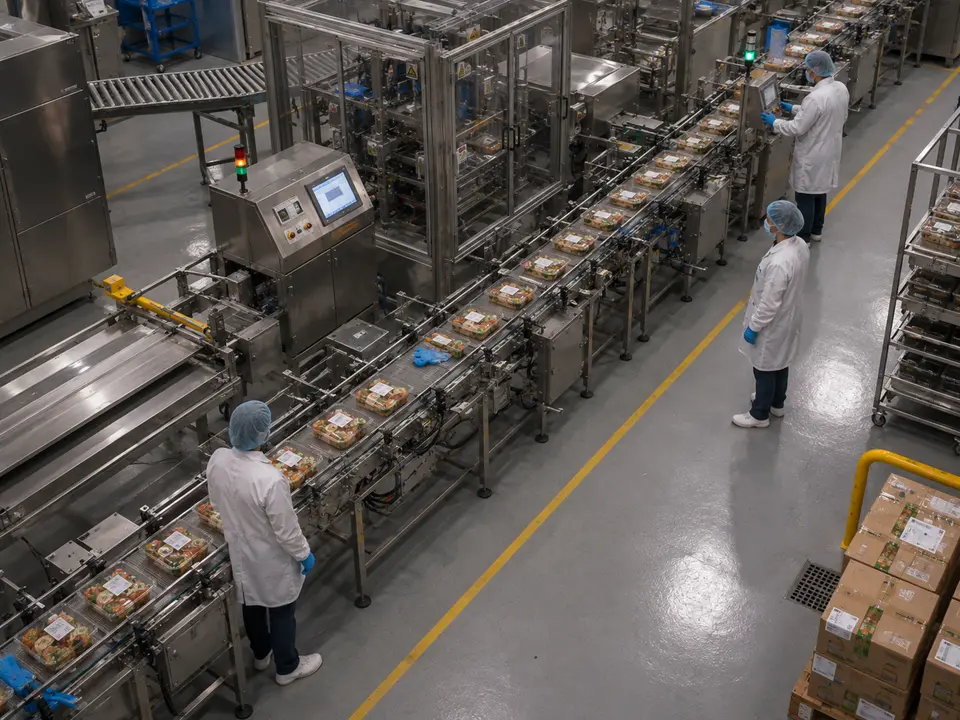
CAM-203A glove on the belt, among the trays
«Tell me if anything that is not product shows up on the belt: a glove, a piece of plastic or a tool.»
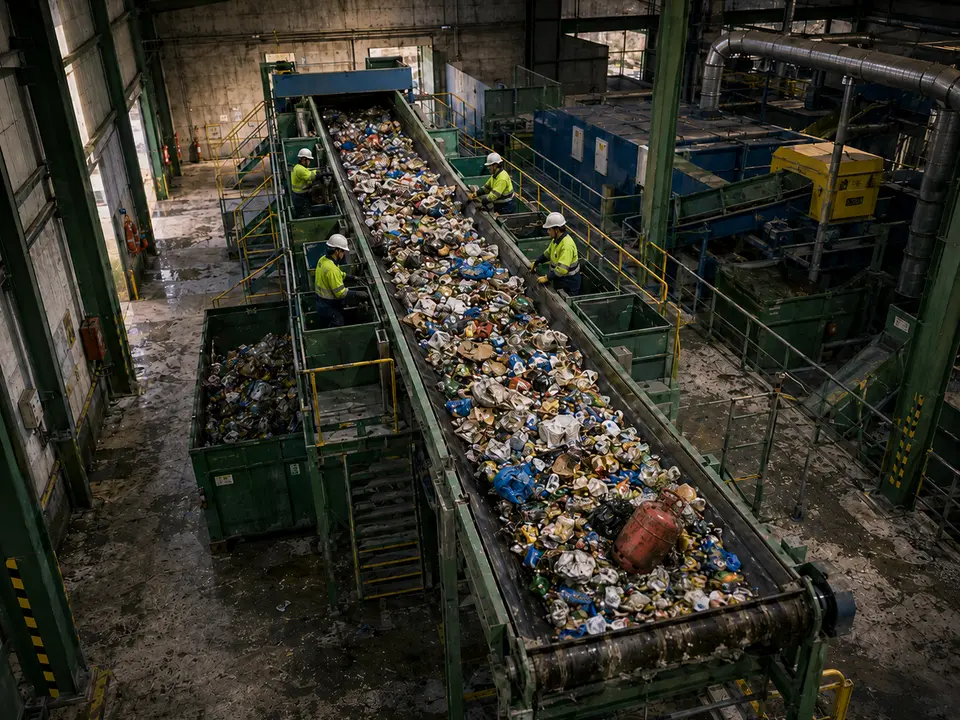
CAM-182Gas cylinder on the sorting belt
«Tell me if something comes down the belt that is not shaped like what we are sorting, such as a gas cylinder.»
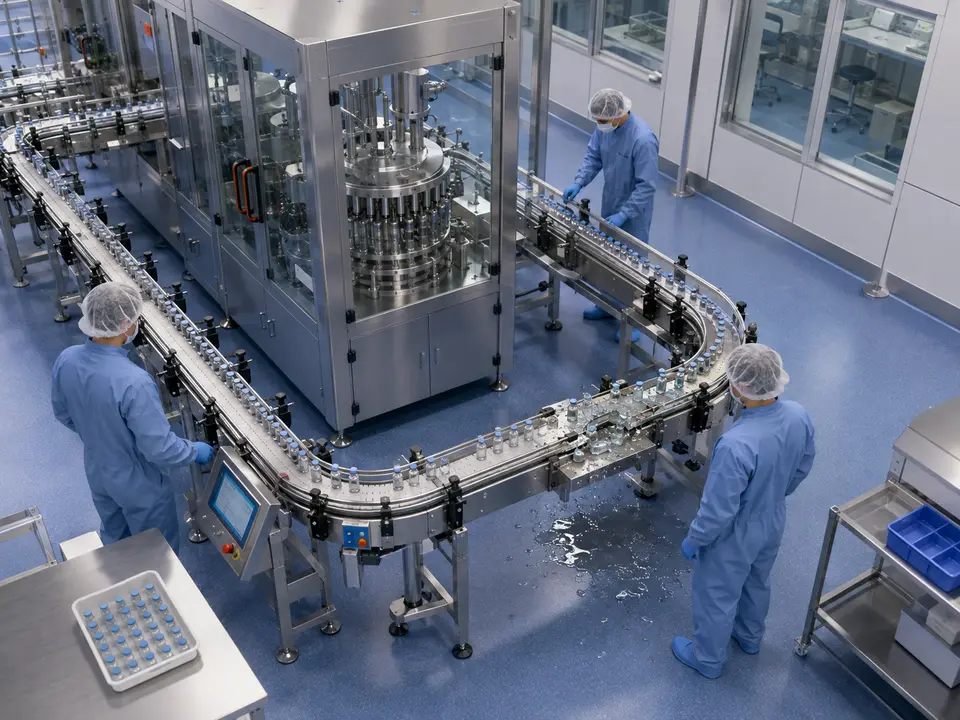
CAM-290Glass has broken on the curve and the line keeps running
«Alert me the moment a vial breaks on the filling line, even if the belt keeps running.»
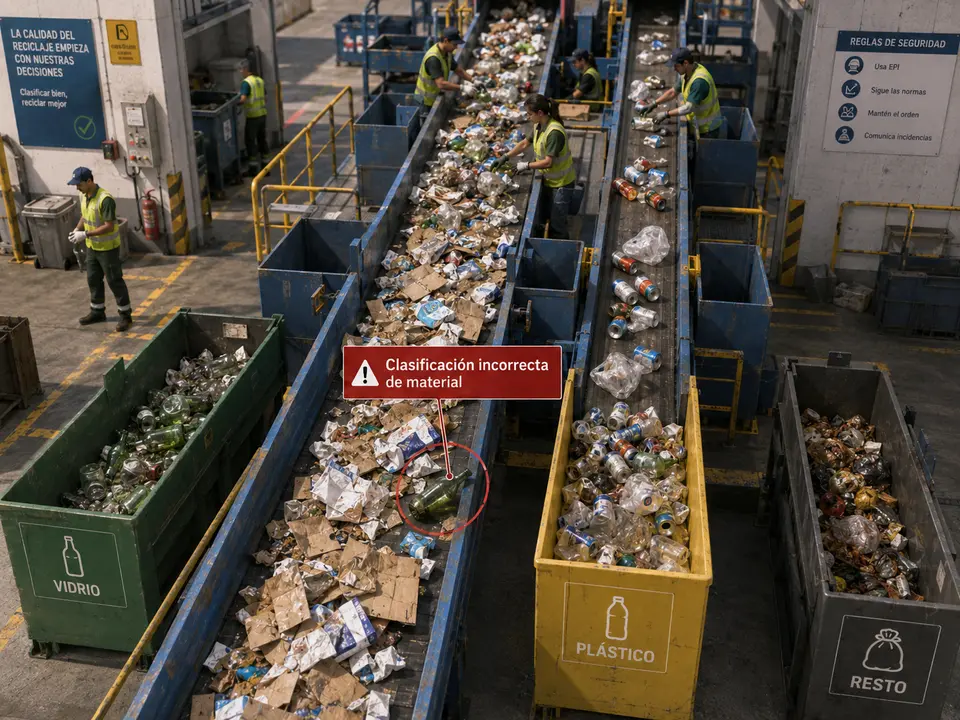
CAM-424A glass bottle is riding down the paper and card line
«Tell me if glass or metal goes past on the paper and card line, and keep the count for me by the hour.»

CAM-354Three rows of panels with the glass shattered
«Tell me if broken, dirty or displaced panels show up in any row of the field.»
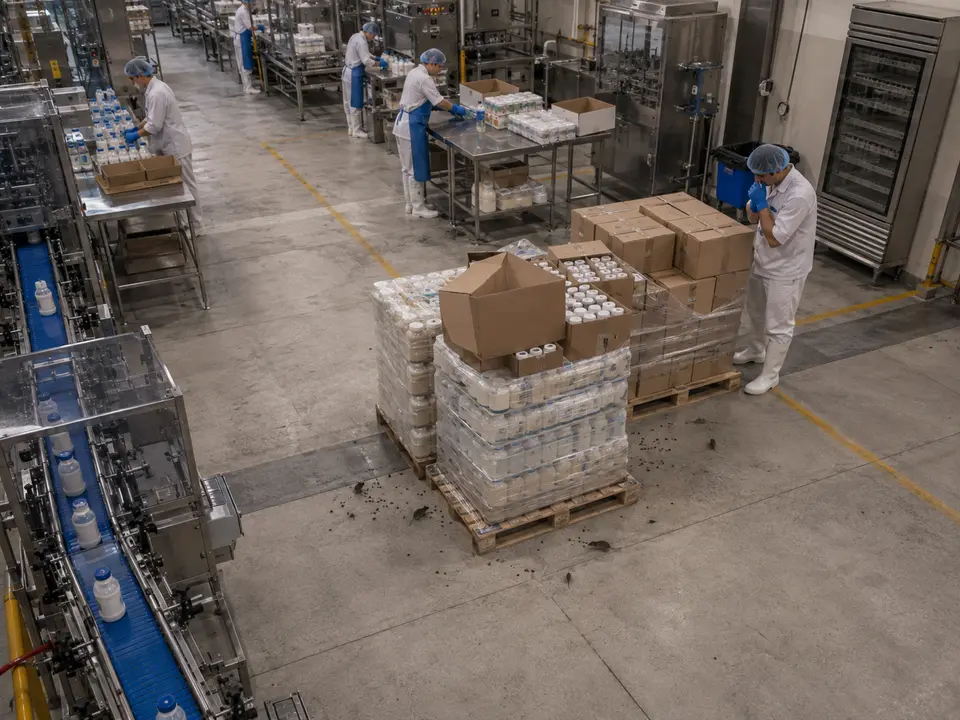
CAM-213A rodent among the pallets
«Tell me the moment a camera sees an animal in the warehouse or in dispatch, even if it only crosses for a second, and tell me where and when.»
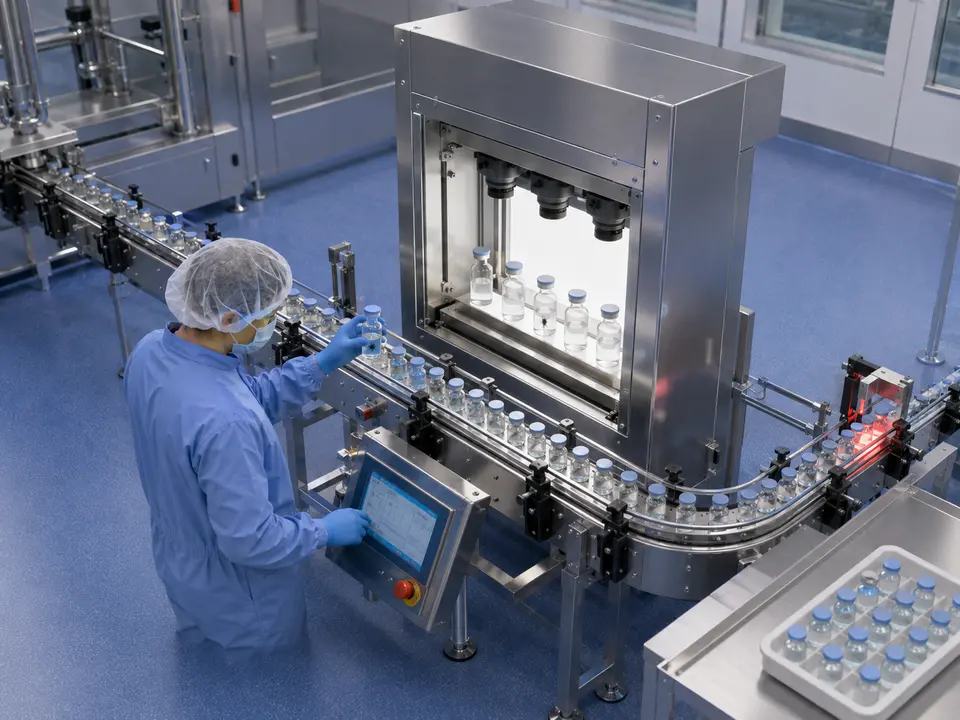
CAM-293A dark speck floating inside a filled vial
«Alert me if a vial goes through the inspection with something dark floating inside.»


What it does not do
IRIS does not see inside. A foreign object inside a sealed, opaque pack is not in the image: that is what metal detectors and X-ray are for, and it does not replace them.
What it sees is what is in plain view: on the belt or inside a transparent pack if the light allows. And some things cannot be told apart at that distance — a small splinter, a hair — and that is said up front, not afterwards.
Questions
- Does it replace the metal detector or the X-ray?
- No, and it does not try to. Those systems see inside the sealed pack, which is exactly where a camera cannot reach. IRIS covers the opposite: what is in plain view before the pack is sealed, on the belt, on the table or on the floor. A nitrile glove will not trip a metal detector, but it is perfectly visible on the band. The sensible thing is to have both, each where it is good, and not to ask either one to do the other’s job.
- How can it detect something that could be anything?
- By looking the other way round. It does not search a list of everything that could fall onto a belt, because that list does not exist: it searches the opposite. It learns what your product looks like going past — identical trays, identical vials, cardboard — and flags anything that does not fit. Whether it is a glove, a spanner or a glass bottle makes no difference: what triggers the alert is not recognising the object, it is that it does not look like what has been going past all morning.
- Does it also detect an animal in the warehouse?
- Yes, and it is one of the most appreciated alerts. A rodent crossing between pallets at night is in front of the camera for one second and nobody sees it, because at that hour nobody is watching. IRIS tells you it crossed, on which camera and at what time, and keeps the video. That changes a pest inspection: instead of arguing about whether there is activity, you show where and when, and the treatment goes to one specific spot instead of the whole warehouse.
- And the alerts that turn out to be nothing?
- There will be some, and here it is worth having them. On a food line, looking once too often costs ten seconds; looking once too rarely costs a recall. Even so, the number of alerts gets tuned: the watched area, the minimum size worth flagging and the stretch of line are adjusted until what arrives is worth the look. That tuning is done with your images and your product, not with a factory setting, and it can be revisited whenever the line changes.
Every simulation
Something has spilled
Tell me if there is liquid or foam outside its place and it is still there two minutes later.
- The sentence
- Where it applies
- What it finds
- The same rule
Not seeing yours here?
These words are the ones we have built, not the ones IRIS understands. The list falls short on purpose: you ask for it in a sentence, and sentences do not run out. Tell us what is in front of your cameras and we will tell you whether it understands it, or not yet.
And the best part
The door was left open at two.Finding out at nine is no use to anyone.
The video tells you at nine. IRIS says it at two, with the camera, the time and the images from that moment. The difference between the two is whether someone can go.
Tell us your problem and we will say whether IRIS understands it, or not yet.
We reply the same working day.