Solutions by typeLogistics efficiency
How many minutes does the berth go without moving a container?
Half an hour of berth with no crane move
It is 11:15 on the berth line. The ship is still moored and loaded, but the crane is not working: the spreader has been hanging empty and still over the deck for twenty-two minutes. Down on the quay, three trucks wait with nothing on their trailers. Nobody is moving in the working strip. Nowhere is there a written note of when this started, and a month from now somebody will ask exactly that.
1 cameras across 1 sectors
What IRIS is
IRIS watches the cameras for you.
IRIS Neural is an artificial intelligence that watches the cameras you already have and understands what happens in front of them. When something important happens —or something you told it you need to keep an eye on—, it alerts you; and whatever can be counted, it counts in numbers. All day long, without anyone having to watch a screen.
You tell it what you need to watch, and IRIS does it.
Works with the cameras you already have. Nothing to replace.
A person replies, not a form.
- Your footage never leaves your premises.
- It doesn't identify people.
- Certifications →
This is how you ask for it
«Show me the minutes the berth spends without a crane cycle, by hour and by shift, and alert me if they go past twenty in a row.»
A terminal’s performance is measured by the time a ship spends alongside, and that time gets argued over in every meeting with the shipping line. You know how many moves were made, but not when they stopped or what was happening on the quay during those minutes. So stoppages are justified from memory, the next calls are planned on the same old information, and the gap shows up again next month.
You decide once
This one is drawn as well. On the image you trace a line across the lane where trucks come and go, and two zones: the quay strip under the crane and the lane where they wait. You also decide after how many consecutive minutes without a cycle you want an alert on top, and who gets it: the terminal manager, planning, or both. After that the figure comes out the same every day, because it depends on the drawing and not on who is looking.
In a port, everyone looks at moves per hour. It is the number one terminal is compared with another by, and the number a call gets negotiated on. But moves per hour is an average, and an average hides exactly what matters: the gaps.
A ship does not stop working all at once. It stops for ten minutes because a truck has not turned up, starts again, stops for another twenty at a shift change, starts again. By the end of the shift the average looks reasonable and nobody remembers there was half an hour without a single cycle while three trucks waited below. That is in no report, because the person who was there had better things to do than note the time.
IRIS does not alert on this: it measures it. It counts the minutes the berth spends without a cycle, keeps the video of the minute it stopped and adds up how many trucks piled up meanwhile. At the end of the shift there is a table: the gaps, their time and their length. With that the terminal manager walks into the meeting with the shipping line without having to remember anything, and decisions about shifts, trucks and planning stop being made by eye.
What changes
Before, a half-hour gap was recounted afterwards, and by the person who had lived through it: badly remembered, well justified, and never written down with a time. Now it is in a table, with the minute it started, how long it lasted and the video of the quay at that moment. The terminal manager is not arguing with anyone’s memory: he shows where the gaps were and what could be seen in them, and from there the conversation is about fixing them.
Where we have seen it
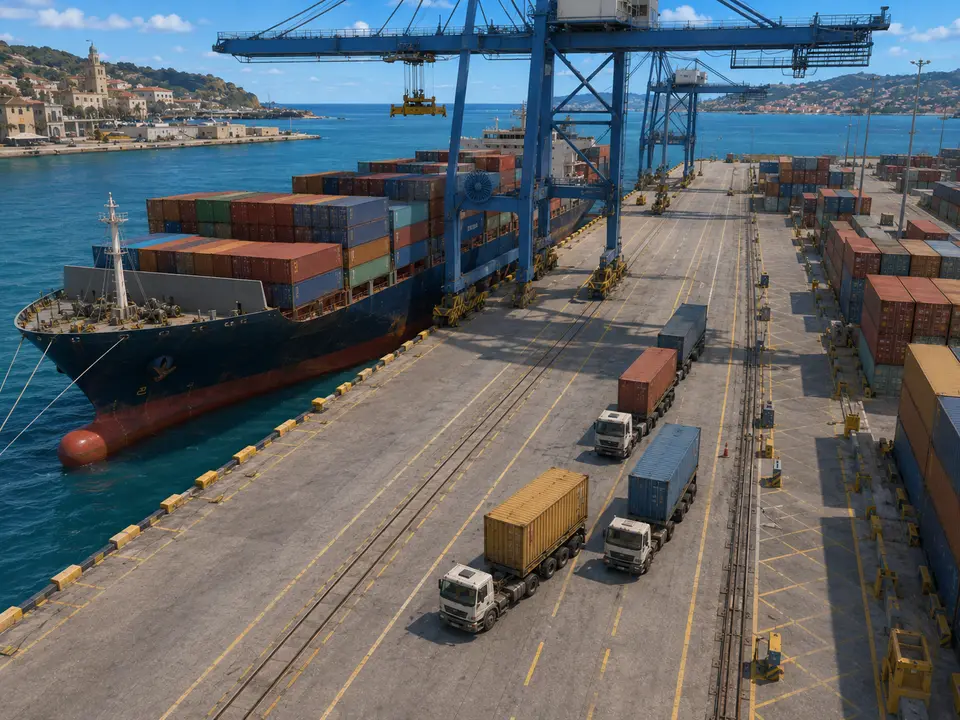
CAM-449Half an hour of quay with not one crane move
«Show me the minutes the quay spends with no crane move, by hour and by shift, and tell me if they go past twenty in a row.»

What it does not do
IRIS does not know why the crane stopped. It does not replace the terminal system either — the recorded move lives there and should stay there. And it judges nobody: it does not identify the crane operator or compare shifts between individuals. What it adds is the exact minute things stopped, which is precisely what nobody writes down.
Questions
- Does the camera know why the crane stopped?
- No. IRIS measures what can be seen: how many minutes the berth has gone without a cycle and how many trucks are waiting meanwhile. The cause — no truck, a shift change, paperwork that has not arrived, a breakdown — comes from whoever watches the video or from the terminal system. What the camera adds is the exact minute things stopped, which is precisely what nobody notes down and what nobody afterwards remembers accurately.
- Does this number replace the terminal system?
- No. The recorded move comes from the terminal system and should keep coming from there. IRIS works alongside it: it supplies the picture of what was happening on the quay, and the time. When the system says there was no movement for half an hour, the camera shows whether the quay was empty, whether trucks were waiting, or whether the spreader was hanging still. Two different pieces of data that support each other, and together explain what neither explains alone.
- Why is counting drawn instead of asked for in words?
- Because asking is for finding and counting is for measuring, and they are not done the same way. A line cannot be described in a sentence: it has to be drawn on the image, because the number depends on exactly where it runs and in which direction. That is why a drawn figure is repeatable and auditable, and why people counting could be certified with the Spanish Metrology Centre. Here we are not counting people, we are counting minutes and cycles, but the method is the same.
- Is this any use for the meeting with the shipping line?
- Yes, and it is what it gets used for most. You take a table of the shift’s gaps: what time each one started, how long it lasted and how many trucks were waiting meanwhile, with the video behind it if anyone wants to look. Nobody has to remember anything or defend a version. And since the criteria are the same every day, you can compare one week with another and see whether a change in the way things are organised actually did anything.
Every simulation
Something has spilled
Tell me if there is liquid or foam outside its place and it is still there two minutes later.
- The sentence
- Where it applies
- What it finds
- The same rule
Not seeing yours here?
These words are the ones we have built, not the ones IRIS understands. The list falls short on purpose: you ask for it in a sentence, and sentences do not run out. Tell us what is in front of your cameras and we will tell you whether it understands it, or not yet.
And the best part
Nobody was hired to stare at a screen.They were hired to know what to do.
Watching is what a machine does best; deciding is what only a person does. IRIS watches all four thousand at once and hands over only what calls for a decision.
Tell us your problem and we will say whether IRIS understands it, or not yet.
We reply the same working day.