Solutions by typeProduction efficiency
How long has the cold room door been open?
The cold room door, wide open
Six in the morning on the chilled dock. The cold room door is wide open and the mist is spilling onto the bay. An operator stands waiting in the doorway, arms open, for the pallet truck to arrive. Outside, on the dock floor, three pallets of fish boxes came off the truck eleven minutes ago. Nobody has looked at a clock once.
5 cameras across 4 sectors
What IRIS is
IRIS watches the cameras for you.
IRIS Neural is an artificial intelligence that watches the cameras you already have and understands what happens in front of them. When something important happens —or something you told it you need to keep an eye on—, it alerts you; and whatever can be counted, it counts in numbers. All day long, without anyone having to watch a screen.
You tell it what you need to watch, and IRIS does it.
Works with the cameras you already have. Nothing to replace.
A person replies, not a form.
- Your footage never leaves your premises.
- It doesn't identify people.
- Certifications →
This is how you ask for it
«Tell me how long the cold room door has been open and how long the pallets have been outside, and alert me past five minutes.»
That consignment’s temperature record does not count those eleven minutes, because the probe is inside the room and the fish is outside. If the goods arrive in poor condition, the argument is not settled by the logger chart: the chart only tells what happened inside. What broke the chain happened on the dock, between six and six eleven, and there is not one line written about it anywhere.
You decide once
You decide this once, and quality decides it with logistics. You say how many minutes each door may stay open, how long a pallet may stay out of the room, in which time bands it applies and who is told: if the chilled dock door goes past three minutes open, alert the dock supervisor; if a pallet has been out for more than ten, alert again and log it. IRIS applies it on every door, and keeps the clock on every opening.
The cold chain almost never breaks all at once. It breaks in five-minute pieces, and none of those pieces show in the record. A refrigerated container with both doors open and the power cable lying on the ground, out of its socket. A pharmaceutical cold room door open for six minutes while somebody takes out trays of vials. None of those moments is an incident. All of them together are the product’s shelf life.
The underlying problem is that temperature is measured where the probe is, and the product is almost always somewhere else. The room’s chart says it was four degrees inside all night, and that is true. It does not say the door was open for eleven minutes at six in the morning with three pallets out on the dock, because there is no probe for that: there is a camera that was watching the whole thing and that nobody asked.
IRIS does not measure temperature, and that is worth saying up front. It measures time and place: how many minutes that door has been open, how long that container has been unplugged. And in the machine room, where the cold is made, it does something different and more serious: if a white cloud comes out of the side of the skid, if somebody is on the floor, or if someone is left inside during an evacuation, that is not a quality alert. That is an urgent call.
What changes
Before, the door was closed when somebody walked past and remembered, and how long it had been open was anybody’s guess. Now, at three minutes an alert reaches the dock supervisor with the camera, and at ten another one arrives for the pallets still outside. And at month end there is a list of openings by door and by shift, which is exactly the conversation that until now could not be had with numbers.
Where we have seen it
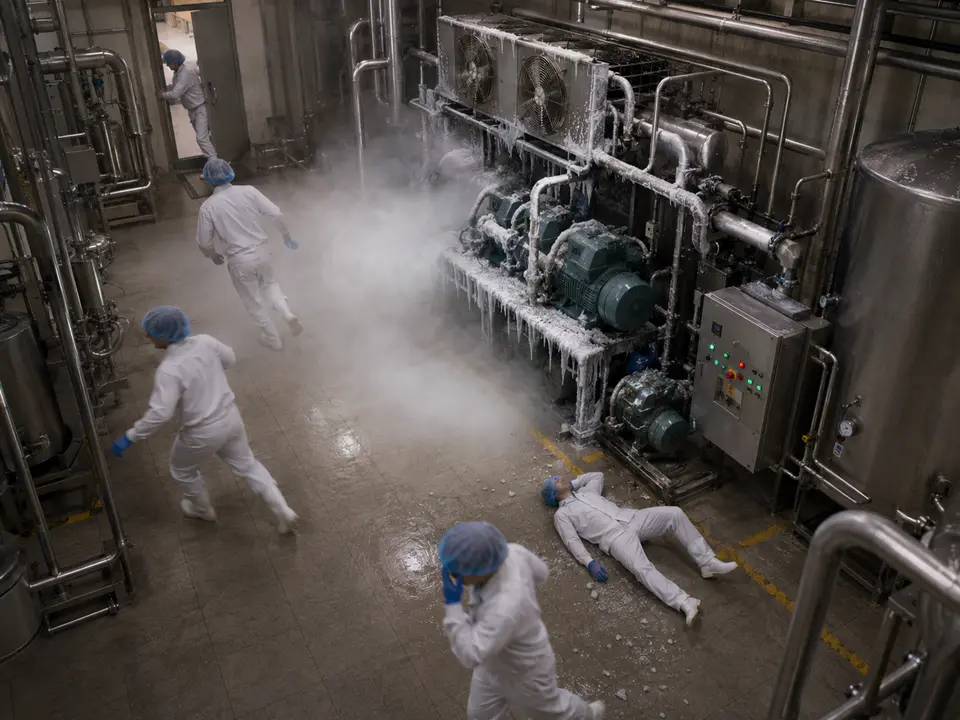
CAM-219Cloud in the chiller plant room and a person on the floor
«Tell me if a cloud comes out in the plant room, if somebody is on the floor, or if anybody is left inside during an evacuation.»
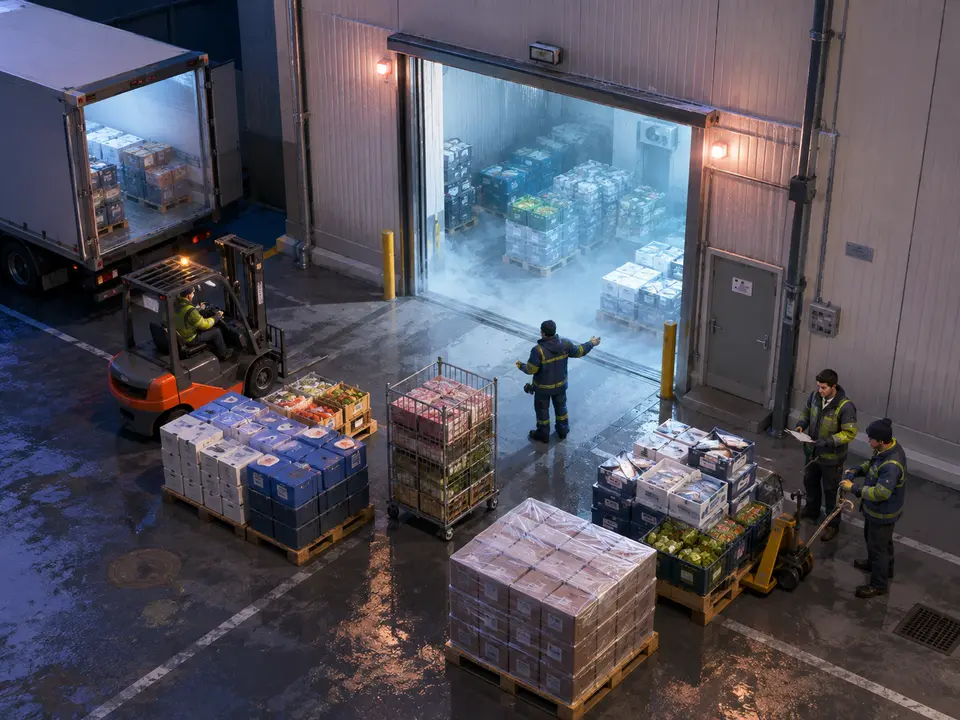
CAM-277The cold store standing open and the fish waiting outside
«Tell me how long the cold store door has been open and how long the pallets have been outside, and alert me if it goes past five minutes.»
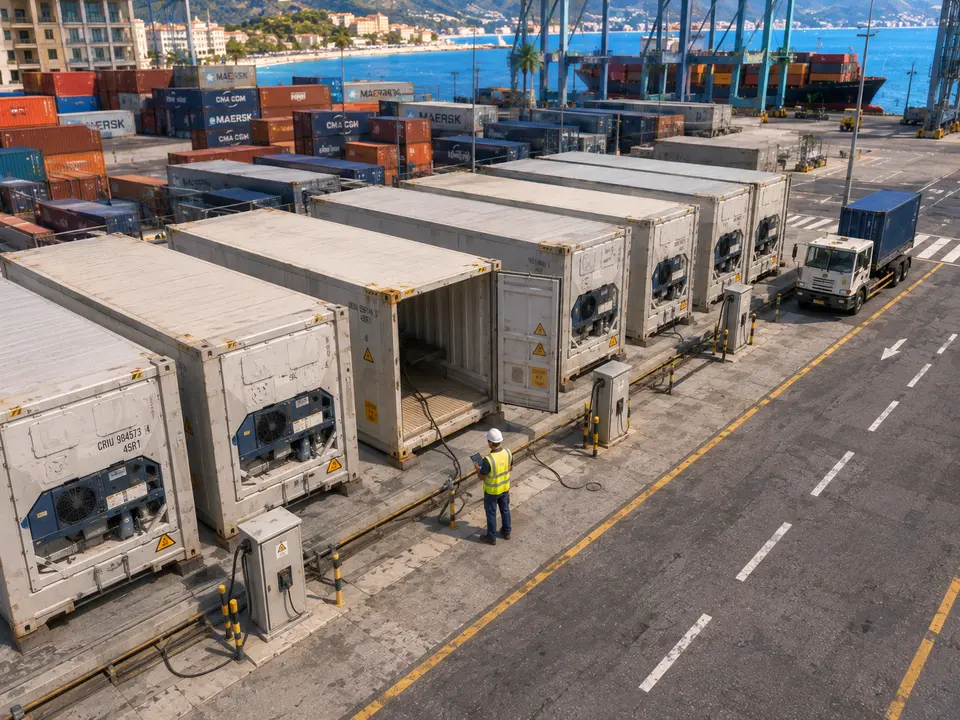
CAM-452A reefer with its doors open and the cable on the ground
«Tell me when a reefer has been more than five minutes with a door open or with its cable out of the socket.»
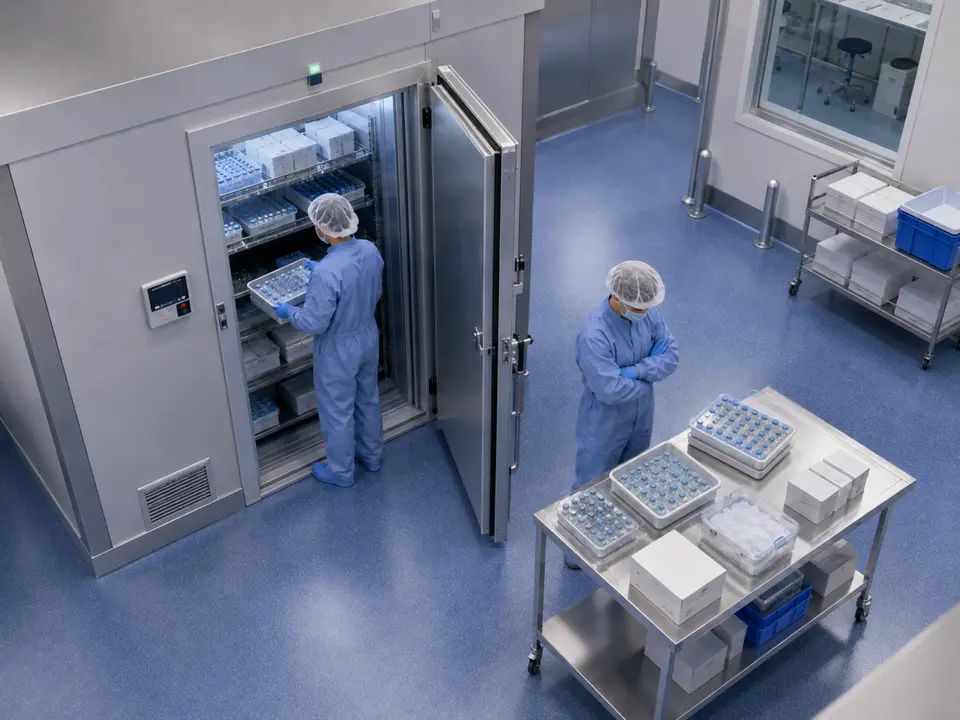
CAM-296The cold room door has been open for six minutes
«Tell me if the cold room door has been open for more than three minutes, or if trays have been out for more than ten.»
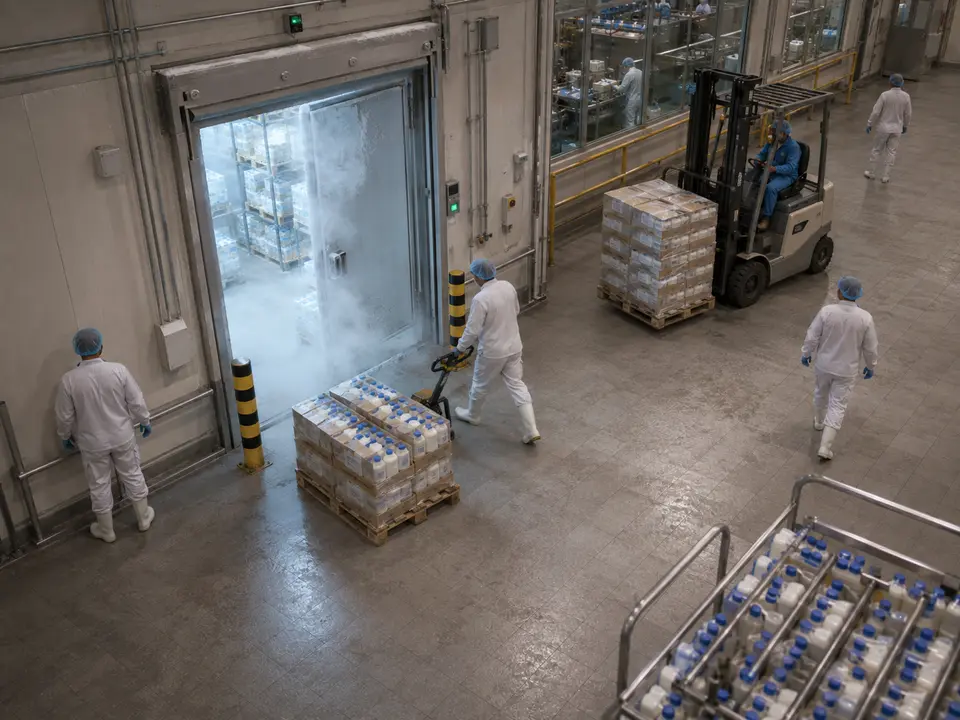
CAM-214The cold-store door has been open too long
«Tell me when the cold-store door has been open for more than three minutes, and tell me too if a pallet has been out of the cold too long.»


What it does not do
IRIS does not measure temperature. It does not know how many degrees that fish gained on the dock or whether the product has spoiled: your probes say that.
And it does not see inside equipment. It knows whether a container door is open and whether the cable is out of its socket, but not whether the refrigeration unit is working properly. What it contributes is time and place, which is exactly the figure nobody has today.
Questions
- Does IRIS measure the cold room temperature?
- No, and it does not try to. You already have probes for that, and they are better than any camera. What IRIS contributes is what the probe cannot see: how many minutes the door was open, how long that pallet was outside the room, and how long that container had been standing without its cable. They are two different kinds of data and they complement each other: the probe tells what happened inside, IRIS tells what happened outside.
- Is it any use for a claim against a carrier?
- It is useful for knowing what happened and when, which is what is missing today. It is on record that at 06:00 that door opened, that at 06:11 it was still open and that three pallets were out on the dock, with the image and the camera. Whether that information helps in a particular claim is for your contract and your lawyers to say, not us. What does change is that the conversation stops being your word against theirs.
- Does it know whether a reefer container is plugged in?
- Yes, it sees whether the cable is in the socket or lying on the ground, and that alone catches the slip that leaves a container without cooling all night. It also sees whether the doors are open and how long they have been. What it does not see is whether the refrigeration unit is working properly inside: a container can be plugged in and faulty, and that is for its own system to report, not a camera. IRIS covers what is visible from outside, which is where almost all the slips happen.
- And a leak in the refrigeration machine room?
- Yes, and there the rule is different and more urgent. If a dense white cloud comes out of the side of the skid, if a person is on the floor, or if somebody is left inside during an evacuation, the alert does not go to quality: it goes to emergency response, with the camera open. That said, IRIS does not replace the room’s gas detectors, which are what measure concentration and raise the alarm. It sees what is visible — the cloud, the person, the room that does not quite empty — and it says so fast.
See it for yourself
No extra alarms here. Just what needs looking at.
Not a recorded video, not an explanatory drawing: a summary of the real screen, with a different case every time it starts. There is a lot more behind it.
- You draw the line
- It counts by itself
- A number comes out
Not seeing yours here?
These words are the ones we have built, not the ones IRIS understands. The list falls short on purpose: you ask for it in a sentence, and sentences do not run out. Tell us what is in front of your cameras and we will tell you whether it understands it, or not yet.
And the best part
There are nights of thick fogwhen the image gives you nothing. We do not dress that up.
Backlight, heavy rain, a street lamp that has blown. IRIS works with what the camera puts in front of it; when there is no image, it says so instead of inventing an answer.
Tell us your problem and we will say whether IRIS understands it, or not yet.
We reply the same working day.