Who is watching the cameras of a whole branch network?
Many branches, few eyes. You set the rule once and it holds for all of them.
We show thirteen cameras here, in a branch and on its street: eleven that raise an alert when something happens, one that alerts nobody — it just counts — and one that shows how you find the exact moment afterward. And one thing worth saying early: IRIS identifies nobody, it does not recognize faces and it accuses no one. It sees facts — two bodies and a single door opening, someone who stays, a bag that doesn’t move — and hands them over with the camera and the minute. The one who concludes is a person.

Without IRIS this is a lot of branches recording and nobody watching them.
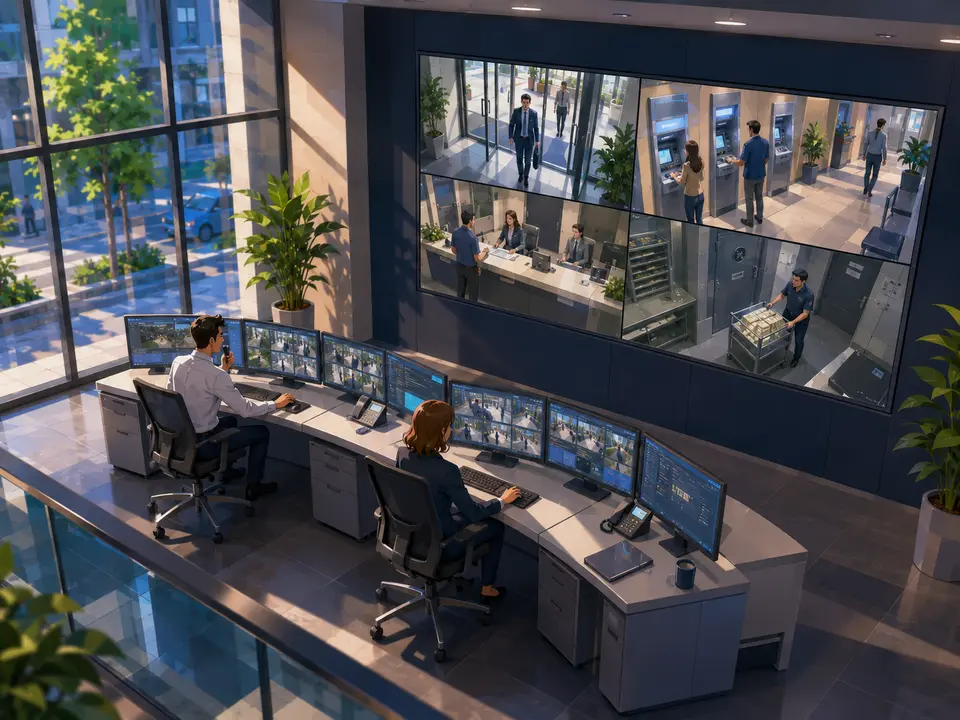
AI-generated image
What IRIS is
IRIS keeps an eye on the branch for you.
IRIS is an artificial intelligence that watches the cameras you already have at the branch and understands what's happening at the lines, ATMs, and teller windows. When a line gets long, a window is left unattended, or something you've asked it to watch happens, it alerts you — and whatever can be counted, like people waiting, it counts in numbers. All day long, with no one needing to stare at a screen.
You tell it what you need to watch, and IRIS does it.
Works with the cameras you already have. Nothing to replace.
A person replies, not a form.
- Your footage never leaves your premises.
- It doesn't identify people.
- Certifications →
What’s at stake in a branch network
A branch network is a lot of cameras and very few people to watch them, and those few already have their own work in front of them. The ATM lobby stays open all night with nobody inside. The machine is opened for servicing and the street keeps walking past. Cash crosses twenty-five feet of sidewalk. An operation that takes two people sometimes ends up being done by one, and that only shows at the cash count. And when a complaint arrives about something that happened at eight o’clock on a Tuesday, somebody spends the afternoon going through hours of video from four cameras.
IRIS watches for you. It analyzes every camera the branch already has, all at once, and only interrupts when a rule your own team set is met: two people through a door on a single authorization, a restricted door left standing open, an operation that takes two people with one person in the room, someone who has spent half an hour in the ATM lobby, a machine standing open while people come closer, a cash box leaving the secure area, a person on the floor, a bag left on its own. The alert arrives with the camera, the time and the video, while it’s happening. And it identifies nobody: it sees two bodies and one door opening, it does not say who anyone is or what they came for. The one who concludes is a person.
And where there’s nothing to alert about, IRIS measures. How long the line is at eleven and how long at six is what tells you how many desks you need at each hour, and until now that got counted by hand or not at all. Measuring isn’t set up by talking: it’s set up by drawing a line or a zone on the image, because a line can’t be described in a sentence, it has to be drawn. That’s why a Tuesday’s number and a Friday’s are measured the same way and can be audited. And here’s something that doesn’t happen in other sectors: branches look like one another. The rule is set once and it applies to the whole network.
The real scale
Thirteen cameras here. A whole network of branches that look alike.
This demo shows thirteen cameras because thirteen fit on a screen. A branch network doesn’t. Here the axis isn’t the miles of a road or the passengers of a station: it’s the branches. Lobby, counter, restricted door, counting room, secure area, the machines facing the street and the sidewalk in front. And every branch looks like the next one: the same lobby, the same door, the same machine. That’s why a rule is worth more here than in any other sector. It’s set once, tried in one branch and applied to the rest without starting over. The day a new branch opens, it already knows how to watch.
Examples
These thirteen are just examples.
Eleven raise an alert when something happens, one alerts nobody — it only counts — and one shows how you find the exact moment afterward. There’s the door and the counting room, the cash and the secure area, the ATM lobby at night and the people coming in from the street. None of them says that anyone is going to do anything: they say what is happening, where and at what time. The one who concludes is a person. These aren’t the thirteen things IRIS can do in a branch; they’re the ones that fit on a screen. Open any of them and you’ll see the image as it is, and then with what IRIS understands on top.
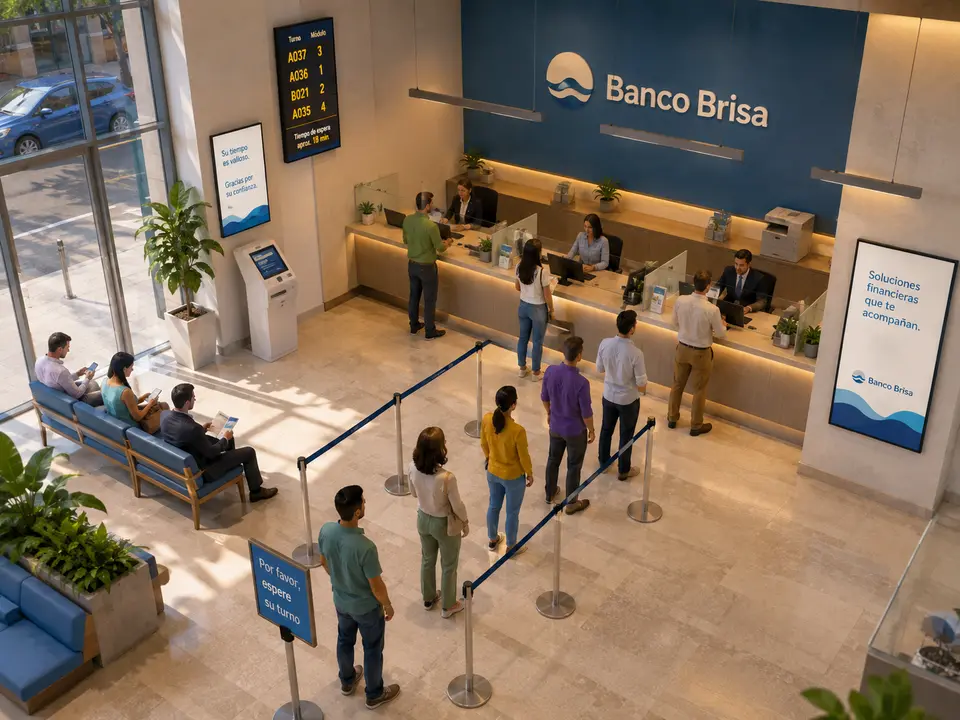
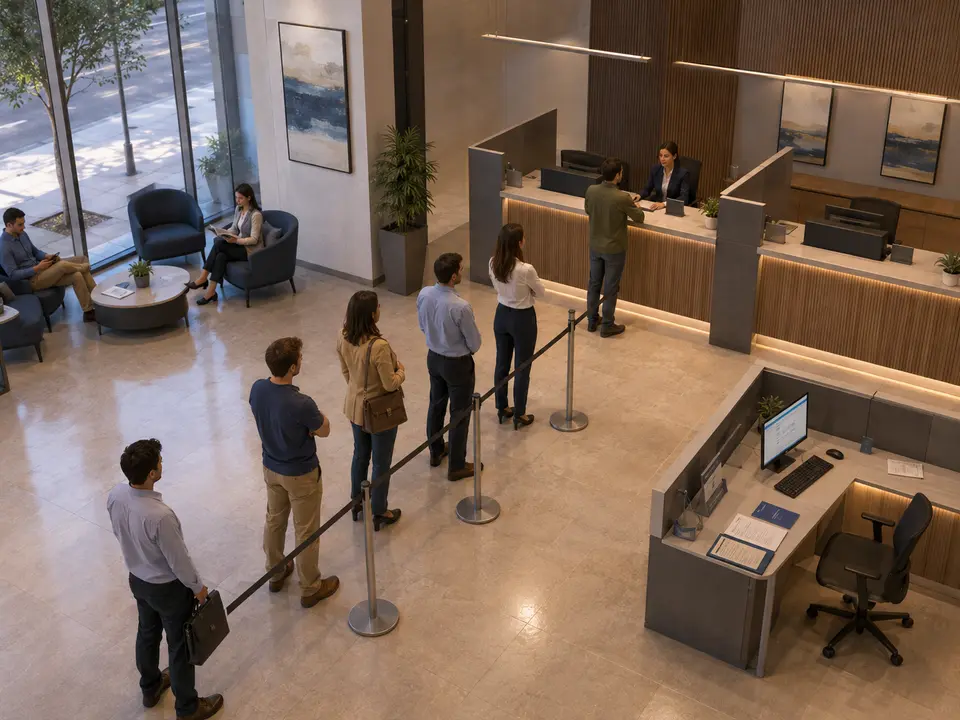
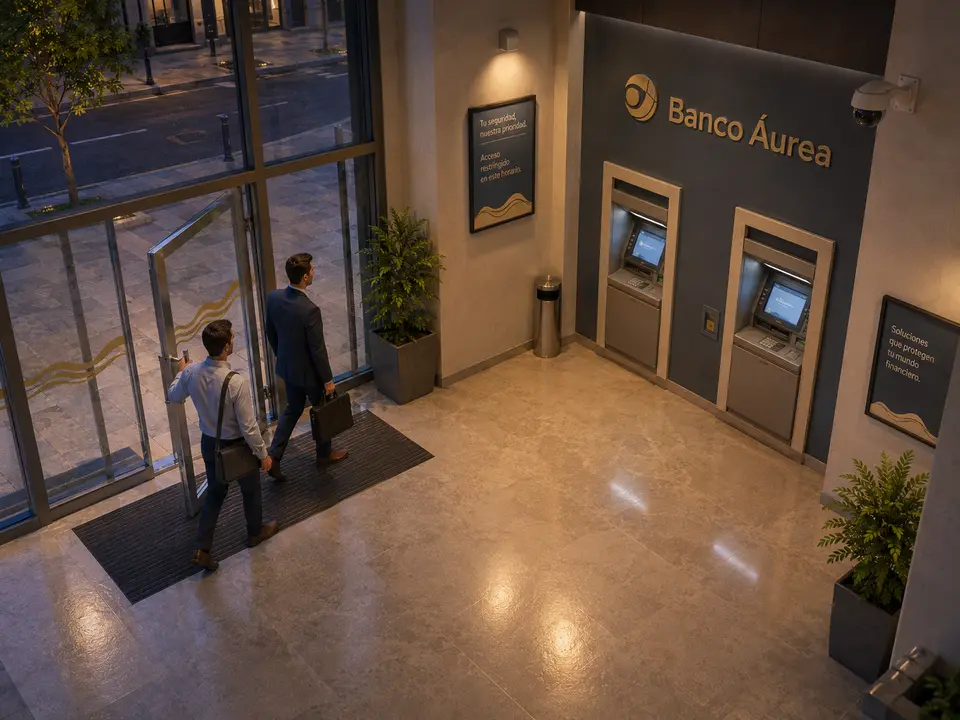
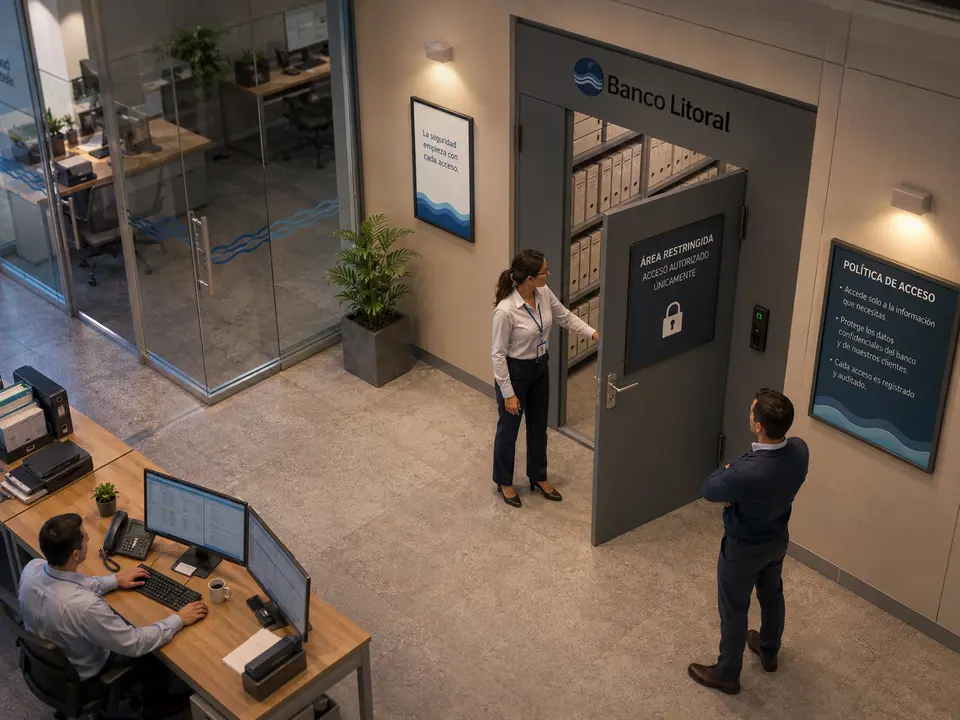
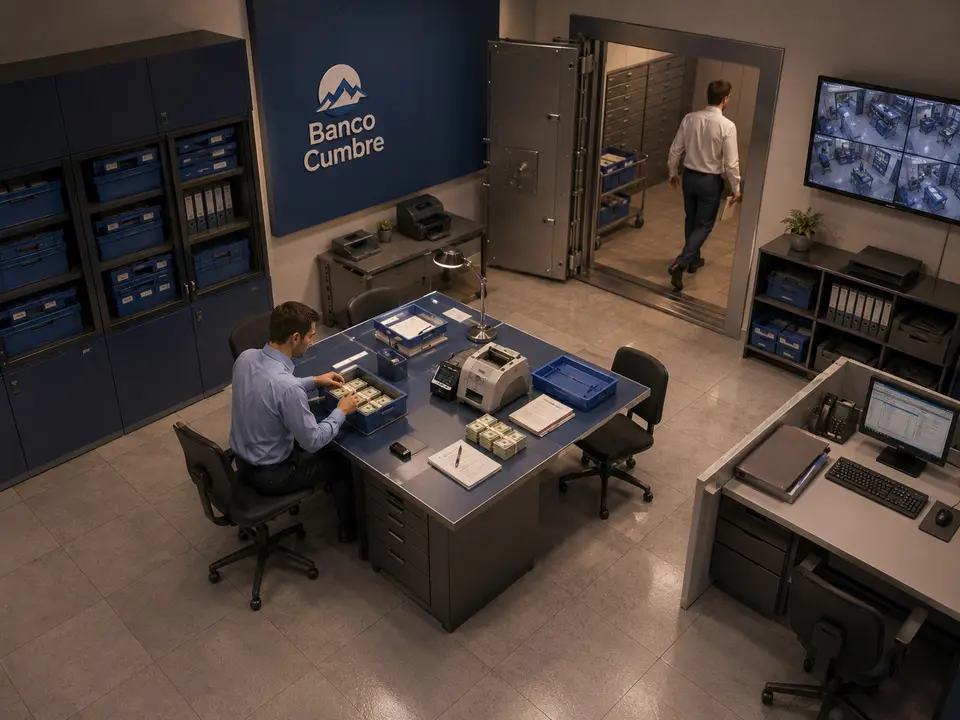
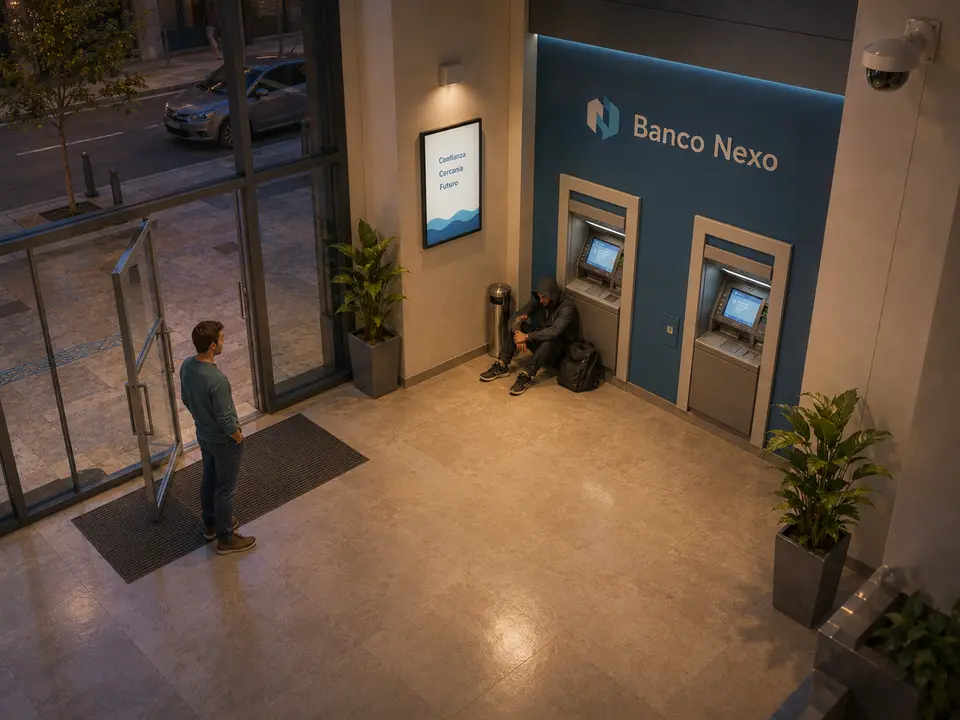
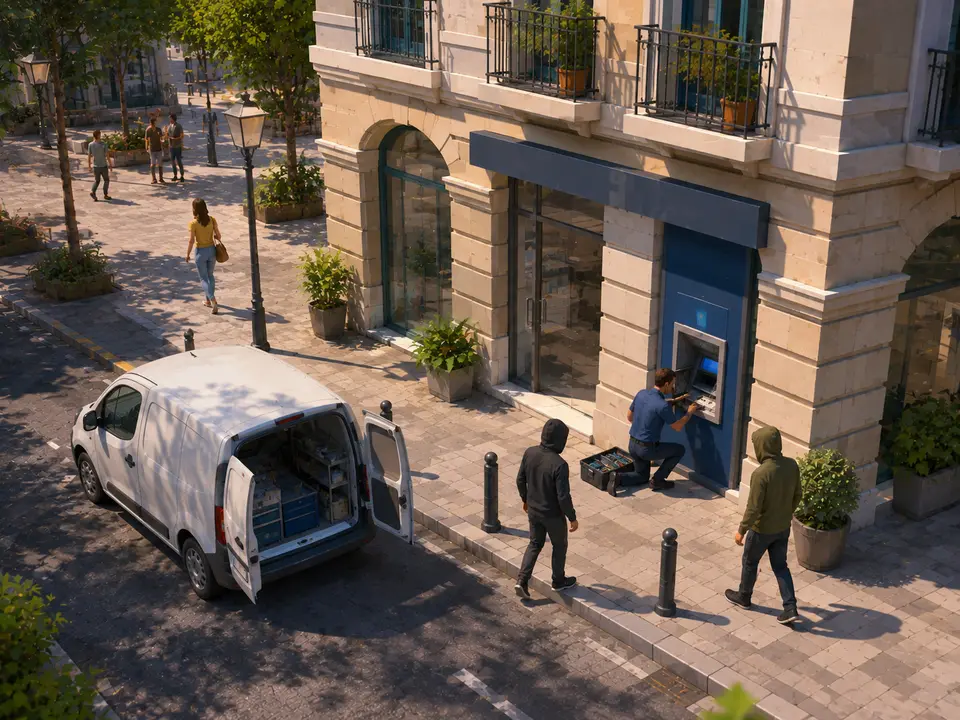
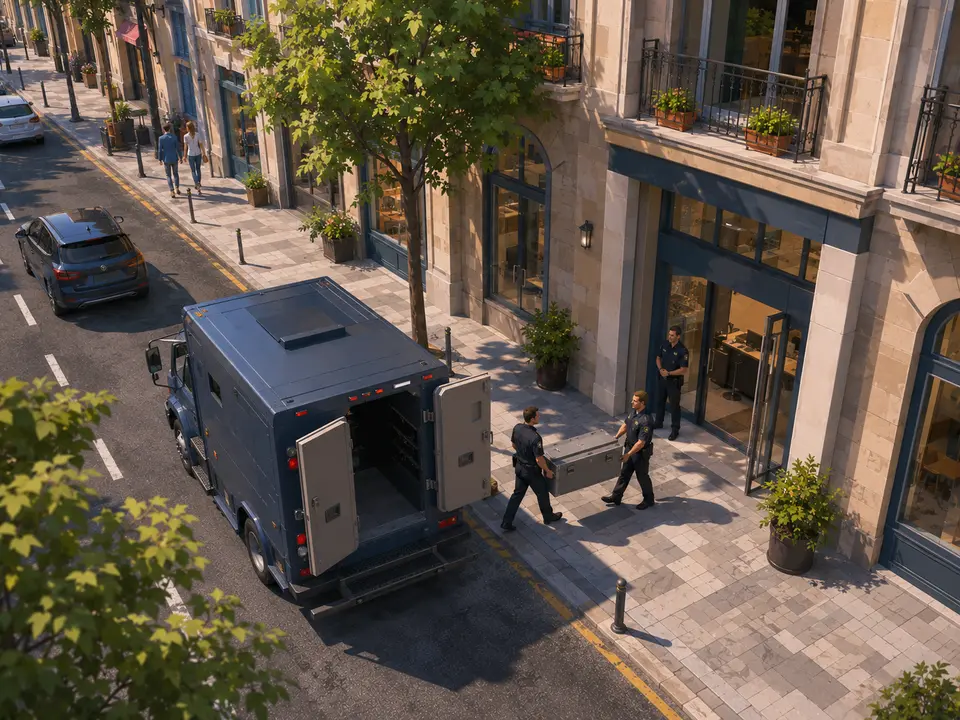
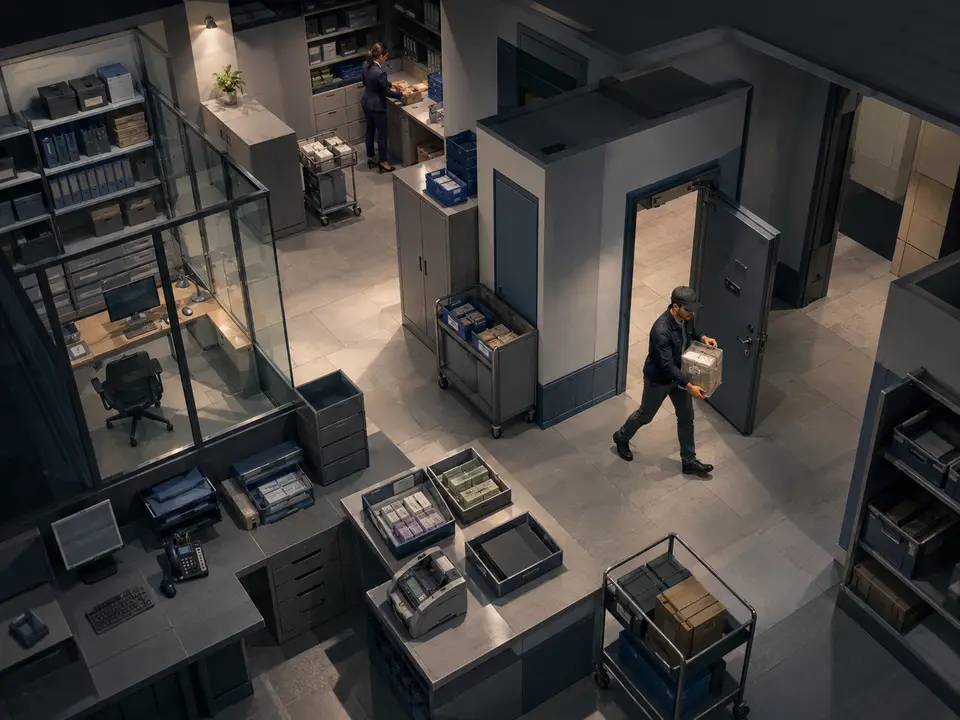
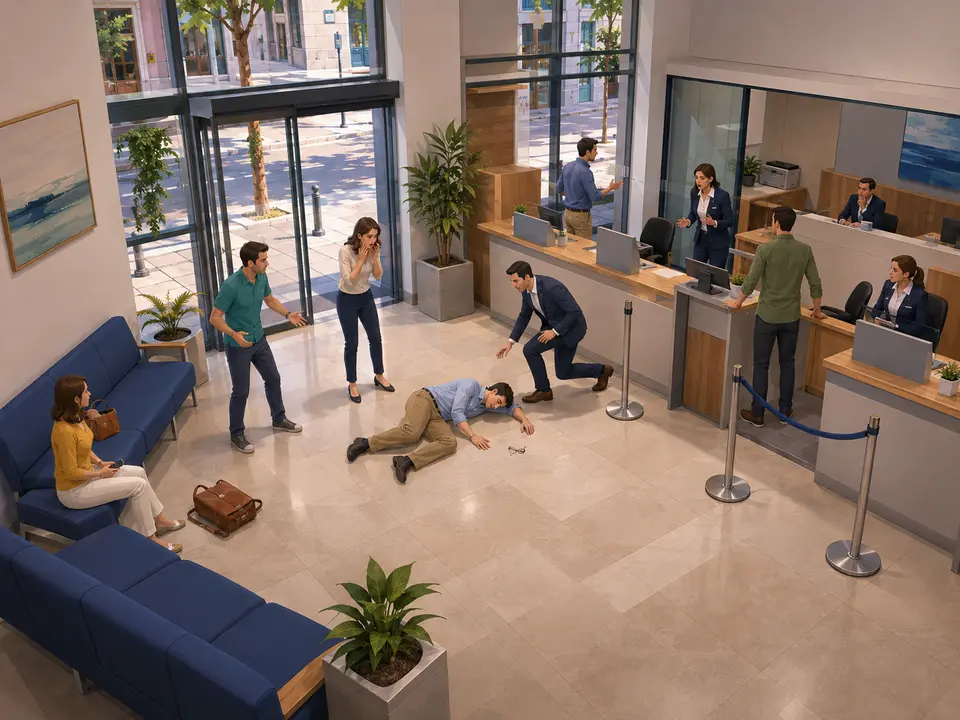
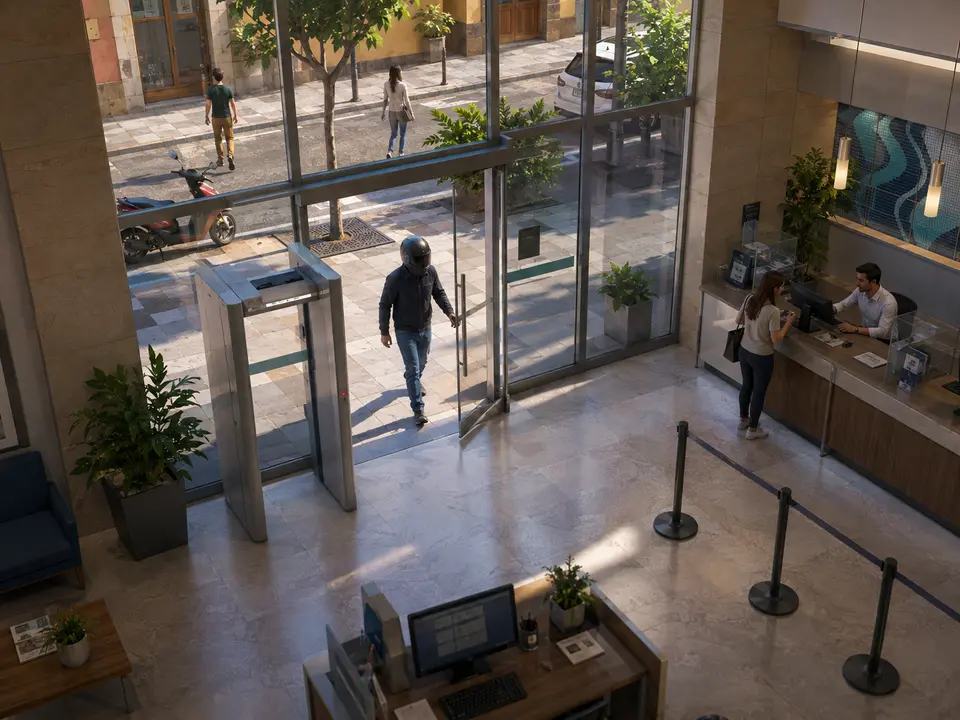
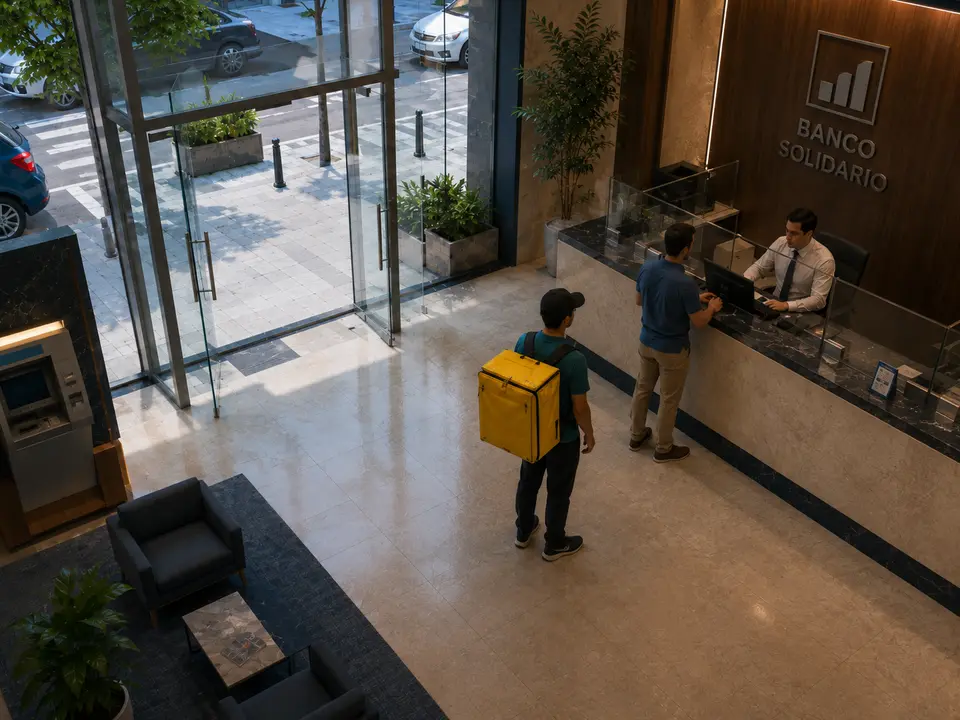
Simulation · how IRIS works
No extra alarms here. Just what needs looking at.
Not a recorded video, not an explanatory drawing: a summary of the real screen, with a different case every time it starts. There’s a lot more behind it.
- Four cameras at once
- Each understands its own view
- The numbers climb by themselves
Now think about your own branches
Imagine knowing all of it while the branch is still open.
The two who went through the restricted door on a single authorization at ten past nine on Tuesday. The door left standing open for twenty minutes with somebody waiting outside. The counting room with one person in an operation that takes two. The one who had spent half an hour in the ATM lobby at three in the morning. The machine that stood open for fourteen minutes while two people came closer. The cash box that left the secure area at ten at night, and is now on record with its time. The customer who fell by the entrance and took four minutes to get up. And the eleven o’clock line, twice as long as the six o’clock one.
All of that is happening in front of cameras the branches already have up. And right now nobody knows: there are three people working in the branch and not one of them can stand watching a screen. IRIS watches them all at once and says so while it’s happening. And when the complaint arrives two weeks from now, the moment is no longer hunted for over hours: you describe it in one sentence and it comes up.
What the security committee asks
The ten questions that come up before the pilot is approved.
Answered in the first line, straight, with no promise that a system can guess what someone is about to do. IRIS sees facts and raises the alert; drawing the conclusion is a person’s job.
Does IRIS identify our customers or recognize faces?
No, IRIS does not identify your customers and does not recognize faces. It compares no face against any list or any database, it builds no profile of anyone, and it is not cross-referenced with your customer systems. What it sees are facts: two bodies through a door on a single release, someone who stays put in the ATM lobby, a package that doesn’t move. Each fact arrives with its camera and its minute. The person who looks at that and decides what it means works for you, always.
Does this detect a robbery before it happens?
No, this doesn’t detect a robbery before it happens, and we’d rather say so before it comes up in a meeting. IRIS doesn’t guess anyone’s intent and doesn’t predict what a person is about to do; anyone promising you that is selling smoke. What it does see are checkable facts, while they’re happening: someone coming in with a helmet on and the visor down, a large package that comes in and stays put, a strongroom door that’s been open for twenty minutes. That arrives with the camera and the minute, and a person decides.
Does it work with the cameras the branches already have?
Yes, IRIS works with the cameras the branches already have. It connects to the feed of the installed IP cameras and analyzes it as it comes: what changes isn’t the kit, it’s what gets understood from the picture. And we’ll say it plainly: mid-afternoon glare through the store window and an ATM lobby in the dark ruin any image, ours included. So we check camera by camera whether the framing is good enough for what you want to see there, and tell you which ones fall short and which would only need moving a few degrees.
Does the video leave the branch or stay inside?
The video leaves the branch or stays inside depending on the mode you choose, and there are two modes. In the local one it doesn’t leave: the servers sit on your premises — in the branch or in your own data center — the video comes in over your network, it’s analyzed right there, and the system needs no internet to work. In the other it is processed in our data center, which is our own cloud and not a third party’s, encrypted and on the terms set out in the contract. Across a branch network it is worth deciding early, because it shapes each site’s network.
And data protection, in a branch full of customers?
Data protection is handled by configuring the processing piece by piece: what’s kept, for how long, who can access it and from where. And on top of all that sits what matters most in a branch: IRIS identifies nobody, so there are no identities to protect and no customer profiles to build. Compliance, mind you, doesn’t depend on the software alone: it also depends on how you deploy it and what you decide to process, and that’s signed off by your organization, not by us. What we can put on the table is that our way of working is certified for information security and for privacy by an external auditing body. That paper isn’t signed by a salesperson: it’s signed by an auditor, and you can ask us for it before you sign anything.
Does it replace the monitored alarm, the guards or the access control?
No, IRIS doesn’t replace the monitored alarm, the guards or the access control: it lives alongside all three and changes what they look at. The alarm keeps doing its job and access control keeps deciding who opens a door. What you’re missing today is the layer that understands the picture: that the door released once and two people went through, that it’s been open for twenty minutes, that the cash room has one person on an operation that calls for two. No card reader sees that, because a reader counts releases, not bodies.
A complaint comes in about something two weeks ago. Does this help find the moment?
Yes, this helps find the moment behind a complaint from two weeks ago, and that’s one of the things that gives the most time back. Today someone sits down and works through hours of recording looking for four minutes. With IRIS you describe in one sentence what you’re after — a person on the floor by the entrance, a package that stays put in the lobby — and the sequence comes up, with its camera and its minute. And the other half is worth saying: that same sequence works just as well to back the person who served as to contradict them. That’s exactly what makes it worth anything as evidence.
How many alerts will arrive, and to whom?
You will get the alerts your rule asks for, and tuning that rule is the work of the first month. A rule is never “alert if someone is in the ATM lobby.” It is “alert if someone has been in the lobby for more than so many minutes, outside branch hours.” You bound the zone on the image, the time band, how long the situation has to last and who it reaches. And the alert goes to someone who can act — the branch manager, the control room, the phone of whoever is on shift — not to a screen nobody watches. An alert nobody attends to is a badly configured alert, and that gets fixed.
Can the same rule be applied across hundreds of branches?
Yes, the same rule can be applied across hundreds of branches, and that’s where this stops being a single-branch tool. In one branch the value is the alert: someone finds out while it’s happening. Across a network something appears that one branch can’t have, which is comparison by the same yardstick: the same rule, written the same, measured the same everywhere. Then you can see which branches pile up doors left open, which one lines at the same hour every day and which one is worth a visit. And you don’t have to start with all of them: you start with a few and decide afterward.
How much does it cost to put IRIS on a branch network?
You pay per camera. What it comes to depends on how many cameras are analyzed, what’s detected or measured on each, how many branches are involved, which deployment mode you choose and whether the hardware is yours or ours. We publish no price list because it wouldn’t be honest: one branch with six cameras and three rules and a network of three hundred aren’t the same project. What you can do is start small: a few branches, the rules that genuinely matter there, and look at the alerts and the figures with your team before deciding anything. Write to hola@infinityneural.com. Or call Spain: 011 34 93 566 70 22.
Next step

Who is watching when the load swings over somebody?
11 cases: 9 raise an alert when something happens and 2 only measure. You see each image as it is, and then with what IRIS understands on top.
Who is watching the yard screen when the fight starts?
17 cases: 16 raise an alert when something happens and one only measures. You see each image as it is, and then with what IRIS understands on top.


And the best part
By the eighth hour of a shiftnobody watches the way they did in the first. That isn’t a flaw.
It’s being human. A camera has no eighth hour: at four in the morning it understands what it understood at noon, and it speaks up just the same.
Tell us your problem and we’ll say whether IRIS understands it, or not yet.
A person answers, the same working day.