How long before somebody comes down that hallway at four in the morning?
In a hospital, data diagnoses nobody. It’s there so somebody comes by sooner.
We show thirteen cameras here: twelve that raise an alert when something’s under way and one that alerts nobody, it just measures. And first of all, because it’s the first thing anybody thinks of on hearing “cameras” and “hospital”: there’s no camera in any room, in any bathroom or in any examination room. IRIS looks at common areas — hallways, waiting rooms, lobbies and entrances — and in those areas it identifies nobody: it does not know who any patient or any member of staff is, it has no access to medical records and it diagnoses nothing.

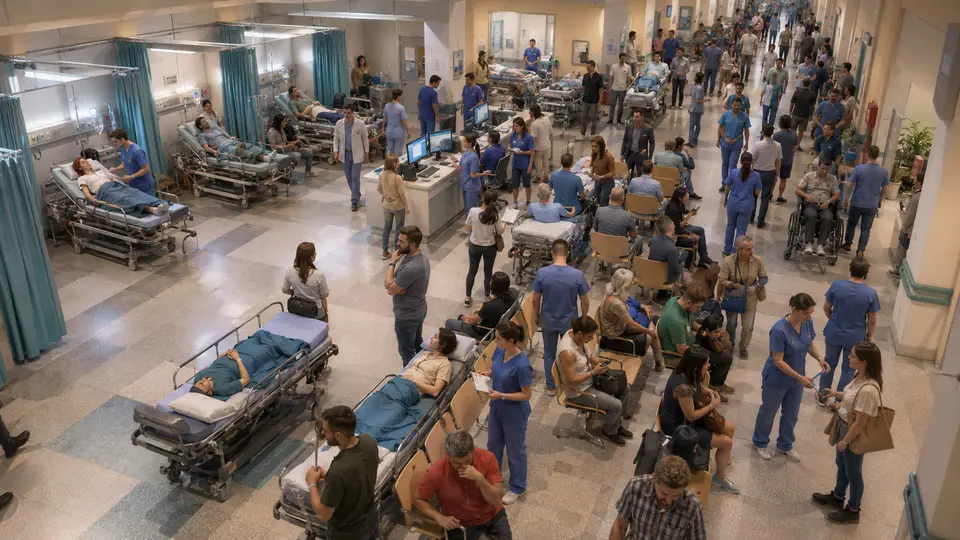
Without IRIS these are hallways nobody watches until somebody calls.
AI-generated image
What IRIS is
IRIS watches your hospital's cameras for you.
IRIS looks at the cameras you already have in the hospital and understands what it sees: a fall, a patient on the floor, someone left alone too long, a long line at admissions. When something like that happens, it lets you know right away; and whatever can be counted, it counts in numbers. All day long, with no one needing to watch a screen.
You tell it what you need to watch, and IRIS does it.
Works with the cameras you already have. Nothing to replace.
A person replies, not a form.
- Your footage never leaves your premises.
- It doesn't identify people.
- Certifications →
What’s at stake in a hospital
A hospital never closes. It has miles of hallway, hundreds of cameras and, in front of the screens, a handful of people per shift. And the people who work there are attending to somebody, not watching a monitor: that’s their job and that’s how it should be. When somebody falls in a hallway at four in the morning, what decides how that ends isn’t the camera that recorded it: it’s how long before somebody comes by. It can be one minute or it can be twenty, and nobody sees that difference until afterward.
IRIS watches for you. It analyzes every camera the hospital already has in its common areas, all at once, and only interrupts when a rule the hospital itself wrote is met: a person on the floor in a hallway, somebody who’s been motionless too long in a waiting room, liquid on the floor by an elevator, a gurney parked in front of an exit. The alert arrives with the camera, the time and the video. And it arrives while it’s happening, to the person who can send somebody there.
And where there’s nothing to alert about, IRIS measures. How many people are waiting in the emergency department right now and how long the room has been full. That isn’t set up by talking, it’s set up by drawing: a line can’t be described in a sentence, it has to be traced on the image. That’s why the number comes out the same way every day and can be audited. And for people counting our system is approved by the Centro Español de Metrología — Spain’s national metrology institute: the figure has been verified by an independent third party, not by us. Worth putting precisely: that approval covers people counting, not the whole product. And it’s there to know at what hour more staff are needed at the desk, never to decide who gets seen first: IRIS doesn’t touch that. That approval is Spanish and it isn’t equivalent to any U.S. certification: we say so up front and not at the end.
And two things said out loud, because they’re the first ones anybody thinks of on hearing “cameras” and “hospital.” First: there’s no camera in any room here, in any bathroom, in any examination room or anywhere a patient is treated or examined. IRIS looks at common areas: hallways, waiting rooms, lobbies and entrances. And in those areas it identifies nobody: it recognizes no faces, it does not know who any patient or member of staff is, it keeps a file on nobody, it has no access to medical records and it is not cross-referenced with any medical data or with the hospital’s systems. Second: IRIS does not diagnose, does not triage and does not decide who gets seen first. It doesn’t say what is wrong with anybody, it assesses nobody’s state of health and it takes no part in any clinical decision. Nor does it replace clinical observation or any member of staff, and it calls nobody on its own account. It gives warning earlier, so that a person gets there.
The real scale
Thirteen cameras here. A hospital has hundreds, and it never closes.
This demo shows thirteen cameras because thirteen fit on a screen. A hospital doesn’t fit. And here the axis isn’t the miles of a road or the stores of a chain: it’s the feet of hallway and the hours. Miles of hallway per hospital, and every hour of the day every day of the year, because a hospital doesn’t close. At night there are fewer people about still, and the hours when fewest people walk down a hallway aren’t the hours when it matters least that somebody does. Putting more people in front of more screens doesn’t fix this either, and it would be absurd: whoever works on a unit has to be caring for people, not watching a monitor. IRIS doesn’t tire and doesn’t get distracted. It analyzes however many cameras there are in the common areas, every hour, and only interrupts when a rule the hospital wrote is met.
Examples
These thirteen are just examples.
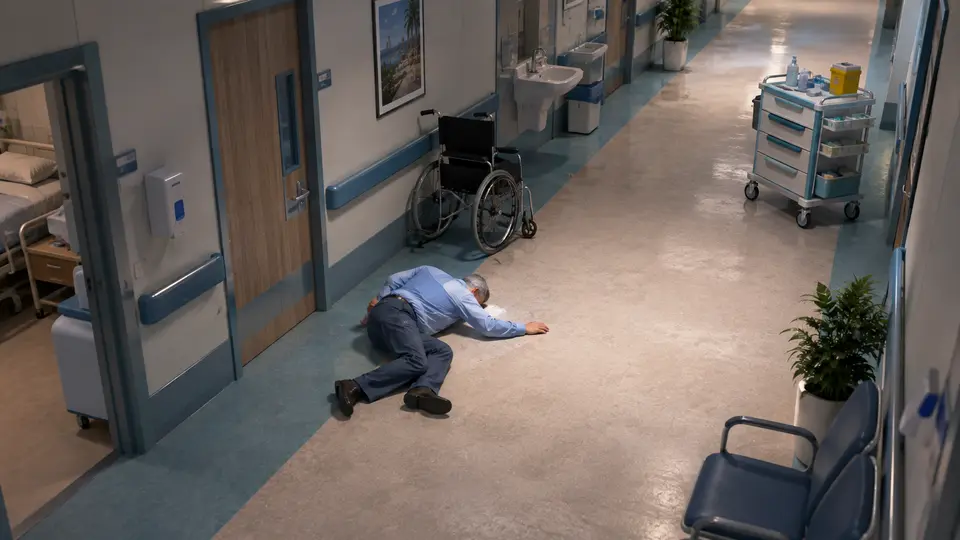
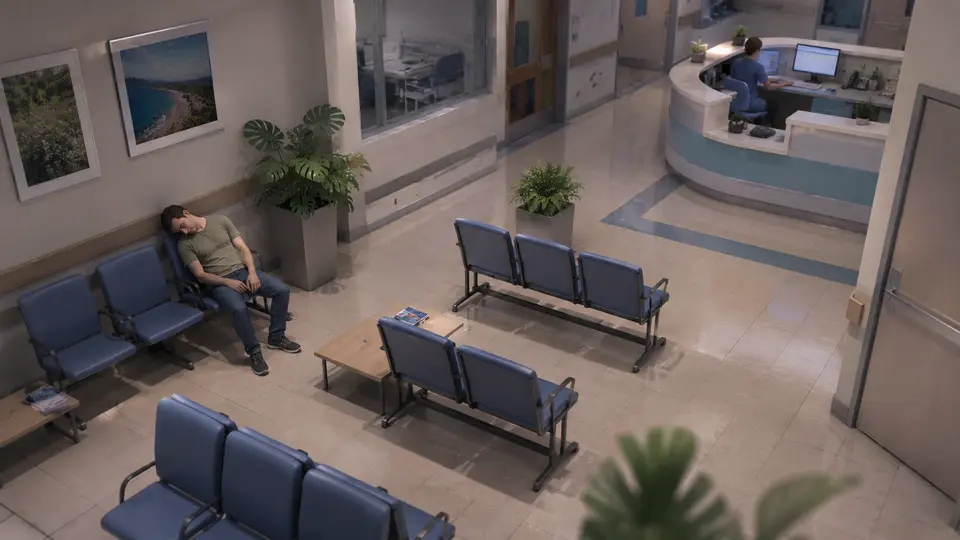
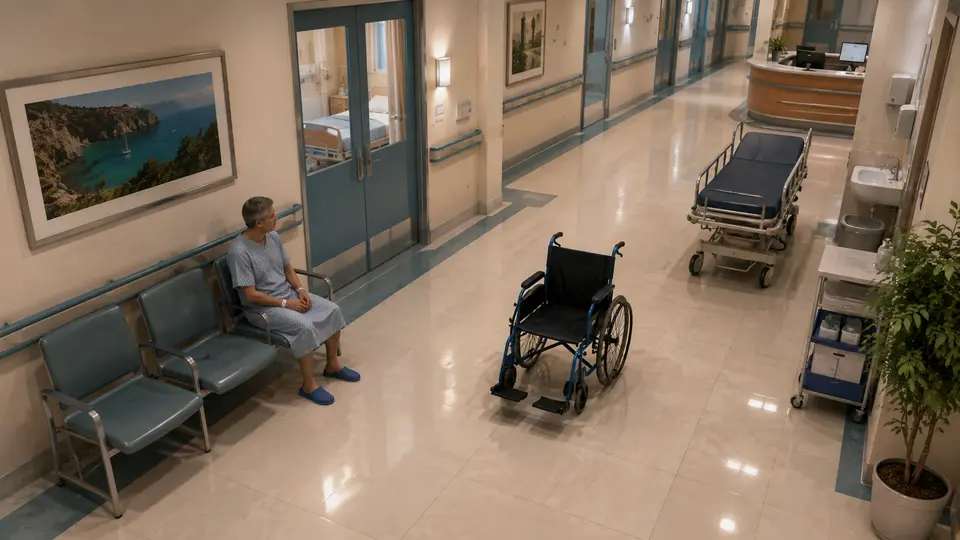
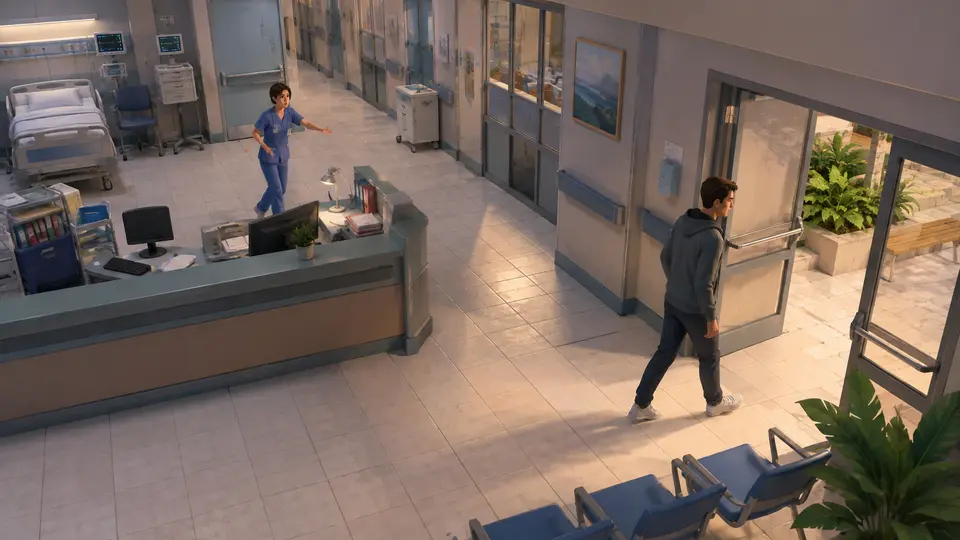
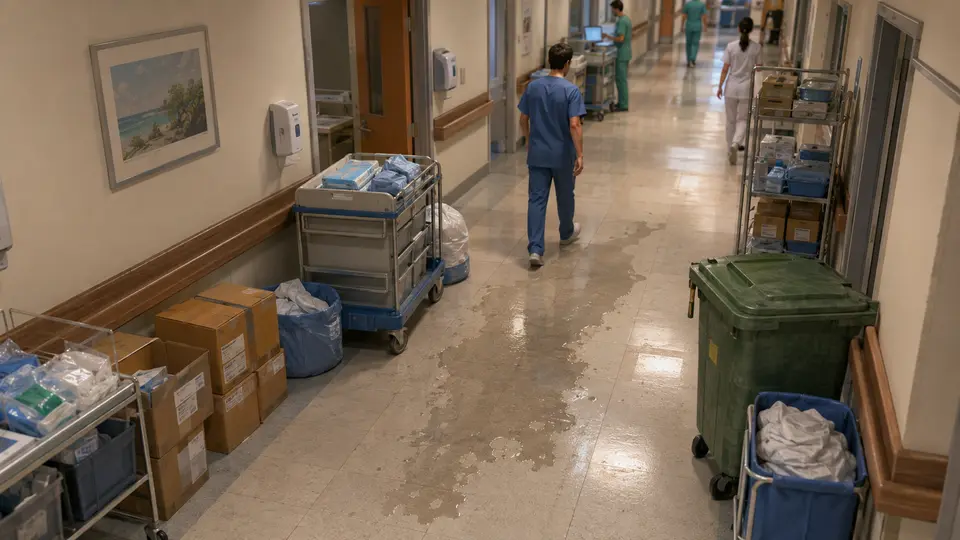
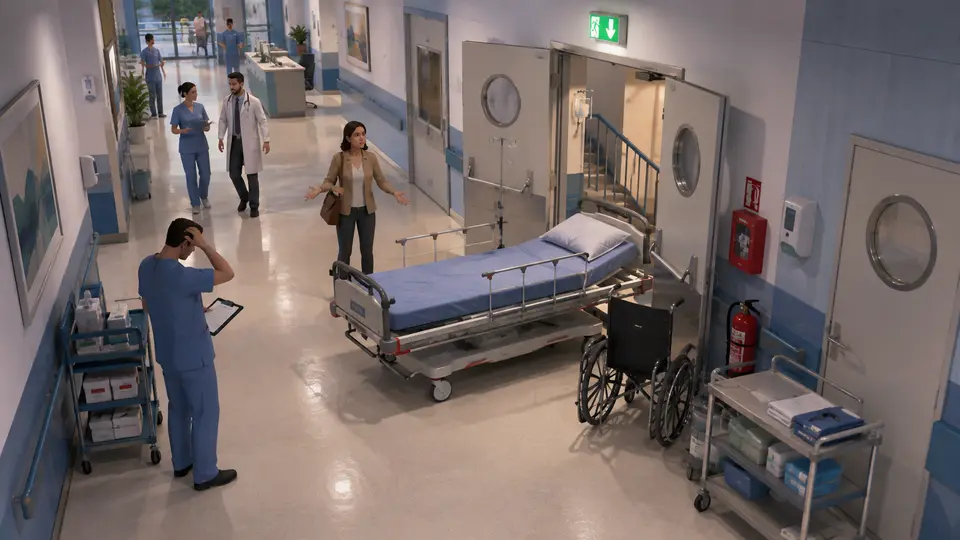
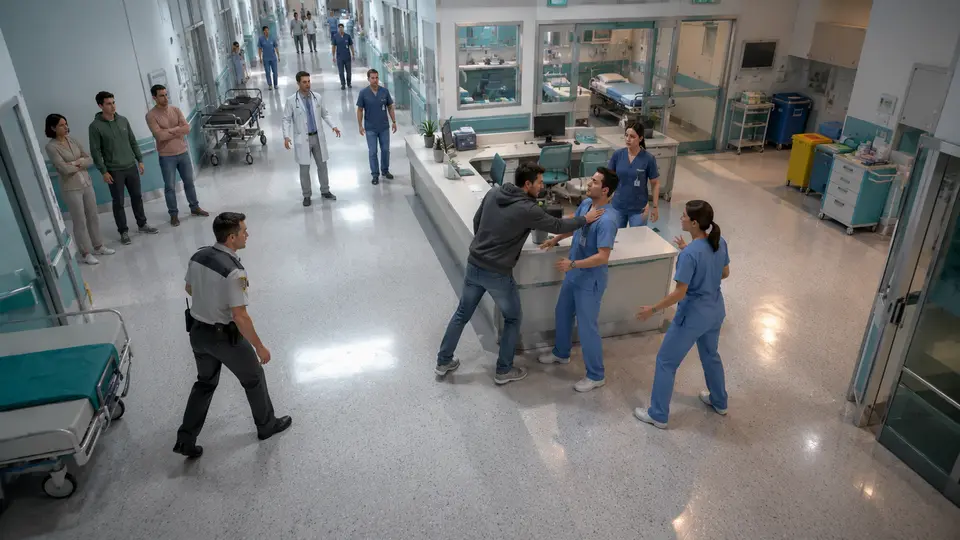
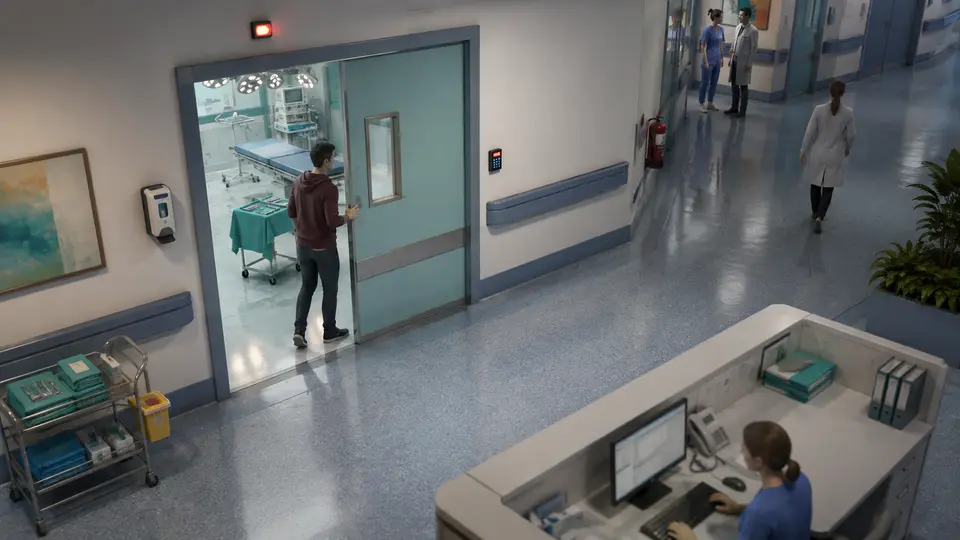
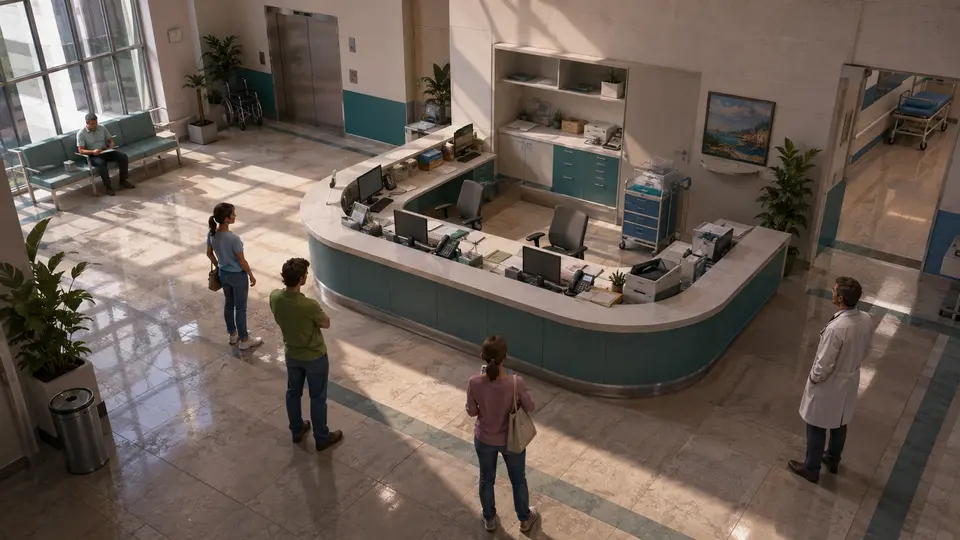
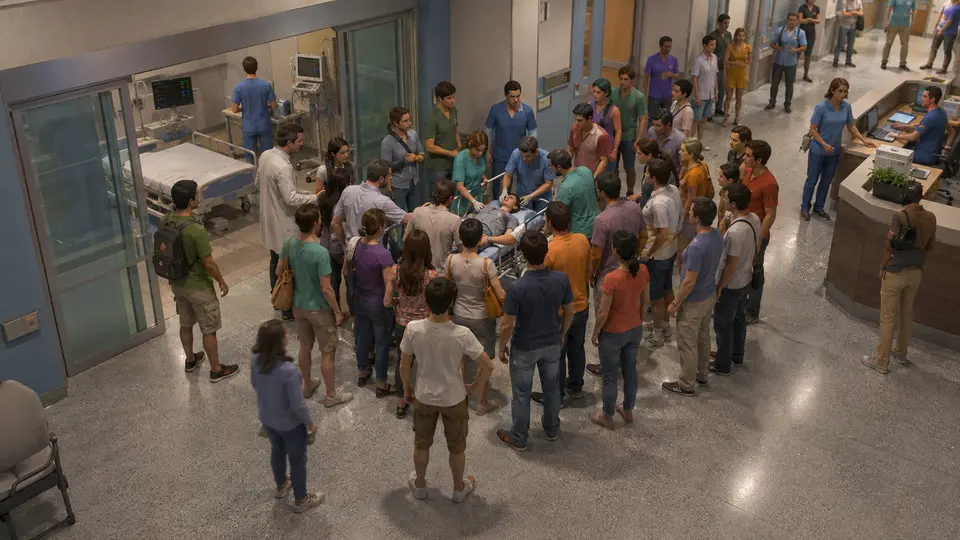
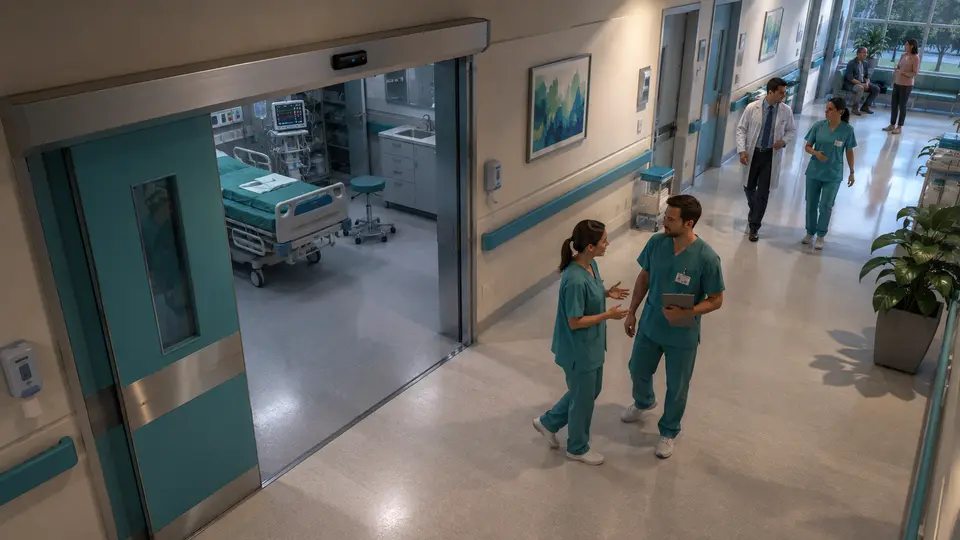
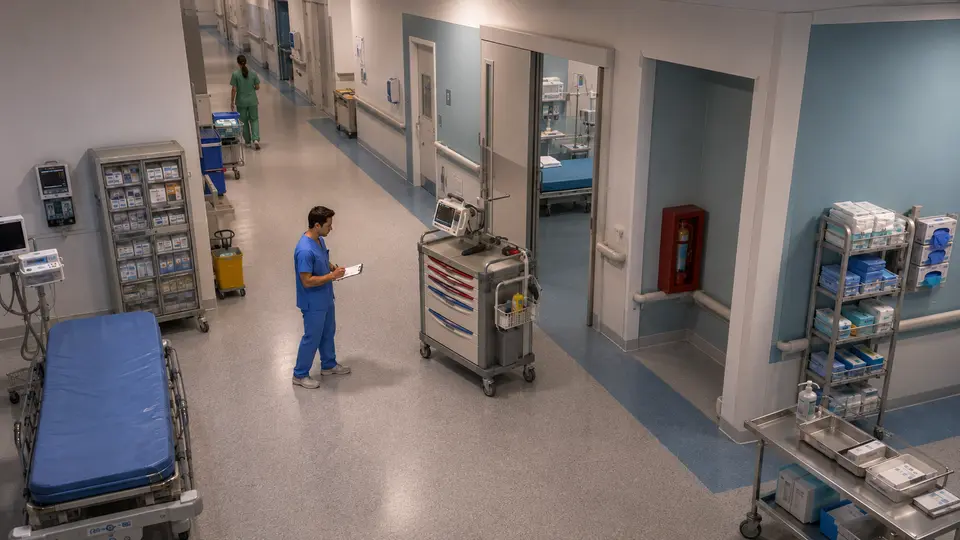
Twelve raise an alert when something’s under way and one alerts nobody: it only measures. They come in five groups, and the first is the patients, because in a hospital that comes first: the patients, what needs fixing now, the ways in and the restricted areas, staff and equipment, and measuring the hospital. They aren’t the thirteen things IRIS can do in a hospital; they’re the ones that fit on a screen, and each hospital writes them in its own words. All of them happen in common areas. Open any of them and you’ll see the image as it is, and then with what IRIS understands on top.
Simulation · how IRIS works
A camera looks. IRIS understands what it sees.
An extract of the real screen, no voice-over and hands-free. Each round poses another situation. What sits behind it is a good deal bigger than what you see.
- Cameras on the map
- You draw an area
- What passed shows up
Now think about your own hospital
Imagine knowing it while it’s happening, and not when somebody finally walks by.
The person who’s been on the floor in the third-floor hallway for four minutes. The patient who’s been sitting motionless in a waiting room for twenty minutes. The one waiting alone in a hallway while the nurses’ station stands empty. Somebody in the hospital clothes walking out of the street door without anyone knowing. The puddle that’s been in front of the elevator for half an hour. The gurney parked in front of an exit. The shove at a transporter on the emergency desk at one in the morning. The three who came in through a door that isn’t for visitors. The lobby reception desk with nobody behind it at the busiest hour. The forty visitors crowded in front of an elevator. The area that has gone half an hour with nobody in uniform in it. The piece of equipment needed now that’s at the other end of the building. And the fifty people who have been waiting in the emergency department since before lunch.
All of that is happening in front of cameras the hospital already has up, in common areas, and right now nobody knows: there are hundreds of screens and a handful of people per shift, and whoever could be watching them is caring for somebody. IRIS watches all those cameras at once and says it while it’s happening, to whoever can send somebody there. None of those lines says who anybody is or what is wrong with them: they say what is happening, where and since when. In front of cameras that already exist.
What gets asked on the visit to the hospital
The ten questions that come up before anyone says yes.
Answered in the first line, straight, and without promising that any system prevents a fall or improves a clinical outcome. IRIS gives warning earlier; looking, assessing and deciding stay with professionals.
Are you going to put cameras in the rooms?
No, we aren’t going to put cameras in the rooms, and this comes before anything else. There’s no camera in a room, none in a bathroom, none in an examination room and none anywhere a patient is treated or examined. IRIS looks at common areas: hallways, waiting rooms, lobbies and entrances, which is where almost any hospital already has cameras today. And in those areas it identifies nobody: it recognizes no faces, compares them against no database, does not know who any patient or member of staff is, keeps a file on nobody, has no access to medical records and is not cross-referenced with any medical data or with the hospital’s systems. What it sees is “there is a person on the floor in the third-floor hallway”: what’s happening, where and since when. That’s everything the alert carries, and it’s the first thing you should be able to show the board, the clinical staff and whoever has to sign this off.
Does IRIS diagnose or decide who gets seen first?
No, IRIS does not diagnose and does not decide who gets seen first. It doesn’t say what is wrong with anybody, it assesses nobody’s state of health, does no triage and prioritizes no patient: clinical judgment belongs to a professional and IRIS takes no part in it. Nor does it access medical records or any medical data, and it does not connect to the hospital’s systems to find out who anybody is. And it replaces neither clinical observation nor any member of staff: the unit’s protocols carry on exactly as they are, done by the same people and by the same procedure. IRIS also calls nobody on its own account and triggers nothing in place of a decision. What it does is give warning earlier — with the camera, the time and the video — so that a person gets there, and that person is the one who looks, assesses and decides.
How many alerts are we going to get per shift?
You’re going to get the alerts you decide on, because the rule is narrowed down: area, hours and duration. A system that throws a hundred alerts a shift is turned off within a week, and rightly so: when everything alerts, nothing alerts. That’s why a rule isn’t “tell me if somebody is standing in the hallway” but “tell me if a person is on the floor in this hallway for more than twenty seconds,” or “tell me if somebody has been motionless in this waiting room for more than fifteen minutes, between ten at night and seven.” Change the area, the time band and the minimum duration and the same detector goes from firing a hundred times a day to firing when it really matters. And it gets tuned afterward, with whatever came out over the first two weeks: rules are sharpened on what happens in your hospital, not on what happens in general.
Who decides what gets watched and what doesn’t?
The hospital decides, not IRIS. Which area, at what hours and how long counts as “a long time”: the hospital writes that with its own clinical staff, and it stays written as a sentence anybody can read and anybody can change. A quarter of an hour without moving in the emergency waiting room doesn’t mean the same as a quarter of an hour without moving in a unit hallway at four in the morning, and the people who work there know that difference, not a supplier. IRIS applies what it’s been told, the same way every time and without tiring. It doesn’t ship with any list of what is “normal” in your hallways. If visiting hours change tomorrow, a wing closes for works or a new floor opens, the rule gets rewritten in a while and nothing has to be ordered in. And because it’s written as a sentence, you can show it exactly as it is to anyone who asks what that camera is actually looking for.
What do we tell the works city and the staff?
The works city and the staff get told everything, and before anything is installed, not afterward. There’s one camera that looks at whether an area has somebody staffing it, and it’s the one that raises a hand in any meeting, so it gets explained straight: that isn’t time-and-attendance, it isn’t clocking in and it grades nobody. IRIS does not know who is at that station, does not store how long anybody has been anywhere and cannot tell you “this person arrived late” or “this person left early.” It tells a member of staff apart by clothing — a coat, a uniform — and not by who they are. What it says is “this area has gone half an hour with nobody in it,” which is a question about the area and not about the person. And the rest isn’t signed off by a salesperson of ours: who sees the alerts, what they’re used for and what may not be done with them is written by the hospital with staff representatives in the room, and in writing. A system like this only works if the staff know what it looks at and what it doesn’t.
Does it work with the cameras we already have?
Yes, it works with the cameras you already have, and that’s exactly the point: a hospital already has hundreds in hallways, lobbies and entrances, and what’s missing isn’t cameras, it’s somebody to watch them. IRIS analyzes the video signal those cameras are already producing. What does shape the result is where each one is mounted and what can be seen from there: a camera looking down the length of a hallway from above gives far more than one placed to get the whole doorway in. Before promising anything we’d rather look at your plans and a few real frames, and tell you which cameras this makes sense on and which it doesn’t. Sometimes the answer is to move a camera six feet, and that’s cheaper than buying anything.
Does the video leave the hospital?
The video leaves the hospital only if you want it to, and in a hospital it normally doesn’t. IRIS can run inside the hospital itself, on your own hardware and with no internet connection: the images go nowhere and the analysis keeps working even if the line drops. It can also run in our data center or in the cloud if that suits you, but that’s your decision and not a condition of ours. Wherever it runs, an alert always stores the same thing: the camera, the time, the situation detected and the clip of video, and nothing else. No name, no record number, no medical data, because IRIS neither has them nor asks for them.
Is the figure for how many are waiting in the ER reliable?
The figure for how many are waiting in the ER is reliable because it isn’t set up by talking, it’s set up by drawing: you trace a line or an area on the image and count who crosses it and how many people are inside. A line can’t be described in a sentence; it has to be traced. That’s why the number comes out the same way every day, can be repeated and can be audited. And on people counting you don’t have to take our word for it: our system is approved by the Centro Español de Metrología — Spain’s national metrology institute, an independent third party that has verified the figure is the right one. Put precisely: that approval covers people counting, not the whole product. And one more thing, because it matters: that number says how many people there are and since when, so you can reinforce the shift or open another desk. It does not say who anybody is and it does not decide who gets seen first. The approval is Spanish. It doesn’t stand in for a U.S. certification, and we don’t present it as one.
And what about what IRIS doesn’t see?
What IRIS doesn’t see exists, and it’s worth saying before anything gets signed. A camera only understands what falls inside its frame: if something happens inside a room, in a bathroom, behind a closed door or in a hallway with no camera, IRIS doesn’t see it, just as a person watching that same screen wouldn’t. In low light or with a dirty lens it sees worse. And some situations look very much alike: somebody bending down to pick something up and somebody who has lost their balance can be confused for a second, which is why an alert is always closed by a person looking at the video. And the whole sentence has to be said: IRIS prevents no fall. The fall has already happened by the time IRIS sees it. What changes is how long that person is on the floor before somebody arrives. We aren’t going to sell you an infallible system, because it isn’t one. It’s a system that watches, every hour, the hallways nobody’s watching right now.
How much does it cost?
You pay per camera. What it comes to depends on how many cameras are analyzed, what each one is asked to do and where the video is processed. We don’t publish a price list because it wouldn’t be honest: a unit with twelve cameras and three rules and a whole hospital with hundreds aren’t the same project. What can be done is to start small: one hallway and the emergency waiting room, the two or three rules that really matter there, and see the alerts and the numbers with your own team before deciding anything. Write to us and we’ll look at it with your plans and your cameras in front of us.
Next step

Why did the line stop?
237 cases, and in every one of them IRIS raises an alert when something happens. You see each image as it is, and then with what it understands on top.

How many spaces are open right now?
15 cases: 9 raise an alert when something happens and 6 only measure. You see each image as it is, and then with what IRIS understands on top.


And the best part
You already record.The hard part was always watching it.
Years of video that only get opened once something has gone wrong. IRIS understands those same images as they arrive, so the answer no longer lives only in the archive.
Tell us your problem and we’ll say whether IRIS understands it, or not yet.
A person answers, the same working day.