How long does it take to find a hand played two hours ago?
A dispute stops being six hours across four cameras.
You describe the hand, IRIS finds the moment and compliance reviews the facts. We show twelve cameras here: nine that raise an alert when something departs from what was written down, and three that alert nobody, they only measure. A gaming floor has hundreds. The system is the same. And one thing before you go in: IRIS identifies nobody.

Without IRIS this is just a busy floor on a screen.
AI-generated image
What IRIS is
IRIS watches the casino floor for you.
IRIS is an artificial intelligence that uses the cameras you already have and understands what's happening at the tables and on the floor. When a table fills up, a seat opens, or drinks need restocking, it lets you know right away; and whatever can be counted, it counts in numbers. All day long, without anyone having to stare at a screen.
You tell it what you need to watch, and IRIS does it.
Works with the cameras you already have. Nothing to replace.
A person replies, not a form.
- Your footage never leaves your premises.
- It doesn't identify people.
- Certifications →
A floor understood, without identifying anyone
A player raises a dispute. Somebody goes down to the recording room, picks four cameras and spends the afternoon rewinding. Meanwhile, upstairs there is a table with people standing and waiting while another one sits open and empty fifteen feet away, a machine has been jammed for half an hour and nobody knows, and the line at the cage has eaten the good mood of the whole floor. All of it happens in front of cameras that are turned on.
IRIS watches for them. It analyzes every camera at once and only interrupts when a rule the floor itself wrote is met: a table that stops, a machine nobody has played for too long, a cage line that keeps growing, a cash move that doesn’t follow the usual route. And for everything else, describing it is enough: you ask for the hand by what happened and it’s in front of you. What IRIS does not do: it identifies nobody, it recognizes no faces, it carries no biometrics, it judges nothing and it concludes nothing. It sees situations, timestamps them and keeps the video.
What arrives isn’t more video. It’s an alert with the camera, the time and what’s happening, and the minute of recording where it started. And when nothing happens, it’s numbers: how many people are at each table, how long people stand waiting for a seat, how long a hand lasts, how long the cage takes. Two limits, stated here and not in a footnote: the money a table or a machine makes comes from the gaming system, not from the camera; and a dealer sequence flagged for review is exactly that, a sequence for compliance to look at, never an accusation against a worker. Same with the movement of value across the floor: the camera contributes a dated fact, and the person who decides is an analyst, cross-checking it against the transactions.
The real scale
Twelve here. Hundreds in a real gaming floor.
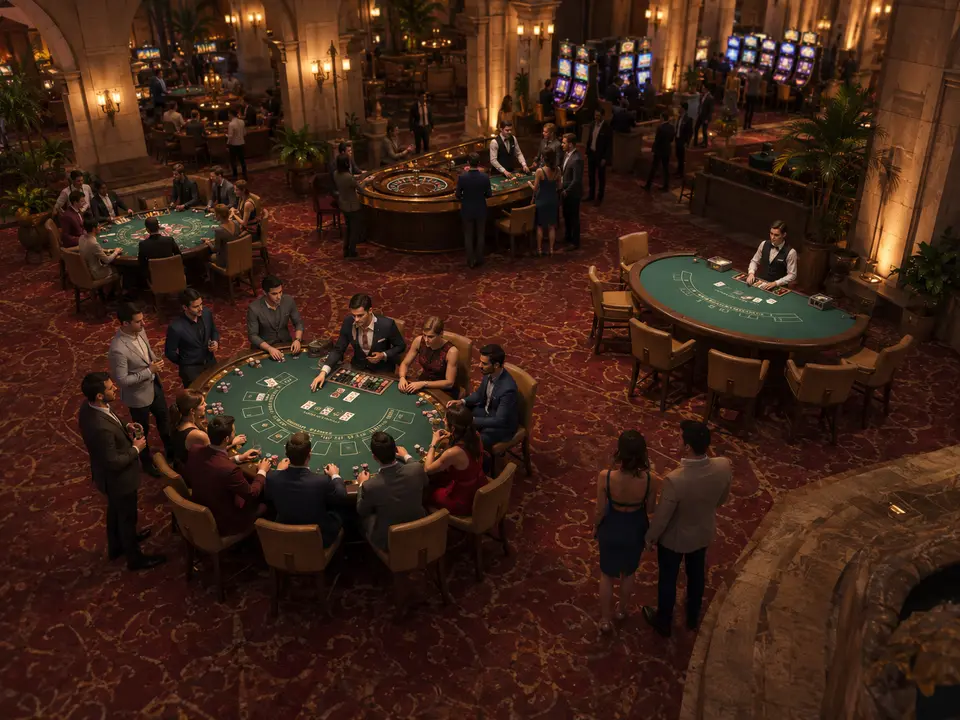
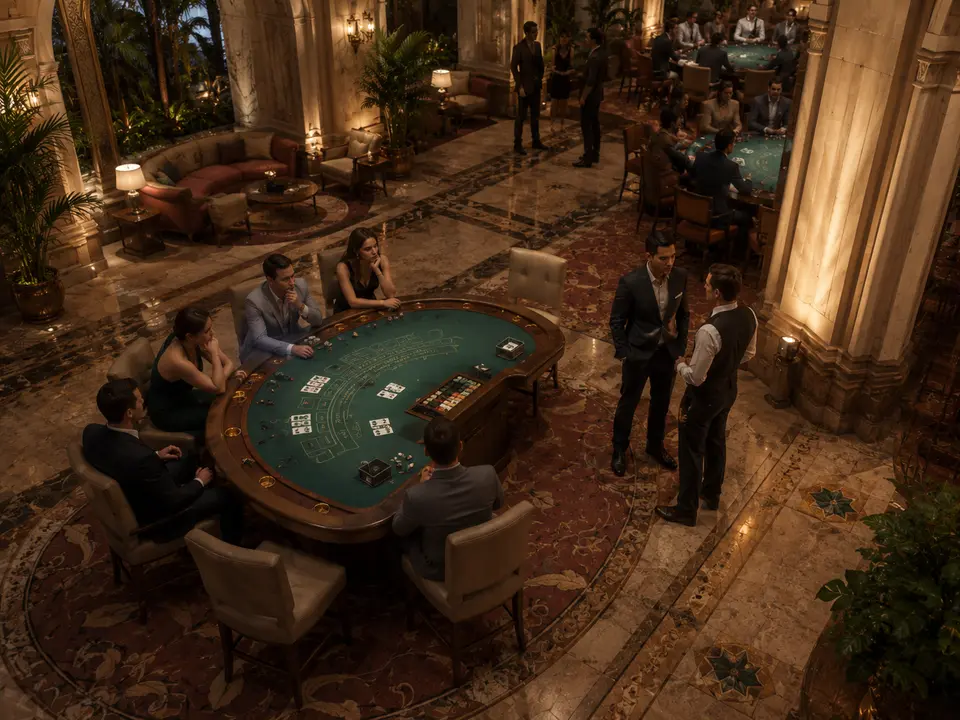
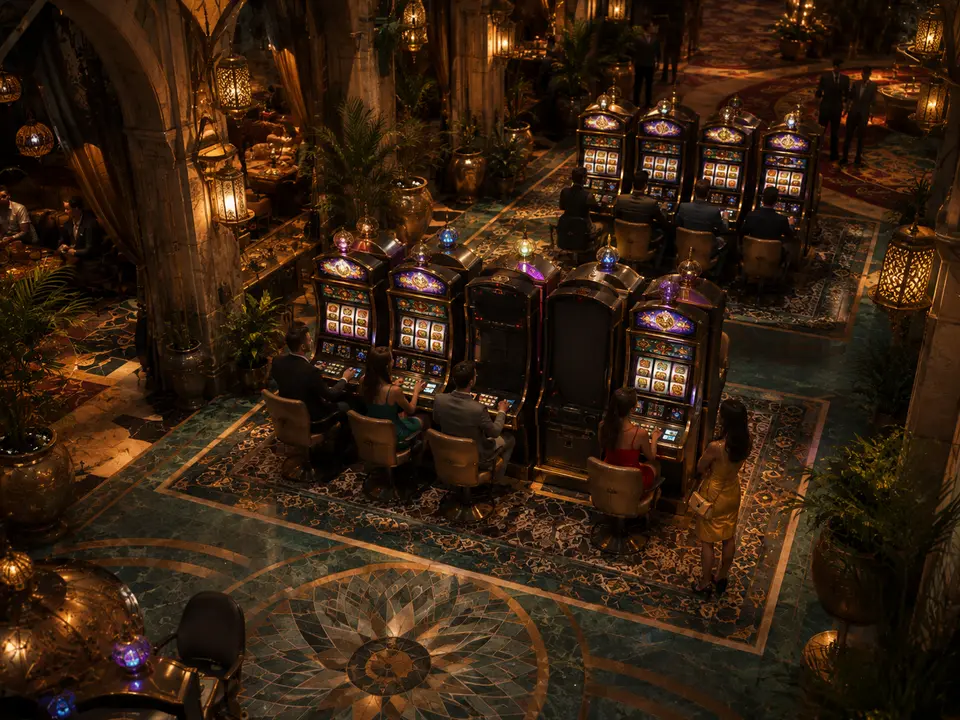
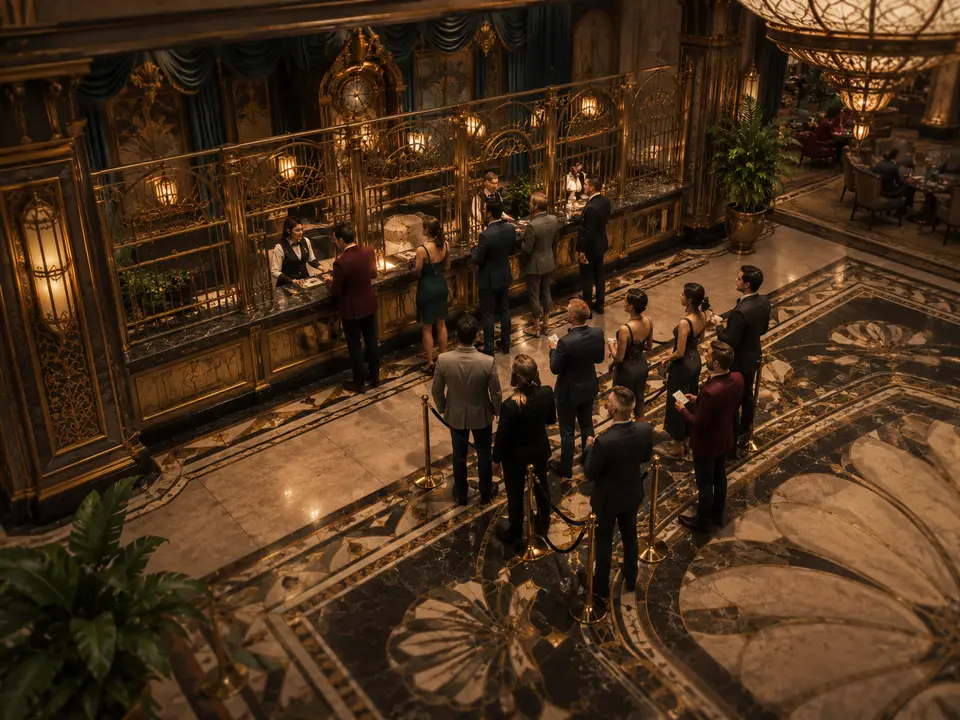
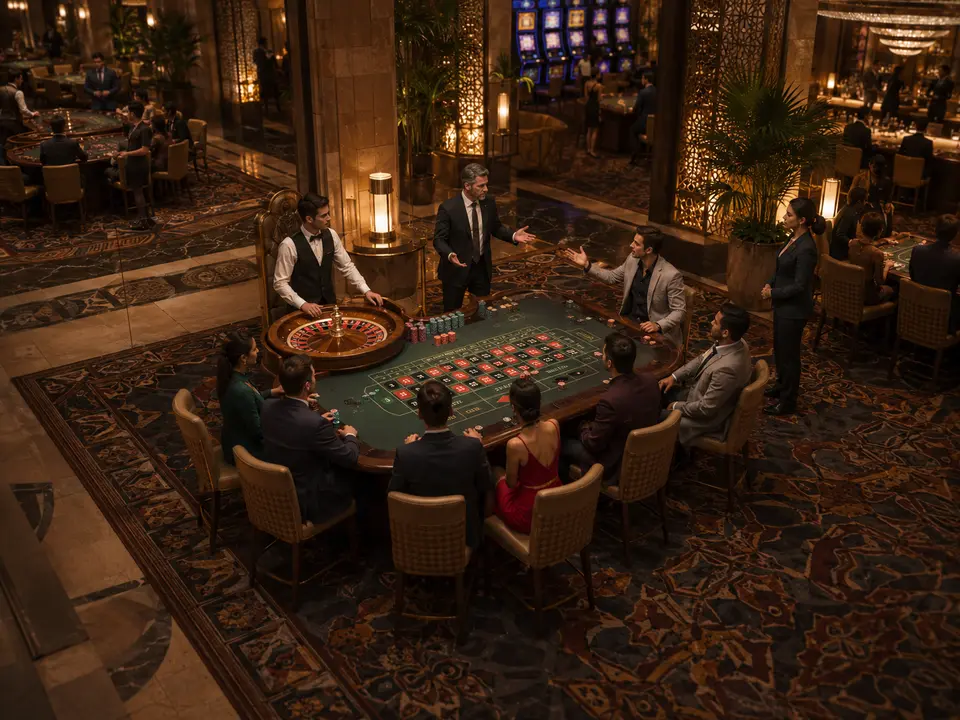
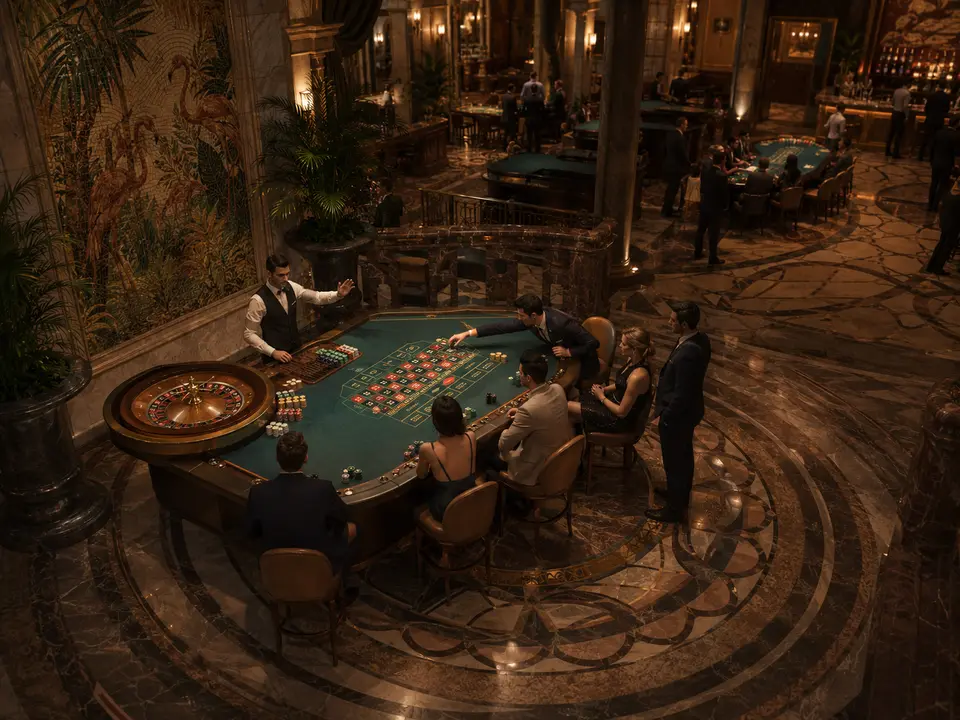
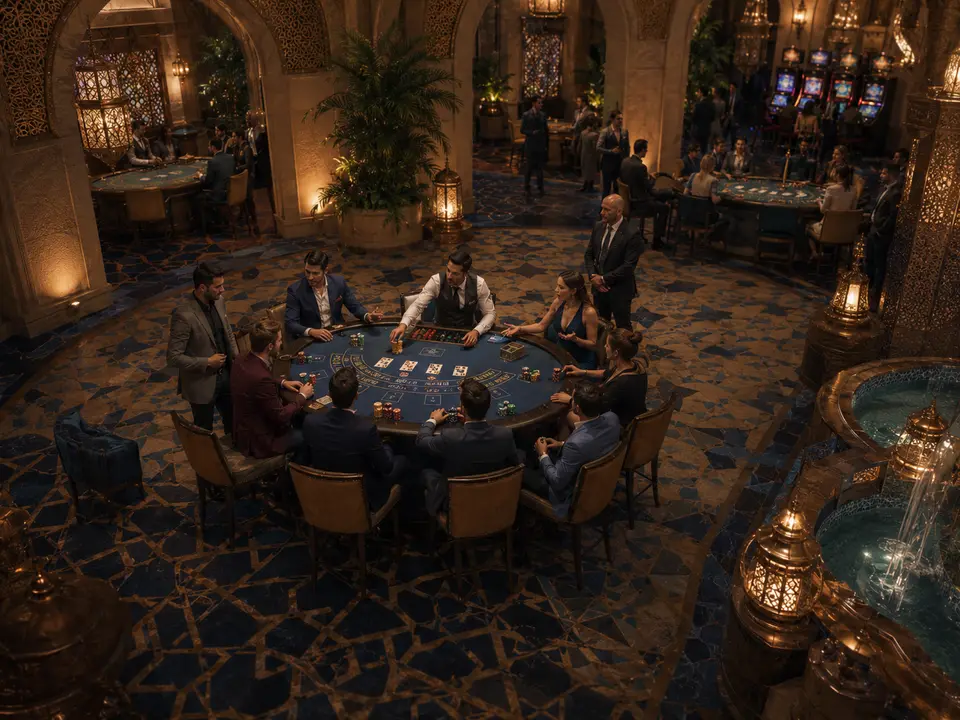
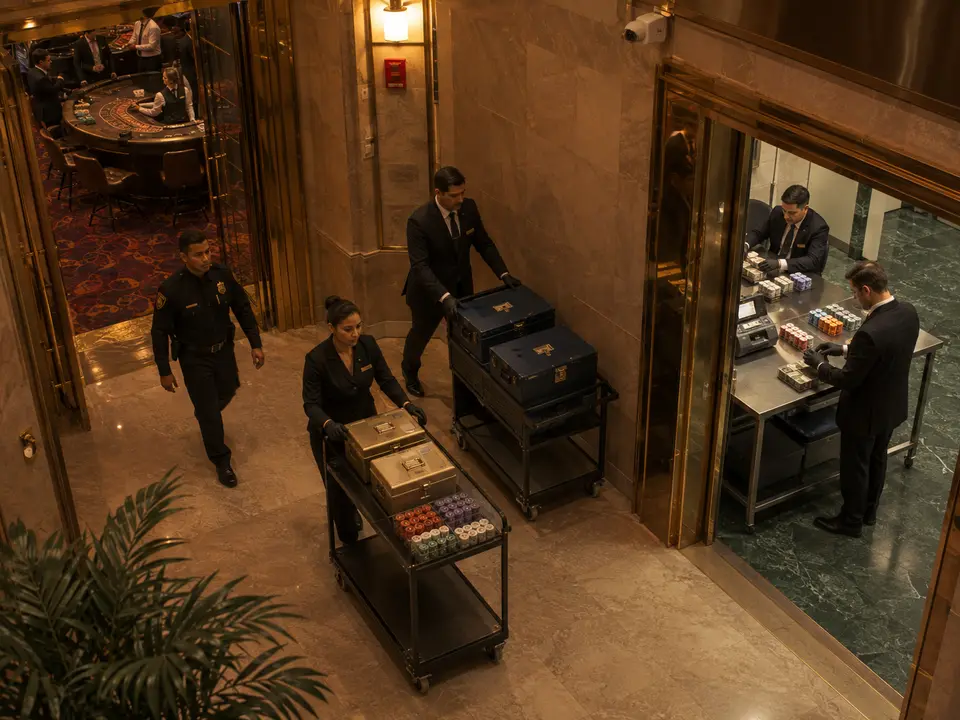
This demo shows twelve cases because twelve fit on a screen. A real gaming floor has a camera over every table, another over each bank of machines, and more at the cage, in the count room, in the service hallways, at the entrances, at the cloakroom and all along the perimeter. Hundreds of them, and a few more with every refit. No person can watch them all on a Saturday night; that’s exactly the problem IRIS solves: it analyzes however many there are, all at once, and only interrupts when a rule is met. And where there’s nothing to watch for, it measures: occupancy per table and per time slot, the wait to get a seat, the time between hands, the line at the cage. That’s the data you use to decide which table opens on Friday, and at what time.
Examples
These twelve are just examples.
Each one shows a different kind of thing: a table, a machine, a line, a dispute, a cash move, a fall. They aren’t the twelve things IRIS can do: they’re the ones that fit on a screen. Open any of them and you’ll see the image as it is, and then with what IRIS understands on top.

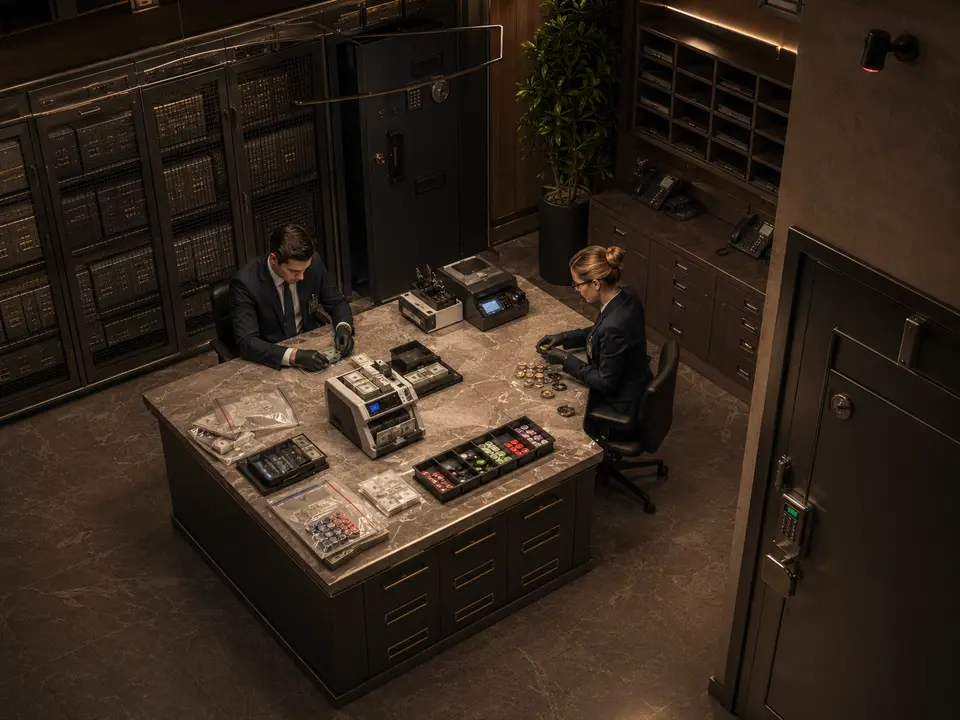
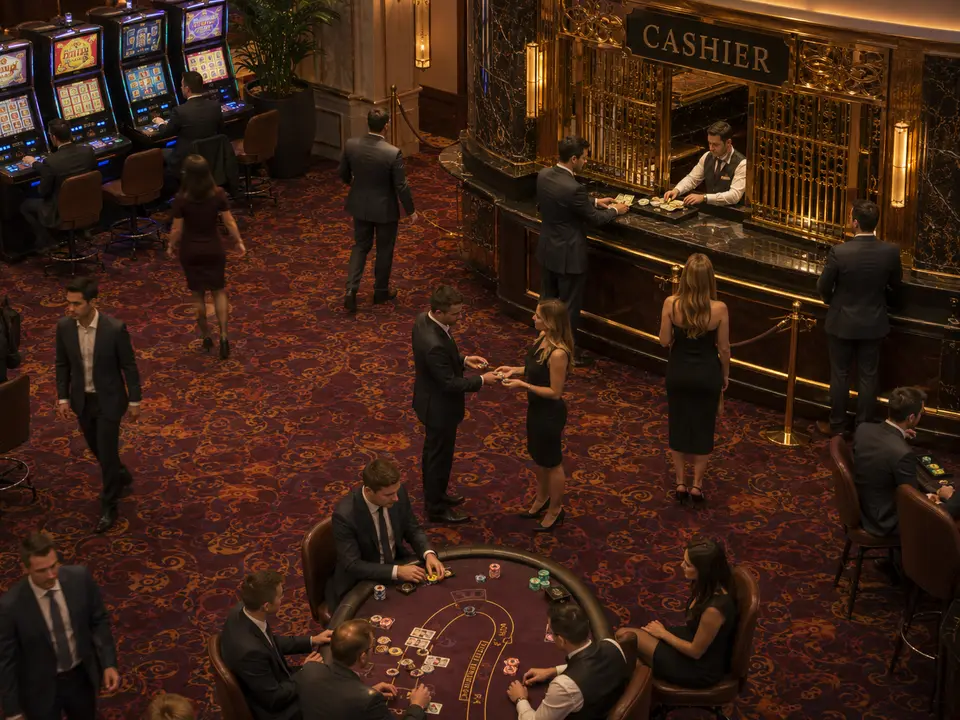
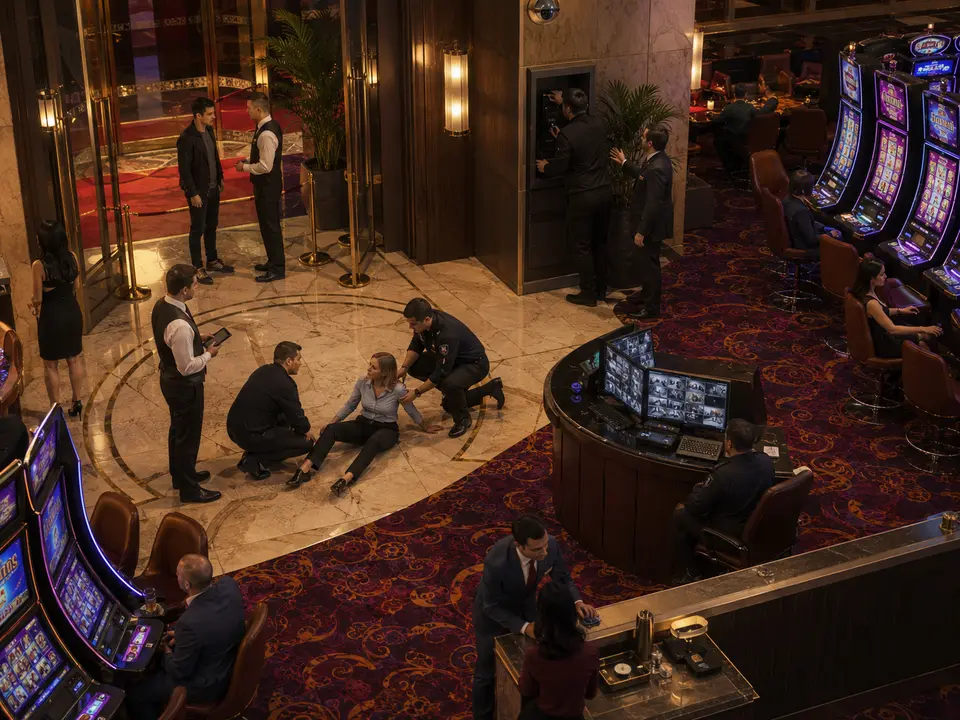
See it in action
Demo · IRIS at work
No extra alarms here. Just what needs looking at.
Not a recorded video, not an explanatory drawing: a summary of the real screen, with a different case every time it starts. There’s a lot more behind it.
- You ask
- IRIS searches
- It shows you
Now think about yours
Imagine finding the exact minute without going down to the recording room.
A table with people standing and waiting while another sits open and empty fifteen feet away. How long people stand before they get a seat. A table that has lost its rhythm, and a dealer away from their post. A machine that’s been down for half an hour and nobody has seen it. A cage line with two windows closed. A dispute under way, on foot, in front of the table. A chip that moves after betting has closed. A dealer sequence flagged for compliance to look at. A run of drop boxes that takes a different route. The count room with two people inside, as the procedure requires. How often the cage is visited, and how far apart. And somebody on the floor while, at the same time, the door of a technical cabinet is being tampered with.
All of that is happening in front of cameras your floor already owns and already paid for. IRIS watches them all at once and tells you while it’s happening, with the camera and the table. And there is a line it does not cross: minors and self-exclusion are only handled where there is a legal basis and an authorized identification system, and that system is not IRIS, because IRIS carries no biometrics. Without identifying anyone, what it can measure is how long a play session lasts, a fight, a fall, an entry into a restricted area and the tampering with a camera. IRIS contributes facts and video; the compliance is signed by whoever runs the floor.
What the floor management asks
The ten questions that come up before anyone signs anything.
Answered in the first line, straight, with no promises a camera can’t keep. IRIS identifies nobody: it sees tables, lines, machines and situations. Whoever decides is still a person.
Does it work with the cameras we already have over the tables?
Yes, it works with the cameras you already have over the tables. IRIS connects to the feed of the installed IP cameras and analyzes it as it arrives: what changes isn’t the equipment, it’s what gets understood from the picture. During the project we check camera by camera whether the framing is good enough for what you want to see there — a camera placed to cover the aisle may not reach the baize — and we tell you plainly which ones fall short and which would only need turning a few degrees. Fitting a new camera is the exception, not the starting point.
Does IRIS recognize faces, enforce self-exclusion or spot minors?
No, IRIS does not recognize faces, does not enforce self-exclusion and does not spot minors. It identifies nobody: it compares no face against any database, keeps no record of who anyone is, does not follow a player around the floor and is not cross-referenced with your loyalty program. And here’s the line, said before you have to ask: self-exclusion and age control require knowing who a specific person is, and that can only be done with a legal basis and an authorized identification system. That isn’t IRIS, and we aren’t going to sell it to you as if it were. What IRIS sees is a table, a line, a machine, a situation and how long it’s been there.
Does the video leave the premises?
The video leaves the premises or stays inside depending on the deployment you choose, and there are two. In the on-site mode it doesn’t leave: the servers sit in your building, the video comes in over your network, it’s analyzed in there, and the system doesn’t need internet to work. In the other one it is processed in our data center, which is our cloud and not somebody else’s. In both, communications are encrypted and the terms are set in the contract. In a gaming venue it is usual to keep everything around the cage and the count room inside, and decide the rest calmly.
How long does it take to find a hand from two hours ago?
Finding a hand from two hours ago stops being an afternoon in the recording room. Today somebody goes down, picks four cameras and rewinds. With IRIS you describe in one sentence what can be seen — which table, roughly what time, what happened — and you land on the minute. What you get is the camera, the time and the clip as it is: nothing’s retouched and nothing’s hidden. And there IRIS stops. A person draws the conclusion, the venue settles the claim, and what counts for compliance or for the regulator is set by your procedure and by whoever has to approve it. We don’t sign that for you.
Are the floor numbers reliable?
The floor numbers are reliable because they aren’t set up by talking, they’re set up by drawing. Asking is for searching; counting is for measuring, and they aren’t done the same way. A line can’t be described in a sentence: it has to be drawn on the image. You draw a line across the threshold or a zone over the baize, and from then on the figure comes out the same way every day, it can be repeated and it can be audited. That’s how you measure how long people stand waiting for a seat, how long a hand lasts or how long the cage takes. And on people counting you don’t have to take our word for it: it’s approved by the Centro Español de Metrología — Spain’s national metrology institute, an independent third party. To be precise: that approval covers people counting, not the whole product. It’s a Spanish approval. What crosses over isn’t the seal, it’s the method: the same line, in the same place, every day.
How many alerts will we get per shift?
You will get the alerts you decide on, because a rule is bounded: area, time slot and duration. A system that throws out two hundred alerts a shift is turned off within a week, and rightly so: when everything alerts, nothing alerts. That’s why a rule isn’t “tell me if there are people standing by a table,” but “tell me if three or more people are standing by this table for more than four minutes while another one is open and empty.” By changing the area, the time slot and the minimum duration, the same detector goes from firing a hundred times to firing when it really matters. And it’s tuned afterward, with what comes out of your floor in the first two weeks, not with what happens in general.
Who decides what is watched and what isn’t?
The venue decides, not IRIS. Which table, at what time, how many people and for how long: your team writes that, and it ends up as a sentence anyone can read and anyone can change. IRIS applies what it’s been told, always the same way and without getting tired. It brings no factory list of behaviors and does not decide on its own what is normal on your baize: what is normal in one room is not normal in another, and the people who work there know it. If tomorrow you change the opening hours, close a table or open a new area, the rule is rewritten in a few minutes and nothing has to be ordered. And since it’s written as a sentence, you can show it exactly as it is to compliance, to the committee or to anyone who asks what that camera is watching.
What does IRIS not see at a table?
What IRIS doesn’t see is real, and it’s worth saying before anything gets signed. A camera only understands what falls inside its frame: a hand covers some chips, one body hides another, and a full table hides half the surface. In the low light of a gaming room it sees worse, and with a dirty lens too. And some movements look very much alike: picking up a chip and moving a chip look the same for a second. That’s why an alert is always closed by a person watching the video, and why IRIS judges nobody’s intent and never says who cheated. IRIS isn’t infallible and we aren’t going to sell it to you as if it were. It’s a system that watches, every hour, the cameras nobody’s watching right now.
How long does it take to be up and running on the floor?
How long it takes depends on the size of the installation, and we aren’t going to give you a date we can’t yet control. The work has three clear phases: connecting the cameras that already exist, drawing the zones on each image and writing the rules that matter, and tuning those rules against what actually happens on your floor. The first detections show up early; the fine tuning takes longer. Specific dates go in the proposal, once we know how many cameras there are and what you want to see on each one.
How much does it cost to put IRIS on a gaming venue’s cameras?
You pay per camera. What it comes to depends on how many cameras are analyzed, what’s detected or measured on each one, which deployment mode you choose and whether the hardware is yours or ours. We don’t publish a single price list because it wouldn’t be honest: twelve cameras over tables and the cage isn’t the same project as a whole venue with its entrances, service hallways and count room. And you can start small: a few tables and the cage, the three rules that really matter there, and see the alerts and the figures with your team before deciding anything. Tell us how many cameras you have and what you want to see, and we’ll give you a figure. Write to hola@infinityneural.com. Or call Spain: 011 34 93 566 70 22.
Next step
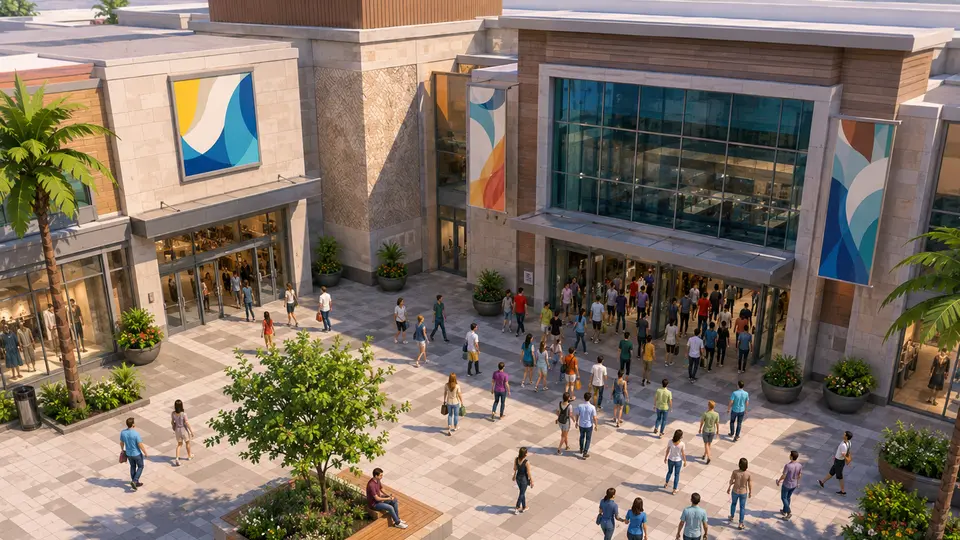
What does a mall see beyond the visitor count?
12 cases: 4 raise an alert when something happens and 8 only measure. You see each image as it is, and then with what IRIS understands on top.
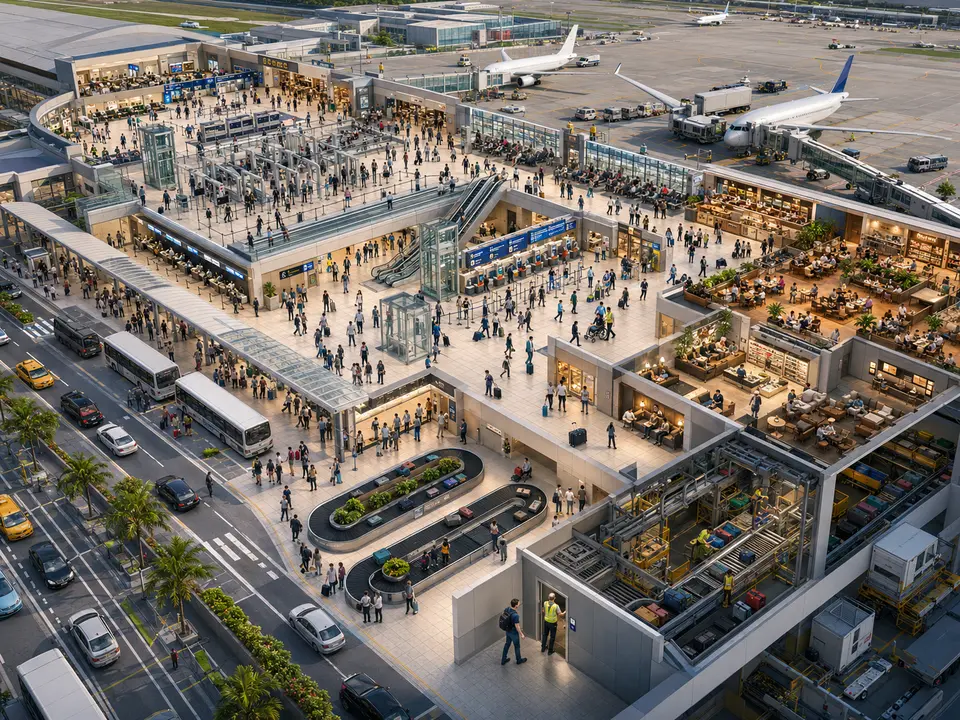
What does an airport see before the line forms?
14 cases: 7 raise an alert when something happens and 7 only measure. You see each image as it is, and then with what IRIS understands on top.


And the best part
Sometimes you don’t need an alarm:you need a number.
How many people came in, and when. You draw a line over the image and the camera counts. People counting is approved by the Centro Español de Metrología — Spain’s national metrology institute — through NeuralPax. It’s a Spanish approval: it isn’t equivalent to any U.S. certification and we don’t present it as one. What crosses over is the method. The same line, in the same place, every day.
Tell us your problem and we’ll say whether IRIS understands it, or not yet.
A person answers, the same working day.