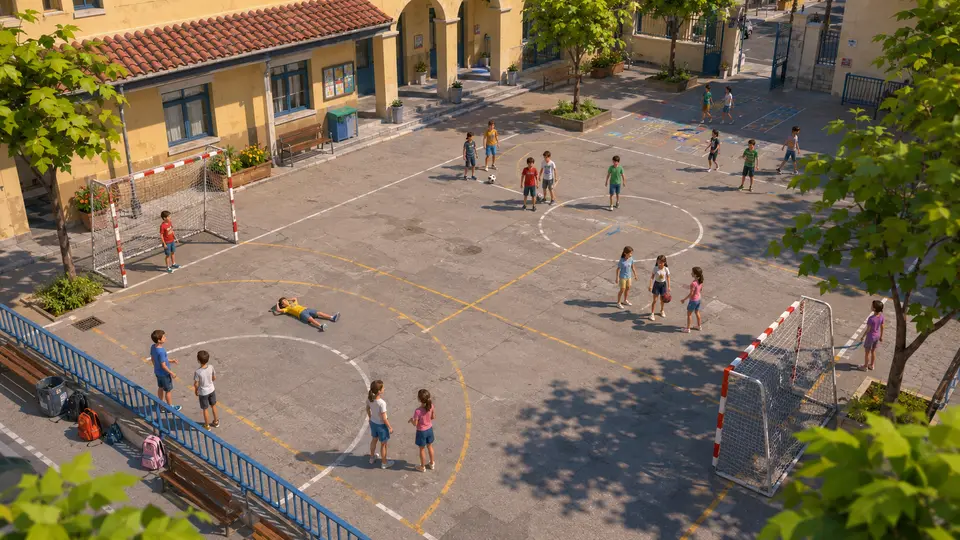
Who sees the child who’s fallen at the far end of the schoolyard?
In a school, data identifies nobody. It’s there so an adult gets there sooner.
We show thirteen cameras here: twelve that raise an alert when something’s under way and one that alerts nobody, it just measures. And first of all, because it’s the first thing anybody thinks of on hearing “cameras” and “school”: IRIS recognizes no child. It does not know who anybody is, it keeps no face and it labels nobody. It looks at common areas — the schoolyard, the entrances, the shared hallways and the street outside the gate — and it raises an alert so an adult from the school walks over. There’s no camera in the restrooms or the locker rooms.

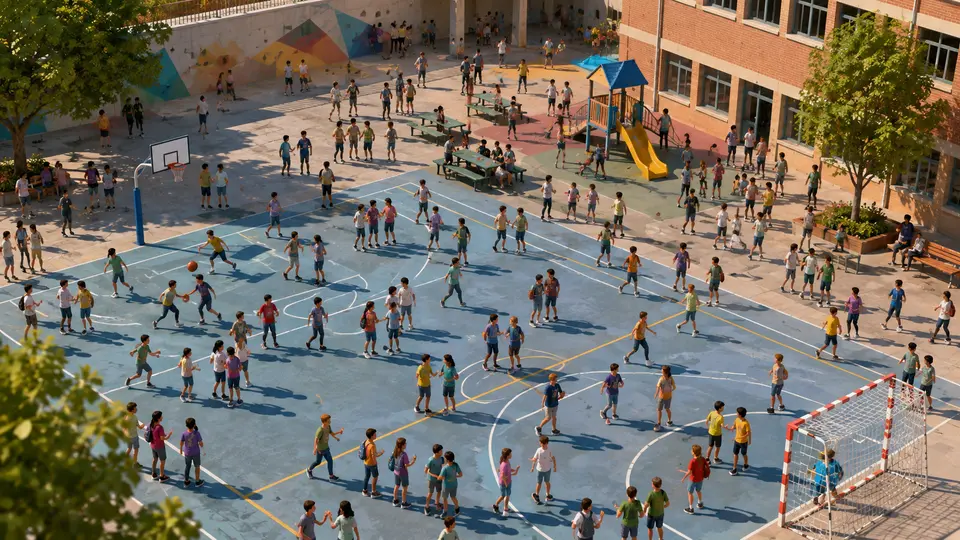
Without IRIS this is a schoolyard with two teachers for three hundred children.
AI-generated image
What IRIS is
IRIS keeps an eye on the school for you.
IRIS looks at the cameras you already have at school and understands what it sees: a kid alone, a kid on the ground, a fight on the playground, someone odd near the entrance. When something like that happens, it lets you know right away; and whatever can be counted, it counts in numbers. All day long, with no one needing to be glued to a screen.
You tell it what you need to watch, and IRIS does it.
Works with the cameras you already have. Nothing to replace.
A person replies, not a form.
- Your footage never leaves your premises.
- It doesn't identify people.
- Certifications →
What’s at stake in a school
Two teachers for three hundred children at break time is nobody’s failing: it’s arithmetic. Half an hour, a schoolyard with corners you can’t see from where you stand, and three hundred children all moving at once. When a child falls behind the gym and doesn’t get up, what decides how that ends isn’t the camera that recorded it: it’s how long an adult takes to get there. It can be ten seconds or it can be ten minutes, and nobody sees that difference until afterward.
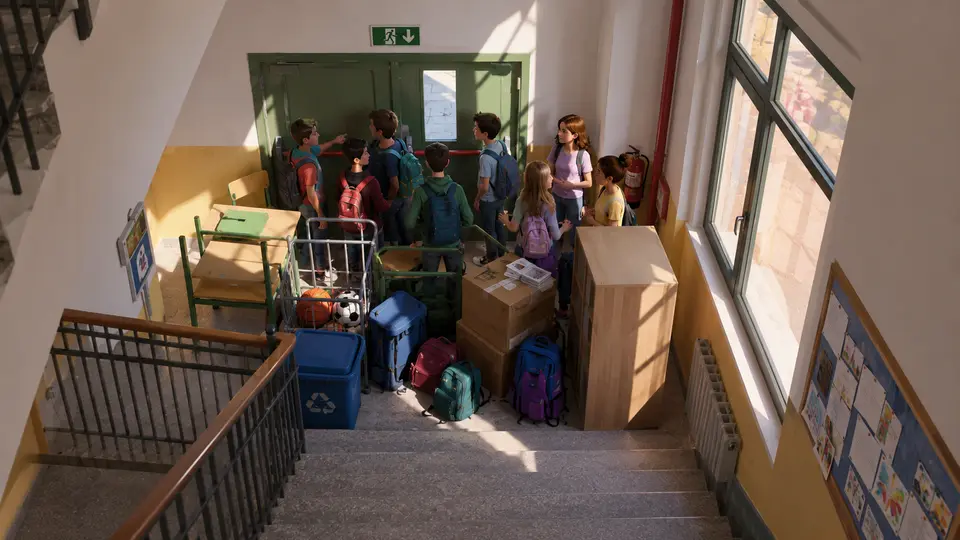
IRIS watches for you. It analyzes at once every camera the school already has in its common areas and only interrupts when a rule the school itself wrote is met: a child on the ground who doesn’t get up, a schoolyard with no adult in it, a blocked emergency exit, somebody coming through the gate outside the hours the school set. The alert arrives with the camera, the time and the video. And it arrives while it’s happening, to the person who can walk out there.
And where there’s nothing to alert about, IRIS measures. How many people are still inside each space if the building has to be evacuated. That isn’t set up by talking, it’s set up by drawing: a line can’t be described in a sentence, it has to be drawn on the image. That’s why the figure comes out the same every day and can be audited. And for people counting our system is approved by the Centro Español de Metrología — Spain’s national metrology institute: the figure has been verified by an independent third party, not by us. It’s worth saying precisely: that approval covers people counting, not the whole product. And that figure says how many people are still in a space, never who they are. The approval is Spanish. It doesn’t stand in for a U.S. certification, and we don’t present it as one.
And two things out loud, because they’re the first things anybody thinks of on hearing “cameras” and “school.” First: IRIS recognizes no child. It does not recognize faces, it does not compare them against any database, it does not store who anybody is, it does not follow any minor and it keeps no file on anybody. It doesn’t read license plates either. And there’s no camera in the restrooms or the fitting rooms: IRIS looks at the schoolyard, the entrances, the shared hallways and the street outside the gate. Second: IRIS labels no child. It does not say who bullies, who is difficult, who is sad or who has a problem; it does not diagnose and it does not predict. It detects situations that are visible and can be checked. And it opens and closes no door, it calls nobody of its own accord, it replaces no teacher on duty, it doesn’t monitor the staff and it issues no fines. It raises an alert early, so a person from the school gets there.
The real scale
Thirteen cameras here. At break time there are two adults and half an hour.
This demonstration shows thirteen cameras because thirteen fit on a screen. A school doesn’t fit. And here the axis isn’t the miles of a highway or the stores in a chain: it’s the feet of schoolyard and the minutes of break time. Half an hour, everybody at once, and a single gate they all come out of when the bell rings. The adults out in the schoolyard are separating children, tying shoelaces and looking at whoever is in front of them, which is exactly what they should be doing. Putting more people in front of more screens doesn’t fix this either, and it would be absurd: whoever is on duty should be in the schoolyard, not at a monitor. IRIS doesn’t get tired and doesn’t get distracted. It analyzes every camera there is in the common areas, all day long, and only interrupts when a rule the school itself wrote is met.
Examples
These thirteen are only examples.
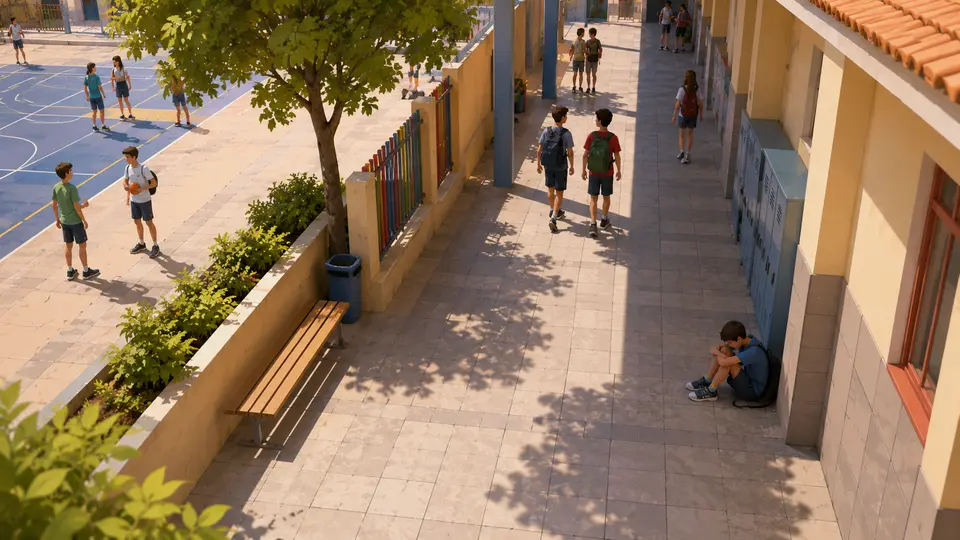
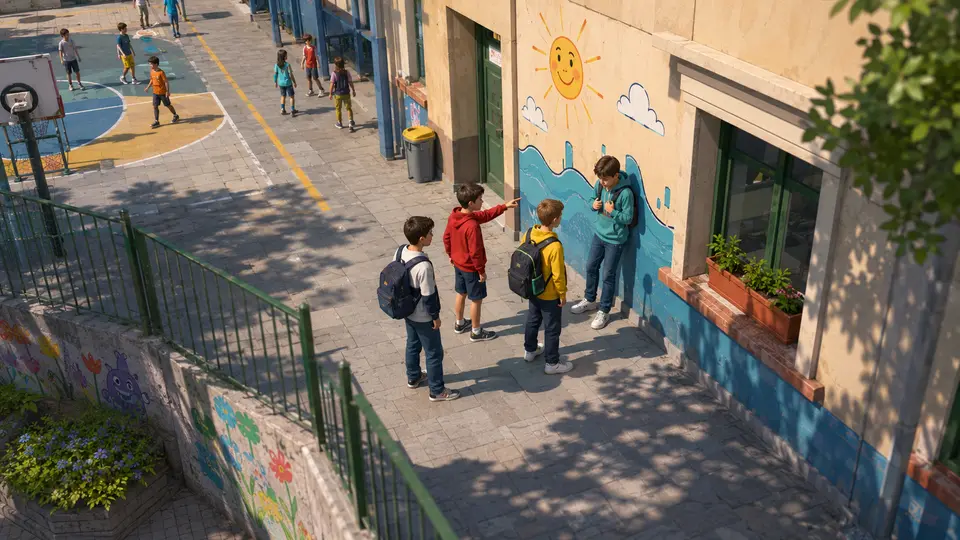
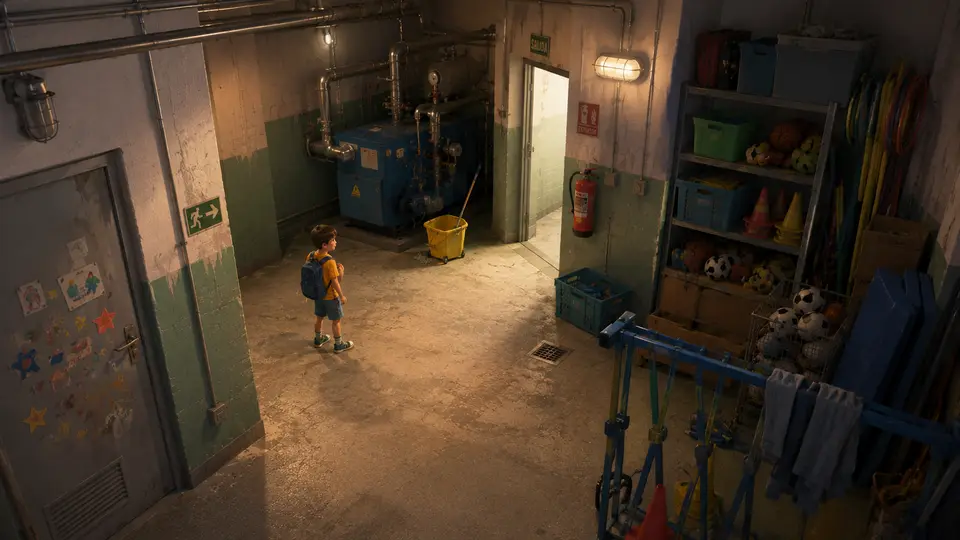
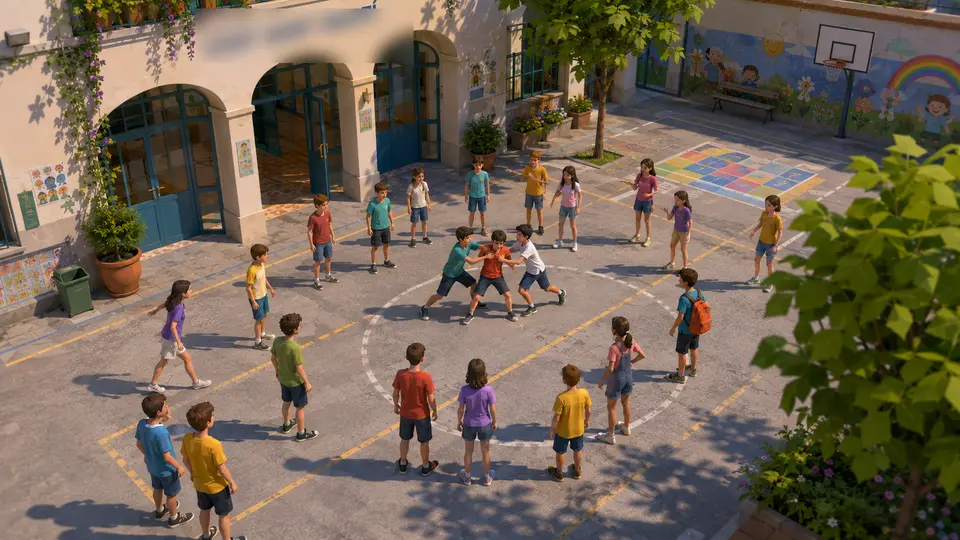
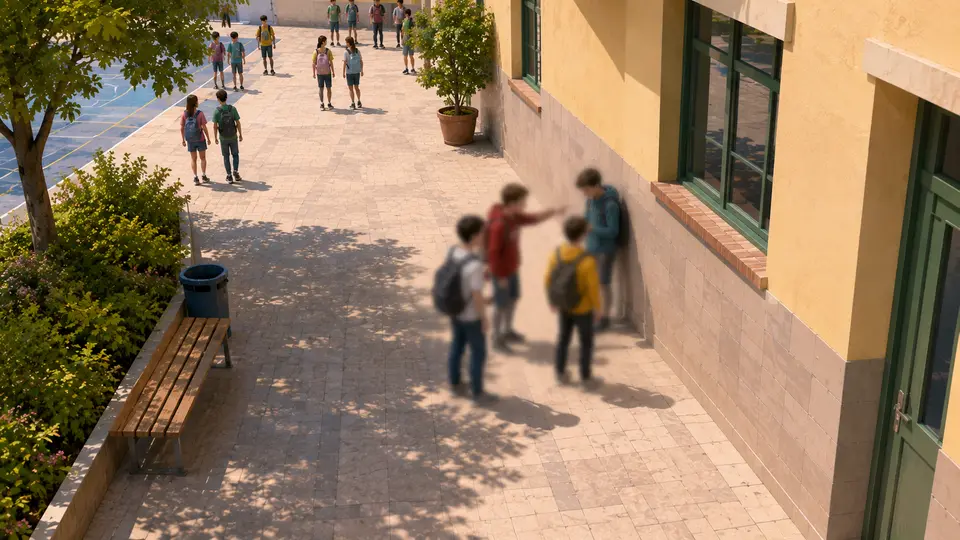
Twelve raise an alert when something’s under way and one alerts nobody: it just measures. They come in five groups, and the first is the children, because in a school that comes first: the children, the schoolyard and the building, the school gate, the street outside and measuring the school. They aren’t the thirteen things IRIS can do in a school; they’re the ones that fit on a screen, and each school writes them in its own words. All of them happen in common areas: there’s no camera in the restrooms or the locker rooms. Open any of them and you’ll see the image as it is and then with what IRIS understands on top.
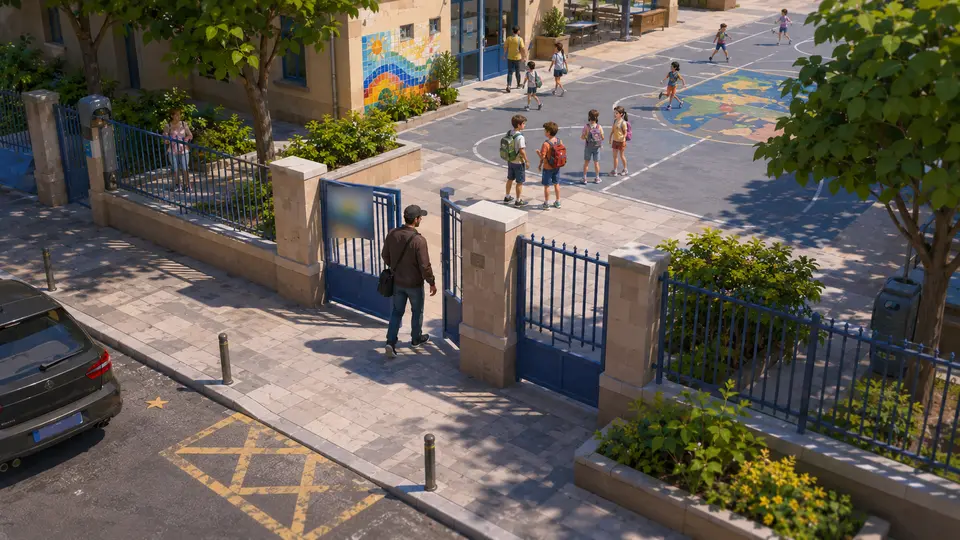
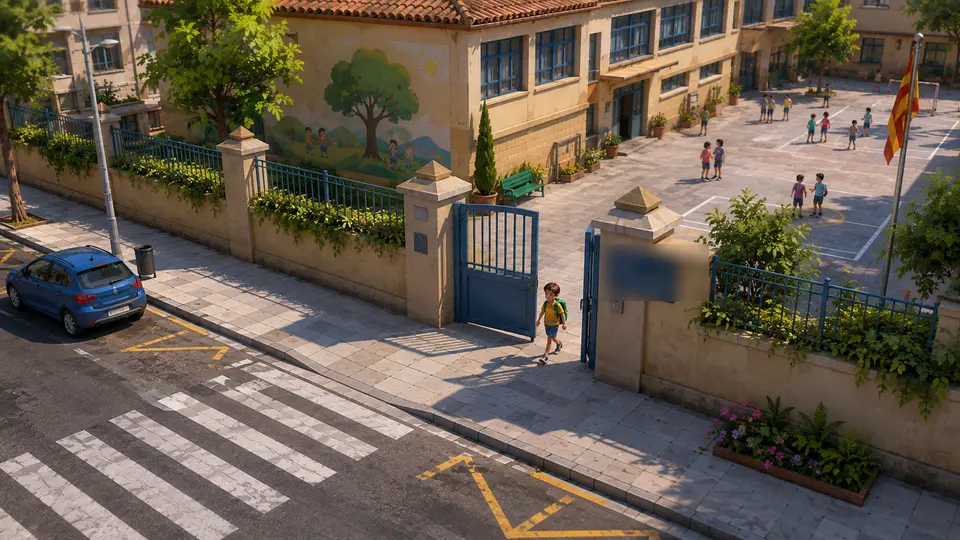
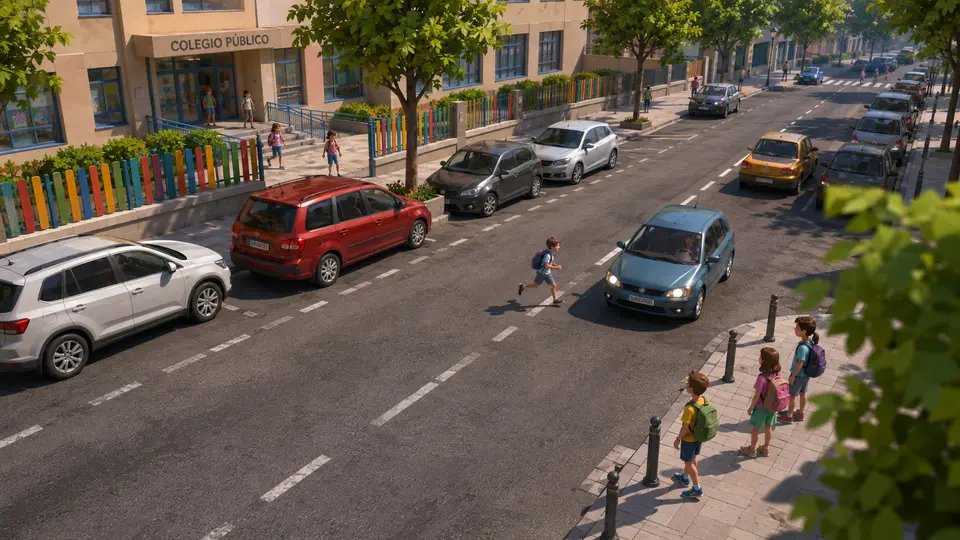
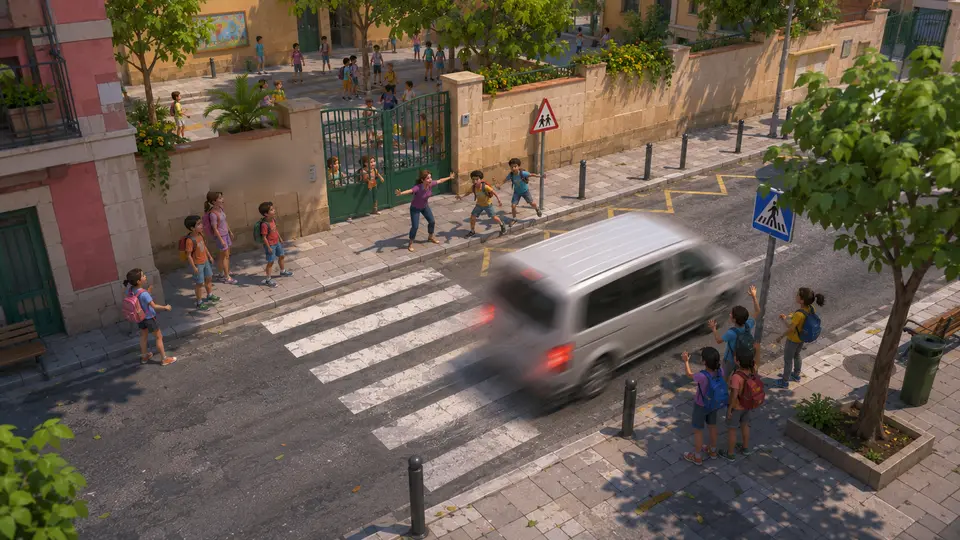
See it for yourself
A camera looks. IRIS understands what it sees.
An extract of the real screen, no voice-over and hands-free. Each round poses another situation. What sits behind it is a good deal bigger than what you see.
- You draw the line
- It counts by itself
- A number comes out
And now think about your school
Imagine knowing while it’s happening, and not when somebody tells you the next day.
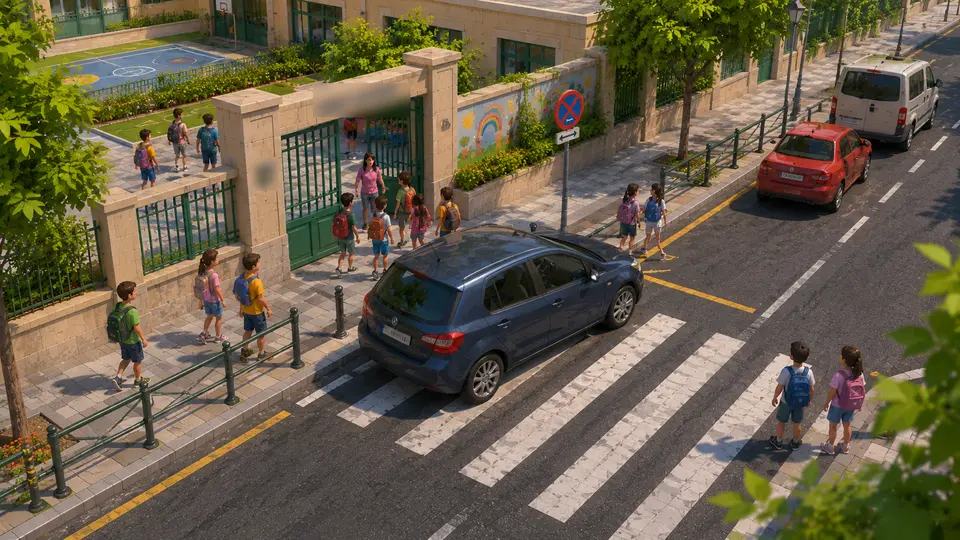
The child who’s been on the ground behind the gym for four minutes and doesn’t get up. The one who has spent the whole break alone, on the same bench. The closed ring that forms in the same corner at the same time every day. The child who’s gone into the schoolyard store room, where nobody should be alone. The shove that has turned into a fight by the basketball hoops. The schoolyard full at mid-morning with no adult in it. The emergency exit that has had a shopping cart in front of it for half an hour. The adult who came through the gate at eleven, when the gate was supposed to be shut. The child who walks out of the gate alone in the middle of the morning. The one who crosses the road without looking while the line waits on the sidewalk. The car going far too fast down the school street right at home time. The two cars parked across the entrance, with the gate behind them. And how many people are still in each space if the building has to be evacuated.
All of that is happening in front of cameras the school already has up, in common areas, and right now nobody knows: there are two adults in the schoolyard and three hundred children. IRIS watches all those cameras at once and says it while it’s happening, to whoever can walk out there. None of those sentences says who anybody is or puts a label on any child: they say what is happening, where and since when. In front of cameras that already exist.
What gets asked in the meeting at the school
The ten questions that come up before anyone says yes.
Answered in the first line, without hedging and without promising that a system prevents a fight or an accident. IRIS raises an alert early; looking, weighing it up and deciding still belong to the school team.
Are you going to recognize our students?
No, we aren’t going to recognize any student, and this comes before anything else. IRIS does not recognize faces, does not compare them against any database, does not know who any child is, keeps no face, follows no minor and holds a file on nobody. It doesn’t read license plates either: in a school that function isn’t turned on. And there are places with no camera: not in the restrooms and not in the locker rooms. IRIS looks at common areas — the schoolyard, the entrances, the shared hallways and the street outside the gate — which is where almost every school already has cameras today. What it sees is “there is a child on the ground on the back court and they have not got up for three minutes”: what’s happening, where and since when. That’s everything the alert contains, and that’s the first thing you have to be able to show the staff, the parents’ association and the families.
Does IRIS detect bullying?
No, IRIS doesn’t detect bullying, and anyone telling you otherwise isn’t being straight with you. Bullying is a pattern a trained professional assesses, looking at many things that never happen in front of a camera. A camera sees something else: it sees a closed ring that forms in the same corner at the same time, or a child who has spent the whole break alone. That’s a fact you can check, not a diagnosis. IRIS doesn’t say who bullies, doesn’t say who’s difficult, doesn’t say who’s sad and puts a label on no child. It does not diagnose and it does not predict. What it does is show the school team where and when to look, with the video in front of them. What that means is decided by a trained person — the class teacher, the school counselor, the team — and IRIS doesn’t touch that part.
Does IRIS open doors or call anyone of its own accord?
No, IRIS opens no door and calls nobody of its own accord. It doesn’t open or close the school gate, it sets off no siren, it alerts nobody outside the school and it takes no decision in place of a person. It doesn’t replace the teacher on duty either: the schoolyard is still watched by whoever watches it today, on the same schedule and with the same judgment. It doesn’t monitor the staff — it isn’t time-keeping, it isn’t clocking in and it appraizes nobody — and it issues no fines to any car. All it does is raise an alert early, with the camera, the time and the video, so an adult from the school walks over. Who goes, what they do and what gets written down stays exactly as it is now.
How many alerts are we going to get in one break time?
You’re going to get the alerts you decide on, because the rule is bounded: area, time of day and duration. A system that fires fifty alerts in one break is turned off within a week, and rightly so: when everything alerts, nothing does. That’s why a rule isn’t “tell me if there is a child on the ground,” which in a schoolyard happens constantly and almost always because they’re playing, but “tell me if there is a child on the ground on this court for more than two minutes,” or “tell me if this area has had no adult in it for ten minutes between eleven and eleven thirty.” By changing the area, the time window and the minimum duration, the same detector goes from sounding all the time to sounding when it really matters. And the rule is written by the school with its team and its counselor, not by a supplier: how long is “a long time” and which corner matters is known by the people who are there every day. It’s then tuned with what came out in the first two weeks.
What do we tell the staff, the parents’ association and the families?
The staff, the parents’ association and the families are told everything, and before anything is installed, not afterward. You show them what is watched: the schoolyard, the entrances, the shared hallways and the street outside the gate. And what isn’t watched: the restrooms and the locker rooms, where there’s no camera. You tell them in these words that there is no facial recognition, that there is no file on any minor and that IRIS labels no child. And you explain the camera that counts how many people are still in each space, because that is the one that raises a hand in any meeting: it is there to know how many people have yet to get out if the building has to be evacuated, and it is not taking the register, because it counts people and does not know who they are. The rest isn’t signed off by a salesperson of ours: the legal framing and the information given to families are signed by the school and its governing body, who are the ones answerable for it. A system like this only works if the staff and the families know exactly what it looks at and what it doesn’t.
Does it work with the cameras we already have?
Yes, it works with the cameras you already have, and that’s exactly the point: a school usually already has cameras at the gate, in the schoolyard and in the hallways, and what’s missing isn’t cameras, it’s somebody to watch them. IRIS analyzes the video signal those cameras are already producing. What does affect the result is where each one is mounted and what can be seen from there: a camera that covers the schoolyard lengthways and from above gives far more than one placed so the whole gate fits in frame. Before promising anything we’d rather look at your plans and a few real images and tell you which cameras this makes sense on and which it doesn’t. Sometimes the answer is to move one camera six feet, and that’s cheaper than buying anything.
Does the video leave the school?
The video leaves the school only if you want it to, and in a school the normal thing is that it doesn’t. IRIS can run inside the school itself, on your own machine and with no internet connection: the images go nowhere and the analysis keeps working even if the line goes down. It can also run in our data center or in the cloud if that suits you better, but that’s your decision and not a condition of ours. Wherever it runs, an alert always keeps the same things: the camera, the time, the situation detected and the clip of video, and nothing else. No name, no class, no stored face, because IRIS neither has them nor asks for them.
Is the figure for how many people are still inside reliable?
The figure for how many people are still inside is reliable because it isn’t set up by talking, it’s set up by drawing: you trace a line or an area over the image and count who crosses it and how many people are inside. A line can’t be described in a sentence; it has to be drawn. That’s why the number comes out the same way every day, can be repeated and can be audited. And on people counting you don’t have to take our word for it: our system is approved by the Centro Español de Metrología — Spain’s national metrology institute, an independent third party that has verified the figure is the right one. Said precisely: that approval covers people counting, not the whole product. And one more thing, because it matters: that number says how many people are still in a space and since when, so that if the building has to be cleared you know where people have yet to get out. It does not say who anybody is and it is not taking the register. It’s a Spanish approval. What crosses over isn’t the seal, it’s the method: the same line, in the same place, every day.
And what about what IRIS doesn’t see?
What IRIS doesn’t see is real, and it’s worth saying before anything is signed. A camera only understands what falls inside its frame: there’s no camera in the restrooms or the locker rooms, and whatever happens there IRIS doesn’t see and won’t see. It doesn’t see behind a closed door either, nor in the corner a tree hides, nor outside the hours the school has decided it should watch. In poor light or with a dirty lens it sees worse. And some situations look very much alike: a pile of children throwing themselves on each other in play and a fight can be confused for a second, which is why an alert is always closed by a person looking at the video. And the whole sentence has to be said: IRIS prevents no fight and prevents no road accident. By the time IRIS sees it, it’s already happening. What changes is how long it takes before an adult gets there. We aren’t going to sell you an infallible system, because it isn’t one. It’s a system that watches, all day long, the schoolyard nobody’s watching right now.
How much does it cost?
You pay per camera. What it comes to depends on how many cameras are analyzed, what each one is asked to do and where the video is processed. We don’t publish a price list because it wouldn’t be honest: a schoolyard with four cameras and two rules and a whole school with the gate, the hallways and the street aren’t the same project. What you can do is start small: the schoolyard and the gate, the two or three rules that really matter there, and look at the alerts with your team before deciding anything. Write to us and we’ll go through it with your plans and your cameras in front of us.
Next step

Who sees the sales that never reach the register?
10 cases: 4 raise an alert when something happens and 6 only measure. You see each image as it is, and then with what IRIS understands on top.

Who is watching when the load swings over somebody?
11 cases: 9 raise an alert when something happens and 2 only measure. You see each image as it is, and then with what IRIS understands on top.


And the best part
Nobody was hired to stare at a screen.They were hired to know what to do.
Watching is what a machine does best; deciding is what only a person does. IRIS watches all four thousand at once and hands over only what calls for a decision.
Tell us your problem and we’ll say whether IRIS understands it, or not yet.
A person answers, the same working day.