Where does IRIS work?
Wherever there are already cameras and nobody to watch them.
A city intersection, a station platform, a jobsite, a school gate, a substation ten miles from the nearest village. None of them looks like the others, and in all of them the same thing happens: the cameras are already there and there aren’t enough eyes to watch them.
What IRIS is
IRIS watches the cameras for you.
IRIS Neural is an artificial intelligence that watches the cameras you already have and understands what happens in front of them. When something important happens —or something you told it you need to keep an eye on—, it alerts you; and whatever can be counted, it counts in numbers. All day long, without anyone having to watch a screen.
You tell it what you need to watch, and IRIS does it.
Works with the cameras you already have. Nothing to replace.
A person replies, not a form.
- Your footage never leaves your premises.
- It doesn't identify people.
- Certifications →
The whole world
Different places. The same cameras. The same system.
A highway looks nothing like an operating room, and a loading dock looks nothing like a casino floor. What doesn’t change is what sits underneath: the camera that is already there, the rule you decide once, and the alert that only arrives when it has to. Step into any of them and you’ll see the same thing told in other words.
- Environments
- 21
- Cases built
- 532
- Of those, measuring
- 62





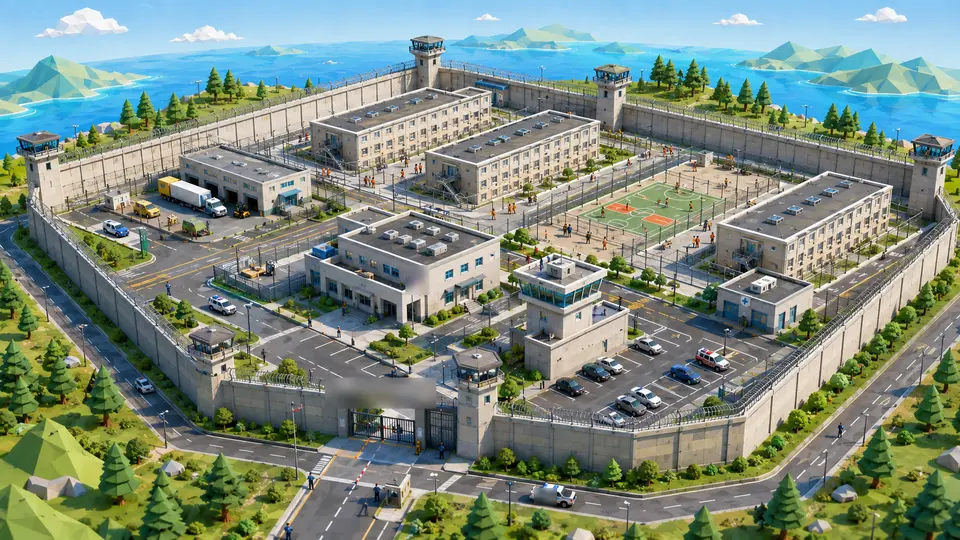
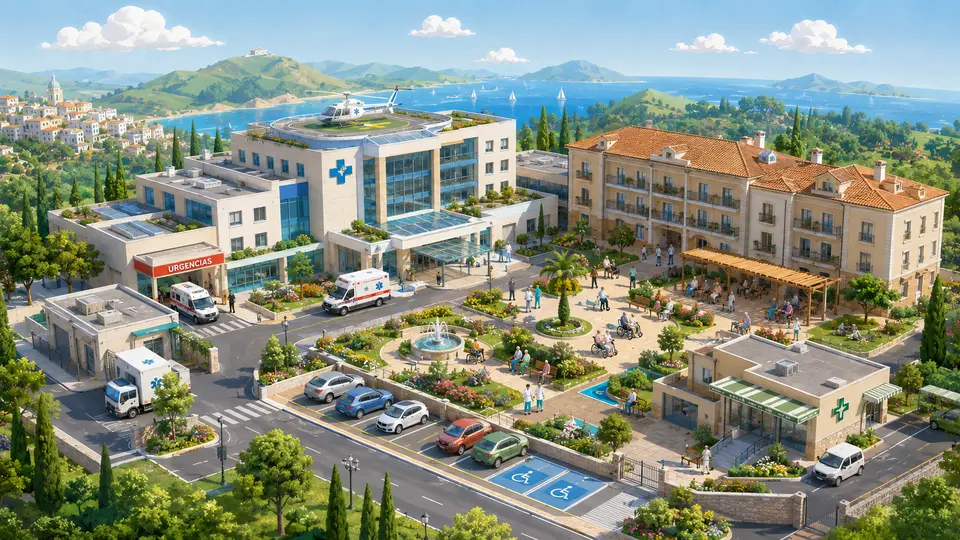


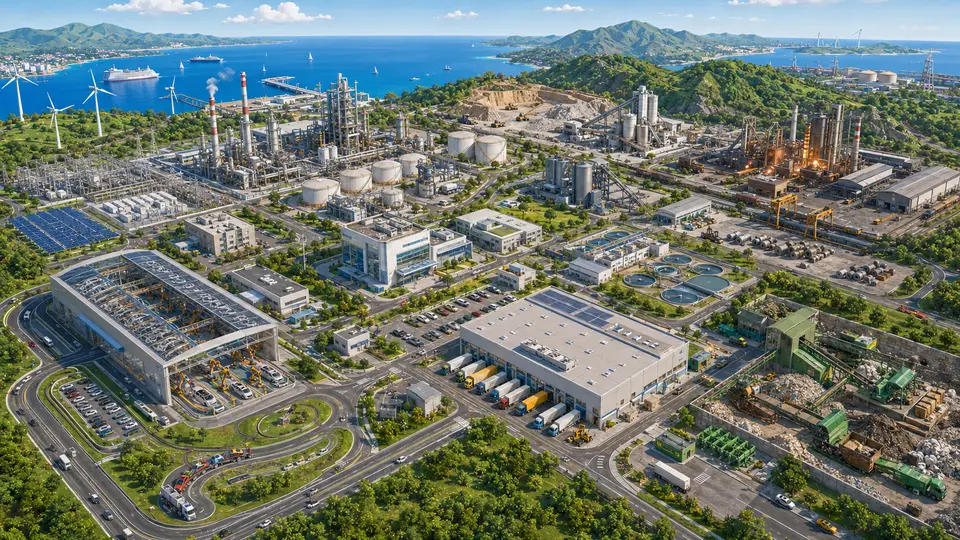
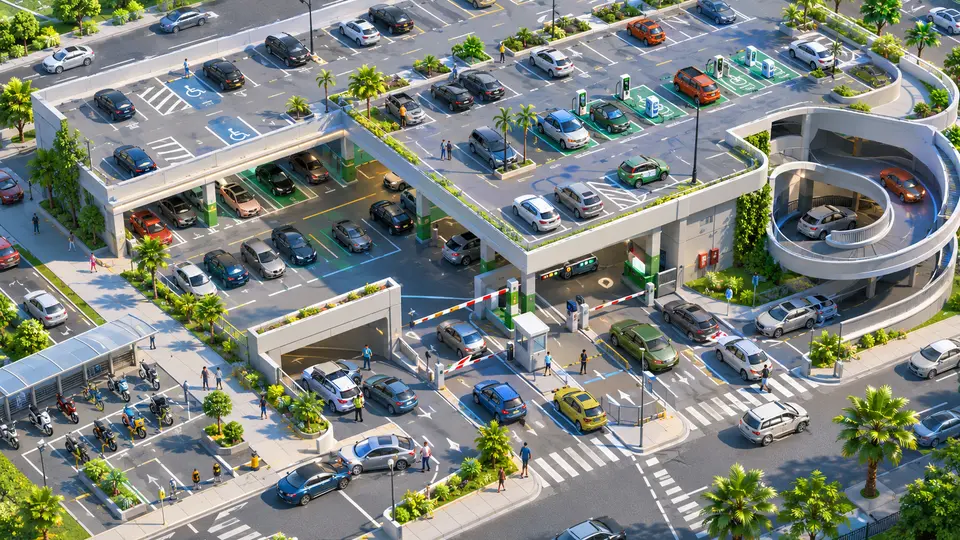


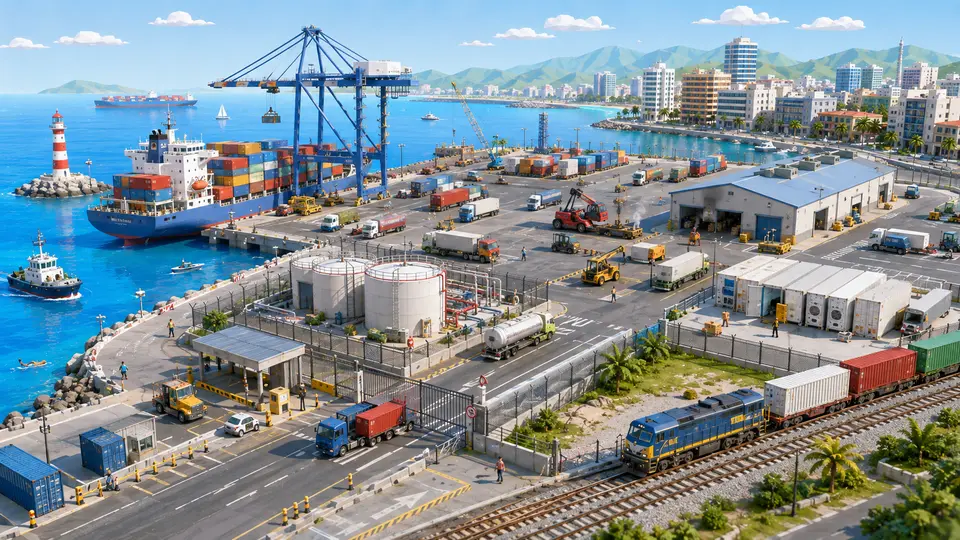




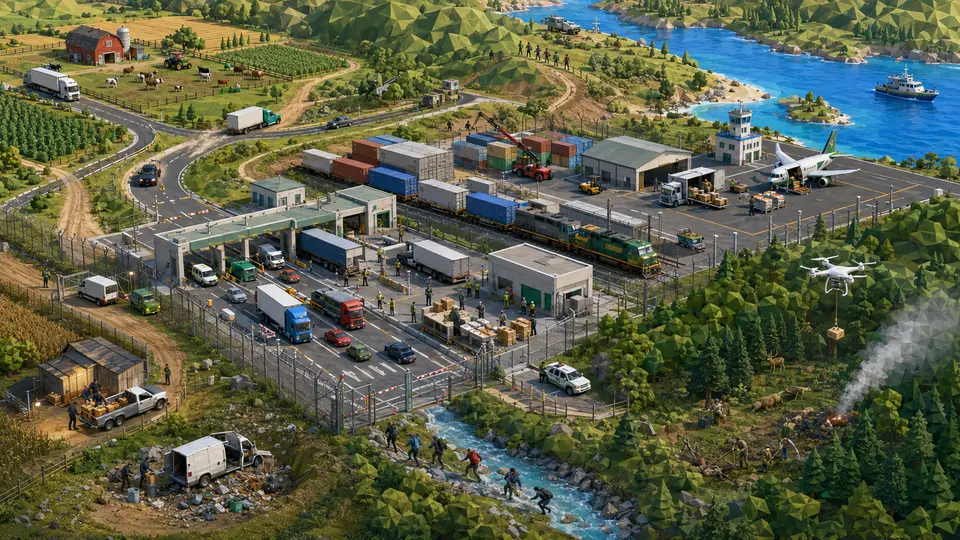
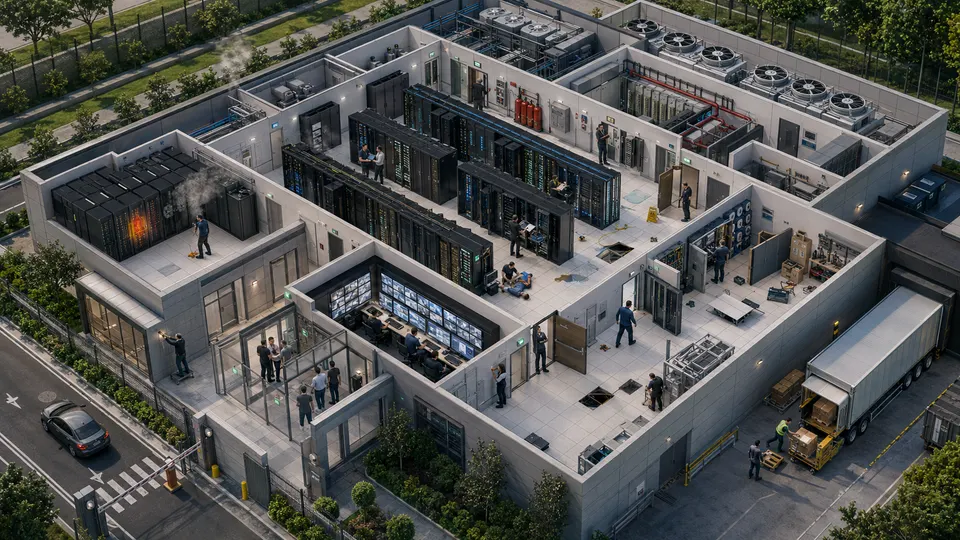
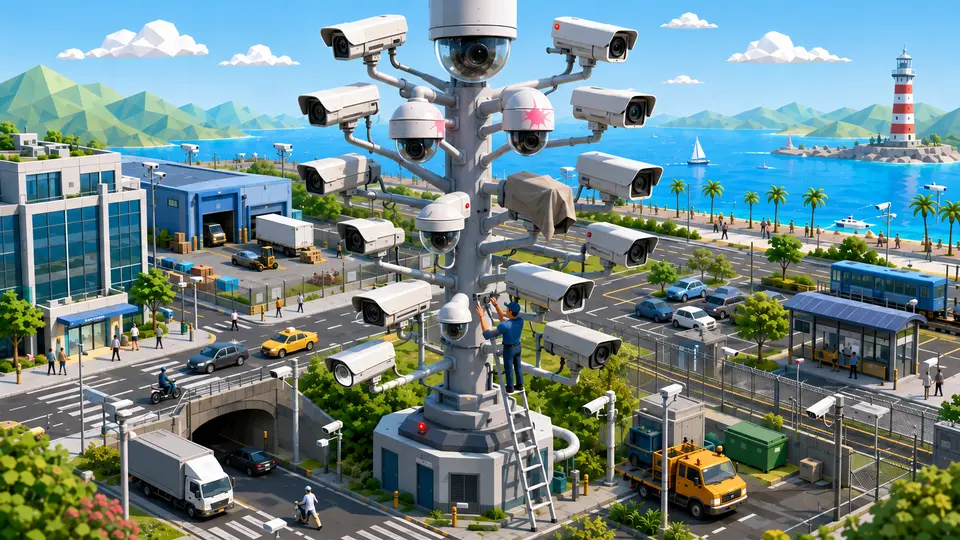


A car pulls over on the shoulder at mile marker 12. A platform fills up ten minutes before the train arrives. A truck has been at dock 4 for half an hour and nobody has written down why. Someone has been on the floor of a hospital hallway for a good while and nobody has walked past yet. The four places have nothing in common, but the failure is the same: the camera was seeing it and nobody was watching.
Above are all the environments that are built, each with its picture and its cases: a city, a highway, a station, a store, a jobsite, a hospital, a school, a port and quite a few more. What changes from one to the next isn’t the technology: it’s what deserves attention. On a highway, a vehicle stopped in a lane matters; on a platform, how much room each person has; on a dock, how many minutes a truck has stood there with nothing being loaded.
Everything is seen from where it’s really seen: a camera on a pole, about fifteen feet up, tilted down toward the scene. A single spot usually has several. At the main intersection, the camera above counts who crosses on red; the one at street level reads what happens in the bus lane. Same intersection, different understanding: change the camera and you change what IRIS can grasp.
There’s no per-sector version of IRIS. It’s the same system, the same way of writing rules and the same console, configured around what matters in each place. For an organization with a port, some offices and a few miles of road, that means one contract instead of three, one history instead of three, and a team trained on one tool instead of three.
A car stopped in the lane
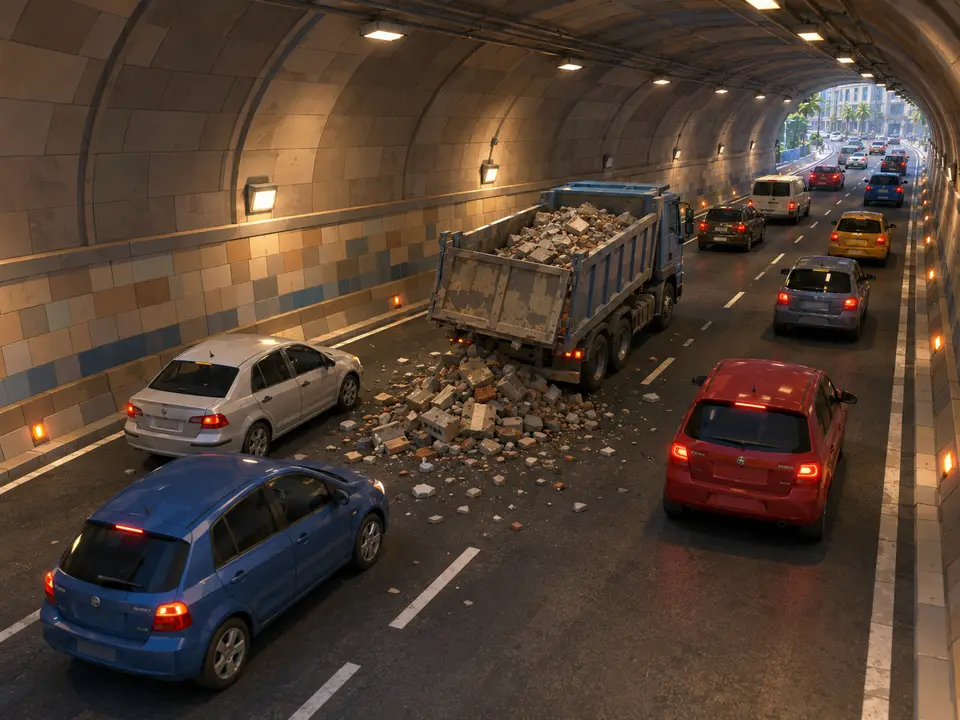
Road and city. A car stops in the right lane at 7:40 p.m. IRIS sees it standing where nothing should be standing, opens the incident and sends it to the control room with the camera already up. Same for something dropped in the lanes, or somebody walking on the shoulder.
A platform filling up
Public transport and large venues. Three minutes before the train, people move toward the platform edge. IRIS measures how much room each person has inside the yellow line and alerts when it drops below the limit the station manager set. At the entrance to a venue or a mall it does the same with the line: how many people and how long they’re taking.
A dock where nothing moves
Industry, port and logistics. A truck pulls into dock 4 at 6:45 a.m. and at 7:12 a.m. it’s still there without a single pallet moving. IRIS times the occupancy, records it and alerts Operations with the elapsed time. At the end of the month, the lost minutes stop being a feeling and become a table.
A fence nobody’s watching
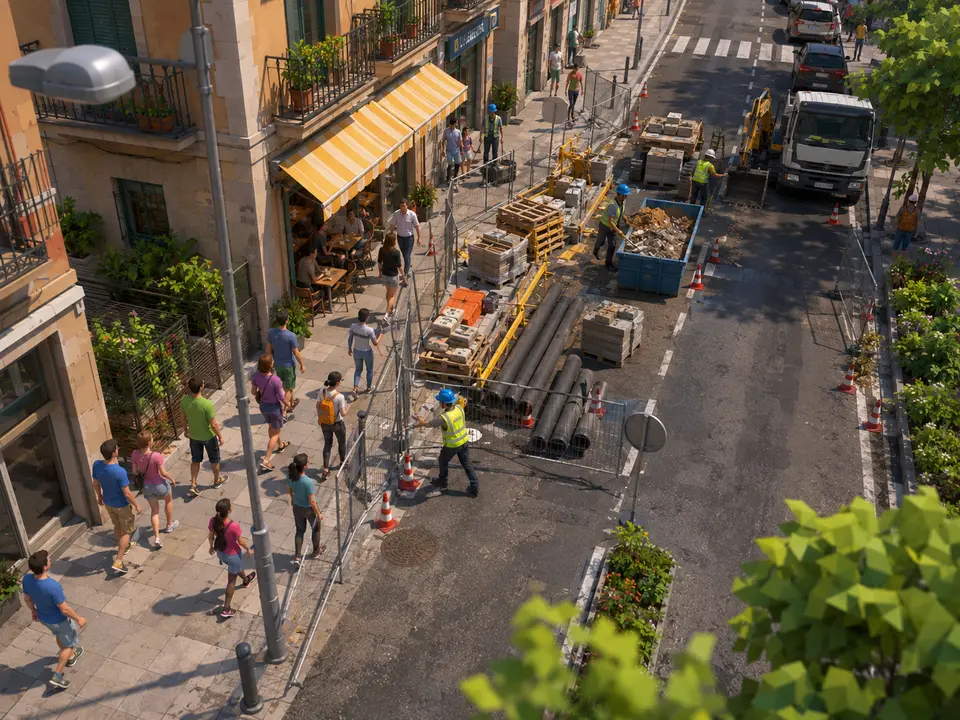
Infrastructure, jobsites and closed facilities. A dam, a water treatment plant or a substation spends most of its time with nobody inside, which is why what happens there is found out late. IRIS tells a person apart from an animal or a branch moving in the wind, so the alert that arrives at four in the morning means something. On a jobsite the same goes for the construction fence, and in a prison for the wall.
Is IRIS only for security?
No. IRIS is also used to measure the operation: headcounts, wait times, zone occupancy, queues and flows of people or vehicles. There are sites where that number is asked for every day and an alarm almost never, because not everything that matters is an alarm: sometimes what matters is a number. That isn’t asked for in words: you draw a line or an area on the image, because a line has to be drawn. And people counting is approved by the Centro Español de Metrología — Spain’s national metrology institute — through NeuralPax: what’s approved is that measurement, counting people, and nothing else. That approval is Spanish and it isn’t equivalent to any U.S. certification: we say so up front and not at the end.
Do I need a different module for each sector?
No. It’s the same platform in every environment; what changes is the configuration: which objects matter, which zones are watched and which rules apply. An organization with very different environments works with one system, one history and one trained team.
Does it work in remote places, with no staff and no connection?
Yes, as long as the camera has power and a route to reach the IRIS server. The analysis runs inside the site itself, so on a remote perimeter or in a closed network IRIS still understands the scene even with no internet connection.
Where it doesn’t fit
Where does IRIS not make sense?
IRIS doesn’t see what the camera doesn’t show. If the framing can’t make out a hard hat, a number or a plate, software won’t fix that: moving the camera or adding another one will. That’s why the first step of any project is to go camera by camera and say which ones serve what you want and which don’t.
Nor is IRIS a sensor. A camera can’t smell a gas leak, measure the temperature of a bearing or know what a container weighs. When the figure you need isn’t in the image, another instrument is required, and the honest thing is to say so upfront rather than sell a camera as if it were one.
And some scenes are hard for anyone: thick fog, backlight at dawn, heavy rain at night, a dirty lens. We don’t promise that will never happen. We promise to test it on real footage from your camera before you sign anything.
If it isn’t visible, it isn’t there
Detection depends on the framing, not on the camera brand. A frame that is too wide or too far away isn’t fixed by adding software.
It isn’t a replacement for a sensor
Gas, temperature, weight, pressure. If the figure isn’t in the image, you need an instrument that measures it; IRIS can take that reading in, but it can’t invent it.
Some scenes are hard
Fog, backlight, heavy rain at night. We don’t hide it: we test on that camera’s own footage and say what can be expected from it.
Not an off-the-shelf product
It’s the same system in every environment, but each site is configured: which zones are drawn, which objects matter and what happens when they do.
See it, don’t read it
Eight environments read badly on paper. Look at one.
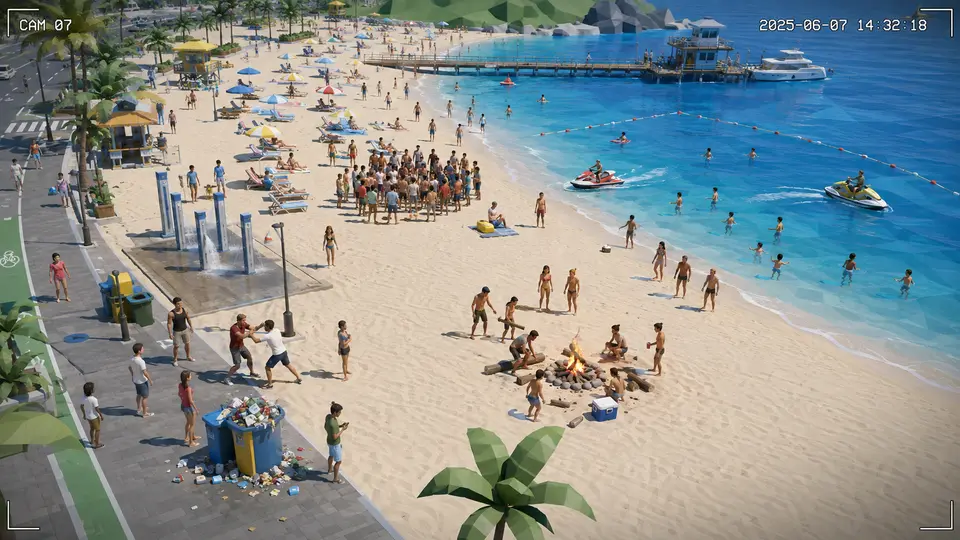
The city is the environment we have built out in full: twenty-three cameras, each with its image as it is and with what IRIS understands on top. What it does there is what it does in a port or on a platform; what changes is what is in front of the camera.



The real interface, step by step
You set the rule once. IRIS applies it every time.
You will see a summary of the interface, played step by step and hands-free. Each round starts with another case. The complete tool doesn’t fit in a demo.
- The rule gets built
- It goes to every camera
- Published, it watches alone
- And then it fires
This is what it looks like
This is not a mock-up. This is IRIS running.
Real screenshots of the interface: the rule editor, the camera map, search by description and the incident panel. It is the same software across all eight environments; the only thing that changes is what is in front of the camera.
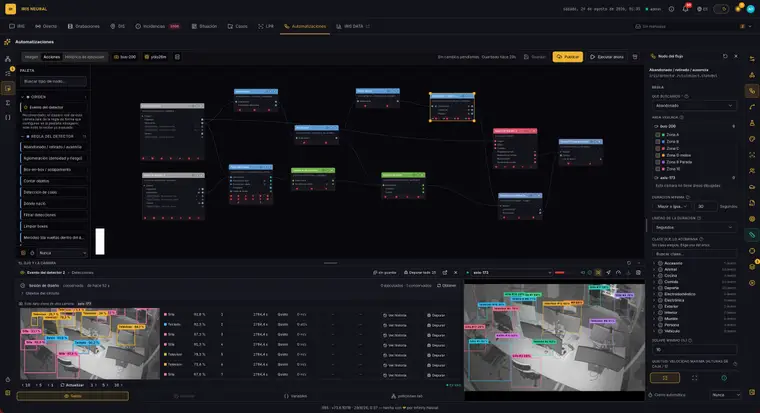
Automation editor: the rule laid out as a block diagram, with the cameras it applies to alongside.
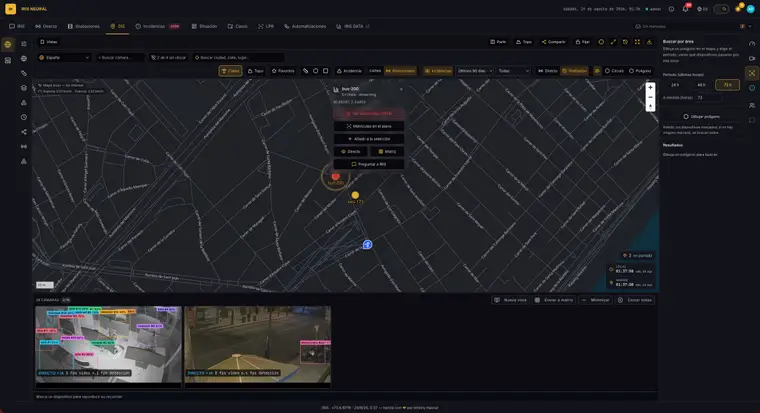
City map with the cameras placed on it, and two of them live underneath.
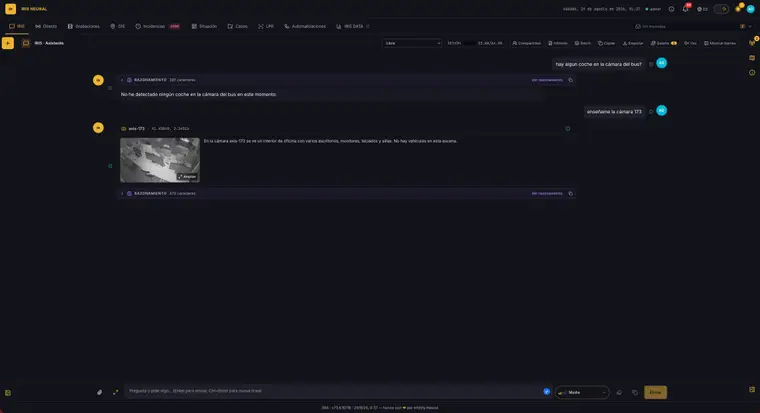
Asking IRIS in writing: “is there a car on the bus camera?” and the answer with the frame.
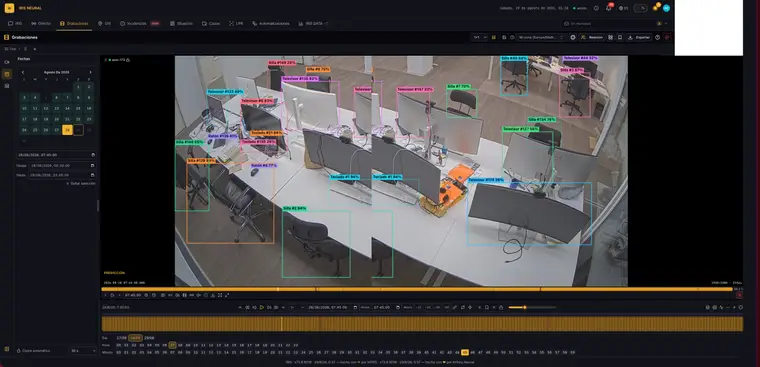
A recording with what IRIS recognizes marked on top, object by object.
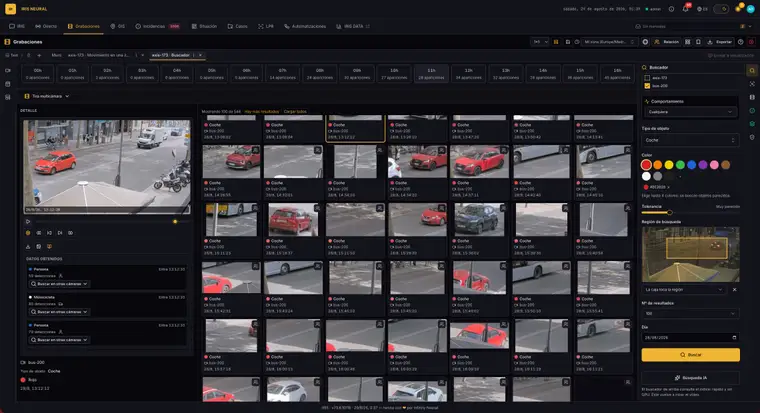
Searching the archive: every red car from one day, without reviewing hours of video.
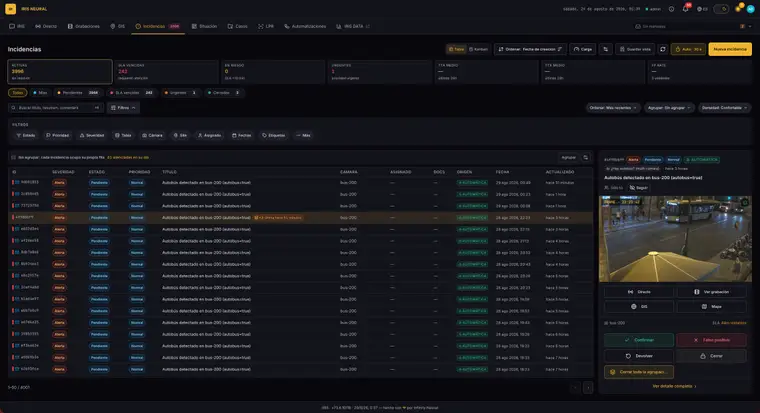
Incident panel: what is open, at what priority and who it is assigned to.


They are small on purpose: this shows what the product looks like, not what it says inside. If you want to see it properly, we will show you in a demo and you can use it yourself.
The real interface, step by step
You set the rule once. IRIS applies it every time.
You will see a summary of the interface, played step by step and hands-free. Each round starts with another case. The complete tool doesn’t fit in a demo.
- The rule gets built
- It goes to every camera
- Published, it watches alone
- And then it fires
Next step
What does a venue with twenty thousand people inside see?
15 cases: 11 raise an alert when something happens and 4 only measure. You see each image as it is, and then with what IRIS understands on top.
When does a bad review get decided?
15 cases: 11 raise an alert when something happens and 4 only measure. You see each image as it is, and then with what IRIS understands on top.
And the best part
You can’t describe a line with a sentence.You have to draw it on the image.
Asking is for finding. Counting is for measuring. And they aren’t done the same way. That’s why the number comes out the same every day, and why people counting is approved by the Centro Español de Metrología — Spain’s national metrology institute. It’s a Spanish approval and it isn’t equivalent to any U.S. certification.
Tell us your problem and we’ll say whether IRIS understands it, or not yet.
A person answers, the same working day.