Everything people ask
The usual questions, answered once and for all.
They’re grouped by where they come from: first what you need to understand before anything else, then each part of the product, and finally each sector. No answer was written for this page: they’re the same ones you’ll see in their own place, and each group links to the page where it lives.
299 questions answered
What IRIS is
IRIS watches the cameras for you.
IRIS Neural is an artificial intelligence that watches the cameras you already have and understands what happens in front of them. When something important happens —or something you told it you need to keep an eye on—, it alerts you; and whatever can be counted, it counts in numbers. All day long, without anyone having to watch a screen.
You tell it what you need to watch, and IRIS does it.
Works with the cameras you already have. Nothing to replace.
A person replies, not a form.
- Your footage never leaves your premises.
- It doesn't identify people.
- Certifications →
First things first
What IRIS is, how it differs from a VMS, whether you have to replace the cameras, whether it works without internet, and who decides.
Home
Go to the pageCan IRIS work without internet?
Yes. IRIS can be deployed fully on site and work with no internet connection. Video, models, searches and rules can all run inside the customer’s own infrastructure.
Do I have to replace my cameras?
Not necessarily. IRIS is designed to use the video infrastructure you already have, where the integration and available streams allow it.
Does IRIS make decisions for us?
No. Your organization sets the rules and the limits. IRIS automates their repetitive application and brings people the situations that need human judgment.
What is an NVMS?
An NVMS is a Neural Video Management System: a video management system that also understands what is happening in the scene. It interprets objects, zones, timings and context, applies the organization’s rules and turns video into metrics and evidence.
How long does it take to get running?
It depends on the site and how many cameras are integrated, so we don’t quote a generic timeline. The usual path is to start with a few cameras and one or two rules, check it detects what you expect, and grow from there.
Does IRIS replace my current VMS?
It depends on the site. IRIS can work as a complete video management system or sit alongside the one you already have, and that’s decided after looking at your camera network, not before. We’d rather go camera by camera and tell you what can be done today and what can’t, than promise it fits everything.
How much does IRIS cost?
The price depends on three things: how many cameras come in, how many detections you want on each one, and where the video is processed. We don’t publish a fixed price list, because a twelve-camera site and a six-hundred-camera site have nothing in common. Tell us your case and we give you a real figure, not a range.
Does IRIS cut down false alarms?
Yes, and it’s one of the reasons it gets installed. Classic motion detection goes off with rain, a branch or a cat; IRIS looks at the scene and works out what is there, where it’s and how long it’s been there before it alerts. We don’t promise an alert will never fire needlessly again, because that doesn’t exist: we promise the noise stops reaching the operator, and that when an alert does arrive, it’s worth looking at.
What is IRIS
Go to the pageDoes IRIS make decisions for us?
No. Your organization defines the rules and the limits, and IRIS takes care of applying them over and over across every camera. Situations that call for human judgment reach a person together with the footage, the context and the history, so the decision is made with everything in view.
Do I have to replace my cameras to use IRIS?
Not necessarily. IRIS is designed to make use of existing video infrastructure where the integration and the available streams allow it. A survey beforehand goes camera by camera: which ones work as they are, which are worth re-aiming, and which don’t give the image quality the detection you want requires.
How is IRIS different from video analytics?
IRIS differs from video analytics in what it does after detecting. Analytics spots an isolated fact: there’s a person, a line was crossed, twelve vehicles went past. IRIS links that fact to the zone, the elapsed time and the context, checks the rule your organization set, and carries out what should happen next. Detection is the beginning, not the end.
Are detecting and understanding the same thing?
No, and this is one of the most confused points. Looking is three different things. The first FINDS: it knows there is a person there and at exactly which point of the image; it’s fast and always gives the same result on the same image, which is why it’s the only one you can count with and have a number come out the same twice. The second NAMES: it tells a van from a car, a hard hat from a cap; it works with a list, and what isn’t on the list it doesn’t see. The third UNDERSTANDS: it reads the whole scene and how things relate — not “a person” and “a car,” but “a person on the ground beside a car stopped in the middle of the intersection” —, it needs no list and answers a sentence written in your own words, but it isn’t the one you count with. IRIS carries all three as standard, not as separate add-ons: on the same camera you usually need them at once. That’s why we say asking is for searching and counting is for measuring, and that they aren’t done the same way.
Can IRIS learn to see something that only happens at my site?
Yes. A part made only here, a movement done only in this trade, a defect that only shows up with this material: none of that is on any list, and it isn’t going to be. A model of your own is trained on images from your cameras and on your cases, and it becomes one more detection inside IRIS, written into a rule like all the others. And that model is yours: it’s trained on your images and on the judgment of your people, so it remains your property. It isn’t reused with another customer, it isn’t folded into a product sold to your competition, and you don’t have to remain a customer to keep using it. What it takes to train it: images of that happening — real ones, not staged — and someone on your team who can say which is right and which isn’t. If the thing you want to detect can’t be seen in the image, no model will pull it out.
NVMS
Go to the pageIs IRIS a VMS?
IRIS includes capabilities you’d expect from a VMS — taking in cameras, recording, playback and export — but what it offers goes beyond that. IRIS understands what happens in the image, applies the organization’s rules, turns video into metrics and lets you investigate without reviewing hours of footage.
Do I have to replace the VMS I already have?
Not necessarily. Depending on the project, IRIS can act as the complete platform or live alongside the existing video infrastructure, using the available streams and integrations. The sensible thing is to review it case by case: which cameras, which recording and which systems can be reused.
What exactly does NVMS mean?
NVMS stands for Neural Video Management System: a video management system that also understands what is happening inside the images. The difference from a VMS is at the center of the model: a VMS revolves around the screen and the operator; an NVMS revolves around the decision.
Do you do custom development?
Yes. A detection is worth little if it ends up on a screen nobody looks at, so usually something’s needed around it: a screen built for how your team works, a report in your format and with your names, a calculation that only makes sense in your operation. That gets built. What we won’t tell you is that it all fits in the same budget: some things are solved in an afternoon and others are a project, and which is which gets said at the start, while there’s still time to change the plan, not after signing.
Does it integrate with what I already have?
Yes, and that’s the norm: almost nobody starts from scratch. The alert can land where your team already works, the number can end up in the dashboard you already read, and what IRIS decides can lean on something your system already knows. What we won’t tell you is that we fit with everything. What gets integrated and how is decided by looking at your actual system, not before: some connections take an afternoon and others depend on whether the other side lets you in, and that sometimes depends on neither of us. It’s checked at the start, with your system in front of us, and if something isn’t going to be possible, that’s said then.
Does IRIS record?
Yes. IRIS takes in the cameras, records, plays back and exports, just like whatever system you have now. Recording is not what changes: what changes is what happens after recording, because IRIS understands what is in the image and applies the rules you write. And if you already have a VMS recording, IRIS can live alongside it instead of replacing it.
Natural language
Go to the pageDo I need to know how to code to configure IRIS?
No. Rules are described in ordinary sentences — what to watch, where, for how long and what to do — and IRIS shows how it has read each part before switching it on. The technical team is still needed for commissioning and integrations, but not for changing a threshold.
Does IRIS detect anything I ask it to?
No. Some situations a given camera can’t resolve because of its position, image quality or lighting, and some details are too small or too far away for any camera at that framing. The way to find out isn’t to argue about it: it’s to test the description on that camera’s real footage and look at the result before counting on it.
Can I use natural language to search the recordings?
Yes. Besides defining rules for the future, you can describe something that already happened — “white van parked for more than ten minutes at dock 4” — and IRIS returns the candidates with their camera, time and image. Stop looking for the minute; look for what happened.
Does it cost me anything to try phrasings until I get it right?
It costs nothing. IRIS doesn’t charge per query: there’s no meter on phrasings, searches or trials. Write a rule, test it against video from that camera, change it and test it again as many times as you need; one trial and a million trials cost the same. That’s deliberate, because a sentence gets sharpened by trying it, and a system that charges per attempt ends up with rules written in one go and written badly.
Processing
Go to the pageCan IRIS work without an internet connection?
Yes, IRIS can work without an internet connection, and the nuance matters: it isn’t that it survives a line outage, it’s that in the on-site mode it doesn’t use the line to work at all. The servers sit in your building, video comes in over your network, and the models run on your hardware without calling any outside service. You can unplug the cable and the system keeps detecting, alerting, measuring and recording exactly the same.
Where does the video live and who can access it?
The video lives where you decide, and only the people you authorize can reach it. In the on-site mode it lives on the disks in your building and no third party sees it. In our data center it lives on our own dedicated infrastructure, located where we agree, and the contract sets who may get in, with what permissions and how long each thing is kept. In both modes communications are encrypted and access is logged.
Can I start with one mode and switch to the other later on?
Yes, you can start with one mode and switch to the other later on. It’s the same system in both places: what changes is where the analysis runs, not what it can do, nor the rules you drew over your cameras, nor how your operators work. The whole organization doesn’t have to move at once either: each site can have its own mode and they’re all seen from the same place. What does change is who buys the hardware and how it’s billed, and that gets discussed before signing, not after.
What happens if the link goes down while the video is being processed in your data center?
If the link goes down, analysis in our data center stops until the line comes back. We say it plainly because it’s the real limit of that mode: with no link, nothing arrives to be analyzed at the other end, and during that time you won’t get alerts. Your cameras keep recording wherever they do today, and as soon as the line is restored the analysis resumes. If there’s a spot where that gap isn’t acceptable — a control room, a treatment plant, a prison — that spot goes on-site. The two modes can be mixed in the same organization.
Does it cost me more the more I use it?
No. IRIS isn’t billed by usage: there’s no meter on queries, searches, alerts or open cameras. One query and a million queries cost the same. That’s deliberate, because a system that charges per question ends up barely used: the operator hesitates before searching and the tool sits idle. What does change the price is the size of the installation and the deployment mode, and that’s agreed before signing, not after.
The world
Go to the pageIs IRIS only for security?
No. IRIS is also used to measure the operation: headcounts, wait times, zone occupancy, queues and flows of people or vehicles. There are sites where that number is asked for every day and an alarm almost never, because not everything that matters is an alarm: sometimes what matters is a number. That isn’t asked for in words: you draw a line or an area on the image, because a line has to be drawn. And people counting is approved by the Centro Español de Metrología — Spain’s national metrology institute — through NeuralPax: what’s approved is that measurement, counting people, and nothing else. That approval is Spanish and it isn’t equivalent to any U.S. certification: we say so up front and not at the end.
Do I need a different module for each sector?
No. It’s the same platform in every environment; what changes is the configuration: which objects matter, which zones are watched and which rules apply. An organization with very different environments works with one system, one history and one trained team.
Does it work in remote places, with no staff and no connection?
Yes, as long as the camera has power and a route to reach the IRIS server. The analysis runs inside the site itself, so on a remote perimeter or in a closed network IRIS still understands the scene even with no internet connection.
By what it does
One for each part of the product: live view, search, plates, incidents, maps, automation and the rest.
Live view and video wall
Go to the pageDo we need new cameras to get a video wall like this?
No. IRIS works with the cameras that are already installed, and the operator drives everything from the browser, with no program to install on each desk. What changes isn’t the hardware out on the poles: it’s that the layout is built in two clicks, saved, and comes back identical tomorrow, and that the room’s wall is driven from the desk.
How many cameras fit on one screen at once?
Up to 64 tiles per screen, with twenty grid shapes or free placement by hand. Separately there is a limit, configurable per server, on how many of those tiles carry live video at once, so neither the workstation nor the network is choked. Tiles beyond that limit don’t go black: they show a refreshing still image, and the tile itself says this is a system decision and not a fault.
Who can see each camera, and is there a record of who watched?
Viewing, moving and configuring are separate permissions, and on top of that each camera can have its own access list, person by person. Privacy-masked areas can’t be uncovered from a view: it takes a written reason, a limited duration and, where the organization requires it, a supervisor’s approval. And yes, there’s a record: every viewing, every camera movement, every unmasking and every access to a published wall is logged with who, when, from where and by which route.
A tile stops showing video. How do I know if it’s a fault or a decision?
Because the tile says so. IRIS tells three reasons apart and names them: the limit on simultaneous live video has been reached — a decision of the system, not a fault — the camera is down, or the stream has stalled. In the first case the tile switches to a refreshing still image and stays useful; in the other two it reconnects by itself and says so while it does. An operator can also insist that their tiles never fall back to a still image. And if a tile is black because you have no access to that camera, it says that too: a black square with no explanation is the worst possible answer in a control room.
What does it actually take to set up a wall of screens?
A screen with a browser — a television, a monitor or a video cube — and its connection to the server over the same secure port as everything else. Nothing to install on that screen and no configuration file to edit: the shape of the wall, the content of each tile, the bezel compensation and even the scrolling text bar are all set from the web interface. The screen opens the published link without typing a password, and that link carries a PIN, an expiry date and a list of allowed addresses. What you do need is the one thing no vendor sells: deciding what gets seen. That part is the control room’s work, and everything else exists so that it only has to be done once.
Detection and behaviors
Go to the pageWhat exactly can IRIS detect?
IRIS ships with 41 ready-made behaviors — intrusion, line crossing, dwell time, loitering, abandoned or removed object, occupancy, queues, crowding with density, space taken, wrong way, speed, distance between people, movement between zones — on top of a catalog of 94 object classes grouped into 12 families. If what you need is none of them, a fine filter compares each object against eleven fields — confidence, tracking age, speed, direction, size, class stability — with eight comparators and conditions grouped by “and” and “or.”
Does the camera have to be calibrated to measure speed?
Not to get started. Every class in the catalog carries its real average height — five foot seven for a person, five feet for a car — and that alone yields feet per second and miles an hour with nothing to set up. For a real measurement on the ground, you mark four points on the image and state their true distances: from then on, distances, paths and speeds are in feet and in miles an hour. IRIS always tells measured speed from estimated speed, and a rule can demand that only the measured one counts; the estimated one falls short, which is exactly why it’s labeled for what it is.
What if it floods the shift with false alerts?
That’s the first thing you tackle. You can mark areas where nothing’s detected at all — a road in the background, a poster with photographs of people — require that an object has been tracked for a while before anything fires, set a double threshold so the alert doesn’t flicker at the edge of a zone, restrict the behavior to a schedule, and add wait time, a cooldown and a cap on alerts per minute. Before anything is published you see on the live image what the rule really produces, including the discarded objects and the reason each was discarded.
What about at night, or in poor light?
With less light there is less to detect, and the system says so instead of covering it up. Every camera carries an image-quality reading that works as a gate: if it’s out of focus, dirty or fogged, the rules that depend on it aren’t run blind. There’s also a detection health score per camera, built on six signals, which doesn’t stop at the diagnosis and says what to do: check the optics, check the focus, check the night infrared. The limit, stated up front: at night, in infrared, the image loses color, so the color reading is flagged as unreliable rather than claiming the van was white. And schedules understand sunrise and sunset, so watching at night keeps meaning the same thing in June and in December.
What happens when two objects cross and hide each other?
The identity is held for a few seconds, and when it can’t be, that’s said. When something hides an object — a pillar, another vehicle, an awning — the system doesn’t extrapolate blindly: it damps the speed the object was carrying and loosens the criterion for picking it up again, in proportion to how long it’s been out of sight. Each object also keeps a small history of its classes, so a car that flickers to truck in the distance doesn’t make the rule flicker, and the tracking parameters are tuned per class, because a truck and a person don’t move alike. The limit, stated up front: if the occlusion lasts too long the track dies, that object’s life summary is closed, and what reappears afterward is a new object. Recognizing it again by its appearance is a different thing, and it still does not know who anyone is.
Recording and forensics
Go to the pageCan something be found in the video without knowing the exact time?
Yes — that’s what the fifteen filters are for. You narrow it down by date range, cameras, object type, up to four colors, a specific part of the frame and one of nine behaviors, and they all combine. You can also just write the sentence in plain language and the system turns it into those filters, showing what it understood first. And if the range is still long, the summary skips the dead time and turns eight hours into a few minutes of review.
How does the person receiving the video know nobody tampered with it?
Because they check it themselves. The exported package includes a fingerprint for each clip, one for the whole package, a digital signature and a checker that opens in any browser. That checker works offline: it calls no server, ours or anyone else’s. If anything has been changed — a frame, a byte, the manifest — the check fails and says so. And before being handed over, the package verifies itself; if it doesn’t pass its own check, it isn’t delivered.
What if the disk fills up while that video is part of an open case?
It isn’t deleted. A locked stretch sits outside recycling, and the disk rule can’t override it. If the only old material left is locked, the system stops, writes it into the log in plain words and raises a warning, instead of sacrificing protected material to gain space. The check runs three times before anything is deleted; if any one of the three can’t be carried out, nothing’s deleted — it’s never assumed there were no locks when the truth is that nobody could look. The screen also shows how much disk is tied up by locks and how many of those have no expiry date.
How much video can really be kept, and who decides how much?
Retention is decided by the customer, camera by camera, and it overrides the server default; it can be left with no limit so nothing’s deleted for being old. The real ceiling isn’t the software, it’s the disk: that’s why the screen doesn’t just show the configured retention but the days actually on disk right now, and warns when there are fewer because the disk fills up first. Recording spreads across as many servers and sites as needed, so growing means adding disk where it’s short. And the decision isn’t taken at our end: the material lives inside the customer’s installation.
And if someone tries to delete a recording tied to an open case?
They can’t, and the attempt is written down. Locked material sits outside automatic deletion, and deleting by hand needs its own permission plus having that camera assigned. Lifting a lock requires the reinforced permission — the same one that governs erasure requests — and a written reason; the lock record doesn’t disappear, it’s marked as released with who, when and why, and the lock history is permanent. And every deletion, every export and every release lands in the audit log with the state before and after, chained so that an altered or removed entry shows up.
Search by appearance
Go to the pageDoes IRIS recognize faces?
The product includes face recognition, it ships turned off, and it isn’t offered in the European Union. Where the law allows it, turning it on means reading nine legal warnings and declaring a legal basis, a purpose and a retention period: without those three it doesn’t run, and withdrawing them stops it there and then, with nothing to restart. Each site decides; it never arrives turned on, and who switched it on and when is on record. In the zones this site shows, IRIS identifies nobody, because on those cameras the function is not turned on. Almost every real search does without it: type, color, route, dwell time, zone and hour are enough.
Can a person be found without knowing who they are?
Yes, and it’s the normal way to work. IRIS keeps a record of what each object looked like — type, color, size, route, speed, dwell time and zone — and that’s enough to find it again on another camera on another day without ever naming it. When it proposes that two sightings are the same object, it says so as a confidence level, not as an identity: the screen warns that this is a possible match by appearance, that it’s no proof of identity and that it needs human review. A person confirms or rejects each proposal, and that decision is stored with a name and a time.
Who is allowed to search, and what’s recorded?
Searching requires permission to view recordings, and on top of that each user only finds objects on the cameras they may see: a camera without permission doesn’t break the search, it simply contributes nothing, and the screen says so. Every search records who ran it, when, over which cameras and with what criteria. Sensitive areas can be covered with privacy masks, and uncovering one requires a stated reason and, if the organization demands it, a second supervisor’s approval. How long each kind of data is kept is set separately. And it all happens inside the customer’s own site: the models and the maps are our own and work with no internet, so not one image goes out to a third party. And everything — interface, video, thumbnails and queries — travels over a single port, 443: not one more port to open on the firewall.
What if the person changes clothes?
Then the appearance trail breaks, and that has to be said plainly. A person’s fingerprint rests on color, shape and build: change the clothes and the fingerprint changes, so IRIS stops proposing that person on later cameras. What it doesn’t do is invent a match: it says nobody reaches the threshold, and states the threshold it used. What still stands is the route up to the change — where the person was last seen and at what time — a search by other criteria in that zone and that time span, and the vehicle if there’s one. This is exactly why the route is built from sightings a person confirms, and not from an automatic chain nobody ever looked at.
How long is the appearance fingerprint kept, and who can query it?
Each site sets it, separately for people, vehicles, faces and license plates, anywhere from zero to 3,650 days. Zero doesn’t mean delete: it means keep indefinitely, and the screen flags it in red so nobody picks it by accident. Deletion is carried out by a nightly sweep, and if that sweep isn’t armed the screen says so instead of assuming the deadline is being met; you can also see how many live fingerprints exist per modality and how many are past their deadline. Querying them requires permission to view recordings, and it only reaches the cameras that user is allowed to see. Changing retention requires its own permission, and every search and every change is recorded with who and when.
License plates and access
Go to the pageYour site says IRIS doesn’t read license plates. So which is it?
Both are true, and the camera is the difference. Plate reading is a feature turned on camera by camera, and it ships turned off. Where it isn’t turned on — a schoolyard, a prison wing, a construction site perimeter — IRIS sees “a vehicle” and that is the end of it: it does not read the number, does not store it and does not compare it with anything. That’s why those pages say it doesn’t read plates: on those cameras it is literal. Where it’s needed — a parking lot barrier, the gate of a truck yard — it’s turned on, because that’s exactly what the customer came to buy. Who switched it on, on which cameras and when stays in the audit trail, so the answer to “where are plates read on this site?” can always be looked up, and it’s always a short list somebody can check. And switching it on is not only a technical decision: a license plate is personal data, so it is turned on where it is permitted and for a stated purpose, and what is kept is kept accordingly — with a retention period, with who may see it, and with a record of who has looked.
Does IRIS know who owns the car?
No. IRIS reads the number on the plate and compares it with the lists the customer has loaded, and that’s where it ends. There’s no vehicle registry behind it: it queries no official database, doesn’t know the owner’s name and can’t find it out. It doesn’t read make or model either. What it does know is what the camera saw — the vehicle type and the color — and when it didn’t see them properly it says so, instead of filling the gap with a guess. A plate only means something if the customer has put it on a list; and every list states what it’s for, on what legal basis, and how many days its data is kept — from one day to ten years — with deletion when the term runs out.
Does IRIS open the barrier by itself?
IRIS decides, records and keeps count of who’s inside. What physically moves the barrier is a sequence the customer builds from the web, step by step, and which can be tested before anything real happens: “what would you do with this plate, at this gate, at this hour?” — and the screen answers through the very same path the live engine uses. Opening by hand is a different matter with a permission of its own, separate from all the rest: you tick a box, write a reason, and it stays in your name. If the sequence fails halfway, it says at which step it failed and that something may have been left open, instead of calling an unconfirmed opening a success. And the credentials that open the barrier never leave the server: they don’t reach the browser, because on many controllers that address is the key.
What if the plate is dirty, bent or covered?
With mud, a bad angle or poor light it usually manages, because one pass leaves dozens of readings and only one of them has to come out well. With a plate that simply isn’t legible, no: there’s no reading, and the system doesn’t invent one. What it does is count the discard with its reason, so you can see how many are being lost on that camera. If it’s losing one in three, software won’t fix that: moving the post, changing the angle or adding light will — and we say so before selling, not after. At an access point, a plate that can’t be read comes out as “not on any list,” is logged with its image, and the barrier doesn’t open by itself: a person opens it by hand, with a written reason, in their own name. And note this is a different thing altogether: noticing that a vehicle is driving with no legible plate requires no reading at all, and that’s done on cameras where plate reading is turned off.
And what if it gets a character wrong?
It happens, and it’s planned for. When matching against a list there are three criteria: exact, known confusions only — the factory setting — and approximate. The middle one allows a difference only in characters that genuinely get confused, and only in the pairs that are turned on; not in any character, which is exactly what makes a loose comparison end up opening the barrier for the car next door. For a barrier you can demand the exact criterion, zero characters of difference, and if that access point ends up looser than the general rule, the screen says so in red before saving. Then there are two details that only show up once somebody has actually built one of these: the alert silence and the who-is-inside state are keyed to the plate on the list, not the plate as read, so a wobbly letter neither slips past its own silence nor counts as a second entry. And when two variants of a plate have shared the same track, that’s no longer a resemblance: it’s proof it was the same car, and the screen marks it as such.
Incidents and control room
Go to the pageWhat happens if nobody attends to an alert?
It climbs. Every alert enters a ladder with its own wait times: if the first one expires and nobody has answered, the next rung is alerted, and so on upward. Answering means taking it, validating it, closing it or commenting on it; that stops the climb, even if it doesn’t solve the case. If a schedule has been left with nobody on call, the alert jumps to the next rung instead of falling silent. And when rungs and repeats run out, a last-resort destination is alerted. It never ends in silence.
How do you stop the control room drowning in alerts?
Three things. Repeats from the same camera fold into a single row with a counter, without deleting any of them: the detail is still stored and the count always adds up. The line filters by 27 combinable criteria, and each operator saves their own view and shares it with the team. And a panel measures how many alerts each person receives per hour and points at the camera and the rule producing them, so they can be tuned rather than turned off. On top of that, there is a record of who muted what.
Can you prove afterward what was done?
Yes. Every incident keeps its whole timeline: who opened it, who looked at it, what changed, what was written and when it was closed. The log only accepts additions, is cryptographically chained and can be verified on demand; if anything had been touched, it names the exact entry where the chain breaks. The case file downloads as a signed package with the fingerprint of every file and a page that checks it offline, with nothing to install. And whatever existed before chaining was turned on is declared as not verifiable, rather than passed off as verified.
And what if it’s the escalation itself that fails?
An escalation that fails silently is worse than no escalation at all, so it’s measured and shown. A panel says whether it’s running, running but with alerts not getting through, or stopped, and gives the reason in plain words: turned off, never run, the last pass errored, it hasn’t run for so many minutes. It also flags what nobody looks at until it’s too late: that there’s no active channel to go out through, or how many people on the team have no way of receiving an alert. And you can see, over the last 24 hours, how many escalations ended up with no recipient and how many times the last resort had to be used. On top of that, a fresh install starts disarmed on purpose: it only simulates and writes down the plan, and someone has to arm it server by server. A deployment must not start calling people on its own.
What if two operators open the same incident at once?
They see each other. The record says, by name, who else is looking at it right now; and if you’re alone, it says that too. Taking it means claiming ownership, and that gesture is stamped with its time: it’s also what stops the escalation, even though it doesn’t solve anything yet. States can’t jump from any one to any other: the server checks every change and rejects the ones that don’t belong, saying which state it tried to go from and to, so two people can’t leave the same incident in two different places. And everything both of them did stays on the same timeline: who opened it, who looked at it, who changed it and what each of them wrote.
Rules and automations
Go to the pageDo you need to know how to code to build an automation?
No. You drag blocks onto a canvas and join them with cables, the way you’d sketch a diagram on a whiteboard. If two pieces don’t fit, the editor rejects the link there and then and names both, so the mistake doesn’t surface once the site is live. And if you don’t even want to draw, there are 23 ready-made recipes: pick one, fill in four fields over the camera live image, and it works on day one. For the control room operator there is also a mode with six plain-language questions and no canvas at all.
What if the rule fires by itself in the middle of the night?
That’s the real fear of anyone who automates something, which is why there are four brakes before you ever get there. Before publishing, the simulator runs the flow against the camera latest real image and tells you whether it would have fired and what it would have done, without sending a single alert. Once published, you can leave it muted: the flow runs and computes but executes no action, so you can validate it for days without bothering anyone. If something looks wrong, pause it for an hour, four hours, a day, or until any date you choose, and it comes back by itself. And a flow that fails several times in a row switches itself off and leaves the reason in writing.
Does the same rule work across many cameras at once?
Yes. An automation is defined once and applied to one camera, a group, a whole server, or the entire site. Exclusions are written with their reason: every camera on the server except the locker room and the server room is a single statement, not a list somebody has to maintain. Each place can carry its own thresholds and its own schedule without duplicating the flow. And one camera takes several configurations at the same time: one in production counting for real, another in validation with the new thresholds, and a third in design while it’s being drawn, without touching the one that is running.
What if a flow fails halfway? Does it leave things half done?
It fails where it fails, and exactly where is written down. Besides its normal outputs, every block has a failure output, so the error is routed somewhere useful — alert maintenance, log it, retry — instead of being lost on the way. The history records the stage where it broke, whether that was the camera, the model, the condition or the action, along with the attempt number, so the fault is located without opening a single video. Two principles are worth stating plainly. If an alert can’t be sent because the channel is off or misconfigured, it isn’t lost in silence: it’s recorded as deferred, with the reason. And if a value can’t be read, none is invented: it says why it’s missing, and it never shows a zero as if it were a measurement. What we don’t promise is undoing what already happened: if the incident was created before the failure, the incident exists. What we do promise is that you know how far it got and why it stopped there.
Who can touch an automation that is already running?
Only whoever holds write permission. Reading and writing are separate rights, so an operator can open the flow, understand all of it, and change nothing. Above that, an administrator decides which blocks each role may use: a blocked block still shows in gray, so people know it exists and can ask for it, and the automations already published that use it keep running, because blocking breaks nothing. Who blocked what and when is recorded, and it’s lifted in one click. Every change leaves a trail too: each published version is kept, renamed and restored as a draft, and the comparator shows on the drawing what was added, removed and changed between two publications. Nor can you delete an automation that starts another one down the chain: you unhook it first.
Chat and artificial intelligence
Go to the pageDo my images or my conversations go out to any internet service?
No. The artificial intelligence that answers is our own and runs on the server in your own installation, and so do the speech transcription, the reading aloud and the maps. Not one image, not one frame and not one sentence of the conversation travels to an outside provider, because there’s no call to a third party at any point along the way. It works with the internet cable unplugged, and that’s a design requirement, not a happy accident. The data stays in the customer’s own database, with its time and its origin.
How is this different from any other chat?
This one reaches the controls. An ordinary chat answers with what it knows; the IRIS assistant has 95 tools wired into the system, and uses them to go and fetch the answer: it looks through a camera, opens a recording, aggregates statistics, draws the map, puts the report together. And if the person asking has the right, it acts on the system: it opens or closes a case, aims a moving camera, sends an alert. Every one of those actions is logged with the name of whoever triggered it, and the ones that touch the installation ask for an explicit confirmation first.
Can I just ask it out loud to count how many people go past?
No, and the difference matters. Asking is how you search and how you describe a situation: that part is done by talking, and the assistant is good at it. Counting is how you measure, and measuring means knowing exactly where the line runs and in which direction. A line can’t be described in a sentence: it has to be drawn on the image. That’s why counting is set up by drawing, and why the number is repeatable and can still be audited a year later.
What happens when the assistant is wrong or doesn’t know?
It says so, and that’s the part that took the most work. If there’s no recording at the moment you asked for, it says so instead of showing you something else. If it runs out of room to think or to write, it says so and suggests moving up a level, rather than handing over a truncated answer without warning. At the higher levels it lists what can’t be determined from the evidence in front of it and what would be needed to know, instead of filling the gap with a guess. Errors are explained with their actual cause — a missing permission, an expired session — rather than failing in silence. And every answer arrives with the tools it used and what they returned, so it can be checked instead of believed. The decision still belongs to the person: this is a tool for whoever is on duty, not a replacement for them.
Can it do things the user has no permission to do?
No, and that isn’t a promise: it’s how it’s built. The assistant only sees the tools the person asking is entitled to use, so the same chat offers an operator and an administrator different powers. Ten permissions govern the chat itself — using it, sharing a conversation, creating or moderating shared threads, reading other people’s, configuring the service, managing behaviors and managing tools — and on top of that each tool can demand one of its own. The ones that modify data are flagged as such and don’t run without that permission, and publishing an automation asks for an explicit confirmation. Everything is logged: who asked, with what role at that moment, with what arguments, what came back, how long it took and whether it succeeded; denied access attempts are logged too. Conversations are private by default, and shared threads only admit people from the same organization.
Does it cost me anything every time I ask?
No. There’s no meter: not on questions, not on messages, not on words. You can have a two-line conversation or spend the whole shift asking, and it costs the same. We say it because it changes how the thing gets used: when every message has a price on it, the operator holds back, asks less than they need and ends up going back to the old system. Here there is nothing to ration.
Maps, floor plans and territory
Go to the pageDoes it really work with no internet connection?
Yes. The mapping is installed on the customer’s server, country by country, and stays there: drawing the map, searching an address and turning a coordinate into a postal address are all resolved against that data. The interface says so on screen — “local map, no internet” — so the operator knows what they’re working with. No query leaves the site, so nobody outside can infer which area is being watched.
Can I use the building plans I already have?
Yes. PDF, TIFF, JPG and PNG are accepted. In the wizard you draw a rectangle around the parts of the document that matter, and a project PDF with twenty floors becomes twenty separate plans in a single pass. Folders are organized however each site prefers — country, site, building, floor or anything else — and every plan keeps its real date, which is almost never the day it was uploaded.
Is there a heat map of detections over the territory?
No, and it’s better said before the demo than during it. The IRIS heat map is drawn over the camera image, not over the mapping. Density on the ground is obtained today by aggregating over drawn zones, site perimeters and measurement spaces, not as a continuous heat layer on top of the map. It’s a real gap, and it’s stated here because an integrator will check it in five minutes.
How much space does a map that lives inside take, and how is it updated?
It takes up whatever the installed countries take up, because they’re installed and removed one by one: the whole world is never installed, and almost nobody needs it. Of the 185 in the catalog, a reference installation works with 65. On the administration screen each country shows its size in storage and its install date, so sizing isn’t a brochure estimate: it’s a figure you see before and after. Updating is a data load launched by the administrator, with a job line stating the type, the status, the progress, the current step and the error if something fails. There’s no automatic trickle from the internet, because there’s no internet: the map changes when someone in the building decides it should, and every dataset keeps its version and its load date so you always know which edition you are working with.
What if a site is brand new or the building isn’t in the mapping?
It happens constantly and it blocks nothing. The floor plan doesn’t depend on the street data: you upload the project plan, anchor it to the map with one click, and the building exists in the system before it exists in any mapping. A site perimeter accepts five origins — taken from the cartographic reference, drawn by hand, imported from the customer’s own file, worked out by wrapping the cameras, or flagged as an orphaned reference when the outline it came from is no longer in the current dataset — and that last label exists precisely so the system says so instead of keeping quiet. Reverse lookup still answers even when the doorway doesn’t exist: it gives the nearest one that does, with its distance in feet. And if the point falls outside the area with terrain data, it says there is no data there rather than inventing an altitude.
What formats does the mapping data come in and go out in?
In whatever the owner of the data already uses, and always as a file: none of this opens a connection to the outside. For road networks there are the three European standards. DATEX II is what public agencies publish the state of the road with. TN-ITS is built for the opposite job: sending only what has changed — a new speed limit, a reversed direction — without shipping the whole map again. And ROSATTE XML is the schema TN-ITS grew out of, which many official catalogs still hand over as it is. Underneath, JSON and XML for everything else: a list of sites, a perimeter, a layer of points. It reads and writes the same formats, so data that comes in can go back out to the system it came from.
Video calls and collaboration
Go to the pageDo you need a separate video-call tool?
No. The room lives inside IRIS and opens from the camera wall or from the map. There’s nothing else to install or to buy, and there’s no need to take video out of the site in order to talk about it: the camera comes into the call, live, and everyone sees the same thing while they talk.
Can someone without an account in the system join?
Yes. The host generates a link with a QR code that is scanned with a phone. The link expires, has a number of uses, can be voided at once and defines what whoever opens it may do: speak, see the cameras on the wall, write in the chat, or only watch. Every use is logged.
Does it work at a site with no internet?
Yes. The room connection, the audio, the video of the people and the video of the cameras all travel over port 443 inside the customer’s own network. There’s no third-party server anywhere along the way, so a plant cut off from the outside holds the meeting just like any other site.
Does anyone have to install something to join a meeting?
No. You join from the browser you are already using, and someone coming from outside joins by scanning a code with their phone. Before going in there is a lobby: you type your name, you see how you’ll look on camera and you decide whether to switch the camera and the microphone on. Browser permissions are asked for there, once, and aren’t asked again inside. And if the room records, the notice appears in that same lobby and has to be accepted to go through.
What about someone from outside the organization who has to take part?
They join with a link, without an account, and the host decides how it’s protected: open to anyone holding it, restricted to people with a session in the system, or guarded by a PIN. The host also decides how long it lasts — a few hours, until a set date, or with no limit — how many times it can be used and what its holder may do. The link also fixes the language it opens in, so a contractor or an assessor reads it in their own without configuring anything. And it’s voided the moment it is no longer needed.
Platform, scale and integration
Go to the pageHow many ports have to be opened in the firewall?
One: 443. The interface, live video, recordings, maps, artificial intelligence, conferencing and the programming interface all travel over it, encrypted. The system listens on fourteen ports in total, but the other thirteen are reachable only inside the machine and never cross the network. For the network team that is thirteen exceptions nobody has to open, justify or maintain, and a single check when something goes wrong.
What happens if the link between a site and the center goes down?
The site keeps running. Each location captures its cameras, detects, applies its rules, records and drives its relays locally; only events and measurements travel to the center, never frames. An outage leaves the center without a live view of that site, but it stops neither the surveillance nor the recording, and when the link returns the site publishes everything it stored. That’s why bandwidth between sites is sized by events, and why video only crosses the network when somebody asks for it.
How far does it really scale?
The product states more than one hundred thousand servers and more than five million cameras, but what lets you check it are the eight published limits, each with the unit it is shared out by: three are solved by adding machines and five are a hard wall. For example, sixty-four cameras fit per capture process, so five thousand cameras are seventy-nine processes spread over as many machines as needed. The calculator built into the product does that arithmetic from twelve questions, says which resource runs out first, and declares a sizing unfeasible when it crosses a limit that can’t be shared out.
The installation is outgrowing us. What do we add, and what has to be redone?
You add a machine and nothing gets redone. You generate a registration code from the central interface, install the service on the new machine and give it that code: the machine enrols itself, with its own identity, and shows up in the fleet. Then you declare what kinds of work it can take and tag cameras with them; until it declares at least one it receives no work, and the interface says so out loud instead of leaving it silent. Routing adjusts by itself and only the cameras that change machine actually move: the whole installation isn’t reshuffled. What does have to be recalculated is the sizing, if the growth crosses one of the five limits that don’t share out, and the calculator says so before anything is bought.
How do you update an installation spread across many sites?
Every server publishes its version, its build identifier and its start time, so version drift across the fleet is visible on screen instead of being discovered the day something breaks. Updating goes machine by machine, not as a general blackout: while one site updates, the others keep capturing, detecting and recording locally, because none of them needs another to work. And there are no configuration files to reconcile server by server: everything lives in the system and is edited from the web, so an update doesn’t drag a trail of local tweaks behind it. If a service is missing something after an update, it doesn’t half-start: it waits with the port closed and writes down exactly what is missing. What we won’t promise is a schedule: the calendar of a distributed installation is set by the customer and their maintenance window, not by us.
Administration and audit
Go to the pageIs IRIS certified under the national security framework or ISO 27001?
No, and no piece of software can be certified on your behalf: it’s the organization running the system that gets certified, with its own processes, staff and premises. What IRIS does is arrive designed to help you meet those frameworks with the groundwork already done: the 79 controls of the Spanish national security framework at its high level and the 93 of annex A of ISO 27001, each with its status, its evidence and its review date, cross-referenced so the same task isn’t done twice. We say it that way instead of showing you a badge: the difference shows up in the first audit. The one third-party approval we do hold is for people counting, granted by the Centro Español de Metrología, Spain’s national metrology institute. That approval is Spanish and it isn’t equivalent to any U.S. certification: we say so up front and not at the end.
Can an administrator erase the trace of what they did?
No. The audit log only accepts additions, and that rule isn’t enforced by the program but by the data store itself: any attempt to change or delete an entry by hand is refused, whatever permissions the person holds. The only thing that deletes is the retention policy the organization has declared, and that purge is logged too, with the policy applied, how many entries went and who triggered it. On top of that, each entry carries the fingerprint of the previous one: if somebody reached underneath and touched the data, the chain would break, and the verification screen would name the entry and the date it happened.
Can I give an outside contractor access to a few cameras for a few days only?
Yes, and that’s the normal case. Access is granted per camera, per site — with everything below it or without — or per investigation, always with an expiry date; the screen warns on its own about grants running out in the next seven days. On top of that you can add a time window: outside it the person gets a plain message and doesn’t get in. Revoking requires a reason, and the grant keeps who gave it, when, why, who took it away and for what reason. That’s how a temporary access closes instead of staying open forever because nobody remembered.
What happens when someone leaves the organization?
The account is deactivated, and that’s reversible in case they come back. Their open sessions are revoked at once: credentials already in circulation stop working without waiting to expire, so nobody stays inside until some record runs out. The grants they held over sites or cameras are revoked with a mandatory reason, and the access keys their programs used are cut off, keeping who removed them. What doesn’t leave with the person is their trail: the log still shows what they did while they were there. And if they also exercise their right to erasure, the deletion is handled as a request, with a grace period before it becomes final, and anonymization replaces the personal data inside the entries, leaving the chain intact and counting how many were anonymized: the log goes on proving what happened without keeping who it was.
How do you prove to a third party that the log hasn’t been touched?
With three things you can hand over. The first is the integrity check: it walks the whole chain and answers intact, or points at the exact entry and date where it breaks. The second is the signed export — spreadsheet, interchange file or report — which carries the signature inside the file itself, so whoever receives it checks for themselves that nothing was touched, without trusting us or you. The third are the anchors and the period seals, which fix the state of the log on a given date so it can be checked against years later. And it comes with a warning we put in writing on the screen itself: entries written before chaining was turned on are declared as such, with how many there are and why they can’t be verified. We’d rather say it ourselves than have the expert witness find it.
By where you work
The same doubts take a different shape depending on the place: what worries a hospital isn’t what worries a port. Here they are, by environment.
The city
Go to the pageDo I have to replace the cameras I already have on the street?
No, you don’t have to replace the cameras you already have on the street. IRIS connects to the feed of the IP cameras that are already installed and analyzes it: what changes isn’t the sensor, it’s what gets understood from the picture. During the project we check camera by camera whether the framing and quality are good enough for what you want to detect at that spot, and we tell you plainly which ones fall short. Replacing a camera is the exception, not the starting point.
How many cameras can IRIS analyze at once across a whole city?
IRIS analyzes at once every camera your installation has, including the thousands across an entire city. This demo shows twenty-three because twenty-three fit on a screen, not because that’s a ceiling. Real capacity is set by the hardware behind it, not by the software, and it’s sized during the project according to how many cameras there are and what each one is analyzing.
Does the video leave my premises or stay inside?
The video leaves or stays inside depending on the deployment you choose, and there are two of them. In the on-site mode it doesn’t leave: the servers sit in your building, the video comes in over your network, is analyzed in there, and the system doesn’t need internet to work. In the other one it is processed in our data center — which is our cloud, not somebody else’s — and then it does leave, encrypted and under the terms set in the contract. Most organizations mix the two: sensitive sites stay in, the rest goes out.
Does IRIS identify people or recognize faces?
No, IRIS does not identify people and does not recognize faces. It detects objects, behaviors and situations: a car parked on the sidewalk, a fall, a crowd building up, trash left outside the trash can. It puts no name to anyone and compares no face against any database. Counting by time slot is aggregated and anonymous: it says how many people passed through an area, never who they were. A counted person is a one: nothing else of them is kept.
How do I stop the control room ending up ignoring alerts because of false alarms?
You stop the control room ignoring alerts by tuning the rules with your operators, street by street, over the first few weeks. Let us start with the awkward part: yes, the system gets it wrong sometimes. Every detection system does, and anyone who says otherwise has never installed one. That’s why a rule is never a single condition: it combines what is seen, where it’s seen and how long it’s been there. Those three values are tuned with you until what reaches the screen is what your team wants to receive. An alert nobody acts on is a badly configured alert, and that can be fixed.
How long does it take to be up and running on the street?
How long it takes depends on the size of the installation, and we aren’t going to give you a date we can’t yet control. The work has three clear phases: connecting the cameras that already exist, drawing on each image the zones and rules that matter, and tuning those rules against what actually happens on the street. The first detections show up early; the fine tuning takes longer. Specific dates go in the proposal, once we know how many cameras there are and what you want to detect on each one.
Does IRIS replace my control room or the guards I have?
No, IRIS doesn’t replace your control room or your guards: it changes what they look at. Today one person sits in front of dozens of screens and can’t watch them all at once. With IRIS they stop watching everything and watch what matters, when it matters. The decision stays theirs: IRIS opens the camera, shows what it saw and waits. Who decides what to do is a person, always.
Can I use IRIS if I already have a VMS recording?
Yes, you can use IRIS if you already have a VMS recording: it lives alongside it instead of replacing it. IRIS is an NVMS, that is, the layer you are missing today: understanding what happens in front of the cameras and applying your rules. You can carry on recording and managing video where you do it now. What gets integrated, and how, is decided by looking at your actual system, not by promising up front that we fit with everything.
Can I put this on public streets without breaching data protection law?
You can, but compliance doesn’t depend on the software alone: it also depends on how you deploy it and what you decide to process, and that’s signed off by your organization, not by us. What we can tell you is that the processing is configurable piece by piece: what’s kept, for how long, who can access it and from where. And that our way of working is certified for information security and for privacy by an external auditing body. That paper isn’t signed by a salesperson: it’s signed by an auditor, and you can ask us for it before you sign anything.
How much does it cost to put IRIS on a city’s cameras?
You pay per camera. What it comes to depends on three things: how many cameras are analyzed, which deployment mode you choose, and whether the hardware is yours or ours. There’s no single price list that fits everyone, because analyzing twenty cameras in a park doesn’t cost the same as two thousand across a whole city. Tell us how many cameras you have and what you want to detect, and we’ll give you a figure. Write to hola@infinityneural.com. Or call Spain: 011 34 93 566 70 22.
The highway
Go to the pageDoes it work with the cameras we already have out on the road?
Yes, IRIS works with the cameras you already have out on the road. It connects to the feed of the IP cameras already mounted on gantries, poles and columns and analyzes it as it arrives: what changes isn’t the kit on the pole, it’s what gets understood from the picture. During the project we check camera by camera whether the framing and the reach are enough for what you want to detect on that stretch — a shoulder fifty yards away isn’t the same as a lane at the back of the frame — and we tell you plainly which ones fall short. Replacing a camera is the exception, not the starting point.
Does it work at night and in the rain?
IRIS works at night and in the rain, with one caveat we’d rather say before signing: heavy rain, thick fog and glare cut down what any camera can see, and what can’t be seen can’t be detected. That’s why IRIS also detects the drop in visibility itself: when a stretch stops being clear, the control room knows and can warn drivers, lower the speed limit or send a patrol. At night it works with the lighting the road already has and with what headlights give it; on unlit stretches we check point by point what can be detected and what can’t.
How quickly does it flag an incident on the road?
IRIS flags an incident the moment the rule you defined is met, with nobody having to phone in. That’s the real change: today the clock starts when a driver calls it in or when someone in the control room happens to land on that camera. With IRIS it starts when the scene happens in front of the lens. We won’t give you a number of seconds, because it depends on your network, your cameras and the hardware behind them; what we’ll tell you is that finding out stops depending on somebody watching the right screen at the right moment.
Can it replace the traffic counters we install for a few days a year?
IRIS doesn’t replace an officially approved traffic count, but it counts what a few days of counting can’t: every day, at every hour, on every camera. A one-off count gives you a snapshot of one week; a camera with IRIS gives you the whole year, split by vehicle type — car, truck, bus, motorcycle — and without closing a lane to install anything. If you need a figure with legal metrological standing for vehicles, that’s a different matter and we aren’t going to claim we provide it: our approval from the Centro Español de Metrología covers the counting of people. For deciding where the surface needs work or where another lane is needed, continuous data is usually worth more than a few days’ snapshot. The approval is Spanish. It doesn’t stand in for a U.S. certification, and we don’t present it as one.
Does it detect a vehicle stopped on the shoulder?
Yes, IRIS detects a vehicle stopped on the shoulder, and also what usually comes next. The rule isn’t just “there is a car”: it’s a vehicle stopped inside the area you marked as shoulder, for longer than the time you set. And if somebody gets out and walks along the shoulder or onto the roadway, that’s a separate detection and it can raise the level of the alert. A breakdown is an incident; a breakdown with a person outside the car is an emergency, and the system tells the two apart.
Does IRIS check that variable message signs are actually working?
Yes, IRIS checks that variable message signs are working, with one limit we’d rather state plainly. IRIS reads what is on the sign, so it spots that it’s off, that it has dead LEDs or that the message has stopped being readable: it sees that from the camera, without depending on anybody. What it can’t know on its own is whether the sign is showing the wrong message, because that means comparing what is displayed with what was ordered, and that requires the system sending the orders to be connected. IRIS can also send orders out to the signs and to whatever systems are connected: what gets connected is reviewed during the project, before signing, and we tell you what fits and what doesn’t.
Does the video leave our site or does it stay inside?
The video leaves or stays inside depending on the option you choose, and there are exactly two. In the on-site option it doesn’t leave: the servers are in your own facilities, the video comes in over your network, it’s analyzed there and the system doesn’t need the internet to work. In the other one it is processed in our data center, which is our own cloud and not a third party’s. In both, communications are encrypted and the terms are set out in the contract. It’s worth deciding early, because it drives how the network and the servers are sized.
Does it identify license plates or the people who appear on camera?
No, IRIS does not identify license plates and does not identify people. It detects objects, behaviors and situations: a stopped vehicle, a person walking on the roadway, an object in a lane, material fallen from a slope, a closed lane. It doesn’t read plates, it doesn’t compare faces against any database and it doesn’t put a name to anybody. When it counts vehicles it counts them by type — car, truck, bus, motorcycle — and the result is an aggregate number, never a list of who went past.
What about false alarms out on an open road?
False alarms exist, and anyone who tells you otherwise has never put a detection system on an open road. Long shadows at dawn, oncoming headlights, a bag blowing across a lane: all of that looks like something. That’s why a rule is never a single condition, but what’s seen, where it’s seen and how long it’s been there. Those three values get tuned with your operators over the first few weeks, stretch by stretch, until what reaches the control room is what the control room wants to get. An alert the night shift learns to ignore is a badly tuned alert, and that can be fixed.
How much does it cost to put IRIS on the cameras of a road?
You pay per camera. What it comes to depends on how many cameras are analyzed, what’s detected on each one, which deployment option you choose and whether the hardware is yours or we supply it. There’s no single price list, because analyzing the cameras of one stretch doesn’t cost the same as analyzing a whole route with its intersections, tunnels and service areas. Tell us how many cameras you have and what you want to detect on each, and we’ll give you a number. Write to hola@infinityneural.com. Or call Spain: 011 34 93 566 70 22.
Public transport
Go to the pageDoes it work with the cameras we already have in the station?
Yes, IRIS works with the cameras you already have in the station. It connects to the feed of the IP cameras on platforms, in the concourse, in hallways, at the gatelines and at the entrances, and analyzes it as it arrives: what changes isn’t the camera on the ceiling, it’s what gets understood from the picture. During the project we check camera by camera whether the framing is enough for what you want to detect at that spot — a camera looking along the platform isn’t the same as one looking across it — and we tell you plainly which ones fall short. Replacing a camera is the exception, not the starting point.
Does IRIS identify passengers?
No, IRIS does not identify passengers. It detects objects, behaviors and situations: a person down on the track, a person on the ground, a platform filling up, an open gate, a machine that is off, a stopped escalator. It does not recognize faces, it does not compare them against any database and it does not store who anybody is. When it counts people, the result is a number — how many people are in an area or how many go past a point — never a list of who went through. And what’s stored, for how long and who may see it is your decision: the system can run entirely inside the station, without a single image leaving it.
Does it detect somebody falling onto the track?
Yes, IRIS detects a person falling onto the track, because the track is an area drawn on the image and a person inside that area is a rule that triggers by itself. The alert goes out with the camera and the time, and the control room has the picture open without waiting for a passenger to hit the emergency button or use the intercom. The honest part: the detection depends on that camera actually seeing the track, and not all of them do. During the project we review platform by platform what framing is needed and tell you which ones fall short.
Does it work when the platform is packed with people?
IRIS works when the platform is packed, with one caveat we’d rather say before signing: when people block each other, some things stop being visible. Somebody who falls to the ground behind a tight group can be hidden from that camera, and what can’t be seen can’t be detected. Occupancy, on the other hand, is still measured just the same: telling how full a platform is getting doesn’t require telling one person from another. That’s why platforms are best covered with more than one framing: two perspectives of the same platform block each other far less than one.
How does the alert go out, and to whom?
The alert is sent to whoever you decide, over the channel you decide. Every rule carries its recipient: the control room position, the station manager, the maintenance team, the security detail. On screen it opens the camera with what was seen, the time and the video of the moment, so that the person deciding sees exactly what the system saw and not a bare label. And a person on the track doesn’t have to travel the same route as a broken ticket machine: each alert goes to whoever can deal with it. Who decides what to do is always a person: IRIS opens the camera, shows it and waits.
Can it replace the passenger counts we do today?
IRIS can replace the passenger counts you do today, and it does what they can’t: count every day of the year, at every hour, at every point you care about. A three-day count gives you a snapshot of three days; a camera with IRIS gives you the whole season, showing which way people come in, how long they wait at the security check and how many are left behind at a stop. And for people counting, our system is approved by the Centro Español de Metrología — Spain’s national metrology institute: that’s the guarantee that the figure you present is the right one, because the one who checked it is a third party and not us. Worth putting precisely: that approval covers people counting, not the whole product. That approval is Spanish and it isn’t equivalent to any U.S. certification: we say so up front and not at the end.
Does the video leave the station?
The video leaves the station or stays inside depending on the option you choose, and there are exactly two. In the on-site option it doesn’t leave: the servers are in your own facilities, the video comes in over your network, it’s analyzed there and the system doesn’t need the internet to work. In the other one it is processed in our data center, which is our own cloud and not a third party’s. In both, communications are encrypted and the terms are set out in the contract. It’s worth deciding early, because it drives how the station’s network and servers are sized.
And what about data protection, with so many people in front of the cameras?
Data protection is handled by configuring the processing piece by piece: what’s stored, for how long, who can access it and from where. That is the starting point, and above it sits the part that weighs most: IRIS does not identify anyone, so there are no identities to protect. Compliance, though, doesn’t depend on the software alone: it also depends on how you deploy it and what you decide to process, and that’s signed off by your organization, not by us. What we can put on the table is that our way of working is certified for information security and for privacy by an external auditing body. That paper isn’t signed by a salesperson: it’s signed by an auditor, and you can ask us for it before you sign anything.
What about false alarms in a busy station?
False alarms exist in a busy station, and anyone who tells you otherwise has never put a detection system in front of that many people. An emotional goodbye looks like a scuffle. A backpack on the floor looks like an abandoned bag. A reflection on a wet floor looks like anything at all. That’s why a rule is never a single condition, but what’s seen, where it’s seen and how long it’s been there. Those three values get tuned with your operators over the first few weeks, platform by platform and entrance by entrance, until what reaches the control room is what the control room wants to get. An alert the afternoon shift learns to ignore is a badly tuned alert, and that can be fixed.
How much does it cost to put IRIS on a station’s cameras?
You pay per camera. What it comes to depends on how many cameras are analyzed, what’s detected or measured on each one, which deployment option you choose and whether the hardware is yours or we supply it. There’s no single price list, because analyzing the platforms of a small station doesn’t cost the same as a whole station with concourse, gatelines, bus spaces, taxi rank and parking lot, and neither costs the same as a network of twenty stations. Tell us how many cameras you have and what you want to detect on each, and we’ll give you a number. Write to hola@infinityneural.com. Or call Spain: 011 34 93 566 70 22.
Retail
Go to the pageDoes IRIS identify our customers?
No, IRIS does not identify your customers: it detects objects, behaviors and situations. It does not recognize faces, does not compare them against any database, does not store who anybody is, does not follow a person from one store to another and is not cross-referenced with your loyalty program. What it sees is “a person,” “a shopping cart,” “an empty shelf,” where it’s and how long it’s been there. That’s why a store’s counting never says who came in: it says how many, through which door and at what time. If somebody ever offers you the opposite, know that we don’t do it, and that this isn’t an oversight: it’s a decision.
Does it work with the cameras we already have in the store?
Yes, IRIS works with the cameras you already have in the store. It connects to the feed of the ceiling IP cameras and analyzes it as it arrives: what changes isn’t the hardware, it’s what gets understood from the picture. During the project we check camera by camera whether the framing is enough for what you want to see there — a camera set up to watch the door may not reach the shelf at the back — and we tell you plainly which ones fall short and which just need turning a few degrees. Adding a new camera is the exception, not the starting point.
Is this for catching shoplifters?
No, this isn’t for catching shoplifters, and we’d rather say so before it comes up in a meeting. None of the ten cameras on this page does that, and it isn’t because it never occurred to us: detecting theft means judging the intent of one particular person, and IRIS doesn’t look at particular people. What it does do is what you have on this page: flag a gap on the shelf, something spilled on the floor, an area left in the dark or a shop floor busier than the shift can handle; and measure lines, fitting rooms, shopping carts, how people spread across the floor and what the promotional display actually achieves. In other words: sell better and keep the store in the state it should be in. If what you need is loss prevention, you’ll need something else, and we’ll tell you that in the first meeting rather than the last.
How do I know how many people give up on the line and leave without buying?
You know how many people give up on the line because IRIS counts two things separately: how many people enter the waiting area at the registers and how many reach the point of payment. The difference is the people who left before their turn came. Two more clues get added to that: the average wait in that line, and the shopping carts left abandoned in an aisle or beside the registers, which nearly always belong to someone who got tired of waiting. And all of it carries a timestamp, so it can be cross-referenced with how many registers were open at that moment. We aren’t going to tell you how much money that is — we don’t know, it never went through your register — but we’ll tell you what time it happens and with how many registers open it stops happening.
Can it tell me whether a promotion is working?
IRIS can tell you whether a promotion is working in the part you can see from a camera: how many people walk past the display, how many stop and how long they stay. The sale itself is in your register, and we don’t go in there. But putting the two halves together changes the diagnosis: if a lot of people walk past and almost nobody stops, the problem is where the display sits or how it looks. If a lot of people stop and it still doesn’t sell, the problem is the price or the product. Today those two situations look identical in the sales report — it sold badly — and they’re two different problems with two different fixes. The same works for comparing the same display in two stores, or the same spot in two different weeks.
Does it work when the store is packed?
IRIS works when the store is packed, with one caveat we’d rather say before signing: when a lot of people are close together, some block others and a camera stops telling them apart one by one. That happens to any vision system, ours included, and anyone who tells you otherwise has never tried it on a Saturday afternoon. What doesn’t get lost is exactly what matters most at that moment: occupancy. Measuring how many people are in an area and how they spread across the floor doesn’t require telling each person apart, so it keeps working, and detecting that the store is overwhelmed works precisely because it’s full. What does degrade is counting people one by one through a narrow, crowded gap; in that case the counting is moved to the entrance, where people go through in single file, and occupancy is left to cover the shop floor.
Does the video leave the store?
The video leaves the store or stays inside depending on the option you choose, and there are exactly two. In the on-site option it doesn’t leave: the servers are in your own facilities — in the store or at head office —, the video comes in over your network, it’s analyzed there and the system doesn’t need the internet to work. In the other one it is processed in our data center, which is our own cloud and not a third party’s. In both, communications are encrypted and the terms are set out in the contract. In a chain it is worth deciding early, because a server per store isn’t the same as bringing the analysis to one single place: it drives the network in every branch.
And what about data protection, with a store full of customers?
Data protection is handled by configuring the processing piece by piece: what’s stored, for how long, who can access it and from where. And above all of that sits the part that weighs most in a store: IRIS does not identify anyone, so there are no identities to protect and no customer profiles to build. Compliance, though, doesn’t depend on the software alone: it also depends on how you deploy it and what you decide to process, and that’s signed off by your organization, not by us. What we can put on the table is that our way of working is certified for information security and for privacy by an external auditing body. That paper isn’t signed by a salesperson: it’s signed by an auditor, and you can ask us for it before you sign anything.
Does it work for a single store, or do you need a whole chain?
IRIS works for a single store and for a chain alike; what changes isn’t the system, it’s what you do with the data. In one store it helps you decide your store: when to open the third register, where to put the promotional table, whether the back of the store gets visited at all or needs a reason to walk to. In a chain something appears that a single store doesn’t have: comparison. The same promotion set up in forty stores and measured the same way in all of them. The store where the line spikes half an hour earlier than the rest. The one that is the same size and has half as many people at the back. Starting with one store, seeing what comes out and deciding afterward is the normal way in, and it’s what we usually recommend.
How much does it cost to put IRIS on a store’s cameras?
You pay per camera. What it comes to depends on how many cameras are analyzed, what’s detected or measured on each one, how many stores are included, which deployment option you choose and whether the hardware is yours or we supply it. There’s no single price list, because measuring the registers and the entrance of a corner store doesn’t cost the same as covering the whole floor of a large supermarket, and one store doesn’t cost the same as forty. Tell us how many stores you have, how many cameras are in each and what you want to see, and we’ll give you a figure. Write to hola@infinityneural.com. Or call Spain: 011 34 902 02 70 91.
The jobsite
Go to the pageIs this here to keep watch on our workers?
No, this isn’t here to keep watch on your workers, and it needs saying in plain words. IRIS does not identify anyone: it detects that a person is not wearing a hard hat, it does not detect who that person is. It does not recognize faces, does not compare them against any database, does not store who anybody is, is not there to clock people in, is not there to discipline a particular worker and does not replace the site’s access control. What it sees is “a person without a hard hat in the plant area,” where they’re and since when, and that’s what the alert carries. If the site has a works city, this is the first thing you should be able to show them: a system that looks at situations, not at people.
Does IRIS stop the crane when it sees the load pass over somebody?
No, IRIS doesn’t stop the crane. It touches no machine, cuts no control and doesn’t replace the safety officer on site, the banksman or the site safety plan. What it does is flag a risky situation while it’s happening — with the camera, the time and the video — so that whoever is directing the maneuver can stop it. The decision stays with a person, and it has to: on a jobsite, the judgment of whoever is standing there is worth more than any automation. What IRIS adds is what that person is missing, which is a pair of eyes on the spot where, right now, nobody’s looking.
How many alerts are we going to get a day?
You will get the alerts your rule asks for, and tuning that rule is the work of the first month. A system that fires a hundred alerts a day gets turned off within a week; we know that, which is why a rule is never “alert if someone has no hard hat.” It is “alert if someone without a hard hat is inside the plant area, during working hours, for more than a few seconds.” You bound the zone on the image, the hours, how long the situation has to last and who the alert goes to. You start with what really matters on that site, review a week of alerts with your own team and adjust. The goal isn’t to alert about everything: it’s to alert about what makes you look up, and stay quiet about the rest.
Does it work with the cameras we already have on site?
Yes, IRIS works with the cameras you already have on site, including the ones that go up and come down as the job moves on. It connects to the feed and analyzes it as it arrives: what changes isn’t the hardware, it’s what gets understood from the picture. During the project we check camera by camera whether the framing is enough for what you want to see there — a camera put up to watch the laydown area at night may not be able to make out a hard hat on the far side of the plot — and we tell you plainly which ones fall short and which just need moving or lowering. Dust, backlight and rain get checked on the spot, because a jobsite isn’t a hallway with fixed lighting. Adding a new camera is the exception, not the starting point.
The site changes every few weeks. Do we have to redo it all each time?
The site changes every few weeks, and that’s exactly why the system is built so that changing it costs little time. When a camera moves or a zone is redrawn, you mark the zone on the image again and carry on: nothing to order in, nobody to wait for. Alert rules are written in words, so a rule for the phase that is starting is written in a while and tested the same day. That’s the difference between a system that is useful for the first month and one that is still useful at fit-out, when the site looks nothing like it did at setting-out.
Can we know how many people are inside each area?
Yes, you can know how many people are inside each work area, and that’s one of the two cameras on this page that alert nobody: they only measure. You draw the zone on the image and IRIS counts who comes in and who goes out, never saying who they are. It serves the moment — how many people are in the basement right now — and it serves the record, showing at what time everybody ends up in the same place. Asking is for searching and counting is for measuring, and they aren’t done the same way: a line can’t be described in a sentence, it has to be traced. For people counting our system is approved by the Centro Español de Metrología — Spain’s national metrology institute — so the figure you see has been verified by a third party, not by us. Worth putting precisely: that approval covers people counting, not the whole product. That approval is Spanish and it isn’t equivalent to any U.S. certification: we say so up front and not at the end.
Where does the video get processed? Connectivity on site isn’t always good.
The video gets processed wherever you decide, and on a jobsite that matters because connectivity isn’t always there. There are two options and only two. The first is inside the site itself: a unit in the site office analyzes the cameras right there and works with no internet, so if the line drops the system keeps seeing and keeps alerting. The second is our own data center, which is our cloud: the video is processed there and the site only needs a connection. You can start with one and move to the other, and in a contractor with many sites the two live side by side.
What do we tell the works city?
The works city gets told exactly this, and the sooner the better: what the system looks at, what it doesn’t look at and who receives the alerts. IRIS detects situations, not people: it does not recognize faces, does not identify anyone and is not there to discipline a particular worker. What’s processed, how long it is kept and who can see it is configured, and it’s configured with you. And we say it without dressing it up: data protection compliance is signed off by your organization, not by a salesperson of ours; we hand over the tool and the documentation of how it processes data. A site where the workforce’s representatives understand what the system is for works; a site where they don’t, doesn’t.
Is this for one site or for all the company’s sites?
This works for a single site and takes on another meaning across all the company’s sites. On one site, the value is the alert: somebody finds out about the situation while it’s happening. In a contractor with dozens of sites at once, something appears that a single site doesn’t have — comparison with the same yardstick: the same rule, written the same way, applied everywhere. Then you can see which site piles up more risky situations in the same kind of work, which one fixed them after a toolbox talk and which one is worth a visit. Today that is decided by the gut feeling of whoever walks the most sites. With the numbers in front of you it is decided better, and it can be explained.
How much does it cost?
You pay per camera. What it comes to depends on how many cameras get analyzed, what each one is asked to do and where the video is processed. We don’t publish a price list because it wouldn’t be honest: a site with six cameras and two rules and a contractor with twenty sites open aren’t the same project. What you can do is start small: a couple of points on one site, the two or three rules that really matter there, and look at the alerts and the numbers with your own team before deciding anything. Write to us and we’ll go through it with your drawings and your cameras in front of us.
The prison
Go to the pageIs this here to classify the people held here?
No, this isn’t here to classify the people held here, and it needs saying in plain words. IRIS identifies nobody: it recognizes no faces, compares them against no database, stores nobody’s identity, keeps a file on nobody and does not follow any particular person around the facility. Nor does it predict or judge: it doesn’t say who’s going to do what, it scores nobody, it grades nobody by their behavior and it reads nobody’s mood. What it detects are situations the facility itself defined: “there is a person on the floor on wing three,” “there is a group gathered in a hallway at an hour when nobody should be there.” What’s happening, where and since when. That’s everything the alert carries, and it’s the first thing you should be able to show the governor, the staff representatives and whoever has to sign this off.
Does IRIS open doors, trigger alarms or replace an officer?
No, IRIS opens and closes no door, triggers no automatic alarm standing in for a decision and replaces no officer. Nor does it replace the official count or any of the facility’s prevention protocols: those carry on exactly as they are, done by the same people and by the same procedure. What IRIS does is give warning earlier — with the camera, the time and the video — so that a person gets there. Who goes, when they go and what they do is decided by whoever is on duty, and it has to stay that way: inside a prison, the judgment of someone who knows that wing and the people on it is worth more than any automation. What IRIS adds is what that person is missing, which is a pair of eyes on the screen nobody’s looking at right now.
How many alerts are we going to get per shift?
You’re going to get the alerts you decide on, because the rule is narrowed down: area, hours and duration. A system that throws two hundred alerts a shift is turned off within a week, and rightly so: when everything alerts, nothing alerts. That’s why a rule isn’t “tell me if there are people in the hallway” but “tell me if three or more people are standing still in this hallway, between ten and seven, for more than a minute.” Change the area, the time band and the minimum duration and the same detector goes from firing a hundred times a day to firing when it really matters. And it gets tuned afterward, with whatever came out over the first two weeks: rules are sharpened on what happens in your facility, not on what happens in general.
Who decides what gets watched and what doesn’t?
The facility decides, not IRIS. Which area, at what hours, how many people and for how long: the institution writes that, and it stays written as a sentence anybody can read and anybody can change. IRIS applies what it’s been told, the same way every time and without tiring. It doesn’t ship with a list of behaviors somebody else decided were odd and it does not decide on its own what counts as normal in your yard: what is normal in one prison is not normal in another, and the people who work there know it. If the dining hall hours change tomorrow, a wing closes for works or a new block opens, the rule gets rewritten in a while and nothing has to be ordered in. And because it’s written as a sentence, you can show it exactly as it is to anyone who asks what that camera is actually looking for.
And what about the rights of the people inside and of the staff?
The rights of the people inside and of the staff are protected by deciding what gets looked at and what does not, and here the answer is short: what gets looked at are situations in common areas the facility has defined — a yard, a hallway, a loading dock — and who anybody is does not get looked at. There is no facial recognition, no license-plate reading, no file on any prisoner and no file on any member of staff. IRIS can’t tell you “this person has come through here six times,” because it does not know who they are: the alert says what situation, on which camera and at what time. And the rest isn’t signed off by a salesperson of ours: the legal footing, the information given to staff and to the people inside, and the decision on where there’s a camera and where there isn’t are signed by the administration that installs it, with its own legal service and with the staff representatives in the room. Be wary of anyone who tells you otherwise.
Does it work with the cameras we already have?
Yes, it works with the cameras you already have, and that’s exactly the point: a prison already has hundreds, and what’s missing isn’t cameras, it’s somebody to watch them. IRIS analyzes the video signal those cameras are already producing. What does shape the result is where each one is mounted and what can be seen from there: a camera looking down the yard head-on from above gives far more than one placed so the whole wall fits in frame. Before promising anything we’d rather look at your drawings and a few real frames, and tell you which cameras this makes sense on and which it doesn’t. Sometimes the answer is to move one camera six feet, and that’s cheaper than buying anything.
Does the video leave the facility?
The video leaves the facility only if you want it to, and in a prison the normal answer is that it doesn’t. IRIS can run inside the facility itself, on your own hardware and with no internet connection: the images go nowhere and the analysis keeps working even if the line drops. It can also run in our data center or in the cloud if that suits you better, but that’s your decision and not a condition of ours. Wherever it runs, an alert always keeps the same things: the camera, the time, the situation detected and the clip of video, so that the incident report can rest on something more than a memory afterward.
Is the headcount by area reliable?
The headcount by area is reliable because it isn’t set up by talking, it’s set up by drawing: you trace a line or an area on the image and count who crosses it and how many people are inside. A line can’t be described in a sentence; it has to be traced. That’s why the number comes out the same way every day, can be repeated and can be audited. And on people counting you don’t have to take our word for it: our system is approved by the Centro Español de Metrología — Spain’s national metrology institute, an independent third party that has verified that the figure is the right one. Put precisely: that approval covers people counting, not the whole product. And one more thing, because it matters: this doesn’t replace the official count. It’s knowing how many people are in the yard right now, which is a different question and is answered a different way. It’s a Spanish approval. What crosses over isn’t the seal, it’s the method: the same line, in the same place, every day.
And what about what IRIS doesn’t see?
What IRIS doesn’t see is real, and it’s worth saying before anything gets signed. A camera only understands what falls inside its frame: if something happens off camera, behind a pillar, between two bodies or in an area with no camera at all, IRIS doesn’t see it — no more than a person watching that same screen would. In poor light, in heavy rain or with a dirty lens, it sees worse. And some situations look a lot like each other: two people hugging and two people grappling can be confused for a second, which is why an alert is always closed by a person looking at the video. IRIS isn’t infallible and we aren’t going to sell it to you as if it were. It’s a system that watches, every hour, the cameras nobody’s watching right now.
How much does it cost?
You pay per camera. What it comes to depends on how many cameras get analyzed, what each one is asked to do and where the video is processed. We don’t publish a price list because it wouldn’t be honest: one block with twelve cameras and three rules and a whole facility with hundreds aren’t the same project. What you can do is start small: one yard and one wing, the two or three rules that really matter there, and look at the alerts and the numbers with your own team before deciding anything. Write to us and we’ll go through it with your drawings and your cameras in front of us.
The hospital
Go to the pageAre you going to put cameras in the rooms?
No, we aren’t going to put cameras in the rooms, and this comes before anything else. There’s no camera in a room, none in a bathroom, none in an examination room and none anywhere a patient is treated or examined. IRIS looks at common areas: hallways, waiting rooms, lobbies and entrances, which is where almost any hospital already has cameras today. And in those areas it identifies nobody: it recognizes no faces, compares them against no database, does not know who any patient or member of staff is, keeps a file on nobody, has no access to medical records and is not cross-referenced with any medical data or with the hospital’s systems. What it sees is “there is a person on the floor in the third-floor hallway”: what’s happening, where and since when. That’s everything the alert carries, and it’s the first thing you should be able to show the board, the clinical staff and whoever has to sign this off.
Does IRIS diagnose or decide who gets seen first?
No, IRIS does not diagnose and does not decide who gets seen first. It doesn’t say what is wrong with anybody, it assesses nobody’s state of health, does no triage and prioritizes no patient: clinical judgment belongs to a professional and IRIS takes no part in it. Nor does it access medical records or any medical data, and it does not connect to the hospital’s systems to find out who anybody is. And it replaces neither clinical observation nor any member of staff: the unit’s protocols carry on exactly as they are, done by the same people and by the same procedure. IRIS also calls nobody on its own account and triggers nothing in place of a decision. What it does is give warning earlier — with the camera, the time and the video — so that a person gets there, and that person is the one who looks, assesses and decides.
How many alerts are we going to get per shift?
You’re going to get the alerts you decide on, because the rule is narrowed down: area, hours and duration. A system that throws a hundred alerts a shift is turned off within a week, and rightly so: when everything alerts, nothing alerts. That’s why a rule isn’t “tell me if somebody is standing in the hallway” but “tell me if a person is on the floor in this hallway for more than twenty seconds,” or “tell me if somebody has been motionless in this waiting room for more than fifteen minutes, between ten at night and seven.” Change the area, the time band and the minimum duration and the same detector goes from firing a hundred times a day to firing when it really matters. And it gets tuned afterward, with whatever came out over the first two weeks: rules are sharpened on what happens in your hospital, not on what happens in general.
Who decides what gets watched and what doesn’t?
The hospital decides, not IRIS. Which area, at what hours and how long counts as “a long time”: the hospital writes that with its own clinical staff, and it stays written as a sentence anybody can read and anybody can change. A quarter of an hour without moving in the emergency waiting room doesn’t mean the same as a quarter of an hour without moving in a unit hallway at four in the morning, and the people who work there know that difference, not a supplier. IRIS applies what it’s been told, the same way every time and without tiring. It doesn’t ship with any list of what is “normal” in your hallways. If visiting hours change tomorrow, a wing closes for works or a new floor opens, the rule gets rewritten in a while and nothing has to be ordered in. And because it’s written as a sentence, you can show it exactly as it is to anyone who asks what that camera is actually looking for.
What do we tell the works city and the staff?
The works city and the staff get told everything, and before anything is installed, not afterward. There’s one camera that looks at whether an area has somebody staffing it, and it’s the one that raises a hand in any meeting, so it gets explained straight: that isn’t time-and-attendance, it isn’t clocking in and it grades nobody. IRIS does not know who is at that station, does not store how long anybody has been anywhere and cannot tell you “this person arrived late” or “this person left early.” It tells a member of staff apart by clothing — a coat, a uniform — and not by who they are. What it says is “this area has gone half an hour with nobody in it,” which is a question about the area and not about the person. And the rest isn’t signed off by a salesperson of ours: who sees the alerts, what they’re used for and what may not be done with them is written by the hospital with staff representatives in the room, and in writing. A system like this only works if the staff know what it looks at and what it doesn’t.
Does it work with the cameras we already have?
Yes, it works with the cameras you already have, and that’s exactly the point: a hospital already has hundreds in hallways, lobbies and entrances, and what’s missing isn’t cameras, it’s somebody to watch them. IRIS analyzes the video signal those cameras are already producing. What does shape the result is where each one is mounted and what can be seen from there: a camera looking down the length of a hallway from above gives far more than one placed to get the whole doorway in. Before promising anything we’d rather look at your plans and a few real frames, and tell you which cameras this makes sense on and which it doesn’t. Sometimes the answer is to move a camera six feet, and that’s cheaper than buying anything.
Does the video leave the hospital?
The video leaves the hospital only if you want it to, and in a hospital it normally doesn’t. IRIS can run inside the hospital itself, on your own hardware and with no internet connection: the images go nowhere and the analysis keeps working even if the line drops. It can also run in our data center or in the cloud if that suits you, but that’s your decision and not a condition of ours. Wherever it runs, an alert always stores the same thing: the camera, the time, the situation detected and the clip of video, and nothing else. No name, no record number, no medical data, because IRIS neither has them nor asks for them.
Is the figure for how many are waiting in the ER reliable?
The figure for how many are waiting in the ER is reliable because it isn’t set up by talking, it’s set up by drawing: you trace a line or an area on the image and count who crosses it and how many people are inside. A line can’t be described in a sentence; it has to be traced. That’s why the number comes out the same way every day, can be repeated and can be audited. And on people counting you don’t have to take our word for it: our system is approved by the Centro Español de Metrología — Spain’s national metrology institute, an independent third party that has verified the figure is the right one. Put precisely: that approval covers people counting, not the whole product. And one more thing, because it matters: that number says how many people there are and since when, so you can reinforce the shift or open another desk. It does not say who anybody is and it does not decide who gets seen first. The approval is Spanish. It doesn’t stand in for a U.S. certification, and we don’t present it as one.
And what about what IRIS doesn’t see?
What IRIS doesn’t see exists, and it’s worth saying before anything gets signed. A camera only understands what falls inside its frame: if something happens inside a room, in a bathroom, behind a closed door or in a hallway with no camera, IRIS doesn’t see it, just as a person watching that same screen wouldn’t. In low light or with a dirty lens it sees worse. And some situations look very much alike: somebody bending down to pick something up and somebody who has lost their balance can be confused for a second, which is why an alert is always closed by a person looking at the video. And the whole sentence has to be said: IRIS prevents no fall. The fall has already happened by the time IRIS sees it. What changes is how long that person is on the floor before somebody arrives. We aren’t going to sell you an infallible system, because it isn’t one. It’s a system that watches, every hour, the hallways nobody’s watching right now.
How much does it cost?
You pay per camera. What it comes to depends on how many cameras are analyzed, what each one is asked to do and where the video is processed. We don’t publish a price list because it wouldn’t be honest: a unit with twelve cameras and three rules and a whole hospital with hundreds aren’t the same project. What can be done is to start small: one hallway and the emergency waiting room, the two or three rules that really matter there, and see the alerts and the numbers with your own team before deciding anything. Write to us and we’ll look at it with your plans and your cameras in front of us.
The school
Go to the pageAre you going to recognize our students?
No, we aren’t going to recognize any student, and this comes before anything else. IRIS does not recognize faces, does not compare them against any database, does not know who any child is, keeps no face, follows no minor and holds a file on nobody. It doesn’t read license plates either: in a school that function isn’t turned on. And there are places with no camera: not in the restrooms and not in the locker rooms. IRIS looks at common areas — the schoolyard, the entrances, the shared hallways and the street outside the gate — which is where almost every school already has cameras today. What it sees is “there is a child on the ground on the back court and they have not got up for three minutes”: what’s happening, where and since when. That’s everything the alert contains, and that’s the first thing you have to be able to show the staff, the parents’ association and the families.
Does IRIS detect bullying?
No, IRIS doesn’t detect bullying, and anyone telling you otherwise isn’t being straight with you. Bullying is a pattern a trained professional assesses, looking at many things that never happen in front of a camera. A camera sees something else: it sees a closed ring that forms in the same corner at the same time, or a child who has spent the whole break alone. That’s a fact you can check, not a diagnosis. IRIS doesn’t say who bullies, doesn’t say who’s difficult, doesn’t say who’s sad and puts a label on no child. It does not diagnose and it does not predict. What it does is show the school team where and when to look, with the video in front of them. What that means is decided by a trained person — the class teacher, the school counselor, the team — and IRIS doesn’t touch that part.
Does IRIS open doors or call anyone of its own accord?
No, IRIS opens no door and calls nobody of its own accord. It doesn’t open or close the school gate, it sets off no siren, it alerts nobody outside the school and it takes no decision in place of a person. It doesn’t replace the teacher on duty either: the schoolyard is still watched by whoever watches it today, on the same schedule and with the same judgment. It doesn’t monitor the staff — it isn’t time-keeping, it isn’t clocking in and it appraizes nobody — and it issues no fines to any car. All it does is raise an alert early, with the camera, the time and the video, so an adult from the school walks over. Who goes, what they do and what gets written down stays exactly as it is now.
How many alerts are we going to get in one break time?
You’re going to get the alerts you decide on, because the rule is bounded: area, time of day and duration. A system that fires fifty alerts in one break is turned off within a week, and rightly so: when everything alerts, nothing does. That’s why a rule isn’t “tell me if there is a child on the ground,” which in a schoolyard happens constantly and almost always because they’re playing, but “tell me if there is a child on the ground on this court for more than two minutes,” or “tell me if this area has had no adult in it for ten minutes between eleven and eleven thirty.” By changing the area, the time window and the minimum duration, the same detector goes from sounding all the time to sounding when it really matters. And the rule is written by the school with its team and its counselor, not by a supplier: how long is “a long time” and which corner matters is known by the people who are there every day. It’s then tuned with what came out in the first two weeks.
What do we tell the staff, the parents’ association and the families?
The staff, the parents’ association and the families are told everything, and before anything is installed, not afterward. You show them what is watched: the schoolyard, the entrances, the shared hallways and the street outside the gate. And what isn’t watched: the restrooms and the locker rooms, where there’s no camera. You tell them in these words that there is no facial recognition, that there is no file on any minor and that IRIS labels no child. And you explain the camera that counts how many people are still in each space, because that is the one that raises a hand in any meeting: it is there to know how many people have yet to get out if the building has to be evacuated, and it is not taking the register, because it counts people and does not know who they are. The rest isn’t signed off by a salesperson of ours: the legal framing and the information given to families are signed by the school and its governing body, who are the ones answerable for it. A system like this only works if the staff and the families know exactly what it looks at and what it doesn’t.
Does it work with the cameras we already have?
Yes, it works with the cameras you already have, and that’s exactly the point: a school usually already has cameras at the gate, in the schoolyard and in the hallways, and what’s missing isn’t cameras, it’s somebody to watch them. IRIS analyzes the video signal those cameras are already producing. What does affect the result is where each one is mounted and what can be seen from there: a camera that covers the schoolyard lengthways and from above gives far more than one placed so the whole gate fits in frame. Before promising anything we’d rather look at your plans and a few real images and tell you which cameras this makes sense on and which it doesn’t. Sometimes the answer is to move one camera six feet, and that’s cheaper than buying anything.
Does the video leave the school?
The video leaves the school only if you want it to, and in a school the normal thing is that it doesn’t. IRIS can run inside the school itself, on your own machine and with no internet connection: the images go nowhere and the analysis keeps working even if the line goes down. It can also run in our data center or in the cloud if that suits you better, but that’s your decision and not a condition of ours. Wherever it runs, an alert always keeps the same things: the camera, the time, the situation detected and the clip of video, and nothing else. No name, no class, no stored face, because IRIS neither has them nor asks for them.
Is the figure for how many people are still inside reliable?
The figure for how many people are still inside is reliable because it isn’t set up by talking, it’s set up by drawing: you trace a line or an area over the image and count who crosses it and how many people are inside. A line can’t be described in a sentence; it has to be drawn. That’s why the number comes out the same way every day, can be repeated and can be audited. And on people counting you don’t have to take our word for it: our system is approved by the Centro Español de Metrología — Spain’s national metrology institute, an independent third party that has verified the figure is the right one. Said precisely: that approval covers people counting, not the whole product. And one more thing, because it matters: that number says how many people are still in a space and since when, so that if the building has to be cleared you know where people have yet to get out. It does not say who anybody is and it is not taking the register. It’s a Spanish approval. What crosses over isn’t the seal, it’s the method: the same line, in the same place, every day.
And what about what IRIS doesn’t see?
What IRIS doesn’t see is real, and it’s worth saying before anything is signed. A camera only understands what falls inside its frame: there’s no camera in the restrooms or the locker rooms, and whatever happens there IRIS doesn’t see and won’t see. It doesn’t see behind a closed door either, nor in the corner a tree hides, nor outside the hours the school has decided it should watch. In poor light or with a dirty lens it sees worse. And some situations look very much alike: a pile of children throwing themselves on each other in play and a fight can be confused for a second, which is why an alert is always closed by a person looking at the video. And the whole sentence has to be said: IRIS prevents no fight and prevents no road accident. By the time IRIS sees it, it’s already happening. What changes is how long it takes before an adult gets there. We aren’t going to sell you an infallible system, because it isn’t one. It’s a system that watches, all day long, the schoolyard nobody’s watching right now.
How much does it cost?
You pay per camera. What it comes to depends on how many cameras are analyzed, what each one is asked to do and where the video is processed. We don’t publish a price list because it wouldn’t be honest: a schoolyard with four cameras and two rules and a whole school with the gate, the hallways and the street aren’t the same project. What you can do is start small: the schoolyard and the gate, the two or three rules that really matter there, and look at the alerts with your team before deciding anything. Write to us and we’ll go through it with your plans and your cameras in front of us.
Critical infrastructure
Go to the pageDoes IRIS identify anyone? Does it read license plates or recognize faces?
No, IRIS does not identify anyone: it does not read license plates and does not recognize faces. What it sees is “a person on the dam crest” or “a vehicle stopped at the access,” where they’re and since when. It compares nothing against any database and stores nobody’s identity. If what you need is to know whose car that is or who came in, this doesn’t do it, and we’d rather say so now than later.
Does IRIS predict a flood, a breakdown or a fire?
No, IRIS doesn’t predict a flood, a breakdown or a fire. IRIS predicts nothing. It flags what is happening in front of the camera and is already visible: water that has already gone past a reference mark, logs already piling up in front of the spillway, smoke already coming off a heap. That arrives before the damage does, which is why it’s worth having; but it’s the warning of something under way, not a forecast. With a camera nothing else can honestly be promised.
Does IRIS open a gate or stop a pump when it sees a problem?
No, IRIS opens and closes no gate, stops no pump and triggers no operation. Nor does it replace the site’s instrumentation: not a level sensor, not the electrical protection, not a fire suppression system, and not any flood warning system. It’s a layer that watches the cameras and gives warning earlier, so that a person decides. Everything that operates the site stays yours, and it stays decided by whoever decides it today.
How does IRIS know the water has risen?
IRIS knows the water has risen because it sees it above a physical reference that is there in the image: a painted gauge, a step, the edge of a chamber, an embankment. That reference isn’t described in a sentence, it’s traced on the image: that’s why the reading comes out the same way every day and can be audited. And it needs saying plainly: that isn’t a water level gauge. It gives no height in feet and replaces no instrumentation. It says “the water has gone past this line,” which is very often exactly what nobody’s watching.
What can a camera see, and what can it not?
A camera can see what is visible and can’t see what isn’t, and being clear about that before writing a rule saves trouble later. IRIS sees a gate in a position, and reads no telemetry and doesn’t know whether the command got through. It sees a flooded pump room with the pumps still, and doesn’t know whether a pump is running. It reads a level against a visible physical reference, and it isn’t a water level gauge. Those are observable signals, not process measurements: they’re there to warn with margin, not to replace your sensors. That said, if the camera is a thermal one then temperature is visible, because there the temperature is the image: IRIS finds the hot spot before there’s any smoke. In a waste heap the fire starts inside and by the time smoke shows it’s been going for hours; in a substation, a connection heating up shows before anything burns. And there’s nothing new to buy: IRIS watches the thermal cameras you already have exactly as it watches the rest.
How many alerts are we going to get a day?
You will get the alerts your rule asks for, and bounding that rule is the work of the first month. At a site with no staff this matters more than anywhere else: a badly bounded rule fires a hundred alerts nobody reads, and within a week the system is turned off. That’s why a rule isn’t “tell me if there is somebody.” It is “tell me if there is a person inside the fenced compound, between ten at night and six, for more than twenty seconds.” Zone, hours and duration. With those three, most nights nothing goes off — and the night it does, somebody looks.
A lot of these sites have no internet. Where does the video get processed?
The video can be processed inside the site itself, with no route out to the internet. It’s the mode that defines the product, and this is where it shows most: a local machine analyzes the cameras and applies the rules right there, and the images never leave your network. If there’s a connection, the alert also reaches the control room or the phone of whoever is on call; if it drops, IRIS keeps watching and keeps storing what it has seen. It can also be processed in our own data center or in the cloud. You choose, site by site.
There’s nobody here at four in the morning. Who does the alert reach?
The alert reaches whoever you decide, because at four in the morning there is nobody in front of the cameras and that’s precisely the problem. It can go to the control room, to the phone of the person on call, to the security company you have under contract, or to all three at once. And it arrives with the camera, the time and the video of that moment, so that whoever receives it can decide without getting up: this can wait until morning, or somebody has to go and look now. It’s all stored, so the next day nothing has to be reconstructed out of hours of recording.
Who decides what counts as an alert and what doesn’t?
The operator of the site decides, not IRIS. You write the rules, in your own words and in one sentence, because you’re the ones who know what is normal at your plant and what isn’t: whether authorized vehicles use that service track every day, whether that door may be open during working hours, past which line the water stops being normal. IRIS brings no factory criterion and does not decide on its own what matters. It applies yours, the same way every time, every hour of the year. And when the operation changes, you change the sentence.
A dam and a landfill have nothing in common. Do we need a system for each type?
A dam and a landfill have nothing in common, and you don’t need a system for each: it’s the same one. This page shows seven types of site — a dam, a treatment plant, a substation, a storm tank, a riverbed, a landfill and a tunnel — with the same rules, written the same way and in one sentence. That’s why it also works when you haven’t one site but hundreds, spread across a whole province and of seven different kinds: one way of writing rules, one place the alerts arrive, one thing to learn.
Industry
Go to the pageDoes it work with the cameras we already have in the plant?
Yes, it works with the cameras you already have in the plant. IRIS connects to the feed of the IP cameras already installed and analyzes it as it arrives: what changes isn’t the equipment, it’s what gets understood from the picture. Now the uncomfortable part: a factory floor isn’t a hallway with steady light. Dust from a crusher, steam from a cooking room and the backlight of an open bay door all degrade what can be seen, and some framings simply fall short. During the project we check camera by camera and tell you plainly which ones work, which would only need moving a few degrees, and which aren’t good enough for what you want to see there.
Is this for keeping an eye on the operators?
No, this isn’t for keeping an eye on the operators, and that has to be said in plain words. IRIS does not identify anybody: it detects that there are hands inside an open machine guard, not whose hands they are. It does not recognize faces, does not compare them against any database, is not a time clock and cannot be used to discipline a particular person. What reaches the alert is the situation, where it’s and since when. If the plant has a works city, this is the first thing you should be able to show them, and the sooner the better: a system that looks at situations, not at people.
Does IRIS stop the machine or connect to the PLC?
No, IRIS doesn’t stop the machine and doesn’t connect to the PLC. It touches no control, cuts no line, and doesn’t replace the interlock, the lockout-tagout procedure or the safety plan. What it does is flag the situation while it’s happening — with the camera, the time and the video — so that whoever is in charge of that area can decide. The decision stays with a person, and it has to: on a plant floor, the judgment of the person standing there is worth more than any automation. IRIS adds what that person is missing, which is a pair of eyes where nobody’s looking right now.
How many alerts will we get per shift?
You will get the alerts your rule asks for, and tuning that rule is the work of the first month. A system that throws a hundred alerts a shift gets turned off within a week; we know that, which is why a rule is never “alert if someone is near the forklift.” It is “alert if a person on foot is inside the forklift aisle, during production hours, for more than a few seconds.” You bound the zone on the image, the hours, how long the situation has to last and who receives it. You start with what really matters in that building, review a week of alerts with your team and adjust. An alert nobody attends to is a badly configured alert, and that gets fixed.
Does the video leave the factory?
The video leaves the factory or stays inside depending on the mode you choose, and there are two modes. In local mode it doesn’t leave: the servers are on your premises, the video comes in over your network, it’s analyzed there and the system doesn’t need internet to work. That matters in a plant where the line drops or where the connection is poor. In the other, it’s processed in our data center — which is our own cloud, not a third party’s — and then it does leave, encrypted and under the terms signed in the contract. In an industrial group the usual answer is a mix: sensitive inside, the rest outside.
We have plants in different sectors. Do we need a separate system for each one?
You don’t need a separate system for each plant: it’s the same system, and what changes is what you ask of it. A pharmaceutical airlock, a chemical containment and a recycling belt are very different scenes, but underneath they are the same thing: a zone drawn on the image and a rule written in words. That’s why a new plant doesn’t start from scratch, and why a steel works and a food factory can share the same way of working. And something appears that a single plant doesn’t have: comparison with the same yardstick. The same rule, written the same, applied everywhere, so you can see where the situation repeats and which plant is worth visiting.
What’s it that IRIS can’t see in a plant?
IRIS doesn’t see what doesn’t fit in a picture, and in a plant that list matters. It doesn’t read a sensor or a PLC: it doesn’t know the temperature of a furnace, the pressure in a line or the concentration of a gas. It doesn’t see inside a closed machine, a vessel or a pipe. A colorless gas is invisible, and very thin smoke isn’t seen early either. That’s why IRIS isn’t fire detection nor gas detection, and replaces neither: those installations stay where they are. What IRIS sees is what can be seen: flame, smoke once it’s visible, liquid on the floor, an open door, a person where they shouldn’t be.
Does it replace our sensors, our safety installation or our prevention plan?
No, it doesn’t replace your sensors, your safety installation or your prevention plan: it lives alongside all of them. A sensor measures one quantity at one point; IRIS understands a whole scene. They’re different things and you need both. What IRIS adds is the layer you are missing today: watching every camera at once and telling you what is happening in front of them. You can keep recording and managing video where you do it now, because IRIS is an NVMS and sits on top. What gets integrated and how is decided by looking at your actual system, not by promising in advance that we fit with everything.
Besides alerting, can it measure?
Yes, besides alerting it can measure, and the two aren’t configured the same way. An alert is written with a sentence. A measurement is drawn: a line that gets crossed, a zone that gets occupied. Out of that comes a figure per hour, per shift and per season: how many people are inside an area, how many pallets pass a point, how long a line has been stopped. Asking is for searching. Counting is for measuring. And they aren’t done the same way: a line can’t be described in a sentence, it has to be traced. For people counting our system is approved by the Centro Español de Metrología — Spain’s national metrology institute — so that figure has been verified by a third party and not by us. Worth putting precisely: that approval covers people counting, not the whole product. The approval is Spanish. It doesn’t stand in for a U.S. certification, and we don’t present it as one.
How much does it cost to put it in a plant?
You pay per camera. What it comes to depends on how many cameras are analyzed, what’s asked of each one, how many plants are included, which deployment mode you choose and whether the hardware is yours or ours. We don’t publish a price list because it wouldn’t be honest: a building with eight cameras and three rules and a group with twelve factories aren’t the same project. What you can do is start small: two or three spots in one plant, the rules that really matter there, and look at the alerts and the figures with your team before deciding anything. Tell us how many cameras you have and what you want to see, and we’ll give you a figure. Write to hola@infinityneural.com. Or call Spain: 011 34 93 566 70 22.
Parking lots
Go to the pageDo I need a sensor in every space to know how many spaces are free?
No, you don’t need a sensor in every space. The figure comes from looking at the spaces with the cameras the parking lot already has: you draw on the image which patch of floor each space is, and IRIS looks at whether there’s a car on it or not. One aisle camera covers dozens of spaces at once, and it also tells the type apart: reserved, accessible, motorcycle or charging. No digging up the asphalt, no cabling floor by floor, and nothing that already works has to be moved.
Does it work with the cameras I already have, with the light there is down there?
It does work with the cameras you already have, and it’s worth saying where it falls short. The mouth of a backlit ramp burns out the image at midday. A floor with the bare minimum of lighting leaves aisles where a plate can’t be read. A corner dome fitted to watch the door won’t tell the far spaces apart. During the project we check camera by camera what can genuinely be detected in that frame, and we tell you plainly which ones fall short, which would only need tilting a few degrees, and which are best left for plain watching. Replacing a camera is the exception, not the starting point.
Is the figure on the entrance sign reliable? And when the parking lot is full?
The number on the sign is reliable because it doesn’t come from subtracting entries and exits: it comes from looking at the spaces. Counting cars at the barrier piles up the whole day’s error, which is why by mid-afternoon the sign says “full” with forty free spaces on level four. Here every space is checked one by one, and the number corrects itself. Now the awkward part: if a column hides half a space, or an aisle has no light, that particular space reads worse. That shows up during commissioning, space by space, and you decide which camera moves and which area stays out of the count.
Does it read license plates? And is that not personal data?
Yes, IRIS reads license plates, and yes, a plate is personal data. We say it plainly because that’s what the law says and because it’s worth knowing before signing. That’s why reading is your decision, camera by camera: you can switch it on at the barrier for season tickets and leave it off in the aisles. And you configure what is kept, for how long and who can look it up. What IRIS doesn’t do is tell you whose car that is: it queries no vehicle register and no database of people. Matching a plate to an owner is a matter for your season-ticket system and your organization, not for us.
Does IRIS identify people or drivers?
No, IRIS does not identify people or drivers. It does not recognize faces, does not compare them against any database and does not store who anyone is. What it sees is “a person crossing the walkway,” “a car going up the ramp,” where it’s and since when. In the blocked fire-exit alert, what arrives is that there is someone on the floor and a car in front of the door: never who that person is. And counting is aggregated and anonymous: it says how many cars and how many people went through an area and at what time, never who they were. A counted person is a one, and nothing else remains of them.
How many alerts are we going to get in a day?
You will get the alerts your rule asks for, and tuning that rule is the work of the first few weeks. A system that fires two hundred alerts a day gets ignored within four, and in a parking lot that happens fast because there’s movement all the time. That’s why a rule is never “alert if a car is stopped.” It is “alert if a car has been stopped outside a space on level four for more than a few minutes, during opening hours.” You bound the area on the image, the hours, how long it has to last and who receives it. Then you review a week of alerts with your team and adjust. An alert nobody attends to is a badly configured alert, and that gets fixed.
Does the video leave the parking lot or stay inside?
The video leaves the parking lot or stays inside depending on the mode you choose, and there are two modes. In local mode it doesn’t leave: the server sits in your own building, the video comes in over your network, it’s analyzed there and the system doesn’t need internet to work. That’s the usual choice in an underground garage, where coverage is poor anyway. In the other one it is processed in our data center — which is our own cloud, not a third party’s — and then it does leave, encrypted and under the terms set in the contract. With several parking lots it is worth deciding early, because one server per building isn’t the same as bringing everything to a single place.
Does it replace the barriers, the ticketing system or the fire protection system?
No, it doesn’t replace the barriers, the ticketing system or the fire protection system: it lives alongside all three. IRIS opens and closes nothing, takes no payment, validates no season ticket and cuts no charger’s power. What it does is see what is happening and alert whoever can go down there. And here’s the important part, said plainly: when it sees smoke or flame at the foot of a plugged-in car, it raises an alert, but it isn’t an approved fire detector and it doesn’t replace the detection and suppression system your building already has to have. It’s an extra pair of eyes, before the ceiling detector goes off. Never instead of it.
What does IRIS NOT know about a parking lot?
IRIS doesn’t know plenty of things about a parking lot, and they’re better said early than late. It doesn’t know whether someone has paid: that lives in your ticketing system, not in the image. It does not know whose car that is. It doesn’t know whether the person parked in the reserved space is entitled to be there — it only sees that a car is there and that no authorization is on record. It doesn’t know what is inside a closed vehicle. And it sees nothing that isn’t in a frame: if there’s no camera on that corner, there’s no data there. What it does know is what happens in front of the cameras you already have, and today nobody knows that until somebody complains.
How much does it cost to put IRIS on a parking lot’s cameras?
You pay per camera. What it comes to depends on how many cameras are analyzed, what’s detected or measured on each, how many parking lots are included, which deployment mode you choose and whether the hardware is yours or ours. We don’t publish a single price list because it wouldn’t be honest: measuring the spaces on one level doesn’t cost the same as covering six levels, two ramps and the barrier. What you can do is start small: one level, two or three rules and open-space counting, and look at the alerts and the figures with your team before deciding anything more. Tell us how many spaces and how many cameras you have and we’ll give you a figure. Write to hola@infinityneural.com. Or call Spain: 011 34 902 02 70 91.
Venues and trade shows
Go to the pageDoes it work with the cameras we already have in the venue?
Yes, it works with the cameras you already have in the venue. IRIS connects to the feed of the IP cameras that are already installed and analyzes it as it arrives: what changes isn’t the equipment, it’s what gets understood from the picture. During the project we check camera by camera whether the framing is good enough for what you want to see there. And we tell you plainly which ones fall short: the stand camera can’t make out a face from the far side of the pitch, and it doesn’t need to, because what it has to see is how much room each person has and whether the line is moving.
Does IRIS identify people or recognize faces in the stands?
No, IRIS does not identify people and does not recognize faces in the stands. It compares nobody against any list, any banning register or any database, and it keeps no record of who anyone is. What it sees are facts: a ring closing around two people, somebody climbing a fence, a lit flare and which row it is in, a density that climbs and a walkway that stops moving. That reaches the screen with the camera and the time. The person who watches the video and concludes what happened is a human being, always.
Can I know how many people are in each area and keep control of capacity?
Yes, you can know how many people are in each area and run capacity from that. You trace a line on the image of each door and IRIS counts who comes in and who goes out, never saying who they are. You draw the zone of a vomitory or a concourse and you know how many people are inside right now. Asking is for searching. Counting is for measuring. And they aren’t done the same way: a line can’t be described in a sentence, it has to be traced. For people counting our system is approved by the Centro Español de Metrología — Spain’s national metrology institute — so the figure has been verified by a third party, not by us. Worth putting precisely: that approval covers people counting, not the whole product. It’s a Spanish approval. What crosses over isn’t the seal, it’s the method: the same line, in the same place, every day.
Does it work when the venue is full, which is when it’s needed?
IRIS works when the venue is full, with one caveat we prefer to say before signing: when a lot of people come together, some block others and a camera stops telling them apart one by one. That happens to any vision system, ours included. What isn’t lost is exactly what you need at that moment: how much room each person has in that area and whether the group is moving or has stopped. Measuring density and flow doesn’t require telling each person apart. Where counting one by one does belong is at doors and turnstiles, because there people pass in single file.
How much warning does it give before a crowd build-up?
IRIS warns about a crowd build-up as soon as the two signals that announce it appear, and it’s worth saying what it doesn’t do: it doesn’t see the future and it predicts nothing. What it measures is how much room each person has in that area and how fast they are moving. When density climbs and flow drops at the same time, that’s a funnel forming, and it shows up in the alert before anyone notices it from the control room. How much margin you get depends on the spot: on a wide ramp you see it coming with more time than at the mouth of a vomitory. The alert arrives with the camera, the area and the time, and the person on the ground decides the move.
Does this replace your event staff, the safety plan or access control?
No, this doesn’t replace your event staff, the safety plan or access control: it changes what they look at. Today one person has dozens of screens in front of them and, on a full house, can’t attend to them all. With IRIS they stop watching everything and watch what matters, when it matters. IRIS doesn’t open or close a door, doesn’t stop a turnstile and doesn’t send anyone anywhere: it opens the camera, shows what it saw and waits. The plan stays yours and so does the decision. What it adds is a pair of eyes at the spot where nobody’s looking right now.
How many alerts arrive on a full house, and who do they reach?
You get the alerts your rule asks for, and tuning that rule is the work of the first few events. A system that throws a hundred alerts in one concert gets turned off by the second; we know that. So a rule isn’t “alert if there are a lot of people.” It is “alert if the density in this area goes above this value and flow drops, for longer than these seconds, during doors-open hours.” You bound the area on the image, the threshold, how long it has to last and who receives it. And the alert doesn’t go to an inbox: it goes to the radio and to the phone of whoever is on that gate, with the camera already open. You review a whole event with your team and adjust.
Does the video leave the venue or stay inside?
The video leaves the venue or stays inside depending on the mode you choose, and there are two modes. In the local mode it doesn’t leave: the servers are on your premises, the video comes in over your network, it’s analyzed there and the system needs no internet to work. In a venue that matters a lot, because on a full house the connection is the first thing to saturate, and the system has to keep seeing precisely then. In the other mode it is processed in our data center, which is our own cloud and not a third party’s. In both, communications are encrypted and the terms are signed in the contract.
A trade show and a concert are nothing alike. Do we have to reconfigure everything for each event?
A trade show and a concert are nothing alike, and that’s why the system is built so that changing the set-up costs little time. Areas are redrawn on the image: if the stage covers half a stand and a front pit appears, you mark the pit and carry on. Alert rules are written in words, so a rule for tonight’s set-up is written in a short while and tested the same day. And you don’t have to redo it every time: you save one configuration per event type — trade show, standing concert, seated concert — and load the one you need. That’s the difference between a system that works for the first event and one that still works during the summer tour.
How much does it cost to put IRIS on a venue’s cameras?
You pay per camera. What it comes to depends on how many cameras IRIS analyzes, what it detects or measures on each one, which deployment mode you choose and whether the hardware is yours or ours. We don’t publish a price list because it wouldn’t be honest: covering the five entrance doors of an arena doesn’t cost the same as the seating bowl, the vomitories and the bars of a whole venue. What you can do is start small: the two doors that always jam, the capacity counting, and then look at the alerts and the figures with your team after a couple of events. Tell us how many cameras there are and what you want to see, and we’ll give you a figure. Phone in Spain · +34 93 566 70 22.
Hotels
Go to the pageAre there cameras in the rooms?
No, there are no cameras in the rooms. None in the bathrooms or in the staff locker rooms either. There’s nothing to measure there, because there’s no camera there and there won’t be one. The cameras this page talks about are at reception, in the lounge, in the dining room, in the kitchen, at the door and in the service area: shared spaces, where cameras already hang today. If anyone offers you analysis inside a guest room, know that we don’t do it, and that it isn’t an oversight: it’s a decision.
Is this for keeping tabs on my staff?
No, this isn’t for keeping tabs on your staff, and it needs saying plainly. IRIS measures the situation, never the person: it sees “a table uncleared for eight minutes,” not who was meant to clear it. The alert is there so you open another desk or send someone to the pass, not to single out a waiter or score a receptionist. It identifies nobody, it is no time clock and it is no basis for discipline. If there’s a works city, this is the first thing to be able to show them, and the sooner the better.
Does IRIS identify guests or recognize faces?
No, IRIS does not identify guests and does not recognize faces. It detects objects, behaviors and situations: a line building up, a suitcase alone in the lounge, an empty tray, a person on the floor. It compares no face against any database, it follows nobody from one room to another and it’s never cross-referenced with the loyalty program or the booking record. Counting is aggregated and anonymous: it says how many people are in the dining room at nine thirty, never who they were. A counted person is a one: nothing else of them is kept.
Does it work with the cameras we already have in the hotel?
Yes, it works with the cameras you already have in the hotel. IRIS connects to the feed of the installed IP cameras and analyzes it as it arrives: what changes isn’t the equipment, it’s what gets understood from the picture. Now the uncomfortable part: not all of them are good enough. A camera hung to watch the door may not tell whether a buffet tray is empty, and the reception camera facing a glass façade at midday gives a burned-out picture where counting goes wrong. During the project we look camera by camera, and we tell you plainly which ones fall short and which would only need moving a few degrees.
Does it really measure how long people wait at reception?
Yes, it really measures how long people wait at reception, and it’s done by drawing, not by talking. You trace the waiting area and the desk line onto the image. IRIS counts how many people enter the area and how many get served: the difference is whoever gave up and left. Asking is for searching. Counting is for measuring. And they aren’t done the same way: a line can’t be described in a sentence, it has to be traced. For people counting our system is approved by the Centro Español de Metrología — Spain’s national metrology institute — so that figure has been verified by a third party, not by us. Worth putting precisely: that approval covers people counting, not the whole product. It’s a Spanish approval. What crosses over isn’t the seal, it’s the method: the same line, in the same place, every day.
Does it work in the kitchen, with the steam and the heat?
It works in the kitchen with one caveat we’d rather state before signing. A flare-up over the pan shows clearly: it’s big, it’s bright and it appears all at once. So does a puddle on the floor. What shows badly is thin smoke, and steam from a dishwasher or a stockpot can cover half the picture and pass for smoke. Grease also builds up on the lens and blurs the framing, so the kitchen camera has to be cleaned. And the important part: IRIS isn’t an approved fire detector and doesn’t replace the kitchen suppression system. It warns; it doesn’t put anything out.
How many alerts will we get, and who receives them?
You will get the alerts your rule asks for, and tuning that rule is the work of the first month. A system that fires a hundred alerts a day gets turned off within a week. That’s why a rule isn’t “alert if there is a line”: it is “alert if more than ten people are waiting at reception for more than five minutes with fewer than three desks open.” You set the area on the image, the time band, how long the situation must last and who receives it. And they land on the duty manager’s or the director’s phone, not on a back-office screen nobody watches. You review a week of alerts with your team and adjust.
Does the video leave the hotel?
The video leaves the hotel or stays inside depending on the mode you choose, and there are two modes. In the local mode it doesn’t leave: the servers are on your premises, the video comes in over your network, it’s analyzed there and the system needs no internet to work. In the other, it’s processed in our data center, which is our cloud and not a third party’s. In both, communications are encrypted and the terms are signed in the contract. In a chain it is worth deciding early, because a server per hotel isn’t the same as taking the analysis to one place: it shapes the network of every property.
Is it for a single hotel or do you need a chain?
It works for a single hotel and it works for a chain; what changes isn’t the system, it’s what you do with the data. In a single hotel it helps you decide your hotel: when to open the second desk, when to reinforce breakfast, whether the dining room is really full or only looks it. In a chain something appears that one hotel can’t have: comparison against the same yardstick. The same rule, written the same, measured the same across forty properties. The hotel where the line spikes half an hour earlier than everywhere else. Starting with one, seeing what comes out and deciding afterward is perfectly normal, and it’s what we usually recommend.
How much does it cost to put IRIS on a hotel’s cameras?
You pay per camera. What it comes to depends on how many cameras are analyzed, what’s detected or measured on each one, how many properties are included, which deployment mode you choose and whether the hardware is yours or ours. We publish no single price list, because it wouldn’t be honest: measuring reception and the dining room of a sixty-room hotel doesn’t cost the same as covering a whole resort, nor does one property cost the same as forty. What you can do is start small: reception and the dining room, the two or three rules that really matter there, and look at the alerts and the figures with your team before deciding anything. Write to hola@infinityneural.com. Or call Spain: 011 34 93 566 70 22.
Ports
Go to the pageDoes it work with the cameras the terminal already has?
Yes, IRIS works with the cameras the terminal already has. It connects to the feed of the installed IP cameras and analyzes it as it arrives: what changes isn’t the equipment, it’s what gets understood from the picture. Now the uncomfortable part. A yard is long, and a camera put up years ago to watch a gate won’t make out a person two hundred yards away. Salt and dust leave the lens hazy, and a dirty camera sees less every week. During the project we go through camera by camera and say plainly which ones reach, which ones only need moving or cleaning, and which ones fall short for what you want to see there. Adding a new camera is the exception, not the starting point.
Does it work if the line goes down?
Yes, it works if the line goes down, and at a terminal that is no small matter. There are two modes and only two. The first is local: the servers sit inside the terminal, the video comes in over your network, it’s analyzed right there and the system needs no internet to run. If the line drops, IRIS keeps seeing and keeps alerting, because the operation doesn’t stop either. The second is our data center, which is our cloud and not a third party’s: the video then leaves encrypted and under the terms set in the contract. You can start with one and move to the other, and in a port with several terminals both live side by side.
Is this for keeping an eye on the dockers?
No, this isn’t for keeping an eye on the dockers, and it needs saying in plain words. IRIS identifies nobody: it sees that a person has crossed the fence or is walking under a suspended load, not who that person is. It does not recognize faces, does not compare them against any database, is not a time clock and cannot be used to discipline one specific worker. What reaches the alert is the situation, where it’s and since when. The works city gets shown exactly this, and the sooner the better: what the system looks at, what it doesn’t, and who receives the alerts. A terminal where the city understands what the system is for works; one where it doesn’t, doesn’t.
Does IRIS stop the crane when somebody walks under the load?
No, IRIS doesn’t stop the crane. It touches no machine, cuts no control and replaces neither the banksman nor the terminal’s safety plan. What it does is flag the situation while it’s happening — with the camera, the time and the video — so that whoever is running the move can stop it. The decision stays with a person, and it has to: on a quay, the judgment of whoever is standing there is worth more than any automation. IRIS adds what that person is missing, which is a pair of eyes at the spot nobody’s watching right now.
Does it see at night, in fog and in rain?
It sees at night, in fog and in rain depending on how much picture is left, and here we’d rather be unpleasant than agreeable. At night it depends on how the quay is lit and on whether that camera is thermal: with light or with thermal you still see a person; with neither, you don’t. In rain you lose sharpness but you keep working. In thick fog the picture is gone, and no vision system fixes that: anyone who tells you otherwise hasn’t spent a foggy night on a quay. That’s why the project states point by point which ones hold up at night and which don’t, before signing and not after.
How many alerts are we going to get per shift?
You will get the alerts your rule asks for, and tuning that rule is the work of the first few weeks. A system that fires a hundred alerts a shift gets turned off in three days; we know that. That’s why a rule is never a single condition: it combines what is seen, where it’s seen and how long it’s been there. “Somebody standing inside the mooring snapback zone, during the operation, for more than a few seconds” isn’t the same as “somebody standing.” You bound the zone on the image, the hours, the duration and who it reaches. A week of alerts is reviewed with your quay supervisors and adjusted. An alert nobody attends to is a badly configured alert, and that gets corrected.
Does this count toward the port security plan?
This counts toward the port security plan as one more tool, not as the plan. What it brings is evidence: every detection is kept with the camera, the time and the video sequence, so a fence crossing or a barrier with two trucks and a single opening stops being somebody’s recollection and becomes a record that can be consulted and audited. And it serves equally to back up whoever acted and to contradict them. Now what we won’t dress up: the plan is approved by the authority, and it’s signed by your organization. We supply the tool and the documentation on how it processes data, not the stamp.
Does it replace the fence, the perimeter sensors or the guards?
No, IRIS doesn’t replace the fence, the perimeter sensors or the guards. The fence is still needed: a fence stops somebody, a camera stops nobody. The perimeter sensors stay where they are, and IRIS works alongside them: where a sensor says something touched the fence, IRIS says what can be seen there and shows the picture, which is what you need in order to decide whether to send anybody. With the guards it is the same as in any control room: they aren’t replaced, what they look at changes. Today they face far more cameras than eyes. With IRIS they stop watching everything and watch what matters, when it matters.
Is it for a single terminal or for the whole port?
It’s for a single terminal and it takes on another meaning across the whole port. At one terminal, the value is the alert: somebody learns of the situation while it’s happening and gets there in time to stop it. In a port with several terminals something appears that one alone doesn’t have, which is comparison against the same yardstick: the same rule, written the same, applied everywhere. Then you can see which quay racks up the most walks under a load, which has fixed it after a toolbox talk and which one is worth a visit. Today that is decided on the gut feeling of whoever walks the most quays. With the figures in front of you it is decided better, and it can be explained. Starting with one terminal, seeing what comes out and deciding afterward is the normal thing.
What does it cost?
You pay per camera. What it comes to depends on how many cameras are analyzed, what each one is asked for, where the video is processed and whether the hardware is yours or ours. We don’t publish a price list because it wouldn’t be honest: a terminal with twelve cameras on the gate and the quay isn’t the same project as a port with several concessions. What you can do is start small: a couple of points at one terminal, the two or three rules that really matter there, and look at the alerts with your quay supervisors before deciding anything. Tell us how many cameras you have and what you want to detect on each, and we’ll give you a figure. Write to hola@infinityneural.com. Or call Spain: 011 34 902 02 70 91.
Banking
Go to the pageDoes IRIS identify our customers or recognize faces?
No, IRIS does not identify your customers and does not recognize faces. It compares no face against any list or any database, it builds no profile of anyone, and it is not cross-referenced with your customer systems. What it sees are facts: two bodies through a door on a single release, someone who stays put in the ATM lobby, a package that doesn’t move. Each fact arrives with its camera and its minute. The person who looks at that and decides what it means works for you, always.
Does this detect a robbery before it happens?
No, this doesn’t detect a robbery before it happens, and we’d rather say so before it comes up in a meeting. IRIS doesn’t guess anyone’s intent and doesn’t predict what a person is about to do; anyone promising you that is selling smoke. What it does see are checkable facts, while they’re happening: someone coming in with a helmet on and the visor down, a large package that comes in and stays put, a strongroom door that’s been open for twenty minutes. That arrives with the camera and the minute, and a person decides.
Does it work with the cameras the branches already have?
Yes, IRIS works with the cameras the branches already have. It connects to the feed of the installed IP cameras and analyzes it as it comes: what changes isn’t the kit, it’s what gets understood from the picture. And we’ll say it plainly: mid-afternoon glare through the store window and an ATM lobby in the dark ruin any image, ours included. So we check camera by camera whether the framing is good enough for what you want to see there, and tell you which ones fall short and which would only need moving a few degrees.
Does the video leave the branch or stay inside?
The video leaves the branch or stays inside depending on the mode you choose, and there are two modes. In the local one it doesn’t leave: the servers sit on your premises — in the branch or in your own data center — the video comes in over your network, it’s analyzed right there, and the system needs no internet to work. In the other it is processed in our data center, which is our own cloud and not a third party’s, encrypted and on the terms set out in the contract. Across a branch network it is worth deciding early, because it shapes each site’s network.
And data protection, in a branch full of customers?
Data protection is handled by configuring the processing piece by piece: what’s kept, for how long, who can access it and from where. And on top of all that sits what matters most in a branch: IRIS identifies nobody, so there are no identities to protect and no customer profiles to build. Compliance, mind you, doesn’t depend on the software alone: it also depends on how you deploy it and what you decide to process, and that’s signed off by your organization, not by us. What we can put on the table is that our way of working is certified for information security and for privacy by an external auditing body. That paper isn’t signed by a salesperson: it’s signed by an auditor, and you can ask us for it before you sign anything.
Does it replace the monitored alarm, the guards or the access control?
No, IRIS doesn’t replace the monitored alarm, the guards or the access control: it lives alongside all three and changes what they look at. The alarm keeps doing its job and access control keeps deciding who opens a door. What you’re missing today is the layer that understands the picture: that the door released once and two people went through, that it’s been open for twenty minutes, that the cash room has one person on an operation that calls for two. No card reader sees that, because a reader counts releases, not bodies.
A complaint comes in about something two weeks ago. Does this help find the moment?
Yes, this helps find the moment behind a complaint from two weeks ago, and that’s one of the things that gives the most time back. Today someone sits down and works through hours of recording looking for four minutes. With IRIS you describe in one sentence what you’re after — a person on the floor by the entrance, a package that stays put in the lobby — and the sequence comes up, with its camera and its minute. And the other half is worth saying: that same sequence works just as well to back the person who served as to contradict them. That’s exactly what makes it worth anything as evidence.
How many alerts will arrive, and to whom?
You will get the alerts your rule asks for, and tuning that rule is the work of the first month. A rule is never “alert if someone is in the ATM lobby.” It is “alert if someone has been in the lobby for more than so many minutes, outside branch hours.” You bound the zone on the image, the time band, how long the situation has to last and who it reaches. And the alert goes to someone who can act — the branch manager, the control room, the phone of whoever is on shift — not to a screen nobody watches. An alert nobody attends to is a badly configured alert, and that gets fixed.
Can the same rule be applied across hundreds of branches?
Yes, the same rule can be applied across hundreds of branches, and that’s where this stops being a single-branch tool. In one branch the value is the alert: someone finds out while it’s happening. Across a network something appears that one branch can’t have, which is comparison by the same yardstick: the same rule, written the same, measured the same everywhere. Then you can see which branches pile up doors left open, which one lines at the same hour every day and which one is worth a visit. And you don’t have to start with all of them: you start with a few and decide afterward.
How much does it cost to put IRIS on a branch network?
You pay per camera. What it comes to depends on how many cameras are analyzed, what’s detected or measured on each, how many branches are involved, which deployment mode you choose and whether the hardware is yours or ours. We publish no price list because it wouldn’t be honest: one branch with six cameras and three rules and a network of three hundred aren’t the same project. What you can do is start small: a few branches, the rules that genuinely matter there, and look at the alerts and the figures with your team before deciding anything. Write to hola@infinityneural.com. Or call Spain: 011 34 93 566 70 22.
Casinos
Go to the pageDoes it work with the cameras we already have over the tables?
Yes, it works with the cameras you already have over the tables. IRIS connects to the feed of the installed IP cameras and analyzes it as it arrives: what changes isn’t the equipment, it’s what gets understood from the picture. During the project we check camera by camera whether the framing is good enough for what you want to see there — a camera placed to cover the aisle may not reach the baize — and we tell you plainly which ones fall short and which would only need turning a few degrees. Fitting a new camera is the exception, not the starting point.
Does IRIS recognize faces, enforce self-exclusion or spot minors?
No, IRIS does not recognize faces, does not enforce self-exclusion and does not spot minors. It identifies nobody: it compares no face against any database, keeps no record of who anyone is, does not follow a player around the floor and is not cross-referenced with your loyalty program. And here’s the line, said before you have to ask: self-exclusion and age control require knowing who a specific person is, and that can only be done with a legal basis and an authorized identification system. That isn’t IRIS, and we aren’t going to sell it to you as if it were. What IRIS sees is a table, a line, a machine, a situation and how long it’s been there.
Does the video leave the premises?
The video leaves the premises or stays inside depending on the deployment you choose, and there are two. In the on-site mode it doesn’t leave: the servers sit in your building, the video comes in over your network, it’s analyzed in there, and the system doesn’t need internet to work. In the other one it is processed in our data center, which is our cloud and not somebody else’s. In both, communications are encrypted and the terms are set in the contract. In a gaming venue it is usual to keep everything around the cage and the count room inside, and decide the rest calmly.
How long does it take to find a hand from two hours ago?
Finding a hand from two hours ago stops being an afternoon in the recording room. Today somebody goes down, picks four cameras and rewinds. With IRIS you describe in one sentence what can be seen — which table, roughly what time, what happened — and you land on the minute. What you get is the camera, the time and the clip as it is: nothing’s retouched and nothing’s hidden. And there IRIS stops. A person draws the conclusion, the venue settles the claim, and what counts for compliance or for the regulator is set by your procedure and by whoever has to approve it. We don’t sign that for you.
Are the floor numbers reliable?
The floor numbers are reliable because they aren’t set up by talking, they’re set up by drawing. Asking is for searching; counting is for measuring, and they aren’t done the same way. A line can’t be described in a sentence: it has to be drawn on the image. You draw a line across the threshold or a zone over the baize, and from then on the figure comes out the same way every day, it can be repeated and it can be audited. That’s how you measure how long people stand waiting for a seat, how long a hand lasts or how long the cage takes. And on people counting you don’t have to take our word for it: it’s approved by the Centro Español de Metrología — Spain’s national metrology institute, an independent third party. To be precise: that approval covers people counting, not the whole product. It’s a Spanish approval. What crosses over isn’t the seal, it’s the method: the same line, in the same place, every day.
How many alerts will we get per shift?
You will get the alerts you decide on, because a rule is bounded: area, time slot and duration. A system that throws out two hundred alerts a shift is turned off within a week, and rightly so: when everything alerts, nothing alerts. That’s why a rule isn’t “tell me if there are people standing by a table,” but “tell me if three or more people are standing by this table for more than four minutes while another one is open and empty.” By changing the area, the time slot and the minimum duration, the same detector goes from firing a hundred times to firing when it really matters. And it’s tuned afterward, with what comes out of your floor in the first two weeks, not with what happens in general.
Who decides what is watched and what isn’t?
The venue decides, not IRIS. Which table, at what time, how many people and for how long: your team writes that, and it ends up as a sentence anyone can read and anyone can change. IRIS applies what it’s been told, always the same way and without getting tired. It brings no factory list of behaviors and does not decide on its own what is normal on your baize: what is normal in one room is not normal in another, and the people who work there know it. If tomorrow you change the opening hours, close a table or open a new area, the rule is rewritten in a few minutes and nothing has to be ordered. And since it’s written as a sentence, you can show it exactly as it is to compliance, to the committee or to anyone who asks what that camera is watching.
What does IRIS not see at a table?
What IRIS doesn’t see is real, and it’s worth saying before anything gets signed. A camera only understands what falls inside its frame: a hand covers some chips, one body hides another, and a full table hides half the surface. In the low light of a gaming room it sees worse, and with a dirty lens too. And some movements look very much alike: picking up a chip and moving a chip look the same for a second. That’s why an alert is always closed by a person watching the video, and why IRIS judges nobody’s intent and never says who cheated. IRIS isn’t infallible and we aren’t going to sell it to you as if it were. It’s a system that watches, every hour, the cameras nobody’s watching right now.
How long does it take to be up and running on the floor?
How long it takes depends on the size of the installation, and we aren’t going to give you a date we can’t yet control. The work has three clear phases: connecting the cameras that already exist, drawing the zones on each image and writing the rules that matter, and tuning those rules against what actually happens on your floor. The first detections show up early; the fine tuning takes longer. Specific dates go in the proposal, once we know how many cameras there are and what you want to see on each one.
How much does it cost to put IRIS on a gaming venue’s cameras?
You pay per camera. What it comes to depends on how many cameras are analyzed, what’s detected or measured on each one, which deployment mode you choose and whether the hardware is yours or ours. We don’t publish a single price list because it wouldn’t be honest: twelve cameras over tables and the cage isn’t the same project as a whole venue with its entrances, service hallways and count room. And you can start small: a few tables and the cage, the three rules that really matter there, and see the alerts and the figures with your team before deciding anything. Tell us how many cameras you have and what you want to see, and we’ll give you a figure. Write to hola@infinityneural.com. Or call Spain: 011 34 93 566 70 22.
Malls
Go to the pageDoes it work with the cameras the center already has?
Yes, it works with the cameras the center already has. IRIS connects to the feed of the installed IP cameras and analyzes it as it arrives: what changes isn’t the equipment, it’s what gets understood from the picture. During the project we go camera by camera to see whether the framing is enough for what you want to measure there — a camera hung to watch an entrance may not reach far enough to count in the hallway at the back — and we tell you plainly which ones fall short and which only need turning a few degrees. Adding a new camera is the exception, not the starting point.
Does IRIS identify visitors or recognize faces?
No, IRIS does not identify visitors and does not recognize faces. It compares them against no database, keeps nobody’s identity, doesn’t follow a person from one store to the next and isn’t crossed with any loyalty program. A counted person is a one: nothing else of them is kept. And because this comes up in every meeting, we say it plainly about the lost child: IRIS can flag that a child is alone in an area, but it does not search for a child by their face and does not know who they are. What it does is narrow down cameras and minutes so a person can look, and it’s that person who finds them.
Does the video leave the center?
The video leaves the center or stays inside depending on the mode you choose, and there are two. In the on-site mode it doesn’t leave: the servers sit in your building, the video comes in over your network, it’s analyzed in there, and the system doesn’t need internet to work. In the other one it is processed in our data center, which is our cloud and not somebody else’s. In both, the links are encrypted and the terms are set in the contract. It’s worth deciding early, because putting a server in the building isn’t the same as taking the analysis outside: it shapes the center’s network.
How is this different from the counter we already have at the door?
The difference is that the counter at the door says how many people came, and this says what happened inside: which entrance they came through, which floors they stayed on, which hallways they avoided and what changed the day you launched the campaign. And there are two ways of asking for things, because they’re two different things. What’s watched is described by speaking: one sentence, and IRIS warns you when it happens. What’s measured is drawn: a line across the threshold, a zone on the floor. A line doesn’t fit in a sentence, you have to trace it, and that’s why the number comes out the same way every day, can be repeated and can be audited. On people counting you don’t have to take our word for it: our system is approved by the Centro Español de Metrología — Spain’s national metrology institute, an independent third party. To be precise: that approval covers people counting, not the whole product. That approval is Spanish and it isn’t equivalent to any U.S. certification: we say so up front and not at the end.
Can we hand these numbers to our retail tenants?
Yes, you can hand those numbers to your tenants, and it’s one of the reasons the system gets installed: they’re anonymous, aggregated figures, so they’re shared without passing on anybody’s data. How many people walk past each unit, at what time, and which entrance they came from. What isn’t here is the sale: that sits in the tenant’s register and we don’t go there. But putting the two halves together changes the diagnosis: if plenty of people walk past and almost nobody comes in, the problem is the storefront or the sign. If nobody walks past, the problem is the hallway and not the store. Today those two situations look the same in the report — it sold little — and they’re two different problems with two different fixes.
How many alerts are we going to get in the control room?
You’re going to get the alerts you decide on, because a rule is narrowed down: area, time band and duration. A system that fires two hundred times a day is turned off within a week, and rightly so: when everything alerts, nothing does. That’s why a rule isn’t “tell me if someone is standing on the escalator,” but “tell me if someone is standing at the foot of this escalator for more than a minute, between ten and ten thirty.” Change the area, the band and the minimum time, and the same detector goes from ringing a hundred times a day to ringing when it really matters. And it’s tuned afterward, with whatever comes out in the first two weeks in your center, not in some center in general.
Who decides what gets watched and what gets measured?
The center decides, not IRIS. A rule is written as one sentence anyone can read and anyone can change; a measurement is drawn on the image, as a line or a zone. IRIS applies what you told it, always the same way and without getting tired. It brings no factory list of behaviors and does not decide on its own what is normal in your hallway: normal in a neighborhood center is not normal in a three-floor one with a food court, and the people who work there know it. If the opening hours change tomorrow, a unit closes or the seasonal campaign goes up in the atrium, the rule is rewritten in a few minutes and nothing has to be ordered.
What does IRIS not see on a busy Saturday afternoon?
On a busy Saturday afternoon IRIS stops telling one person from another when they cover each other up, and we’d rather say so before anything is signed. It happens to every vision system, ours included, and anyone who says otherwise hasn’t tried it with the center full. What isn’t lost is exactly what is needed most at that moment: occupancy. Measuring how many people are in an area and how they spread across the floors doesn’t require telling each person apart. What does degrade is counting one by one in a narrow, heavily loaded passage; there the count is moved to the entrance, where people go through in single file. And whatever happens outside the frame, behind a column or in an area with no camera, nobody sees: IRIS neither.
How long does it take to be up and running?
How long it takes depends on the size of the center, and we aren’t going to give you a date we don’t yet control. The work has three clear phases: connecting the cameras that already exist, drawing the zones on each image and writing the rules that matter, and tuning those rules against what actually happens in the center. The first measurements and the first alerts show up early; the fine tuning takes longer, because a quiet day, a Saturday and a campaign day all have to go by. Specific dates go in the proposal, once we know how many cameras there are and what you want to measure on each one.
How much does it cost to put IRIS on a mall’s cameras?
You pay per camera. What it comes to depends on how many cameras are analyzed, what’s measured or detected on each one, which deployment mode you choose and whether the hardware is yours or ours. There’s no single price list that fits everyone, because measuring two entrances and one floor doesn’t cost the same as covering three floors, the food court and the parking lot ramps. And you can start small: the entrances and one floor, look at the numbers with your team, and decide afterward. Tell us how many cameras you have and what you want to measure, and we’ll give you a figure. Write to hola@infinityneural.com. Or call Spain: 011 34 902 02 70 91.
Airports
Go to the pageDoes it work with the cameras the terminal already has?
Yes, it works with the cameras the terminal already has. IRIS connects to the feed of the IP cameras that are already installed and analyzes it as it arrives: what changes isn’t the equipment, it’s what gets understood from the picture. During the project we check camera by camera whether the framing is good enough for what you want to measure there — a camera set up to cover the whole hall may not reach far enough to count the mouth of a line — and we tell you plainly which ones fall short and which would only need turning a few degrees. Adding a new camera is the exception, not the starting point.
Does IRIS identify passengers or recognize faces?
No, IRIS does not identify passengers and does not recognize faces. It compares them against no database, keeps no record of who anyone is, does not follow a person through the terminal and is not cross-referenced with any passenger list or boarding pass. And it’s worth saying where the line runs: IRIS does no document control, verifies no documents, replaces neither the scanner nor the officer and touches none of the airport security systems. What it does is measure flows and report operational facts: a line growing, a desk open and empty, a belt at a standstill. A counted passenger is a one: nothing else of them is kept.
Does the video leave the airport?
The video leaves the airport or stays inside depending on the deployment you choose, and there are two of them. In the on-site mode it doesn’t leave: the servers sit in your own facilities, the video comes in over your network, is analyzed in there, and the system doesn’t need internet to work. In the other one it is processed in our data center — which is our cloud, not somebody else’s — and then it does leave, encrypted and under the terms set in the contract. At an airport the usual thing is to mix the two: the sensitive stays in, the rest goes out.
Is the security queue wait a reliable number?
The security queue wait is a reliable number because it isn’t set up by talking, it’s set up by drawing: a line at the mouth of the queue, another at the point where people pass through, an area on the floor. A line doesn’t fit in a sentence, you have to trace it, and that’s why the figure comes out the same way every day, can be repeated, compared week to week and audited. And it isn’t only the wait that gets measured: also how many desks were open while people waited, which is the missing half of the explanation for opening another one. On people counting you don’t have to take our word for it: it’s approved by the Centro Español de Metrología — Spain’s national metrology institute, an independent third party. To be precise: that approval covers people counting, not the whole product. The approval is Spanish. It doesn’t stand in for a U.S. certification, and we don’t present it as one.
Does it detect abandoned luggage?
IRIS detects abandoned luggage in the literal sense of what a camera sees: an object that’s been on the floor for a while with nobody beside it, inside an area you drew and for a length of time you set. That’s all it knows. It doesn’t say whose it is, doesn’t say what is inside, looks for nobody and decides nothing: the alert arrives with the camera, the time and the video, and who decides what to do is the person on duty, with the airport protocol in front of them. And this has to be said before anyone signs: in a crowded hall an object can be hidden by the people walking past, and then the camera doesn’t see it.
How many alerts are going to reach the operations center?
You will get the alerts you decide on, because a rule is bounded: area, time band and duration. A system that fires two hundred times a shift is turned off within a week, and rightly so: when everything alerts, nothing does. That’s why a rule isn’t “tell me if there is a line” but “tell me if this line goes over twenty minutes between six and nine.” By changing the area, the time band and the minimum duration, the same detector goes from ringing all day to ringing when it really matters. And it’s adjusted afterward, with what came out in the first two weeks in your terminal, not in a generic one.
Who decides what is watched and what’s measured?
The airport decides, not IRIS. What’s watched is written by talking: a sentence anyone can read and anyone can change. What’s measured is drawn: a line on the floor, an area over a hall. They’re two different things and they aren’t set up the same way, which is why both have to be decided. IRIS ships with no list of behaviors and does not decide what is normal in your hall at six in the morning: the person who has worked there for twenty years knows that. And if a night flight moves, a hallway closes for works or a new gate opens, the rule is rewritten in a few minutes and nothing has to be ordered.
What does IRIS not see in a crowded terminal?
What IRIS doesn’t see is real, and it’s better said before anything gets signed. A camera only understands what falls inside its frame: with the hall full, some people block others and it stops telling them apart one by one. That happens to any vision system, ours included, and anyone who says otherwise hasn’t tried it on a Sunday afternoon. What isn’t lost is occupancy, which is exactly what is needed most when it’s full: measuring how many people are in an area doesn’t require telling each person apart. What does degrade is counting one by one in a narrow, heavily loaded passage, and there the counting is moved to where people walk in single file. Against the backlight of a big glass front, with a dirty lens or a badly aimed camera, it sees worse. And where there’s no camera, it sees nothing.
How long does it take to be up and running?
How long it takes depends on the size of the installation, and we aren’t going to give you a date we can’t yet control. The work has three clear phases: connecting the cameras that already exist, drawing on each image the areas to be measured and writing the rules to be watched, and tuning those rules against what actually happens in the terminal at six in the morning and at eleven at night, which look nothing alike. The first measurements and the first detections show up early; the fine tuning takes longer. Specific dates go in the proposal, once we know how many cameras there are and what you want to see on each one.
How much does it cost?
You pay per camera. What it comes to depends on how many cameras are analyzed, what’s measured or detected on each one, which deployment mode you choose and whether the hardware is yours or ours. There’s no single price list, because measuring the security filter and the baggage reclaim hall doesn’t cost the same as covering a whole terminal with its stores, its hallways and its basement. And you can start small: the filter and the baggage hall, look at the numbers with your own team and decide afterward. Tell us how many cameras you have and what you want to see, and we’ll give you a figure. Write to hola@infinityneural.com. Or call Spain: 011 34 93 566 70 22.
Public safety
Go to the pageDoes it work with the cameras we already have up?
Yes, it works with the cameras you already have up, and that’s exactly the point: a territory isn’t short of cameras, it’s short of someone watching them around the clock. IRIS analyzes the feed of the IP cameras that already exist; what changes isn’t the sensor, it’s what gets understood from the picture. What does shape the result is where each one is mounted and what can be seen from there: a camera placed so the whole access fits in frame gives less than one pointed straight at the spot that matters to you. Before promising anything we’d rather look at real images from your cameras and tell you which ones this makes sense on and which ones it doesn’t. Sometimes the answer is to move a camera six feet, and that’s cheaper than buying anything.
Does IRIS identify people, recognize faces or follow anyone across the territory?
No, IRIS does not identify people, does not recognize faces and does not follow anyone across the territory, and that has to be said plainly. It compares no face against any database, keeps no record of who anyone is and holds a file on nobody. Nor does it predict, score anyone, classify anyone by their behavior, or read anyone’s intentions or mood. What it detects are facts defined by the authority itself: a vehicle stopped where stopping isn’t allowed, a blocked exit, smoke rising from the hillside, a stain spreading on the water, a crowd that keeps growing. What’s happening, where, and since when: that’s everything the alert carries. And on license plates, the honest answer: IRIS can read plates when the camera is installed for that and whoever operates it has a legal basis to do so, but that’s another camera and another decision, and it isn’t what the cameras on this page do.
Does the video leave our premises?
The video leaves your premises only if you want it to, and in this sector the norm is that it doesn’t. In the on-site mode the servers sit in your building, the video comes in over your network, is analyzed in there, and the system doesn’t need internet to work: if the line drops, the analysis carries on. In the other mode it is processed in our data center — which is our cloud, not somebody else’s — encrypted and under the terms signed in the contract. Either way, an alert always keeps the same things: the camera, the time, the fact detected and the clip of video, so the report can later rest on more than a memory.
Does an IRIS alert count as evidence of what happened?
An IRIS alert brings a time-stamped fact with its video, no more and no less: it doesn’t retouch the image, hides nothing and doesn’t interpret what can be seen. Whether that fact counts as evidence is decided by the procedure that applies and by whoever has to weigh it up — not by us and not by a salesperson of ours. What we can tell you is what makes that sequence useful: it’s exactly the same for both sides. It works just as well to back up whoever acted as to contradict them, which is why it’s worth having before anyone needs it. Seeing a fact isn’t accusing anyone.
Where does a camera not go, and who answers for data protection?
Where a camera doesn’t go is worth answering before anyone asks: nothing’s watched inside a home, in a locker room, in a restroom, or in an office where someone is being attended to. And in public space, where there’s a camera and where there isn’t is decided by the authority, with its legal framework, its lawyers and whatever public notice applies. That’s signed by whoever installs it, not by us; be wary of anyone who tells you otherwise. What does depend on the software is that the processing is configurable piece by piece: what’s kept, for how long, who can access it and from where. And that our way of working is certified for information security and for privacy by an external auditing body. That paper isn’t signed by a salesperson: it’s signed by an auditor, and you can ask us for it before you sign anything.
How many alerts will reach the control room?
The control room will get the alerts you decide on, because a rule is bounded: area, time window and duration. A system that throws two hundred alerts a shift is turned off within a week, and rightly so: when everything alerts, nothing does. That’s why a rule is never “tell me if a vehicle is stopped,” but “tell me if a vehicle is stopped on this shoulder, between ten at night and six in the morning, for more than three minutes.” Change the area, the window and the minimum time, and the same detector goes from firing a hundred times a day to firing when it really matters. And it’s tuned afterward, with what actually came out in the first two weeks in your territory and not in somebody else’s.
Who decides what is watched and what isn’t?
The authority decides, not IRIS. Which area, at what time, for how long and under what conditions: that’s written by whoever operates the system, and it stays written as a sentence anyone can read and anyone can change. IRIS applies what it’s been told, always the same way and without getting tired. It ships with no list of behaviors and does not decide on its own what is normal in your territory: what is normal on a stretch of coast is not what is normal on an industrial park, and the people who work there know that. If tomorrow a lane closes, an access opens or the hours of a crossing point change, the rule is rewritten in a short while and nothing has to be ordered. And because it’s written as a sentence, it can be shown exactly as it is to anyone who asks what that camera is actually watching.
What’s it that IRIS doesn’t see?
What IRIS doesn’t see is real, and it’s worth saying before anything is signed. A camera only understands what falls inside its frame: if something happens off camera, behind a wall, between two vehicles or in an area with no camera at all, IRIS doesn’t see it — just as a person watching that same screen wouldn’t. At night, in fog, in heavy rain or with a dirty lens it sees worse, and on a hillside against the light at dawn it sees worse still. And some situations look a great deal like others: dust thrown up by a truck and smoke can be confused for a few seconds, which is why an alert is always closed by a person looking at the video. Detecting isn’t deciding. IRIS isn’t infallible and we aren’t going to sell it to you as if it were: it’s a system that watches, at every hour, the cameras nobody’s watching right now.
How long does it take to be up and running?
How long it takes depends on the size of the deployment, and we aren’t going to give you a date we don’t yet control. The work has three clear phases: connecting the cameras that already exist, drawing the areas on each image and writing the rules that matter at that spot, and tuning those rules against what actually happens. The first detections show up early; the fine tuning takes longer, because it depends on what happens in front of those cameras and not on us. Specific dates go in the proposal, once we know how many cameras there are and what you want to detect on each one.
How much does it cost?
You pay per camera. What it comes to depends on how many cameras are analyzed, what each one is asked to do, which deployment mode you choose and whether the hardware is yours or ours. We don’t publish a price list because it wouldn’t be honest: a stretch of coast with twelve cameras and three rules isn’t the same project as a whole territory with hundreds. What can be done is to start small: one access point, one stretch of hill road, the two or three rules that really matter there, and see the alerts with your own team before deciding anything. Tell us how many cameras you have and what you want to detect, and we’ll give you a figure. Write to hola@infinityneural.com. Or call Spain: 011 34 93 566 70 22.
Data centers
Go to the pageDoes it work with the cameras we already have in the center?
Yes, it works with the cameras you already have in the center. IRIS connects to the feed of the IP cameras that are already installed and analyzes it exactly as it arrives: what changes isn’t the equipment, it’s what gets understood from the picture. During the project we look camera by camera at whether the framing is good enough for what you want to see there — a camera placed to cover a whole aisle may not reach far enough to tell whether a rack was left open — and we tell you plainly which ones fall short and which would only need turning a few degrees. Adding a new camera is the exception, not the starting point.
Does IRIS identify staff or recognize faces?
No, IRIS does not identify staff and does not recognize faces. It compares no face against any database, keeps no record of who anyone is and does not follow a person around the center. We say this inward too, because it’s the first thing the staff representatives ask: this isn’t for checking anyone’s hours, or measuring one person’s performance, or knowing how long somebody stood in an aisle. What it sees is “there is one person,” “there are two,” “this door has been open this long,” “this rack is open with nobody in front of it.” The name, if you need one, comes afterward from your access control, and that cross-check is your decision.
Does the video leave the data center?
The video leaves the center or stays inside depending on the deployment you choose, and there are two. In the on-site mode it doesn’t leave: the servers sit in your own facilities, the video comes in over your network, it’s analyzed in there and the system doesn’t need internet to work. In the other one it is processed in our data center — our cloud, not somebody else’s — encrypted and under the terms set in the contract. In this sector staying inside is the usual choice, and that’s fine by us: it’s your decision, not a condition of ours.
Does it detect two people going through on a single authorization?
IRIS detects that two people went through that door, and at what time. What it doesn’t know is how many authorizations there were: that lives in your access control, not in the picture. Your system does the cross-check using the fact the camera supplies — two bodies and a single authorized entry, or a technician in an aisle that isn’t the one on the work order — and that’s where an ordinary walk-through turns into a problem. The split is deliberate: the camera supplies the fact, the meaning comes from whoever holds the rest of the information. And the fact is kept with its camera, its time and its clip of video, which is exactly what you need the day you have to reconstruct what happened or show it to whoever comes to audit.
Does it alert on water on the raised floor, on smoke or on a wedged door?
Yes, IRIS alerts on water on the raised floor, on smoke in an aisle and on a door wedged open, and also on a rack left open or a tool forgotten inside the room. Now the limit, because it matters: this doesn’t replace fire detection, water sensors or plant monitoring. Those systems have their own rules and their own maintenance, and they stay exactly where they are. What the camera adds is something else: it reaches places where there’s no sensor, and it shows the picture of the moment, so the person on duty can see what it’s without having to walk down and look.
How many alerts will we get per shift?
You will get the alerts you decide on, because a rule is bounded: which door, which time band and for how long. A system that fires two hundred alerts a shift is turned off within a week, and rightly so: when everything alerts, nothing does. That’s why a rule is never “tell me if this door opens,” but “tell me if this door has been open for more than two minutes outside maintenance hours.” By changing the zone, the time band and the minimum duration, the same detector goes from ringing all day to ringing when it actually matters. And it’s tuned afterward with what comes out in the first couple of weeks in your center, not in general.
Who decides what gets watched and what doesn’t?
The center decides, not IRIS. Which door, at what time, how many people and for how long: your team writes that, and it stays written in a sentence anyone can read and anyone can change. IRIS applies what it’s been told, the same way every time and without getting tired. It ships with no list of behaviors and does not decide on its own what is normal in your aisles: what is normal in an operations room is not what is normal on a loading dock, and the people who work there know that. If a procedure changes tomorrow, a new room opens or an aisle is closed for works, the rule is rewritten in a few minutes and nothing has to be ordered.
What does IRIS not see in an aisle of racks?
What IRIS doesn’t see is real, and it’s better said before anything is signed. A camera only understands what falls inside its frame: a rack hides what is behind it, one body hides another, and in a narrow aisle the angle leaves blind spots. With little light, a dirty lens or harsh light straight into it, it sees worse. And some situations look a lot like each other: somebody leaning on a door and somebody wedging it open can be confused for a second. That’s why a person always closes the alert after looking at the video. IRIS isn’t infallible and we aren’t going to sell it to you as if it were. It’s a system that watches, at every hour, the cameras nobody’s watching right now.
How long does it take to be up and running?
How long it takes depends on the size of the installation, and we aren’t going to give you a date we can’t yet control. The work has three clear phases: connecting the cameras that already exist, drawing the zones on each image and writing the rules that matter — this door, this aisle, this rack — and tuning those rules against what actually happens on your shifts. The first detections show up early; the fine tuning takes longer. Specific dates go in the proposal, once we know how many cameras there are, which rooms are included and what you want to detect on each one.
How much does it cost?
You pay per camera. What it comes to depends on how many cameras are analyzed, what each one is asked to do, which deployment mode you choose and whether the hardware is yours or ours. We don’t publish a single price list because it wouldn’t be honest: covering the entry airlock and the loading dock doesn’t cost the same as putting rules on every aisle of every room. And you can start small: the critical access points, the two or three rules that really matter there, and see the alerts with your own team before deciding anything else. Tell us how many cameras you have and what you want to see, and we’ll give you a figure. Write to hola@infinityneural.com. Or call Spain: 011 34 93 566 70 22.
Camera health
Go to the pageDoes it work with my cameras, or do I have to replace them?
With the ones you already have, whoever made them. IRIS asks the camera nothing and doesn’t depend on it being able to report that it’s broken: it looks at the picture that arrives, the same way it looks at a person or a truck. A twelve-year-old camera produces a picture, and that’s enough. Nothing to replace, no extra box, no new cable.
Is this not going to fill my day with alerts?
No, and that’s precisely the design. Everything carries its own threshold and its own time: a raindrop has to stay a good while, dirt has to get worse over several days, the framing has to have really changed and not just caught a gust of wind. Only three things alert immediately: the camera being covered, being turned, or losing the stream. Everything else interrupts nobody — it waits for the day’s report.
How does it know how that camera was supposed to look?
Because it keeps a record. On day one IRIS notes how that camera looks when it’s fine — its framing, its sharpness, its color, how much light it gives at night — and that becomes its reference. It belongs to that camera and no other: one on the loading dock and one in a lobby have nothing in common, and comparing them would say nothing. From then on it compares each day against its own reference, not against an ideal.
How often does it check the cameras?
You decide. You schedule an audit — every day, every Sunday, the first of every month — and at the appointed hour IRIS looks at every camera in the installation one by one, without anybody having to ask and whoever happens to be at the screen. When it finishes there is a report of which are fine, which have gotten worse and which can’t see, each with its image and its time. It exports to a spreadsheet.
Is this charged separately?
No. The IRIS license is per camera, not per question. Asking it to alert you when somebody falls and asking it whether that same camera is dirty cost exactly the same, because what you pay for is the camera. There’s no separate maintenance module and no price per thing you want to watch: if the camera is already in IRIS, you already have this.
Does IRIS fix the camera, or does somebody still have to climb up?
Somebody has to climb, and IRIS doesn’t pretend otherwise: it repairs nothing, reboots nothing and cleans no domes. What it does is let whoever climbs go up knowing what for, and in the right order. The difference isn’t small: you go from a calendar round — walking four hundred cameras because it’s that time of year — to a list of the eleven that actually have something, with the picture in front of you. And some of those eleven get sorted from the ground.
And if yours isn’t here?
Write to us and we’ll answer it. If it’s a good question, it ends up on this page for the next person who asks it.
Next step
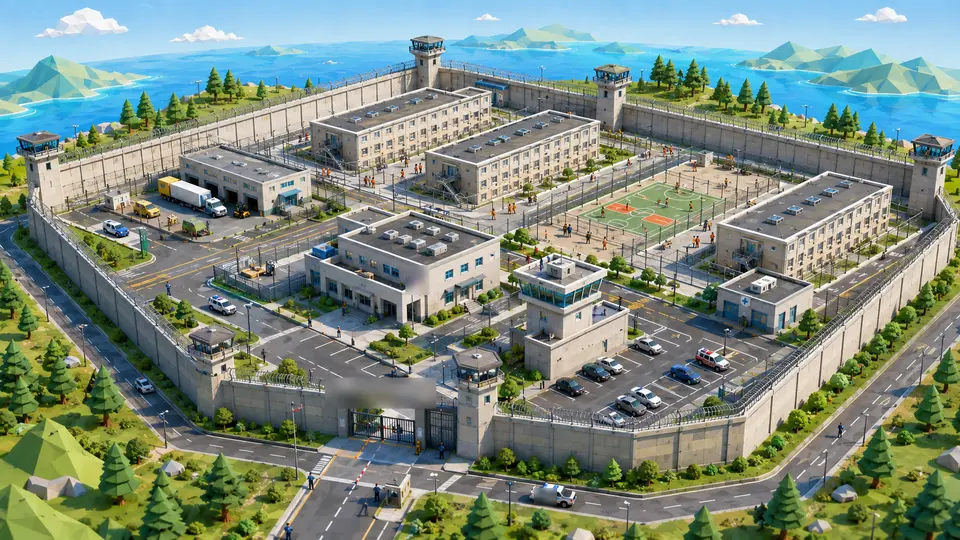
Who is watching the yard screen when the fight starts?
17 cases: 16 raise an alert when something happens and one only measures. You see each image as it is, and then with what IRIS understands on top.

How long before somebody comes down that hallway at four in the morning?
13 cases: 12 raise an alert when something happens and one only measures. You see each image as it is, and then with what IRIS understands on top.


And the best part
The cameras you bought years agostill hold up. What they were missing wasn’t image quality.
It was someone to look. IRIS connects to the installation you already have — same equipment, same cabling — and those images go from being stored to being understood.
Tell us your problem and we’ll say whether IRIS understands it, or not yet.
A person answers, the same working day.