The hospitalIntrusion detection
CAM-121
Someone leaves the unit for the street
The lobby of a unit. On the right, someone is walking toward the doors to the outside, his hand already near the bar. On the left, the station counter and a member of staff stepping out from behind it with an arm stretched out that way; at the back, the beds of the unit. IRIS sees that somebody has crossed from the unit toward the exit, and at what time; it doesn’t know who.

Turn on IRIS Vision
AI-generated image
What IRIS is
IRIS watches your hospital's cameras for you.
IRIS looks at the cameras you already have in the hospital and understands what it sees: a fall, a patient on the floor, someone left alone too long, a long line at admissions. When something like that happens, it lets you know right away; and whatever can be counted, it counts in numbers. All day long, with no one needing to watch a screen.
You tell it what you need to watch, and IRIS does it.
Take this hallway, for example — the second someone heads from the unit toward the exit door, IRIS sends an alert with the camera, the door, and the exact time stamped. That means you find out while it's happening, not at the next bed check half an hour later. From there, you're the one who decides whether to go look, and nine times out of ten it's just someone headed down to the cafeteria.
Works with the cameras you already have. Nothing to replace.
A person replies, not a form.
- Your footage never leaves your premises.
- It doesn't identify people.
- Certifications →
What IRIS understands
What it recognizes in this scene
- person heading for the exit
- exit door
- member of staff at the station
- station counter
- beds in the unit
What this camera measures
An alert says something’s happening. The reading says how much.
- 35 scrossed
- 1people at the door
- 1staff in view
- 2people in the lobby
- 2exits with a camera
- 21:48time of the crossing
The figures on this screen are an example from the illustration, not any client’s measurement.
The rule
You decide once. IRIS applies it always.
If
somebody crosses from the unit toward the exit during a time band in which the hospital has said it wants to be told
Then
- alert the unit with the camera, the door and the time
- open the video of the crossing, so the team sees the same thing the camera saw
- leave a record of the crossing, with the door and the time
The instruction that set it up«Tell me if somebody leaves the unit toward the street at the hours when nobody should, so the unit knows while it is happening.»
What changes
What changes for whoever runs the unit
When someone who had been admitted walks out of the door, the unit usually finds out at the next round — and by then minutes have passed, or a great deal more. IRIS doesn’t chase anyone and doesn’t lock any door: it tells the unit that somebody has crossed toward the exit, says which door and at what time, and opens the video. From there the team decides, because the team is the one that knows who had been admitted and who hadn’t. Most of the time it will be someone going down to the cafeteria and nothing will come of it. What changes is that whoever runs the unit knows while it’s happening, and not half an hour later.
What people usually ask
How does IRIS know that person had been admitted?
It doesn’t, and that’s the whole point. IRIS does not identify anyone, does not recognize faces, does not store who anyone is and does not access any medical record or the hospital’s systems. What it sees is a movement: somebody has crossed from the unit toward the exit during a time band in which the hospital asked to be told. Who they’re and whether they had been admitted is checked by the team, who do know. IRIS supplies the moment and the door; the judgment is made by a person.
Does IRIS lock the door or hold anyone back?
No. IRIS doesn’t open or close anything, doesn’t lock any door and doesn’t chase anyone. It raises an alert, and that’s all. Holding a person back is a decision with consequences, and it is taken by the hospital’s team, under its own rules and judgment, not by a program looking at an image. What IRIS does is raise the alert earlier, so that the decision is made with time rather than at a run.
What about visitors and staff, who come and go all day?
That’s why the rule isn’t “alert whenever somebody crosses the door,” but whatever the hospital writes: which door, in which time band and from which side. A lobby in the middle of the afternoon with visitors coming in fires nothing; the same door at three in the morning does. That setting belongs to the hospital and is reviewed with the team, and it’s precisely what keeps the alert meaningful when it arrives.
A different case every time
A camera looks. IRIS understands what it sees.
An extract of the real screen, no voice-over and hands-free. Each round poses another situation. What sits behind it is a good deal bigger than what you see.
- Four cameras at once
- Each understands its own view
- The numbers climb by themselves
Next step
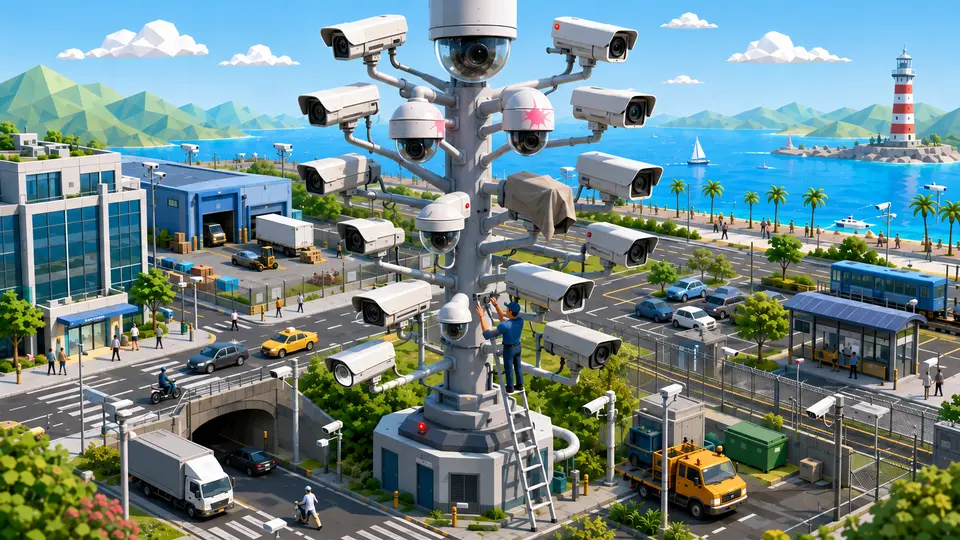
And who watches the cameras?
34 cases, and in every one of them IRIS raises an alert when something happens. You see each image as it is, and then with what it understands on top.

Who watches the cameras of a whole city?
23 cases: 18 raise an alert when something happens and 5 only measure. You see each image as it is, and then with what IRIS understands on top.


And the best part
You already record.The hard part was always watching it.
Years of video that only get opened once something has gone wrong. IRIS understands those same images as they arrive, so the answer no longer lives only in the archive.
Tell us your problem and we’ll say whether IRIS understands it, or not yet.
A person answers, the same working day.