CAM-128
Is anyone covering this area?
A unit hallway. Two people in scrubs walk down it talking, one holding a tablet; further back two more are coming, one in a white coat and one in scrubs. On the left, a bay’s sliding door is open and you can see the bed, made and empty. At the back on the right, the seats by the window with visitors waiting. This camera alerts nobody: it shows a state you look up. And what it counts isn’t where each professional is, but whether this area has someone attending it. IRIS tells scrubs from street clothes, like a hard hat on a building site; it does not know who anyone is and it does not know whether this is the same person as an hour ago.

Turn on IRIS Vision
AI-generated image
What IRIS is
IRIS watches your hospital's cameras for you.
IRIS looks at the cameras you already have in the hospital and understands what it sees: a fall, a patient on the floor, someone left alone too long, a long line at admissions. When something like that happens, it lets you know right away; and whatever can be counted, it counts in numbers. All day long, with no one needing to watch a screen.
You tell it what you need to watch, and IRIS does it.
Here, for example, IRIS checks out a stretch of the hallway and tells you whether someone in scrubs is actually covering it right now. It doesn't page anybody on its own — it's a number you pull up when you need it, like at four in the morning. That number is what tells you whether that area needs more staff on that shift.
Works with the cameras you already have. Nothing to replace.
A person replies, not a form.
- Your footage never leaves your premises.
- It doesn't identify people.
- Certifications →
What IRIS understands
What it recognizes in this scene
- in work clothes in the area
- in work clothes further down
- bay with the door open
- sliding door
- waiting seats
What this camera measures
An alert says something’s happening. The reading says how much.
- 2In work clothes in the area
- 1Minimum set by the hospital
- 58 minArea covered, last hour
- 2 minLongest gap with nobody
- 6People in the frame
- 07:52Time of the reading
The figures on this screen are an example from the illustration, not any client’s measurement.
The rule
You decide once. IRIS applies it always.
If
the area is left with nobody in work clothes for longer than the hospital has set
Then
- show it in the unit’s status, without interrupting anyone: nothing rings here
- add those minutes to the time the area has been uncovered within the hour
- store nothing about who was there: the area yes, the person no
The instruction that set it up«Tell me whether this hallway has anyone attending it right now, and how many minutes of the last hour it was left with nobody.»
What changes
What changes for whoever runs the unit
A unit sister doesn’t need to know where each person on her shift is: she knows that. What she can’t know is that, at four in the morning, a unit hallway has had nobody in it for twenty minutes because the two people on duty are inside two different rooms at once. That’s nobody’s fault and it isn’t fixed by watching anybody: it is fixed by knowing how many minutes of each hour an area was left uncovered and changing the split or the backup. IRIS gives that figure per AREA, never per person. It does not know who anyone is, it does not know whether the person there now is the one from before, and no timesheet and no report on anybody comes out of this, because there is nothing to build one from. In a real deployment this is discussed with the staff before anything is installed, not afterward: a camera the staff don’t accept is a camera you shouldn’t fit.
What people usually ask
Is this a way of monitoring staff?
No, and that’s the line that doesn’t get crossed. IRIS does not identify anyone: it does not recognize faces, it does not know who any professional is, it keeps no file on anyone and it does not know whether the person it sees now is the same one as an hour ago. It tells scrubs from street clothes, the same way it tells a hard hat on a building site, and it tells nothing else. What it gives back is a figure about the AREA — this area was covered for fifty-eight minutes of the last hour — not a figure about a person. There’s no time-and-attendance here, no clocking in, no productivity measure and no appraisal of anyone: it isn’t that it is turned off, it’s that what the camera sees can’t be used to build it. And in a real deployment this is discussed with the staff before anything is installed, not afterward.
So what question does it actually answer?
It doesn’t answer “where is so-and-so?.” It answers “is there anyone at the third-floor station right now?.” They are two different questions, and only the second can be answered by looking at an area instead of at a person. The first one IRIS doesn’t answer: not now, not by configuring it differently, not by asking in writing. And the second is the one that’s actually needed, because it lets you split a night shift with data instead of with a hunch that that unit runs short.
Are there cameras inside the rooms?
No, and there won’t be. These cameras look at common areas: hallways, lobbies, doors. Not in a room, not in a bathroom, not in an examination room. What you see of the bay on the left is what the open sliding door lets you see from the hallway, and once it closes you see nothing. That’s why this camera can’t say whether someone is attending a patient: it only says whether there’s anyone in the hallway or nobody at all.
Demo · IRIS at work
You set the rule once. IRIS applies it every time.
You will see a summary of the interface, played step by step and hands-free. Each round starts with another case. The complete tool doesn’t fit in a demo.
- It lands in the tray
- You open it
- You confirm or dismiss
Next step
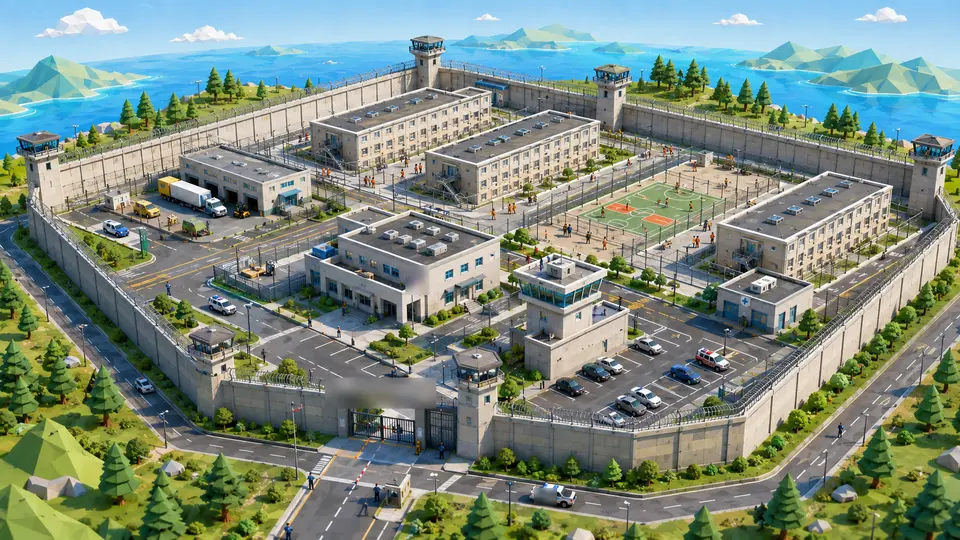
Who is watching the yard screen when the fight starts?
17 cases: 16 raise an alert when something happens and one only measures. You see each image as it is, and then with what IRIS understands on top.

How long before somebody comes down that hallway at four in the morning?
13 cases: 12 raise an alert when something happens and one only measures. You see each image as it is, and then with what IRIS understands on top.


And the best part
You decide the rule onceand it’s applied the same way every time.
At three in the morning it means what it means at noon, on camera one and on camera four thousand. It doesn’t depend on who’s on shift, or how tired they are.
Tell us your problem and we’ll say whether IRIS understands it, or not yet.
A person answers, the same working day.