Solutions by typeEnvironment and cleanliness
How long has that puddle been there with nobody flagging it?
Someone is about to slip and nobody has seen it
It is 18:40. There is a shiny puddle in the chilled aisle, right in front of the fridge unit. It has been there seven minutes. A shopper comes in from the far end with her trolley, eyes on the top shelf, and she has not seen it yet. There is no cone out. The aisle camera has been recording since the first drip and it has told nobody.
16 cameras across 10 sectors
What IRIS is
IRIS watches the cameras for you.
IRIS Neural is an artificial intelligence that watches the cameras you already have and understands what happens in front of them. When something important happens —or something you told it you need to keep an eye on—, it alerts you; and whatever can be counted, it counts in numbers. All day long, without anyone having to watch a screen.
You tell it what you need to watch, and IRIS does it.
Works with the cameras you already have. Nothing to replace.
A person replies, not a form.
- Your footage never leaves your premises.
- It doesn't identify people.
- Certifications →
This is how you ask for it
«Tell me as soon as something is spilled on the floor, which camera sees it and what minute it started.»
A fall in an aisle is not a scare: it is a claim. First the person, sometimes an eighty-year-old customer, sometimes the colleague with the pallet truck. Then the paperwork: the report, the insurer, the sick leave, and months later somebody asking for that day’s video to find out how long the spill had been sitting there. That question almost never has an answer, and with no answer you pay.
You decide once
You say where the floor has to stay clear, how many minutes an unflagged puddle is tolerated and who gets told: if liquid appears in a ward corridor and is still there after two minutes, tell the cleaner on shift and open the camera; if it appears on the filling line, tell the line manager as well. IRIS applies that on every camera looking at that floor, on every shift, with nobody having to remember.
The same puddle turns up in places that have nothing in common. On the bend of a filling conveyor, broken glass sitting in the liquid and the belt still running. In a hospital corridor, half the width of the walkway, without a single sign put out. The building changes and the liquid changes; what does not change is that somebody sees it late.
It is seen late because a spill makes no noise. No alarm goes off, nothing stops, nobody is on watch staring at the floor. It gets found when somebody walks past, and that somebody is as likely to be the customer with the trolley or the operator carrying twenty kilos as it is to be the cleaner. Meanwhile the stain grows: drop by drop under the pump, tile by tile across the paving, following the slope and sometimes the drain, which is where a puddle stops being a slip hazard and becomes a form somebody has to sign.
IRIS watches the floor. It sees that something is there that was not there before, sees it shine, sees it grow, and it says so: which camera, what time, and the video from the first drip. It does not know what the liquid is or whose fault it was, and it does not need to for the only thing that matters right then, which is that somebody goes. The rest — the cone, the announcement, the report — is still done by a person. What has changed is that it no longer depends on who happens to walk past.
What changes
Before, a spill was found by whoever walked past. If a customer got there before an employee, bad luck. Cleaning heard about it over the radio, with the puddle already spread and no idea how long it had been there.
Now the alert comes from the floor itself: camera, minute, and video from the first drip. And whoever signs off on safety finally has the answer to the question that always arrived too late: how long it had been sitting there.
Where we have seen it

CAM-237A puddle spreading under the skid
«Tell me if a puddle appears on the line floor, and tell me from what minute it has been growing.»
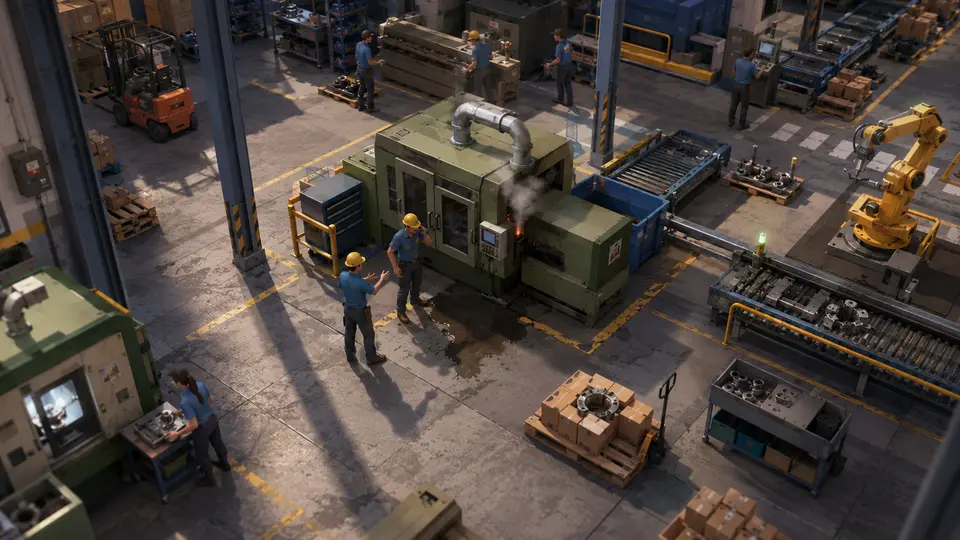
CAM-256Smoke from the machine and oil on the floor
«Tell me if smoke comes out of a machine or a puddle appears on the shop floor.»
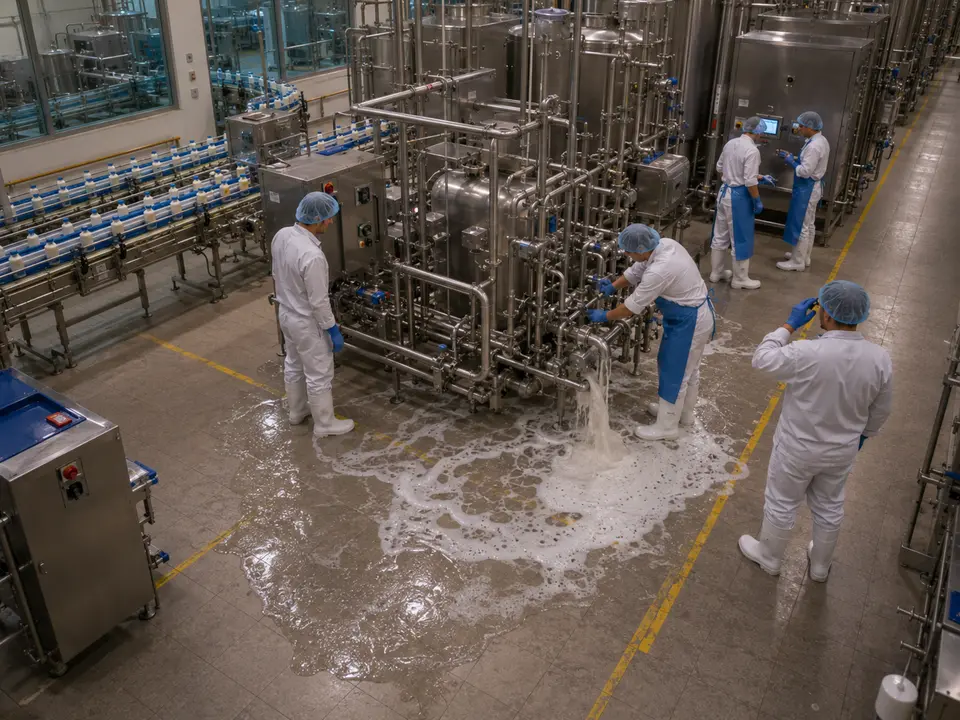
CAM-215A pool of foam right across the walkway
«Tell me if liquid or foam builds up on the process floor, even at night with nobody around.»
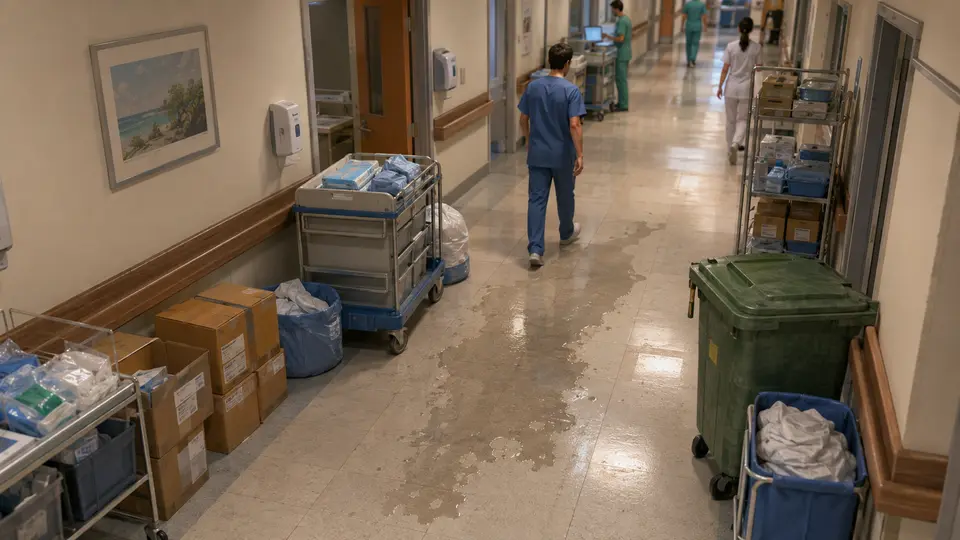
CAM-122Wet floor in the corridor
«Tell me when something gets spilt on a corridor floor and is still there with no sign out, and tell me which camera and since when.»

CAM-544Four cleaning jobs in a single frame
«Tell me if there is a spill in a walkway, a service trolley standing for more than fifteen minutes, or a shopping trolley outside its area.»

CAM-320A jet from the pump and a pool that keeps growing
«Tell me as soon as liquid sprays out of a pump or a pool starts growing on the skid floor, and show me the video from the first second.»

CAM-292Split capsules and loose powder among the good ones
«Alert me when split or broken capsules go past on the belt, or powder spilled around them.»
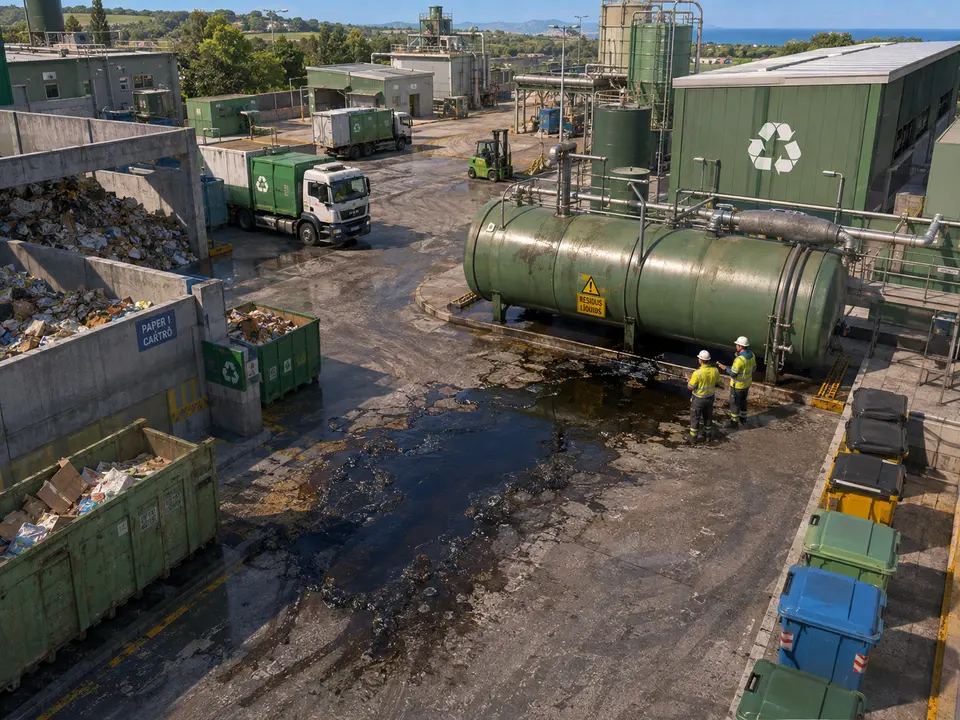
CAM-435The liquid has left the bund and is running across the concrete
«Tell me if a pool appears outside the tank bund and keeps growing.»

CAM-73Liquid spill on the floor
«Tell me the moment something is spilt on the floor, in any aisle, and above all if someone is walking towards it.»
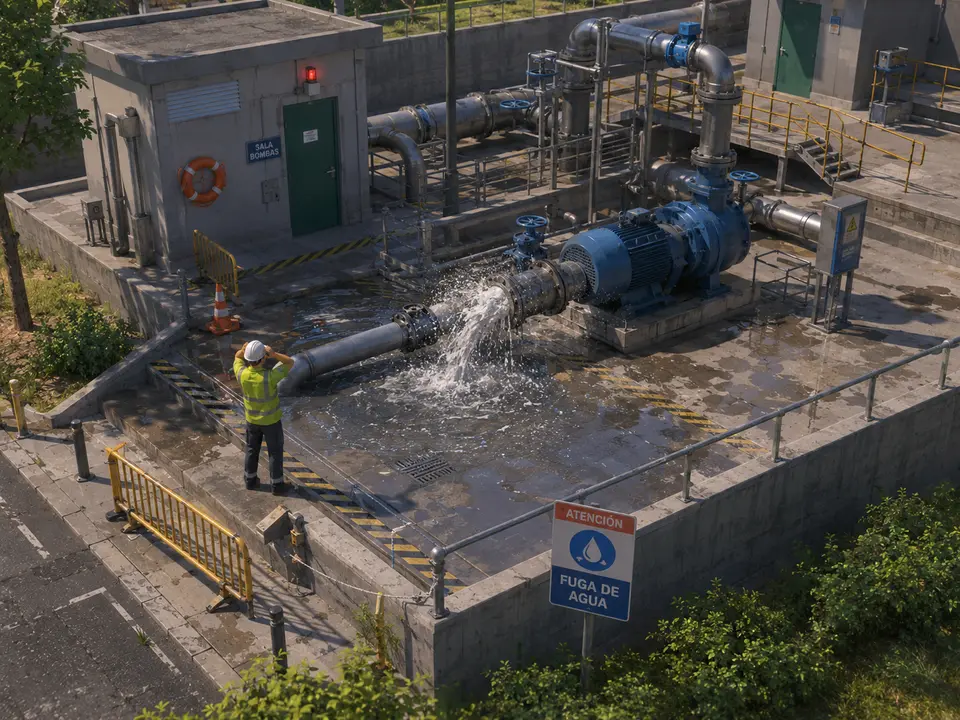
CAM-404A jet is spraying from the flange and the puddle keeps growing
«Tell me if a jet sprays from a joint or a puddle grows around a pump.»


What it does not do
IRIS does not know what the liquid is. It sees that something is on the floor that was not there before, that it shines and that it is spreading: it does not tell water from oil and it does not say whether it is dangerous. It does not put the cone out or close the aisle by itself either; it tells a person, and that person decides.
And it only sees what the camera looks at. If the puddle is under a pallet, behind a machine or outside the frame, it is not there.
Questions
- Can IRIS tell whether it is water, oil or product?
- No. IRIS sees that something is on the floor that was not there before, that it reflects light and that it is spreading, and it alerts on that. It does not analyse what anything is made of: the person who goes and looks does that. In practice you do not need it to act, because the first decision is always the same — go, flag it and find where it is coming from — and in most places the response depends more on the location than on the liquid: a puddle in front of the chiller is handled differently from one under a pump, and the people running the site already know that.
- Does it alert at night, when nobody is in the plant?
- Yes, and that is when it matters most. In the daytime somebody eventually sees a spill; at night, in an empty process room, it can grow for five hours until the morning shift walks in to half a wet floor and an unplanned stop. IRIS watches at four in the morning exactly as it does at eleven, and the alert goes to whoever you choose: the on-call team, the shift supervisor, a duty phone. The camera was already on; what was missing was somebody watching it.
- Does it work with the cameras I already have?
- Yes, as long as the camera sees the floor. That is the only real condition: a camera hung facing straight at a doorway is no use here, because the floor sits at the very edge of the image. What works is the usual setup, a camera about four metres up and angled down, the way street poles and corridors are normally fitted. If a viewpoint is not good enough, the trial shows it: you connect it, watch for a week and decide, without changing anything first.
- Does it keep the video from before the alert?
- Yes, and for this word that is half the answer. The alert arrives once the puddle is visible, but what you need afterwards is the minute before: what broke, who walked past, whether somebody saw it and carried on. IRIS keeps the incident with its video, its start time and its camera, and it stays searchable: if somebody claims for a fall six months later, that day’s video is found by what happened, not by scrubbing through eight hours of recording.
See it for yourself
No extra alarms here. Just what needs looking at.
Not a recorded video, not an explanatory drawing: a summary of the real screen, with a different case every time it starts. There is a lot more behind it.
- You draw the line
- It counts by itself
- A number comes out
Not seeing yours here?
These words are the ones we have built, not the ones IRIS understands. The list falls short on purpose: you ask for it in a sentence, and sentences do not run out. Tell us what is in front of your cameras and we will tell you whether it understands it, or not yet.
And the best part
One camera,and you already have a watchman. Four thousand cameras, and you have four thousand watchmen.
None of them tires, none of them looks away and none of them works shifts. And there is nothing to install: the cameras you already have can start understanding what they see.
Tell us your problem and we will say whether IRIS understands it, or not yet.
We reply the same working day.