Solutions by typeMobility analysis
How many spaces are free, and on which level?
There is room, and nobody knows where
Twenty past seven in the entry ramp. Six cars are waiting with the barrier down and the street sign says FULL. On level -3 there are fourteen free spaces, all together, in the far aisle. The sign is not lying on purpose: it is fed by a barrier counter that adds entries and subtracts exits since Sunday, and since Sunday it has been drifting a little every hour.
14 cameras across 7 sectors
What IRIS is
IRIS watches the cameras for you.
IRIS Neural is an artificial intelligence that watches the cameras you already have and understands what happens in front of them. When something important happens —or something you told it you need to keep an eye on—, it alerts you; and whatever can be counted, it counts in numbers. All day long, without anyone having to watch a screen.
You tell it what you need to watch, and IRIS does it.
Works with the cameras you already have. Nothing to replace.
A person replies, not a form.
- Your footage never leaves your premises.
- It doesn't identify people.
- Certifications →
This is how you ask for it
«Tell me how many free spaces there are on each level and alert me when a zone fills up.»
A car doing three laps looking for a space takes six minutes longer and gets in the way of everyone who knows where they are going. The centre loses the visit of whoever gives up and leaves, and the team loses a morning recounting on foot to put the sign back in line. And because the counter never says where the space is, it also never says which aisle fills first, or when, which is exactly what you would need to organise it differently.
You decide once
The organisation draws the spaces on the image once and says what each of them is: rotation, reserved, loading, accessible, dock. It also decides which zones it wants reported separately and at what fill level it wants the alert. IRIS keeps it up to date all day, level by level, without anyone walking down to count. And because the spaces are drawn, today’s figure and next year’s are counted the same way.
A car park with a sensor in every bay works very well and costs exactly what it costs to fit, wire and maintain one sensor per bay. When there are eight hundred bays, the conversation ends before it starts. That is why most car parks still run on a barrier counter, which gives one global figure, never says where, and drifts on its own. A camera high in the aisle sees a whole run of bays and says which ones have a car on them and which do not.
The same idea reads backwards in places that have nothing to do with cars. The product rack in a chemical plant has a slot marked in yellow and black for every drum: somebody has to walk past each morning to check they are all there. In a hospital corridor there is a spot where the crash cart lives, and the question is not whether the corridor is clear, it is whether the cart is in its place. In a street, a manhole cover has its hole, and being out of it is precisely the problem.
It is the least spectacular thing IRIS does and probably the most used. No villain, no alarm and nobody doing anything wrong: there is a place, a state and a time. Occupied or free, drum or no drum, the cart is there or it is not. And because it is a state and not an event, it can be consulted when needed instead of watched just in case.
What changes
The state of a place used to be learned by going there: down to the level, round the rack, along the corridor. And because going takes time, people went once a day and for the rest of the shift nobody knew anything.
Now the state is at hand and timestamped: how many bays free and in which aisle, which rack slot has been empty since 06:40, where the missing cart was last seen. It takes ten seconds to check, and you walk only when you must.
Where we have seen it

CAM-580The kerb jams before the terminal does
«Tell me if a car has been stopped in the drop-off lane for more than ten minutes and others are waiting for a gap.»

CAM-524Every seat taken and seventeen people standing around the table
«Tell me when a table has been full for a quarter of an hour with more than fifteen people standing around it.»
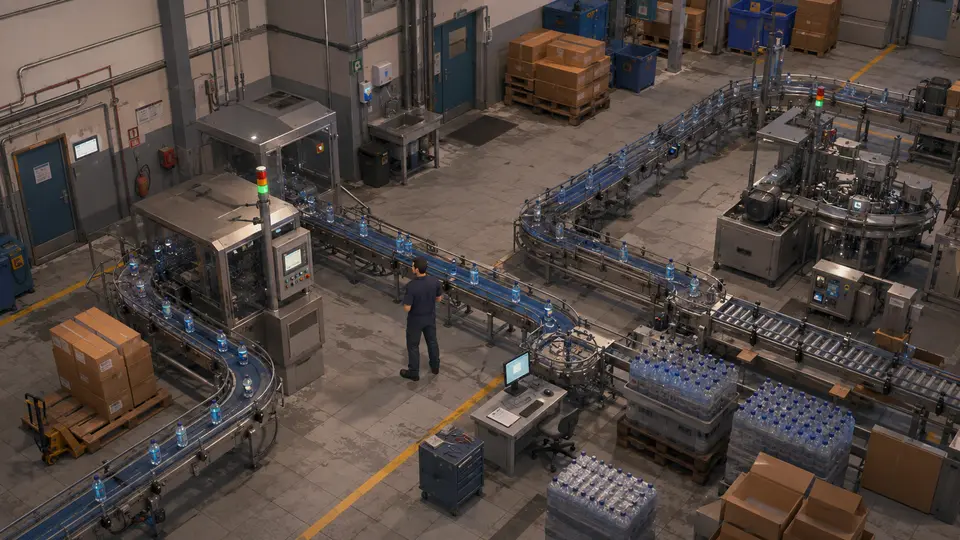
CAM-241The line is running, but a gap opens every few seconds
«Count the bottles going past here every minute and tell me if a gap of more than ten seconds opens up.»

CAM-155A drum missing from the rack
«Show me the product rack every morning and tell me if anything is missing from its bay, without anyone having to go and count.»
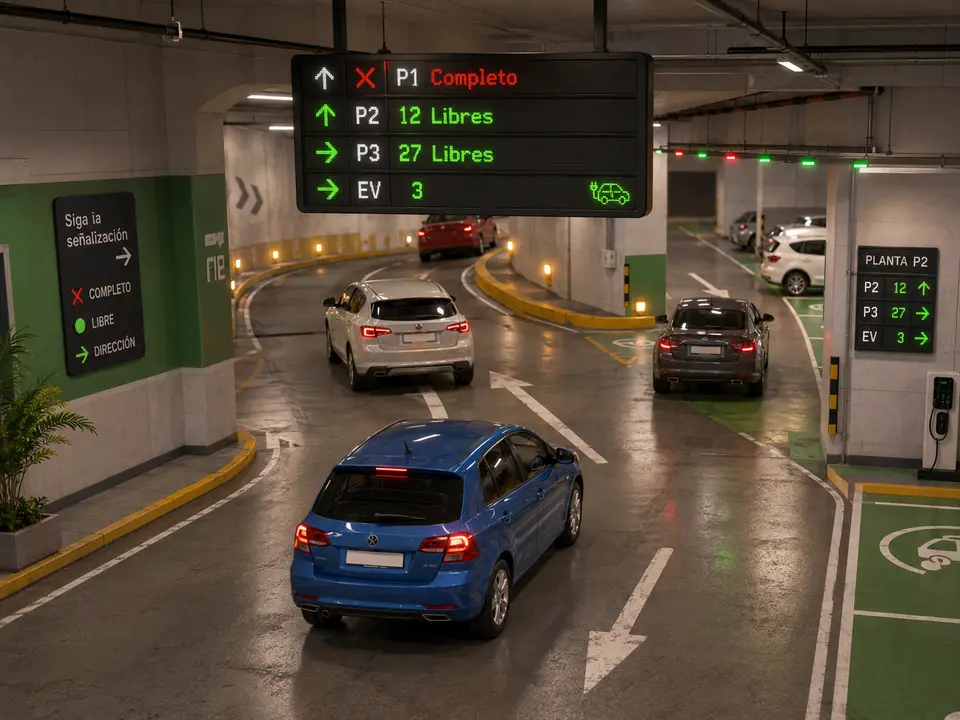
CAM-462The sign gets it right because the number comes from the bays themselves
«Send the free bays for each level to the sign and tell me if the sign and the count stop matching.»
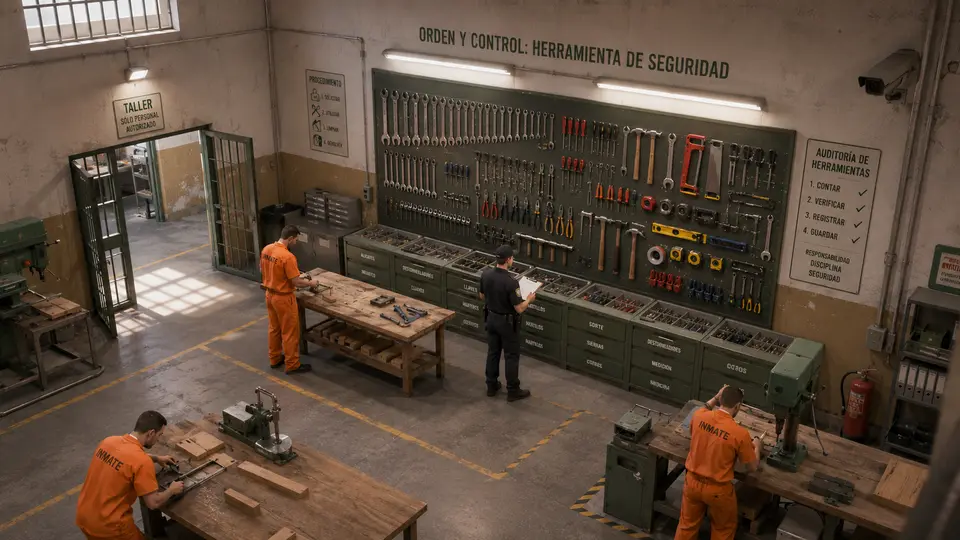
CAM-115The tool board in the workshop
«Tell me if any tool is missing from the board when the workshop closes, and tell me which slot and since what time it has been empty.»
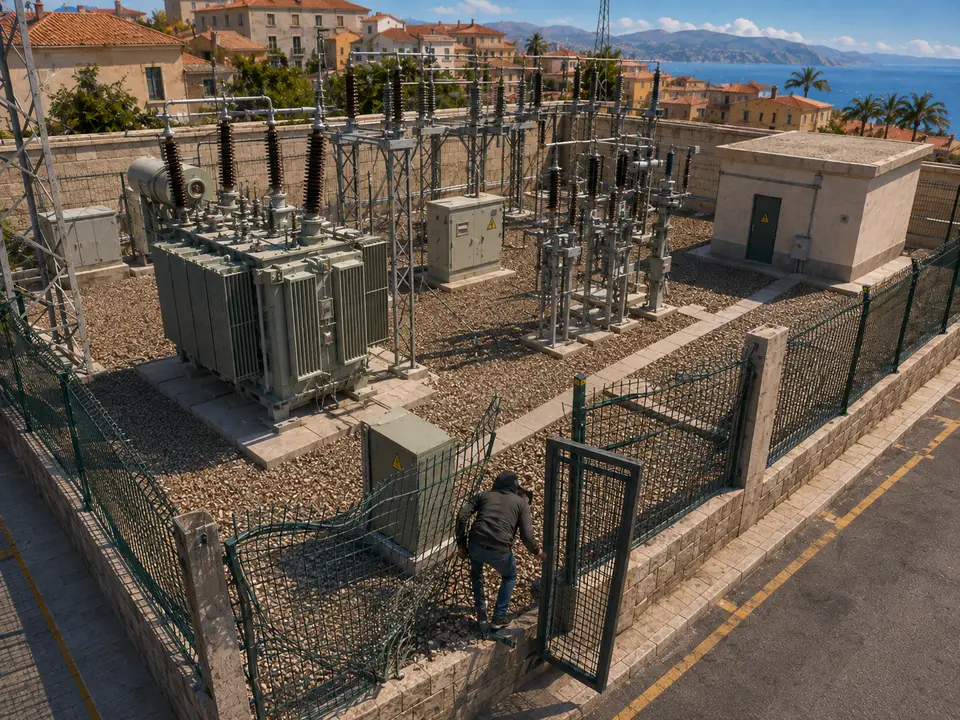
CAM-341The fence is down and someone is coming through the gap
«Tell me if the fence or the gate stop being the way they were, and also if anyone goes through that spot.»
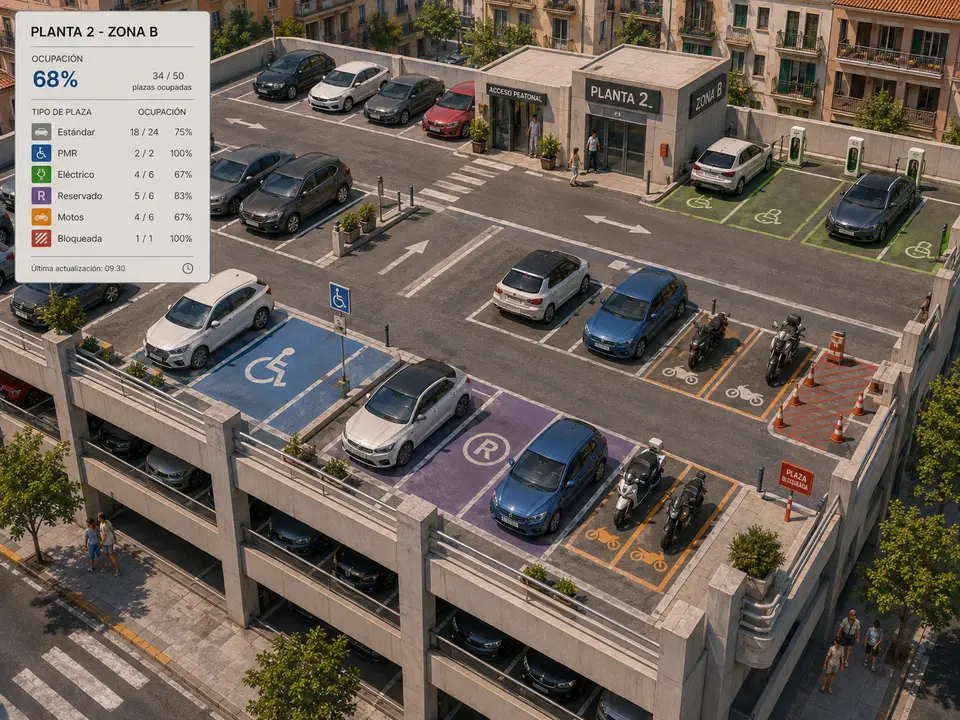
CAM-460How many bays are left, and of what kind
«Tell me how many free bays are left on level 2 and how many of them are charging bays.»
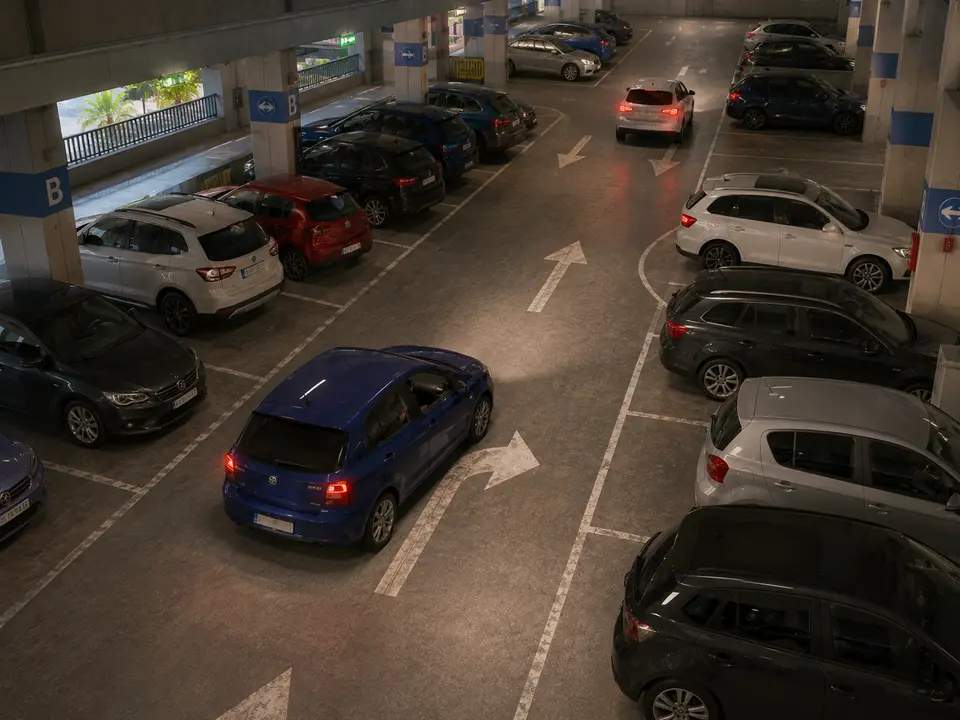
CAM-461Four minutes going round and not one free space
«Tell me how long it takes a driver to park on this level on average, by time of day.»


What it does not do
IRIS does not know whose the car is or whether that bay was reserved for someone: it knows whether there is a vehicle on it or not.
And there are two things it does worse than it looks. A long vehicle parked badly across two bays throws the count off, and so do bays hidden behind a pillar. And with two identical drums on the rack, it sees that the slot is filled, not which of the two is in it.
Questions
- Do we need a sensor in every bay?
- No. A well-placed high camera sees a whole run of bays at once and says which ones have a car on them. That is the cost difference that makes a large car park genuinely measurable: no fitting, wiring and maintaining one device per bay. Where sensors already exist, the camera figure is useful for cross-checking them, which is usually the cheapest way to find out which ones have failed.
- How many bays does one camera cover?
- It depends on the view, and it is worth measuring before promising anything. A high camera looking along an aisle covers a long run of bays; the same camera mounted low and head-on covers three, because the cars in front hide the ones behind. Pillars, ramps and curves take bays away too. That is why the camera count for a car park comes from looking at the drawings, not from dividing bays by a round number.
- Does it work for spotting a missing drum on a rack?
- Yes, and it is the same rule inverted. Instead of saying «this bay is occupied», it says «this slot is empty». The camera looks at the rack at whatever hour the plant chooses — seven in the morning, say — and compares each slot with how it should look. If something is missing it says so, with the picture and the time. Nobody has to walk the rack with a clipboard, and the morning record exists every day, Saturdays included.
- What if a car parks badly and takes up two bays?
- It counts both as occupied, because in practice they are: nobody else can park there. The figure stays true for the driver looking for a space, which is who it is measured for. Where it does hurt is in the month-end balance, and that is why bad parking can be reported separately: how often it happens a day, in which aisles and at what hours. It is usually the argument that ends up repainting an area.
See it for yourself
No extra alarms here. Just what needs looking at.
Not a recorded video, not an explanatory drawing: a summary of the real screen, with a different case every time it starts. There is a lot more behind it.
- You draw the line
- It counts by itself
- A number comes out
Not seeing yours here?
These words are the ones we have built, not the ones IRIS understands. The list falls short on purpose: you ask for it in a sentence, and sentences do not run out. Tell us what is in front of your cameras and we will tell you whether it understands it, or not yet.
And the best part
Counting is not watching over anyone.It is knowing how many went through, and when.
It is what lets you compare: two Tuesdays, two doors, two seasons. Because it is measured the same way every day, the comparison stands on its own.
Tell us your problem and we will say whether IRIS understands it, or not yet.
We reply the same working day.