Solutions by typeInfrastructure integrity
How do I find out a pump has stopped before the water rises?
The pump stopped and the water keeps rising
It is 04:10. In the pumping room under the street, the emergency lights are on and both units sit still on their plinths. Murky water is already over the concrete, carrying rubbish that turns slowly in circles. Nobody has been down tonight. Upstairs, on the panel, one lamp has been out for hours. The corridor camera has been watching all of it since the first minute.
7 cameras across 4 sectors
What IRIS is
IRIS watches the cameras for you.
IRIS Neural is an artificial intelligence that watches the cameras you already have and understands what happens in front of them. When something important happens —or something you told it you need to keep an eye on—, it alerts you; and whatever can be counted, it counts in numbers. All day long, without anyone having to watch a screen.
You tell it what you need to watch, and IRIS does it.
Works with the cameras you already have. Nothing to replace.
A person replies, not a form.
- Your footage never leaves your premises.
- It doesn't identify people.
- Certifications →
This is how you ask for it
«Alert me if the water in the pump room rises above the plinths and stays there without going down.»
By the time someone goes down in the morning it is no longer a fault: it is a flooded room. The motors have to be dried, stripped and rewound, and that means weeks with one unit less. Meanwhile the water those pumps were meant to move finds its own way out: basements, garages, the street next door. Then come the residents’ complaints, the vacuum truck and the question of why nobody knew until seven.
You decide once
You decide what normal looks like in that room: how high the water may rise, how many minutes a pump may sit still when it should be running, and who gets called at four in the morning. That is decided once, with the plant manager in the room. From then on IRIS applies it every night, in every station and on every shift, without anyone having to remember.
A pumping station is a boring room right up to the minute it stops being one. It is almost always empty, almost always dark, and the pumps almost always do their job. That is why most stations get looked at once a day, on the round. And that is why the real trouble starts in the small hours: not because something different happens, but because at that time nobody is there to see it.
The telemetry says whether the pump has power, not whether the room has water. It can show all green while the level climbs behind the door, because a float got stuck, because a panel got wet, or because the impeller is spinning without moving anything. IRIS looks at something else: the picture. It sees the plinth, it sees the waterline and it sees that the units are not turning. When that line goes past where you said, it sends the alert with the camera, the time and the video of the water coming up.
On the night it goes well there is no story to tell. Someone gets the alert at four, opens the camera, sees water halfway up the plinth and calls the standby crew. By the time they arrive the room can still be pumped out and the motors are still dry. It is a bad night, not a three-week repair. The whole difference fits into two hours.
And there is a second thing that happens in the same place. The pump yard of a chemical plant or a refinery is the same frame: the same plinths, the same canopy, the same camera. What changes is what can appear in front of it — a white cloud running low across the ground, an orange flame between two units, somebody lying on the concrete beside the discharge line — and none of those things waits for the shift change. The camera is already up and already looking; all it needs is to be told what to look for.
What changes
Before: the room was checked on the morning round, and whatever happened in between was pieced together afterwards from the video and the tank level.
Now: the room watches itself all night and only calls when the water crosses the line. The operator has stopped driving round stations that are fine and goes to the one that is not.
Where we have seen it
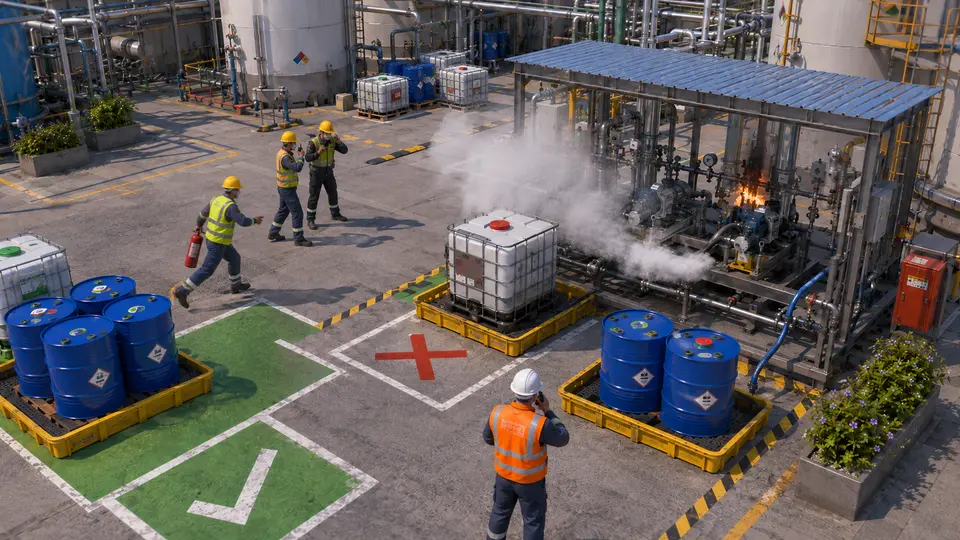
CAM-308A white cloud and a flame at the pump skid
«Tell me as soon as smoke, a cloud or fire shows up anywhere in the pump yard.»
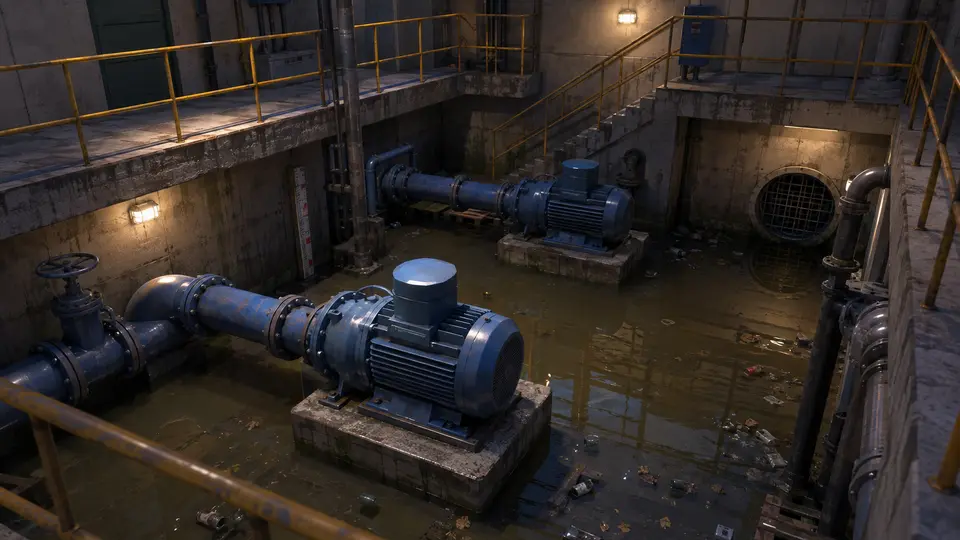
CAM-168Water above the pumps
«Tell me if the water in the pumping station goes above the plinths and just stays there without dropping.»
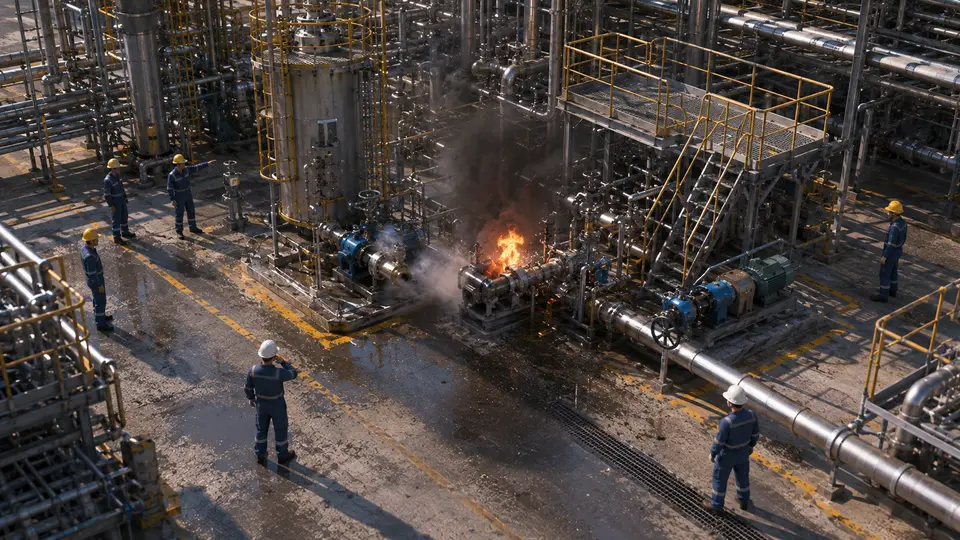
CAM-321Flame and smoke in the pump row
«Tell me the moment flame or smoke shows up on any process camera, and open for me at the same time the cameras looking at that same point.»
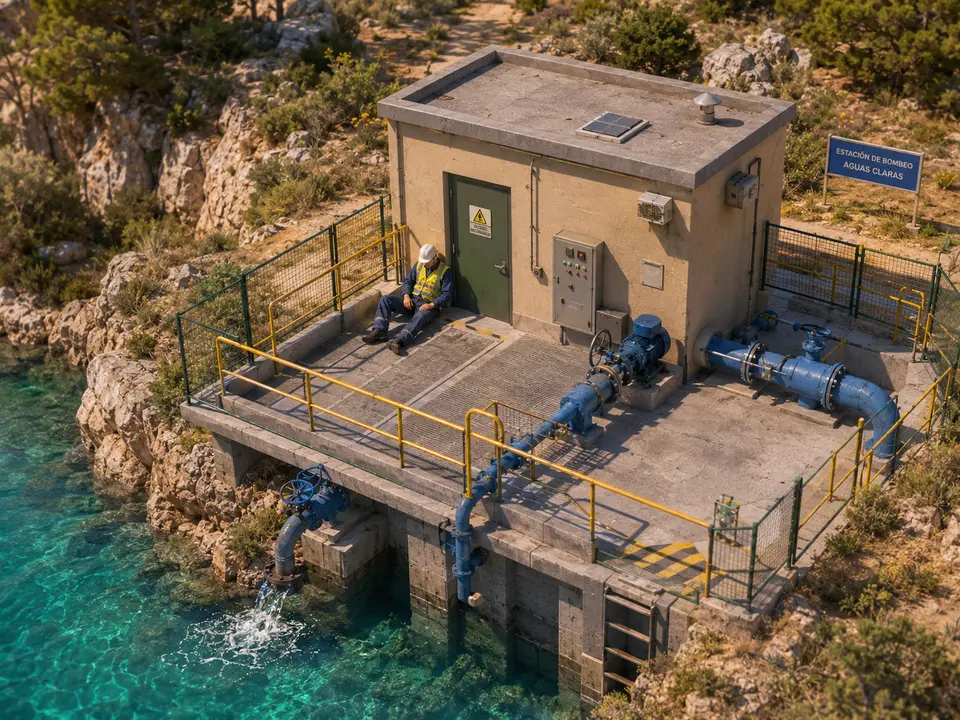
CAM-411A lone pumping station, and the operator has not moved for nine minutes
«Tell me if the operator working alone at a station stops moving for more than two minutes.»
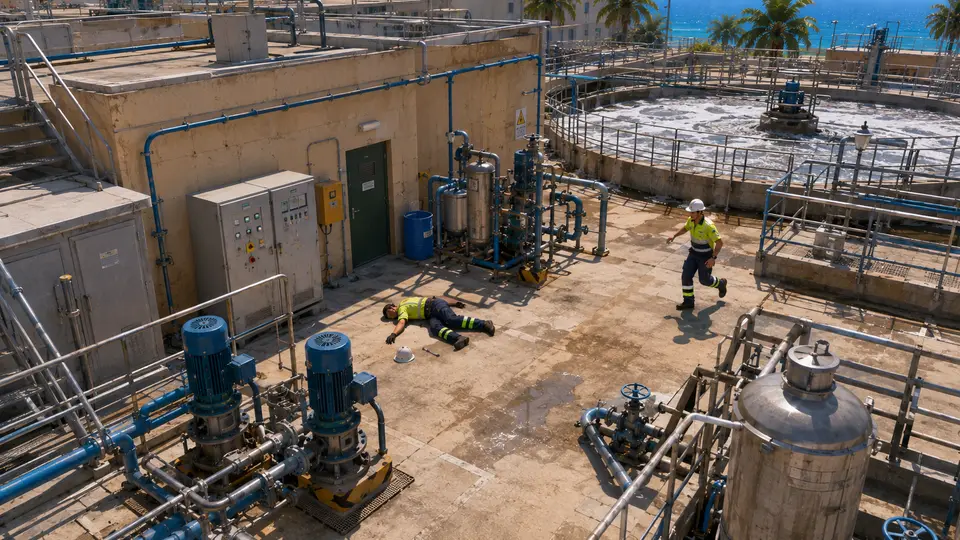
CAM-153Worker on the ground by the pumps
«Tell me if someone has been on the ground and not moving for a while in a technical area, even at night when there is nobody else on site.»
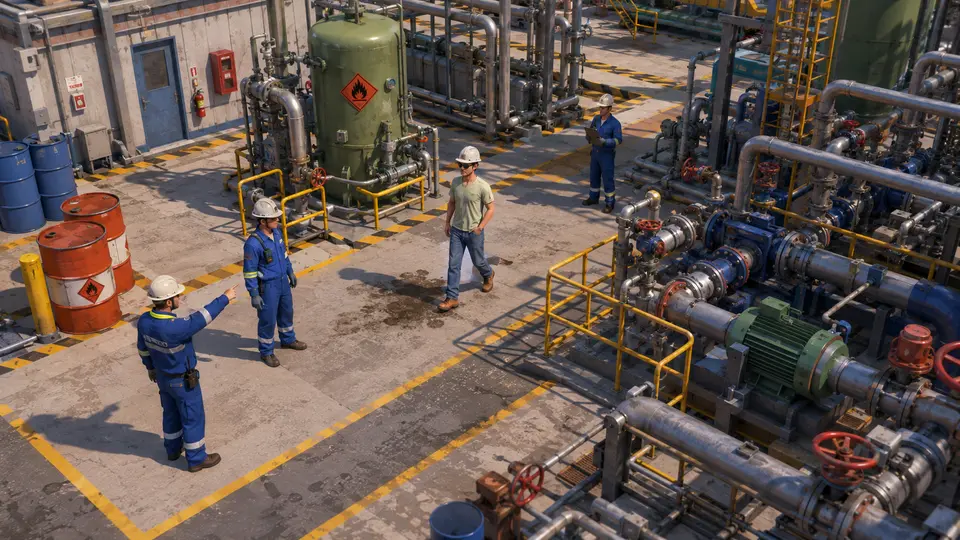
CAM-331Bare arms in the pump area
«Tell me if anyone enters the pump area without flame-resistant clothing.»
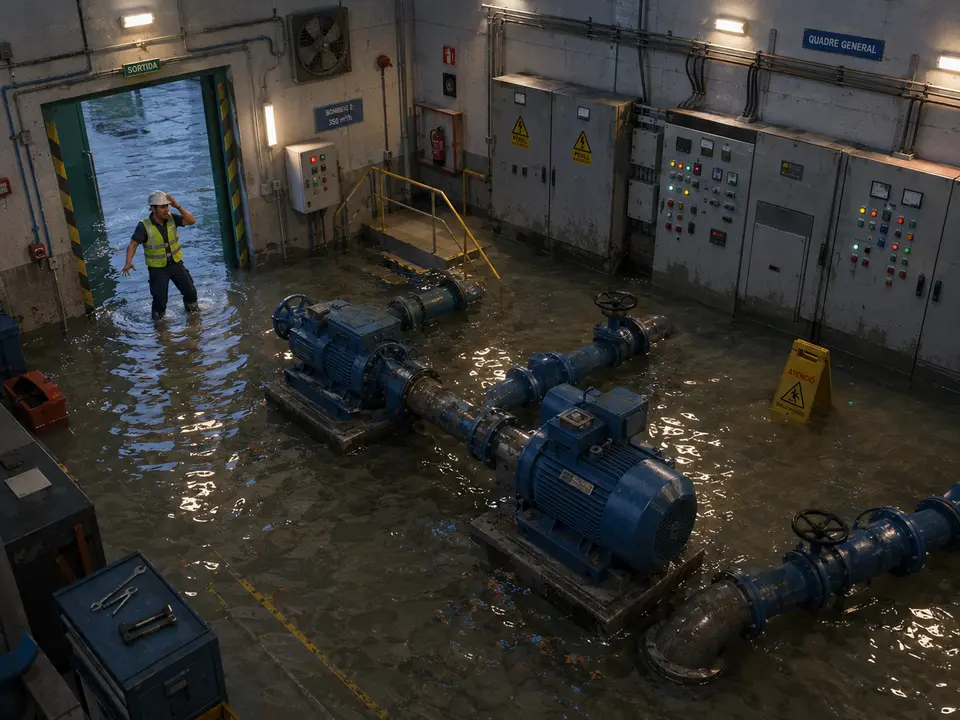
CAM-415The water covers the whole floor and is climbing towards the switchboard
«Tell me as soon as there is water on the floor of the pump room, and again if it reaches the height of the motor plinths.»


What it does not do
IRIS does not start the pump, does not close a gate and does not replace the level sensors or the station’s control logic: it touches nothing, it warns.
It does not know why the unit stopped either — the panel says that, not the picture — and it cannot see under the water. If the camera is in the dark or the lens has fogged up, it sees nothing, and it tells you that too.
Questions
- Does it replace the floats and the telemetry?
- No. The floats, the probes and the telemetry are still the system that runs the station, and IRIS touches none of them. What it adds is a second view that fails in a different way: when a float sticks or a panel gets wet, the telemetry can keep saying everything is fine while the water rises. The camera sees the water, not the reading. Together they cover gaps that neither covers alone.
- Does it work in a room with no light?
- It depends on the camera, and that is worth saying plainly. If the room has an infrared camera, or an emergency light that comes on, IRIS sees the waterline and the plinths as well as it would by day. If it is pitch dark and the camera has no infrared, it sees nothing — and then what it does is report that this camera has stopped seeing. A blind spot you know about is a problem; a blind spot nobody knows about is a much worse one.
- How quickly does it alert?
- While it is happening, not the next day. You set the rule: in some rooms you want to know the moment water touches the floor slab, in others the alert only makes sense if the water stays above the plinth for a while and does not drop. You put a number of minutes on that «while», and that number is what separates a useful alert from one nobody will open. IRIS applies it the same on night one and on night two hundred.
- Does it work for unstaffed stations?
- Yes, and those are the ones that need it most. A remote station can go weeks without anyone setting foot in it, and there the alert does not land in a control room: it lands on the standby engineer’s phone, with the camera and the video, so whoever reads it can decide whether to drive out now or wait for morning. IRIS does not decide that. It shows what is there, says since when, and leaves the decision with a person.
Demo · IRIS at work
We won't just tell you. We'll show you.
It is a summary of the real screen: it plays by itself, step by step, and shows only the path of one case. The actual tool has far more than fits in here.
- The alert fires
- It lands in the tray
- You open it
- You confirm or dismiss
Not seeing yours here?
These words are the ones we have built, not the ones IRIS understands. The list falls short on purpose: you ask for it in a sentence, and sentences do not run out. Tell us what is in front of your cameras and we will tell you whether it understands it, or not yet.
And the best part
You do not need to buy cameras:you need yours to understand what they see.
Nothing gets built, mounted or rewired. It plugs into what is already up and running, and the only thing that changes is what those cameras understand.
Tell us your problem and we will say whether IRIS understands it, or not yet.
We reply the same working day.