Solutions by typeIntrusion detection
How long has that hole been in the fence?
The fence stopped being a fence
It is 18:20 in the scrapyard. At a point in the mesh where there is no gate, the fence has been cut from top to bottom and folded back like a curtain. A person comes out through the gap, crouching. Another follows, a coil of cable over one shoulder. The last perimeter round walked past there on Thursday and the cut was not there. That is five days.
12 cameras across 8 sectors
What IRIS is
IRIS watches the cameras for you.
IRIS Neural is an artificial intelligence that watches the cameras you already have and understands what happens in front of them. When something important happens —or something you told it you need to keep an eye on—, it alerts you; and whatever can be counted, it counts in numbers. All day long, without anyone having to watch a screen.
You tell it what you need to watch, and IRIS does it.
Works with the cameras you already have. Nothing to replace.
A person replies, not a form.
- Your footage never leaves your premises.
- It doesn't identify people.
- Certifications →
This is how you ask for it
«Tell me if the fence stops looking the way it did — a panel cut, folded or flattened — and tell me as well if anyone crosses at that point.»
The hole is not found on the day it appears. It is found on the next round, or the day the inventory does not add up. Weeks pass between the two, and material has been leaving through that gap every night. When it is finally repaired, nobody can say when it opened or how much went out through it, because the video of those weeks has already been recorded over.
You decide once
You decide this once. You mark which stretches of fence are really perimeter, how often you want them compared with the day before, and who is told when one changes shape. IRIS goes over them every morning, in every camera that sees fence, without anyone having to walk the perimeter. If works start and that stretch is taken down on purpose, you change the rule and put it back when they finish.
A fence is the cheapest security measure there is and the one nobody looks at. It gets checked by walking it: once a week, once a month, the day somebody remembers. The rest of the time it is assumed to be fine. And cut mesh, from twenty metres away, still looks like mesh.
The hole is not the end of anything. It is a door that only a few people know about. Scrap leaves through it at night, anyone can come in through it, and in a substation or a robot cell it lets in somebody who has no idea what is live inside. The bill arrives in two shapes: material that is not there when it is counted, or an accident on your site involving someone who does not work for you.
And a fence is not the same fence everywhere. In a scrapyard, the cut is a door through which material leaves every night and the stock count fails three months later. In a substation, it is a breach through which somebody walks in with no idea what is live inside. In the wall of a prison block, a hole blown from top to bottom with the reinforcement showing is not a stock matter: it is a matter for that night, and the round is at eleven. On an urban building site, a panel flattened by the wind leaves the plot open to the street with the machinery inside. And on the fence of a chemical compound, the open leaf is the way to the tanks. The same detection; five different urgencies.
IRIS looks at the fence as an object, not as background. It compares today’s panel with yesterday’s, and when one turns up cut, folded or flattened it says so, with camera, hour, video and the before and after. And when someone crosses at a point that is not a gate, it says that too. Not on the night round: while it is happening.
What changes
Before, the state of the fence was whatever the last round said: a sheet signed on Thursday that held until the following Thursday. Now the whole perimeter is reviewed every morning from the cameras that are already there, and the stretch that changed comes out on its own, with the earlier picture beside it. The maintenance crew does not go out to find the hole. They go out to close it, and they know which post it is at.
Where we have seen it

CAM-580The kerb jams before the terminal does
«Tell me if a car has been stopped in the drop-off lane for more than ten minutes and others are waiting for a gap.»
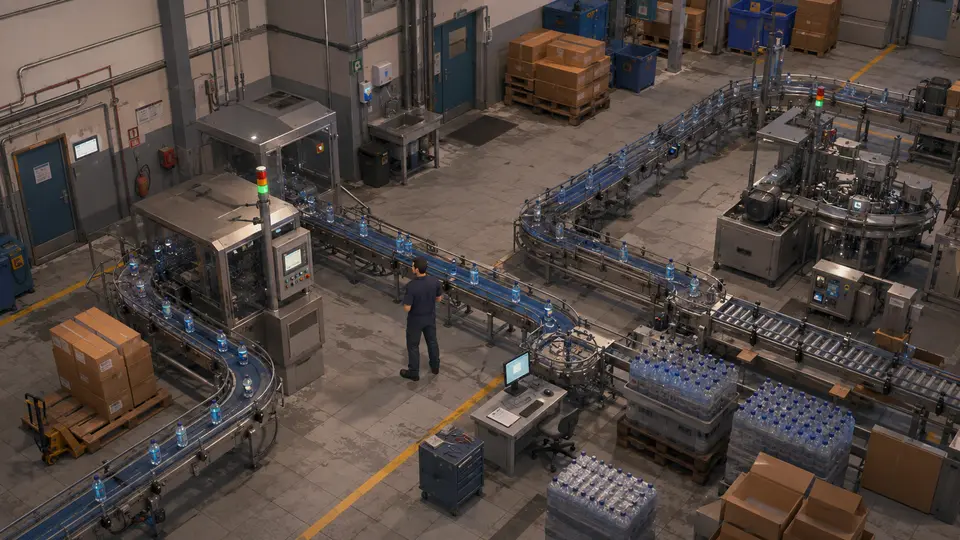
CAM-241The line is running, but a gap opens every few seconds
«Count the bottles going past here every minute and tell me if a gap of more than ten seconds opens up.»
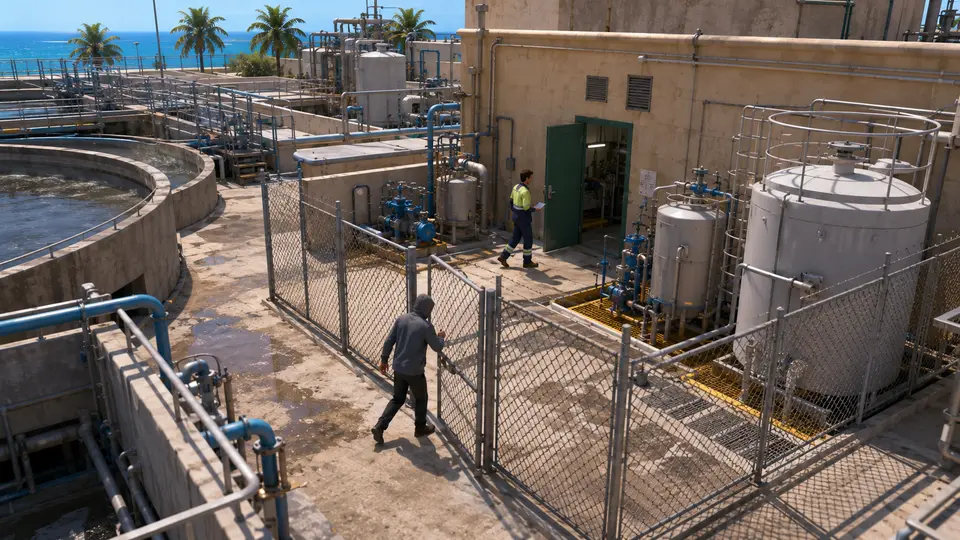
CAM-154Someone opens the chemical compound gate
«Tell me if anyone opens the chemical compound gate in a time band with no work scheduled there.»
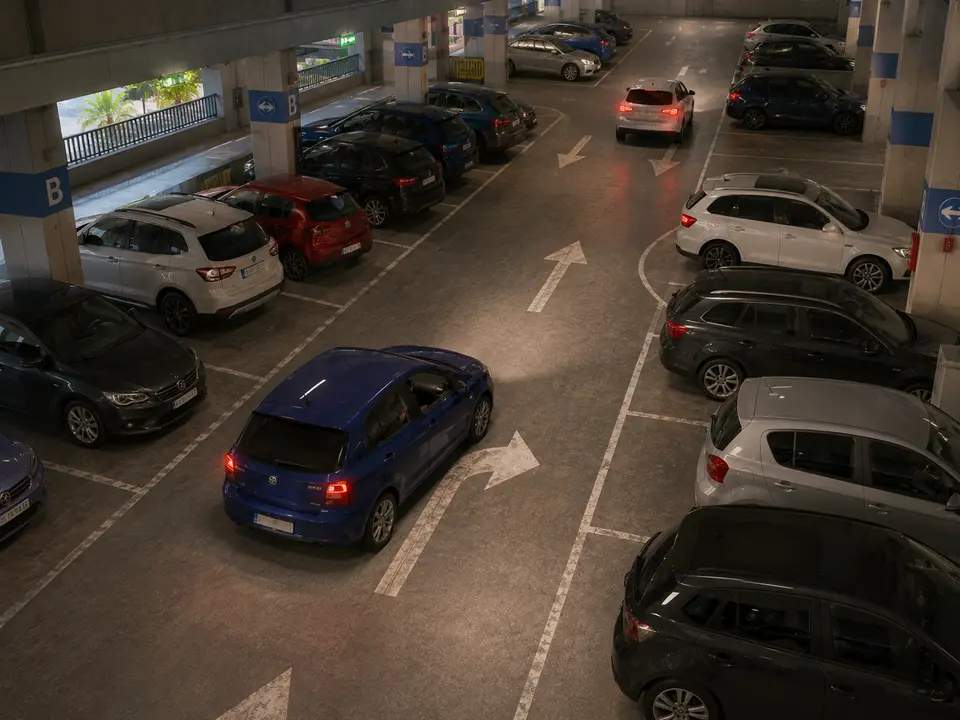
CAM-461Four minutes going round and not one free space
«Tell me how long it takes a driver to park on this level on average, by time of day.»
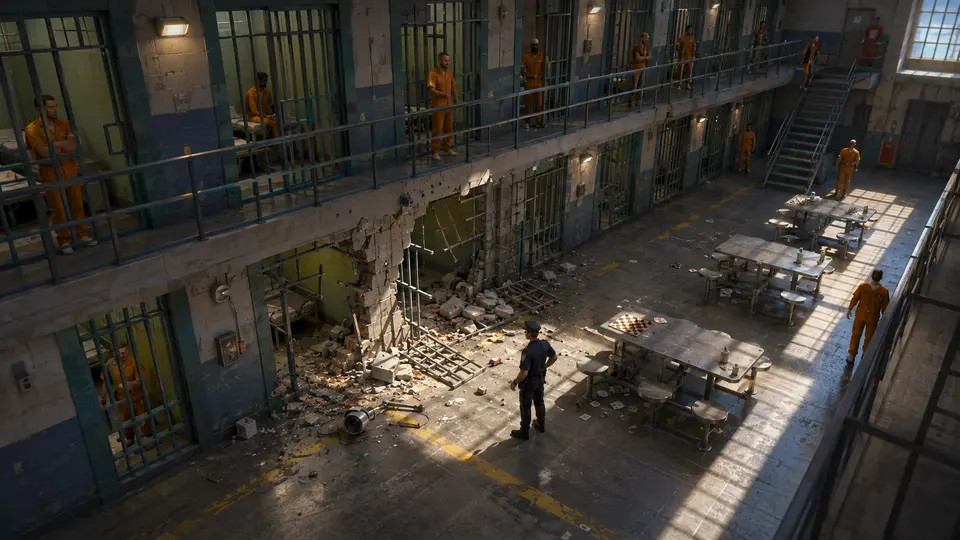
CAM-116A hole in the wing wall
«Tell me when damage appears on a wall, a grille or a mesh fence in this area, and tell me while it is happening, not on the night round.»
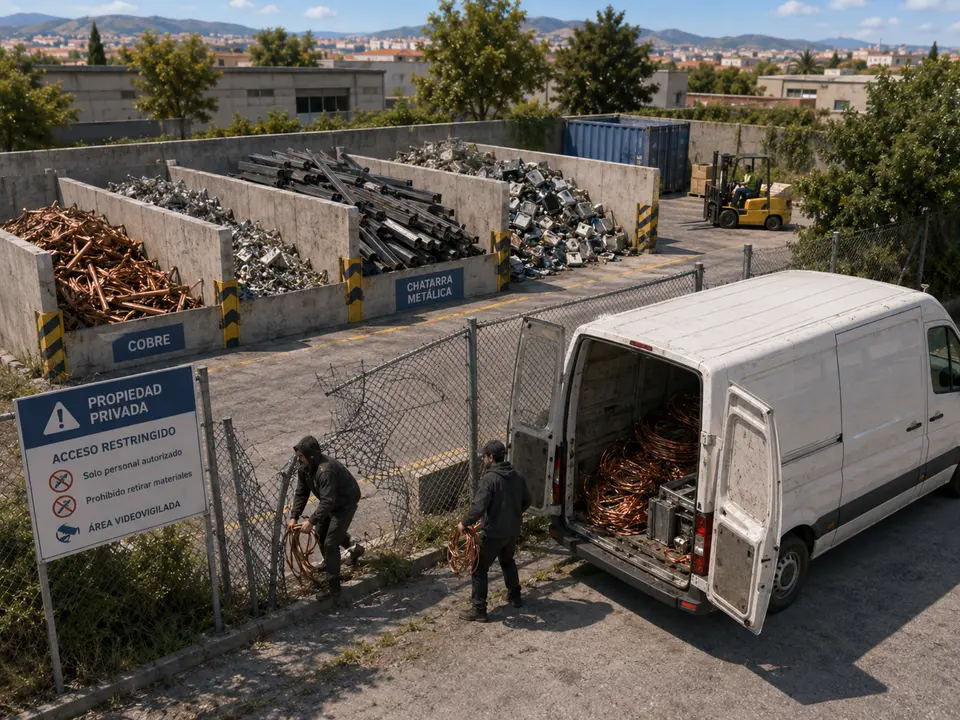
CAM-428The fence has been cut and material is leaving through it
«Alert me if anyone crosses the fence at a point that is not a gate, or if material leaves the yard by a route that is not the exit.»
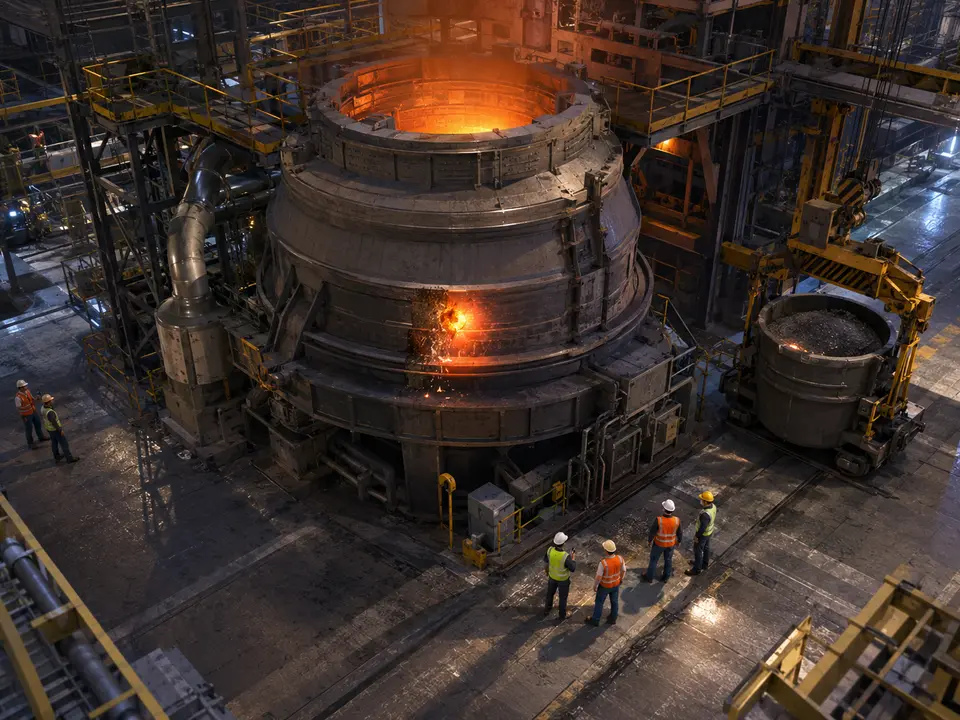
CAM-370A glowing breach in the furnace shell
«Tell me if a hot spot shows up on the furnace shell, or if the usual patch has grown compared with the days before.»
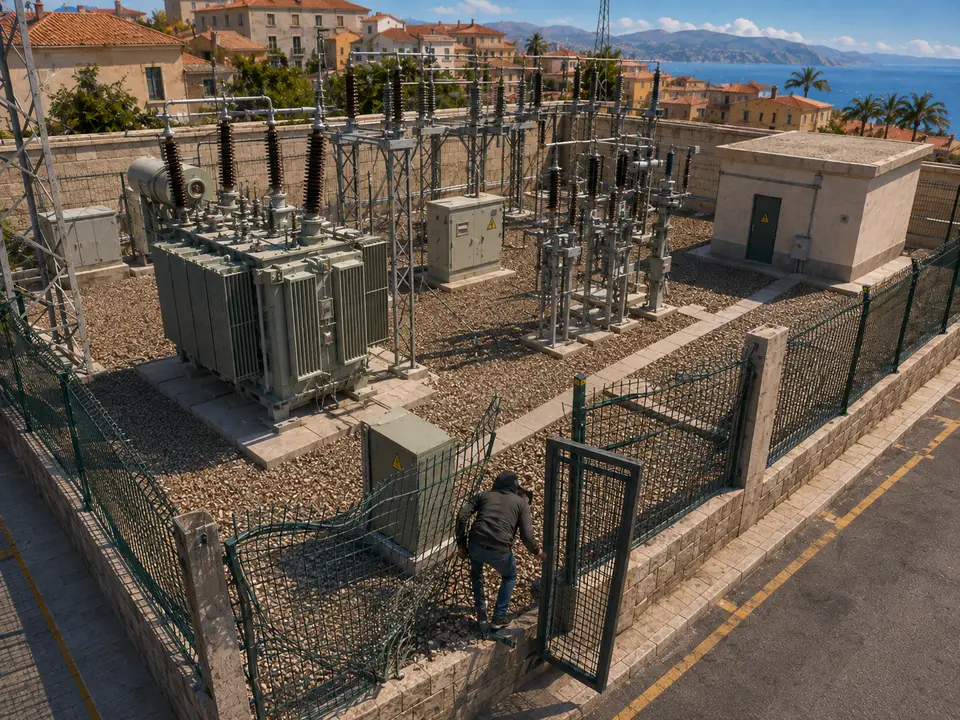
CAM-341The fence is down and someone is coming through the gap
«Tell me if the fence or the gate stop being the way they were, and also if anyone goes through that spot.»
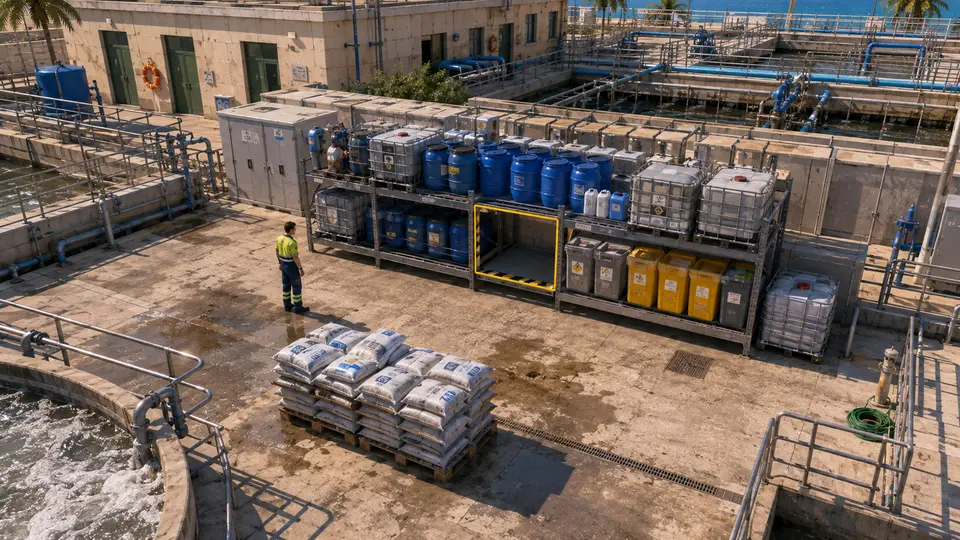
CAM-155A drum missing from the rack
«Show me the product rack every morning and tell me if anything is missing from its bay, without anyone having to go and count.»
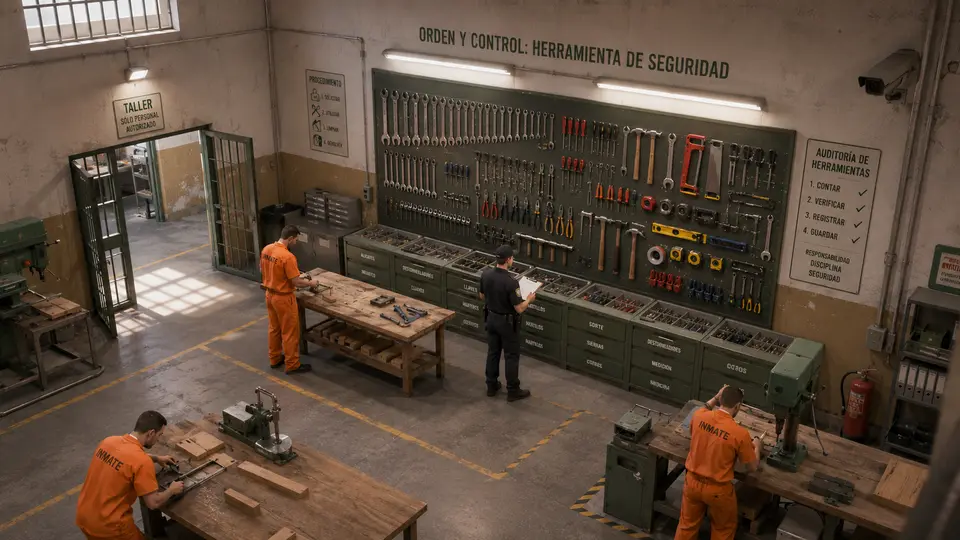
CAM-115The tool board in the workshop
«Tell me if any tool is missing from the board when the workshop closes, and tell me which slot and since what time it has been empty.»


What it does not do
IRIS does not know who cut the fence or why. It sees that the panel is no longer as it was, and it says so. Whether a reversing truck flattened it or somebody cut it with an angle grinder is for the person who goes to look.
And it only sees the fence that falls inside a camera. A two-kilometre perimeter with four cameras has four watched stretches and a lot of dark ground. Before calling a site covered, you check which metres each camera actually sees.
And the review says that a panel has changed since yesterday, not the exact hour of the cut. If the minute matters, a camera has to have seen somebody go through there.
Questions
- Do you need sensors or cable on the fence?
- No. IRIS works from the images of the cameras that already look at the perimeter, so there is no trenching, no cable to pull and nothing to hang on the mesh. That matters on long fences, where a perimeter detection system costs more than the fence itself. What is needed is for the camera to see the panel in enough detail: if a stretch appears at two hundred metres and against the light, there is nothing there to compare. It is checked camera by camera before it counts as covered.
- What if the fence breaks from wind or a truck?
- It detects that just the same, and it tends to be the most used part. IRIS does not care about the cause: it sees that a panel has changed shape or come down, and it says so. A storm that flattens thirty metres of mesh is a breach in the perimeter exactly like a cut with an angle grinder, and on a windy night nobody is going out to check. In the morning there is the list of stretches to look at, with the camera and the hour each one changed.
- Does it alert at the time or the next day?
- Both, and they are not the same tool. The fence review works by comparing today’s image with earlier days, and that result comes out once a day, like a report. The immediate alert is a different rule: if someone crosses the fence at a point that is not a gate, that arrives at the time, with the camera open. A cut made at four in the morning shows up in the morning report; the person going through it shows up while they are going through.
- Does IRIS identify whoever comes through the gap?
- No. IRIS does not recognise faces and does not know who anyone is. It says there is a person crossing the fence at a point that is not a gate, in which camera and at what hour, and it keeps the video. Searching afterwards for «who else has crossed at that point this week» works from what can be seen — what they were carrying, the direction they went, the time — never from the face. Putting a name to someone is a matter for people and a procedure, not for a camera.
Demo · IRIS at work
We won't just tell you. We'll show you.
It is a summary of the real screen: it plays by itself, step by step, and shows only the path of one case. The actual tool has far more than fits in here.
- The alert fires
- It lands in the tray
- You open it
- You confirm or dismiss
Not seeing yours here?
These words are the ones we have built, not the ones IRIS understands. The list falls short on purpose: you ask for it in a sentence, and sentences do not run out. Tell us what is in front of your cameras and we will tell you whether it understands it, or not yet.
And the best part
Not everything calls for an alert:some things call for counting.
An alert gets you out of your chair; a number lets you plan. Two different jobs, and the same camera can do both at once.
Tell us your problem and we will say whether IRIS understands it, or not yet.
We reply the same working day.