Solutions by typeProduction efficiency
How long does it take anyone to find out the belt has stopped moving?
The belt is stuck and a hand goes in
Mid-morning in the sorting hall. On the roller bend the parcels have piled on top of each other and nothing is moving. An operator in a yellow vest has lain across the belt and pushed both arms between the rollers to pull out the parcel underneath. The belt is not stopped: it is still under tension, waiting to be freed. Nobody has hit the emergency stop.
6 cameras across 5 sectors
What IRIS is
IRIS watches the cameras for you.
IRIS Neural is an artificial intelligence that watches the cameras you already have and understands what happens in front of them. When something important happens —or something you told it you need to keep an eye on—, it alerts you; and whatever can be counted, it counts in numbers. All day long, without anyone having to watch a screen.
You tell it what you need to watch, and IRIS does it.
Works with the cameras you already have. Nothing to replace.
A person replies, not a form.
- Your footage never leaves your premises.
- It doesn't identify people.
- Certifications →
This is how you ask for it
«Tell me if somebody puts their hands into the belt without stopping it, and show me the video from when the jam started.»
Two bills come out of this. One is the stoppage: parcels that do not get sorted, trucks that leave without them, and an hour nobody writes down anywhere. The other is the arm. If the belt frees itself while his hands are in there, the shift ends in a hospital and the company ends up in an investigation. And the worst part is that it almost always turns out fine: it turns out fine so often that it stops looking dangerous.
You decide once
You decide this once, and safety decides it with operations, not a camera. You say how many seconds without movement count as a jam, on which sections it matters, what happens and who is told: if material on the roller bend has not moved for more than a minute, alert the control desk; and if somebody enters the belt space with the machine running, alert the shift supervisor immediately and keep the video. IRIS applies it on every section.
A jam is almost never reported in time, because it shows up downstream. In an airport baggage basement, suitcases pile on top of each other at the belt’s elbow and forty-six are already stuck, with more arriving behind. Upstairs at check-in nobody knows. They will find out when a plane leaves with half its hold missing. The same happens with a crusher chute that stops swallowing, with a vial line that halts and overflows the reject tray.
And there is a worse case, the steel one: a glowing slab standing still on the rollers, halfway between the furnace and the next stand, beacons red. There, every minute stopped is not only lost time: it is material cooling where it should not, and a hard decision somebody has to take quickly and with the best information available.
IRIS watches two things at once and both matter. The first is whether material is moving: when something has not advanced for longer than the seconds you set, it alerts, with the camera and the video from when it started. The second is the one that really counts: whether somebody gets into the belt, the chute or between the rollers with the machine running. That is not a productivity problem. That is a hand, and the alert arrives before the scare does.
What changes
Before, the control desk learned about the jam when material stopped arriving downstream, and it never learned about the hand between the rollers unless it ended badly. Now an alert arrives within the minute, with the video from when it started, and a different, more urgent one arrives the moment somebody enters the belt with the machine running. And every stoppage is logged with its duration, so at month end it can be added up.
Where we have seen it
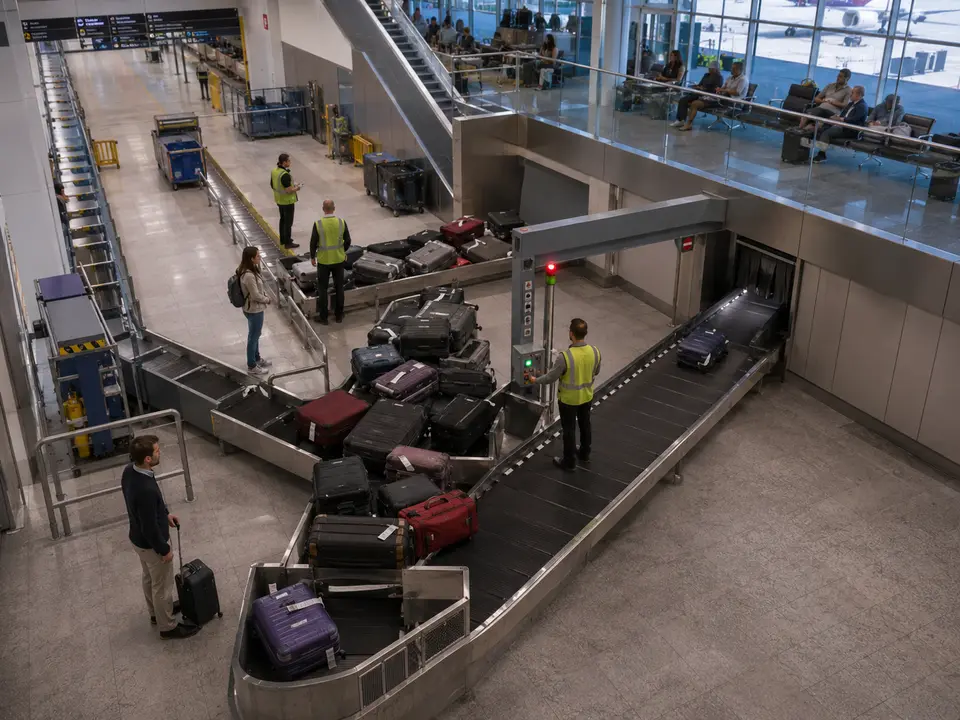
CAM-592Downstairs the belt is jammed and upstairs nobody knows
«Tell me if the conveyor stops moving bags and luggage stacks up at the bend.»
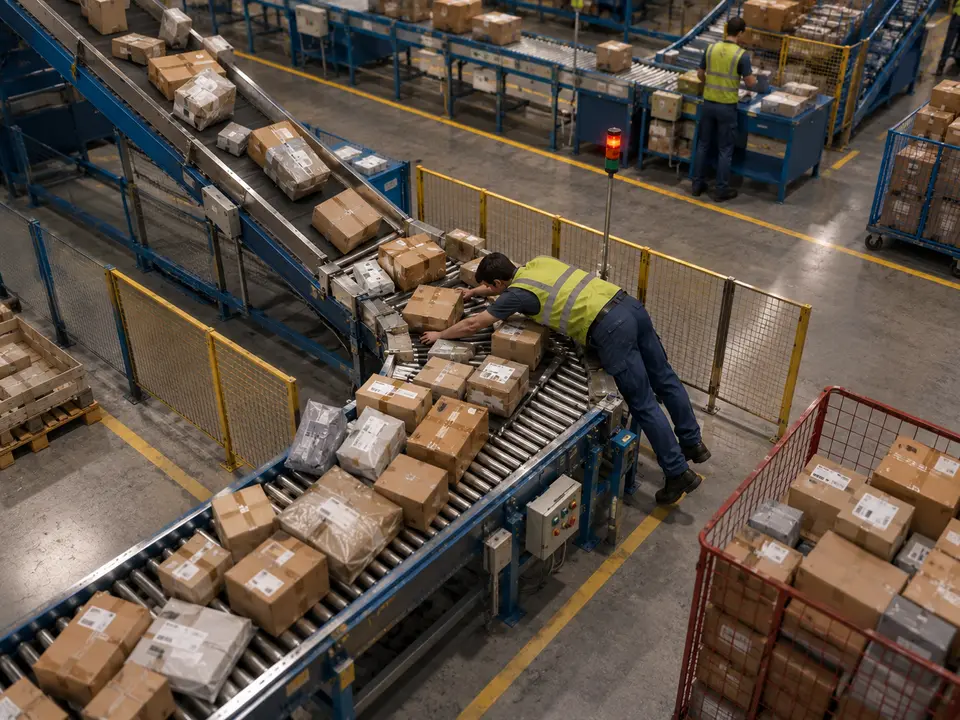
CAM-275Jammed conveyor, two arms in among the rollers
«Tell me if somebody puts their hands into the conveyor without stopping it first, and show me the video from when the jam started.»
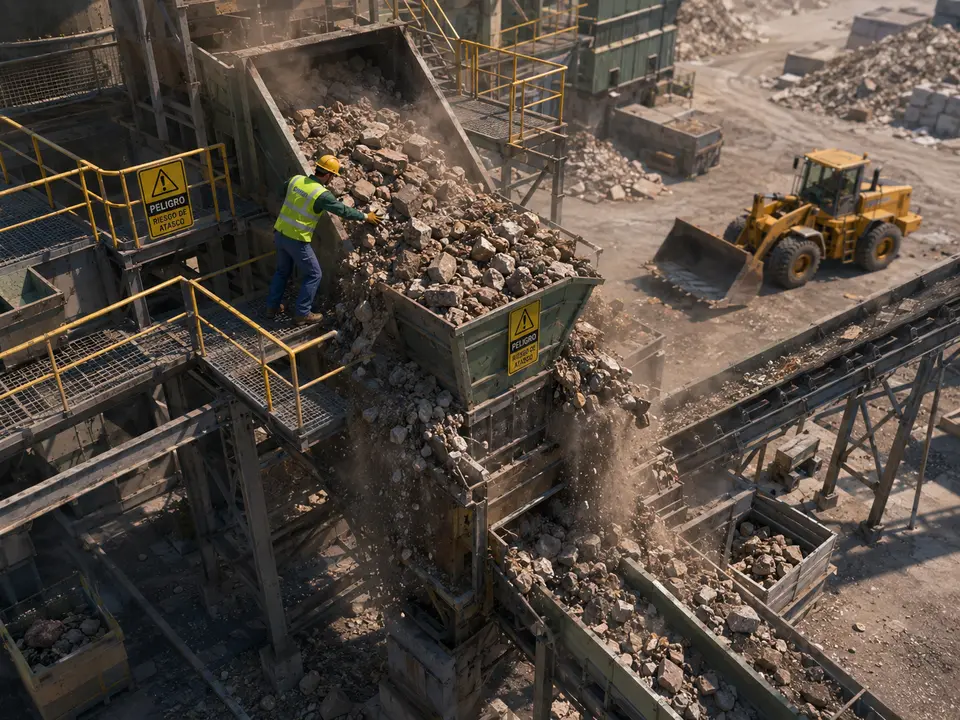
CAM-393The hopper is blocked and somebody is reaching in
«Tell me if a hopper stops taking material and someone comes to clear it by hand.»
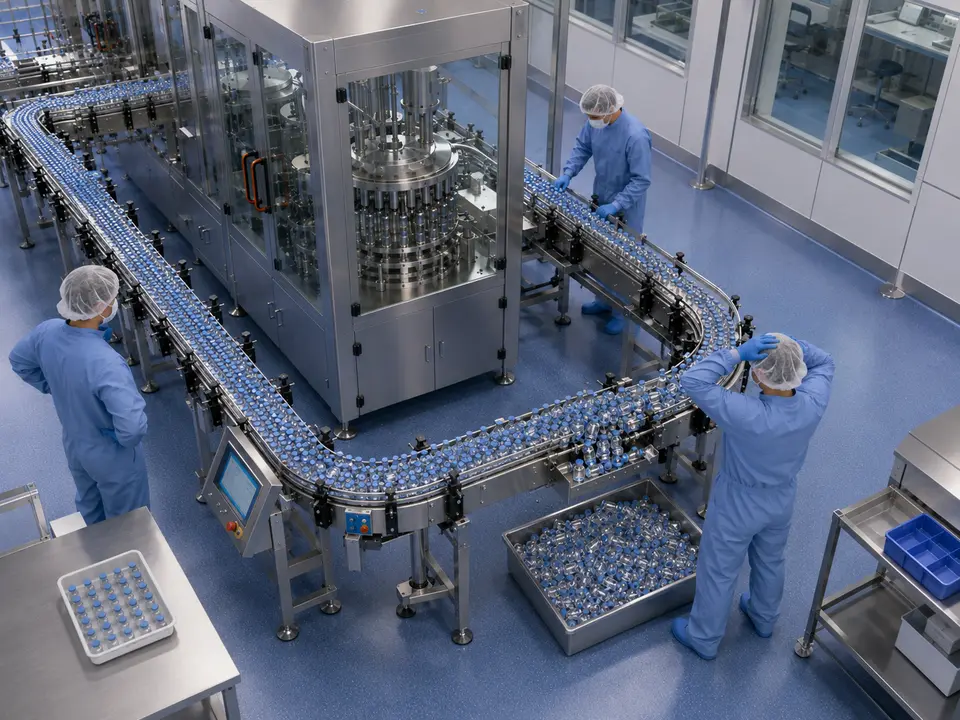
CAM-299The line has stopped and the reject tray is overflowing
«Tell me when the vials stop moving for more than a minute, and tell me how many have gone into the reject tray.»
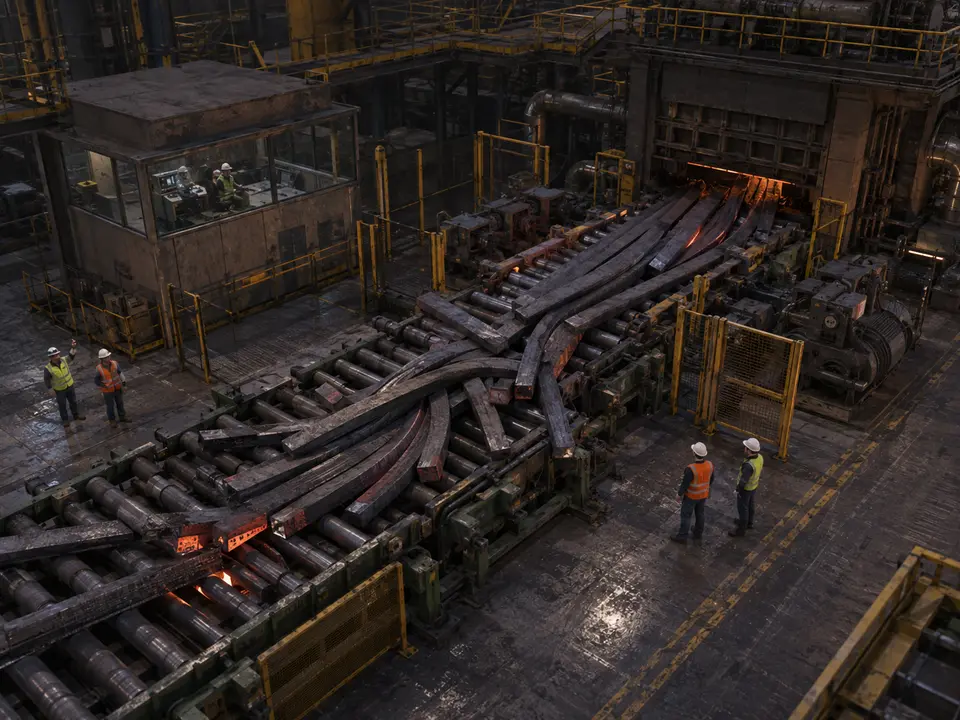
CAM-372The bars have tangled on the roller table
«Tell me the moment a bar stops moving along the roller table or rides up on another one, and show me the video from just before.»


What it does not do
IRIS does not stop the belt. It does not replace the emergency stop or the machine lockout procedure: those are safety systems and they remain in charge.
And it does not know whether the work was authorised. It cannot tell a technician who has locked the machine out from someone who has reached into a belt still under tension. It sees that somebody is inside and the machine is running, and it says so.
Questions
- Can it stop the belt when somebody reaches in?
- Not on its own, and this is worth understanding properly. IRIS alerts: it sends the alert to the control desk and to whoever you nominate, with the camera open and the video. It can be wired to a stop, but that is a safety decision taken with your health and safety team and the machine builder, not a box to tick. And it never replaces the emergency stop or the lockout: those remain what actually protects the person.
- How does it tell a jam from a normal shift stoppage?
- By what piles up. A belt stopped because the shift is over is empty, or empties itself; a jammed belt builds material up in front of the point while more keeps arriving behind. That difference is visible in the image and it is what triggers the alert. The rule also carries its schedule: if there is a planned stop at two in the afternoon, nothing is sent. It is defined once with somebody who knows the line, and it stops producing alerts nobody needs.
- Can it tell me how much time is lost to jams in a month?
- Yes, and it is usually what surprises people most. Every stoppage is recorded with its start time, its duration and its section, so at month end there is a list, not a feeling. That is where it turns out most of the lost time sits in two specific bends, and that is no longer an alert: it is a maintenance decision. Not everything that matters is an alarm; sometimes what matters is a number nobody had before.
- Does it work with dust, steam or poor light?
- Sometimes yes and sometimes no, and it depends on the camera, not on goodwill. A crushing plant with dust in the air or a rolling mill with steam and heat are hard environments: if the camera cannot make out the material, neither can IRIS. So before committing to a rule in a place like that, we look at that specific camera at the worst hour of the day. If it cannot be seen, we say so and change the vantage point or the equipment. We do not promise detection the image cannot support.
The real interface, step by step
A camera looks. IRIS understands what it sees.
An extract of the real screen, no voice-over and hands-free. Each round poses another situation. What sits behind it is a good deal bigger than what you see.
- It lands in the tray
- You open it
- You confirm or dismiss
Not seeing yours here?
These words are the ones we have built, not the ones IRIS understands. The list falls short on purpose: you ask for it in a sentence, and sentences do not run out. Tell us what is in front of your cameras and we will tell you whether it understands it, or not yet.
And the best part
What happens in the small hoursdoes not have to wait for the morning report.
IRIS understands it there and then and tells whoever is on call, with the camera and the time. The next day there is nothing to reconstruct: it is already written down.
Tell us your problem and we will say whether IRIS understands it, or not yet.
We reply the same working day.