CAM-377
He crosses the track in front of the ladle
Night in the internal yard. A works locomotive comes forward with its headlights on, hauling a car with a full ladle: through the mouth you can see the orange metal. A man in a hi-vis vest crosses the track in front of it, a few metres from the nose. From the left a forklift is entering the same crossing. On the right, four colleagues wait inside the marked walkway. IRIS sees a person in the crossing with the train moving.

Turn on IRIS Vision
AI-generated image
What IRIS is
IRIS watches the plant for you.
IRIS looks at the cameras you already have on the plant floor and understands what it sees: a stopped line, someone inside a robotic cell, someone without their safety gear on, jammed parts. When something like that happens, it alerts right away; and whatever can be counted, it counts in numbers. All day long, with no one needing to watch the screen.
You tell it what you need to watch, and IRIS does it.
Here, for example, IRIS counts every time someone crosses the track while the train is moving and logs the alert with the time and the video, even when nothing happens. After a month you have a list of when and at what time it happens most. With that list you decide whether to change the schedule, add a signal, or move the crossing.
Works with the cameras you already have. Nothing to replace.
A person replies, not a form.
- Your footage never leaves your premises.
- It doesn't identify people.
- Certifications →
What IRIS understands
What it recognises in this scene
- person crossing the track
- works locomotive with its headlights on
- car carrying the full ladle
- forklift entering the same crossing
- four colleagues in the marked walkway
What this camera measures
An alert says something is happening. The reading says how much.
- 4 sTime inside the crossing
- 1People crossing
- 4People in the marked walkway
- 2Vehicles in the crossing
- 22:07Time
The figures on this screen are an example from the illustration, not any client's measurement.
The rule
You decide once. IRIS applies it always.
If
a person enters the crossing while the loco with the ladle is approaching
Then
- alert the control room with the camera and the time
- save the video of the crossing from ten seconds before
- add the crossing to the shift’s count of dangerous crossings
The instruction that set it up«Tell me if anybody crosses the track when the loco with the ladle is coming, and save me the video.»
What changes
What changes for whoever answers for the plant
A near miss leaves no trace: no report, no injury, and by the next day nobody remembers. That is why the plant still believes the crossing is safe. With the camera, every time somebody steps onto the track with the train moving there is an alert with a time and a video. After a month there is a list of when and at what hour it happens, and that list is what changes the timetable, the signal or the walkway.
What people usually ask
Does IRIS tell people and vehicles apart?
Yes. The camera separates people from vehicles and sees where each one is in relation to the crossing, which is what makes the alert useful. What it does not do is identify anybody: the alert says there is a person on the track, not who that person is.
Do you need a sensor on the track?
Not for this alert. The camera sees the locomotive approaching and sees the person step into the crossing, and that is enough. If the plant wants to interlock a barrier or a signal, that belongs to the track system: IRIS alerts and provides the image, it does not operate anything.
Is it worth anything if there was no accident?
Yes, and it is the part that is worth the most. A near miss is recorded nowhere and it is the cheapest warning there is. Counting them by location and by hour shows where and when the walkway, the signal or the timetable has to change, before somebody gets hurt.
Other cameras
- CAM-360 · The slab has stopped on the mill, with the beacons on red
- CAM-361 · The ladle stream has missed and molten metal is running across the floor
- CAM-362 · Snow and closed drums in the basket, still hanging over the furnace
- CAM-363 · The basket has been loaded from four different bays
- CAM-364 · Somebody is walking the aisle while the full ladle is moving
- CAM-365 · A coil is passing right over a worker
Demo · IRIS at work
You set the rule once. IRIS applies it every time.
You will see a summary of the interface, played step by step and hands-free. Each round starts with another case. The complete tool does not fit in a demo.
- Cameras on the map
- You draw an area
- What passed shows up
See it somewhere else
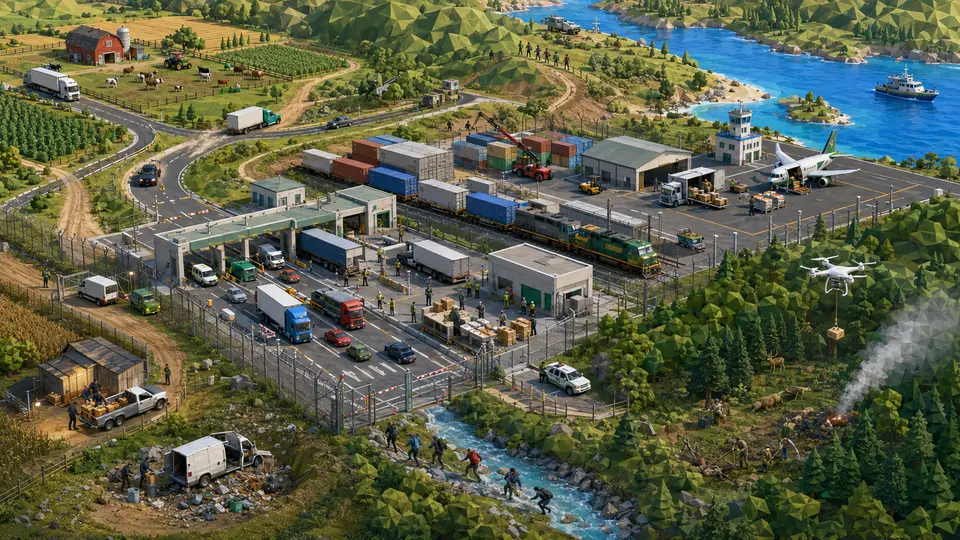
What can a camera see without pointing at anyone?
13 cases: 9 raise an alert when something happens and 4 only measure. You see each image as it is, and then with what IRIS understands on top.
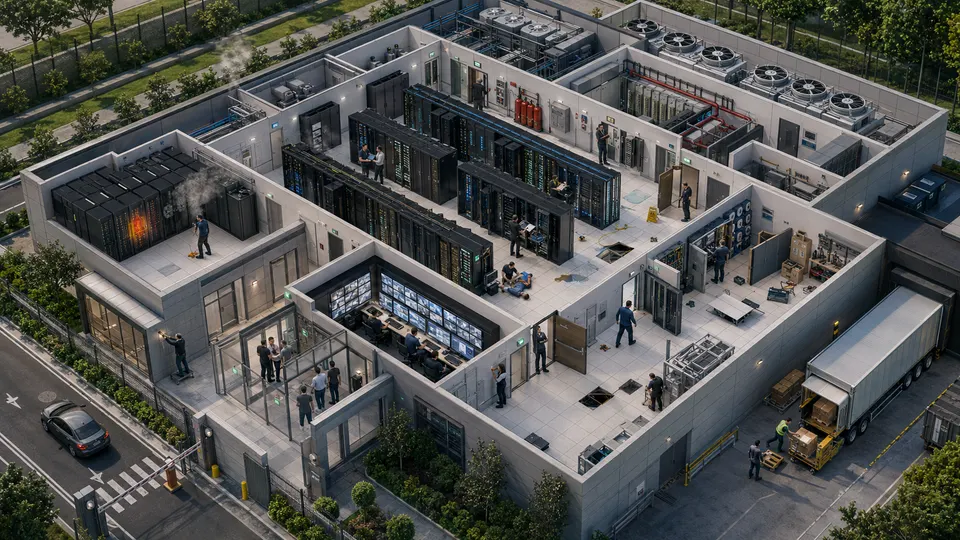
What if the outage does not start with an attack?
13 cases, and in every one of them IRIS raises an alert when something happens. You see each image as it is, and then with what it understands on top.


And the best part
There are nights of thick fogwhen the image gives you nothing. We do not dress that up.
Backlight, heavy rain, a street lamp that has blown. IRIS works with what the camera puts in front of it; when there is no image, it says so instead of inventing an answer.
Tell us your problem and we will say whether IRIS understands it, or not yet.
We reply the same working day.