CAM-53
On foot through the truck gate
The vehicle gate of a construction site in the middle of a city: the control cabin, the barriers and the traffic lights of the entry lane. A concrete mixer truck is coming in at that moment, with another truck waiting behind it. A line of people is walking across right in front of the mixer's nose: two of them have helmets and hi-vis vests on, one has a vest but no helmet, and five more are bare-headed with nothing reflective on. On the right, the container with the mandatory-kit signs, the barriers and a cone.

Turn on IRIS Vision
AI-generated image
What IRIS is
IRIS looks after the site for you.
IRIS looks at the cameras you already have on the construction site and understands what's happening: someone entering without a helmet or safety gear, a person too close to a machine or a vehicle at the gates. When something important happens, it alerts you; and whatever can be counted, it counts. All day long, with no one watching a screen.
You tell it what you need to watch, and IRIS does it.
Here, for example, IRIS watches who's walking past the trucks and whether they've got their helmet and vest on. If someone crosses without them, the alert lands straight away, marked urgent if a truck happens to be pulling in at that moment. It also counts how many times people cross there, and that number tells you whether the crossing is in the wrong place and needs moving.
Works with the cameras you already have. Nothing to replace.
A person replies, not a form.
- Your footage never leaves your premises.
- It doesn't identify people.
- Certifications →
What IRIS understands
What it recognises in this scene
- on foot in the lane
- bare head
- no helmet, no vest
- concrete mixer truck
- full kit on
The rule
You decide once. IRIS applies it always.
If
somebody on foot crosses the vehicle entry lane, and on top of that has no helmet or no vest on
Then
- alert the access control point with the camera, the lane and the time
- flag it as urgent if a truck is coming in or going out at that moment
- log how often it happens and in which time band, to find out whether a walking route is missing
The instruction that set it up«Tell me if somebody walks in through the truck gate, and all the more so if he has no helmet on: nobody should be crossing there on foot.»
What changes
What changes for whoever answers for the site
The truck gate is the worst place on the whole site for visibility: the driver sits high, the bonnet is long and there is a blind wedge in front where he sees nobody. If people also cross there because it is the short cut to the changing rooms, the mix is complete. Today this rests on the gate keeper, who is at the same time handling delivery notes, raising the barrier and answering the phone. With IRIS the alert arrives while the person is in the lane, and it arrives flagged urgent if a truck is coming through at that moment. It also leaves a count of how often it happens and at what hours, and that number usually says something uncomfortable: the walking route is in the wrong place and needs moving. Fixing the gate is what actually removes the risk; the alert only covers the hole in the meantime.
What people usually ask
Isn't the 'no pedestrians' sign enough on its own?
The 'no pedestrians' sign is necessary, but it is not enough: in this very picture the sign is up and people cross anyway. A sign tells you once; a camera looks every time. What IRIS adds is not replacing the sign, it is knowing how often people ignore it, at what hour and where, and warning while it is happening. That count is what lets you decide whether the walking route needs moving or a fence needs putting up, which is the real fix.
Can this be used to discipline the worker who crossed?
No, this cannot be used to discipline the worker who crossed, because IRIS does not identify anyone. It detects that there is a person on foot in the truck lane and that this person has no helmet on; it does not detect WHO that person is, it does not recognise faces, it does not compare them against any database and it does not cross-check them with clock-in records. The alert is about a place and a moment, not about somebody. If a site started using the system to point at individuals, that site would stop using it within a fortnight, and that is the opposite of what we are after.
Does it tell somebody walking through apart from a driver stepping down from his truck?
Yes, and it has to, because otherwise the alert fires twenty times a day and stops being useful. The driver who steps down from the cab, hands over the paperwork and climbs back up is doing his job and is not an incident. The rule is drawn on the image: you mark the lane, you leave out the bay where the trucks pull up, and you ask for the person to be there a few seconds and to have come in from the street. That keeps the alert for what actually worries you: somebody walking in through the gate the trucks use.
Simulation · how IRIS works
Everything comes in. Only what matters gets through.
This sums up what IRIS does with one alert, from the moment it appears until it is closed. The real screen holds far more; this is the main thread.
- The alert fires
- You open it
- You confirm or dismiss
See it somewhere else
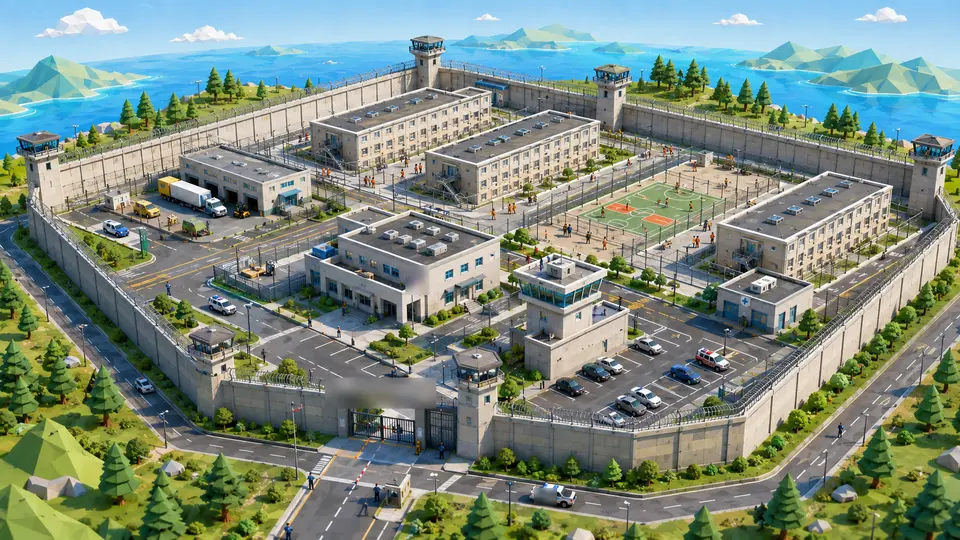
Who is watching the yard screen when the fight starts?
17 cases: 16 raise an alert when something happens and one only measures. You see each image as it is, and then with what IRIS understands on top.

How long before somebody comes down that corridor at four in the morning?
13 cases: 12 raise an alert when something happens and one only measures. You see each image as it is, and then with what IRIS understands on top.


And the best part
We would rather promise less.Let the first week be the surprise, not the brochure.
What it cannot do gets said on day one, not on the last day. A short list that holds beats a long one that falls apart the moment it is switched on.
Tell us your problem and we will say whether IRIS understands it, or not yet.
We reply the same working day.