The building sitePersonal safety
CAM-51
Walking into the site with no helmet
The pedestrian gate of a city construction site, seen from above: the control cabin, the full-height turnstile and, on the hoarding, the sign with the helmet and vest pictograms. Two people are waiting at the turnstile: one has a helmet and a hi-vis vest on; the one beside them is waiting bare-headed and with no vest. A third worker is walking up along the pavement, this one kitted out. Behind the hoarding you can see the concrete frame, the scaffolding and the rubble skip.

Turn on IRIS Vision
AI-generated image
What IRIS is
IRIS looks after the site for you.
IRIS looks at the cameras you already have on the construction site and understands what's happening: someone entering without a helmet or safety gear, a person too close to a machine or a vehicle at the gates. When something important happens, it alerts you; and whatever can be counted, it counts. All day long, with no one watching a screen.
You tell it what you need to watch, and IRIS does it.
Here, for example, IRIS spots someone going in without a helmet and alerts on the spot, with the camera, the time and a few seconds of video. With that alert the supervisor stops the person before they set foot on site, and there's a record of how often it happens and at which gate.
Works with the cameras you already have. Nothing to replace.
A person replies, not a form.
- Your footage never leaves your premises.
- It doesn't identify people.
- Certifications →
What IRIS understands
What it recognises in this scene
- no helmet, no vest
- full kit on
- entrance turnstile
- site rules sign
The rule
You decide once. IRIS applies it always.
If
somebody stands at the entrance turnstile without a helmet, or without a hi-vis vest
Then
- alert whoever is in the control cabin, with the camera and the time
- attach the few seconds of video, so what happened can be seen instead of argued about
- log the alert in the day's record, with the gate and the time, and nobody's name
The instruction that set it up«Tell me if somebody turns up at the turnstile with no helmet or no vest, and tell me there, at the gate, not once they have been inside the site for half an hour.»
What changes
What changes for whoever answers for the site
Seven in the morning at the personnel gate: a queue at the turnstile and the phone ringing in the site hut. Nobody stops wearing a helmet halfway through the job: they stop putting it on at the entrance, and today that depends on whoever is in the hut looking up at exactly the right moment. With IRIS the alert arrives at the gate itself, with the camera, the time and the seconds of video, and the supervisor has time to stop that person before they go in. And there is a record of how often it happens, at what time and through which gate, which is what the inspector asks for. IRIS does not lock the turnstile and does not block anyone: it reports while it is happening, and a person decides.
What people usually ask
Does the alert lock the turnstile or stop somebody entering?
The alert does not lock the turnstile and does not stop anyone entering. IRIS watches the scene and warns whoever is in the cabin; opening, closing or letting somebody through is still a person's decision, made with the site's own criteria. This is deliberate: a system that bars the gate on its own ends up locking out the people who needed to get in, and by the third day someone unplugs it. IRIS warns while it is happening; acting is the site manager's job.
Does IRIS know who the person entering without a helmet is?
No. IRIS does not identify anyone. It detects that there is a person and that this person is missing a helmet or a vest; it does not detect WHO that person is, it does not recognise faces, it does not compare them against any database and it does not cross-check them with the attendance system. That is why the alert cannot be used to discipline a specific worker: it is there so that somebody walks over to the gate and fixes it on the spot. On a site, with subcontractors and crews that change every week, that difference is what makes the system usable at all.
What if I get a hundred alerts a day and end up switching it off?
A hundred alerts a day is the surest way to make certain nobody reads any of them, which is why the rule is tuned before it is switched on. You decide where the camera looks — just the turnstile bay, not the whole pavement — how many seconds a person has to be there for it to count, and which time bands it applies to. Then it runs for a week in test mode, alerting nobody, you look at what would have fired, and you move those three numbers up or down. One alert that gets acted on is worth more than twenty that get closed without looking, and that is the yardstick for the tuning.
Demo · IRIS at work
We won't just tell you. We'll show you.
It is a summary of the real screen: it plays by itself, step by step, and shows only the path of one case. The actual tool has far more than fits in here.
- Cameras on the map
- You draw an area
- What passed shows up
See it somewhere else
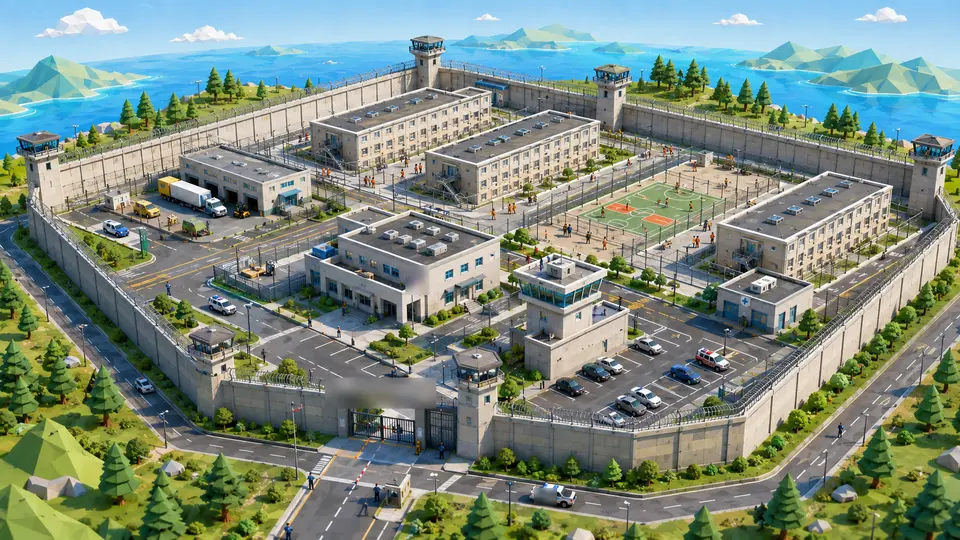
Who is watching the yard screen when the fight starts?
17 cases: 16 raise an alert when something happens and one only measures. You see each image as it is, and then with what IRIS understands on top.

How long before somebody comes down that corridor at four in the morning?
13 cases: 12 raise an alert when something happens and one only measures. You see each image as it is, and then with what IRIS understands on top.


And the best part
Sometimes you do not need an alarm:you need a number.
How many people came in, and when. You draw a line over the image and the camera counts. People counting is certified by the Centro Español de Metrología through NeuralPax.
Tell us your problem and we will say whether IRIS understands it, or not yet.
We reply the same working day.