Solutions by typeIntrusion detection
Why has that car been standing there for eleven minutes?
Nothing has happened yet
Half past five in the afternoon. A white van is standing in the road, right up against the substation gate, engine off and nobody at the wheel. Beside it, someone on the pavement is looking at the fence. They have been there eleven minutes. Nobody ever stops on that street: there is no doorway, no shop, not one parking space. Nothing has happened yet, and that is exactly the moment.
5 cameras across 5 sectors
What IRIS is
IRIS watches the cameras for you.
IRIS Neural is an artificial intelligence that watches the cameras you already have and understands what happens in front of them. When something important happens —or something you told it you need to keep an eye on—, it alerts you; and whatever can be counted, it counts in numbers. All day long, without anyone having to watch a screen.
You tell it what you need to watch, and IRIS does it.
Works with the cameras you already have. Nothing to replace.
A person replies, not a form.
- Your footage never leaves your premises.
- It doesn't identify people.
- Certifications →
This is how you ask for it
«Tell me if a vehicle stands for more than four minutes against the fence or in front of the gate, and tell me at which point of the perimeter.»
Today nothing happens. It happens on Thursday, in the small hours, and by then there is no decision left to take: there is an empty cabinet, a cut fence and a report. What has been lost is the only moment when a phone call would still have been worth something. Nobody has a person watching an empty street in case someone stops, so that moment is always lost and is only recognised afterwards, watching the video backwards.
You decide once
You decide this once, and what has to be decided here is a number. You say which stretches of street or track count as perimeter, how many minutes stopped are too many on each one — four in front of a gate, fifteen on a service road — and at what hours. IRIS applies it on all those stretches, every day. If there is a point where people genuinely park, that stretch comes out and is never mentioned again.
This is the earliest word in the whole vocabulary. Nothing has happened yet. Nobody has cut anything, climbed anything or taken anything. There is a vehicle standing where no vehicle stands, and somebody beside it looking at a fence.
And it has to be said plainly: almost always it is nothing. A delivery driver eating a sandwich, a driver on the phone, somebody waiting for a call back. IRIS does not say anybody is suspicious, and that word has no business here. What it says is far more modest and far more useful: this vehicle has been at this point of the perimeter for eleven minutes, and nobody stops here.
The place changes and the minute stays the same. A white van parked at an angle on a dam crest, its nose against the no-entry sign. A four-by-four on the dirt track that skirts the fuel tanks, with a person standing still against the mesh. A van and a grey car on the public road that runs beside the wall of a prison, with two people on the pavement. A dark van standing on the pedestrian crossing in front of a venue barrier while, to the right, somebody climbs the railing. In none of the four has anything happened yet, and in all four there is a call that can be made.
That is enough. The person in the control room opens the camera, looks for five seconds and decides: nothing, or send the patrol car past, or make a call. It costs almost nothing, and that is exactly why it works: because the ones that turn out to be nothing are cheap. What you cannot do is put a person in front of an empty street in case somebody parks. That is exactly the job to hand to a machine, so that people can get on with deciding.
What changes
Before, that van only turned up in the video you watch after a theft, and then everybody says the same thing: «there it is, three days earlier, looking at the fence». Now it turns up on Tuesday at half past five, with the camera open and eleven minutes counted. And what you do with that is a thirty-second phone call that almost always ends in nothing. On Thursday in the small hours, sometimes, nothing happens because that is what happened on Tuesday.
Where we have seen it
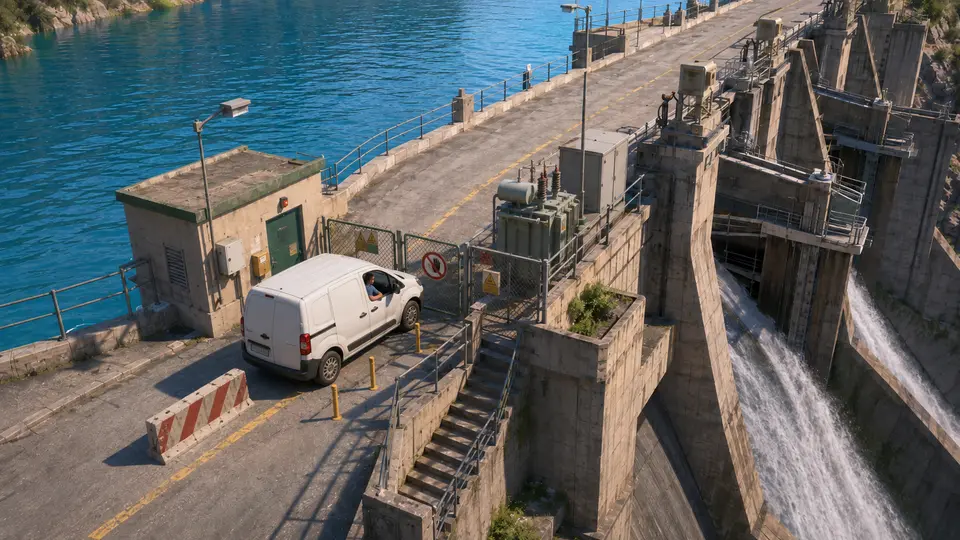
CAM-145A van parked on the dam crest
«Tell me if a vehicle stays parked on the crest for more than five minutes outside working hours, and tell me if anyone gets out of it.»
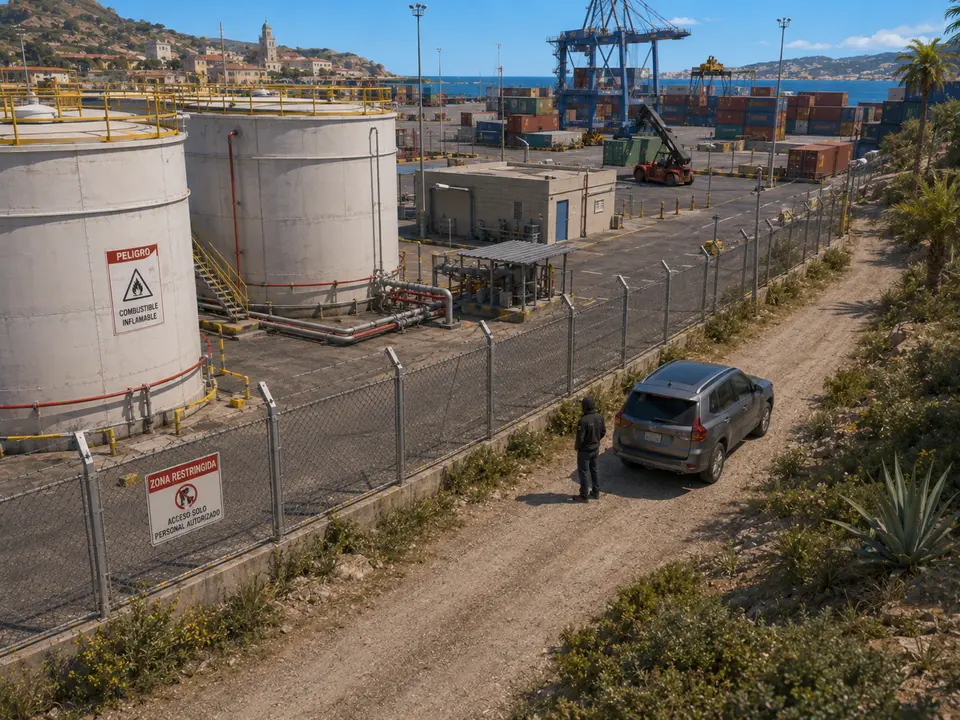
CAM-442A car has sat eleven minutes where nobody ever stops
«Tell me if a vehicle or a person stays more than five minutes by the tank farm fence.»
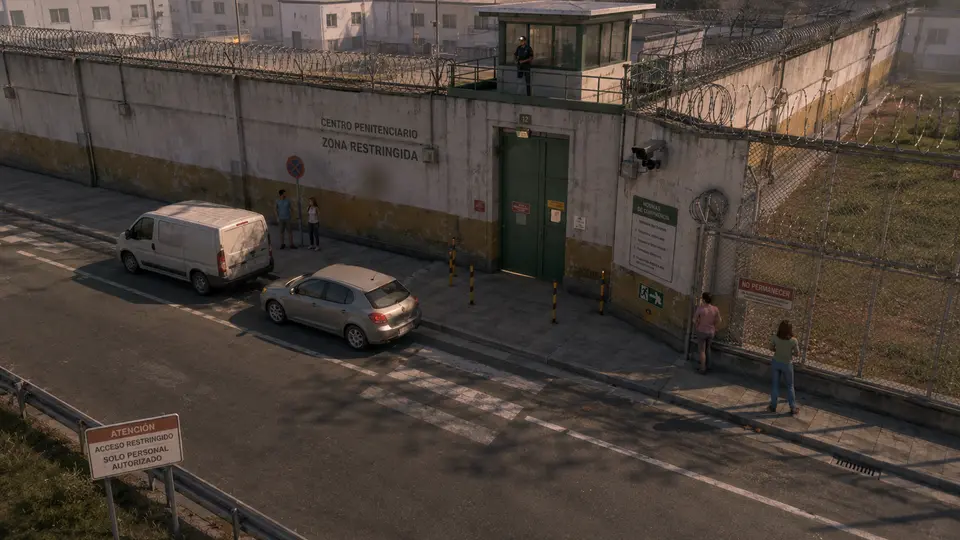
CAM-109A car parked too long against the wall
«Tell me if a vehicle stays parked against the wall for longer than we have set, or if someone stays put against the fence, and tell me which point of the perimeter it is.»
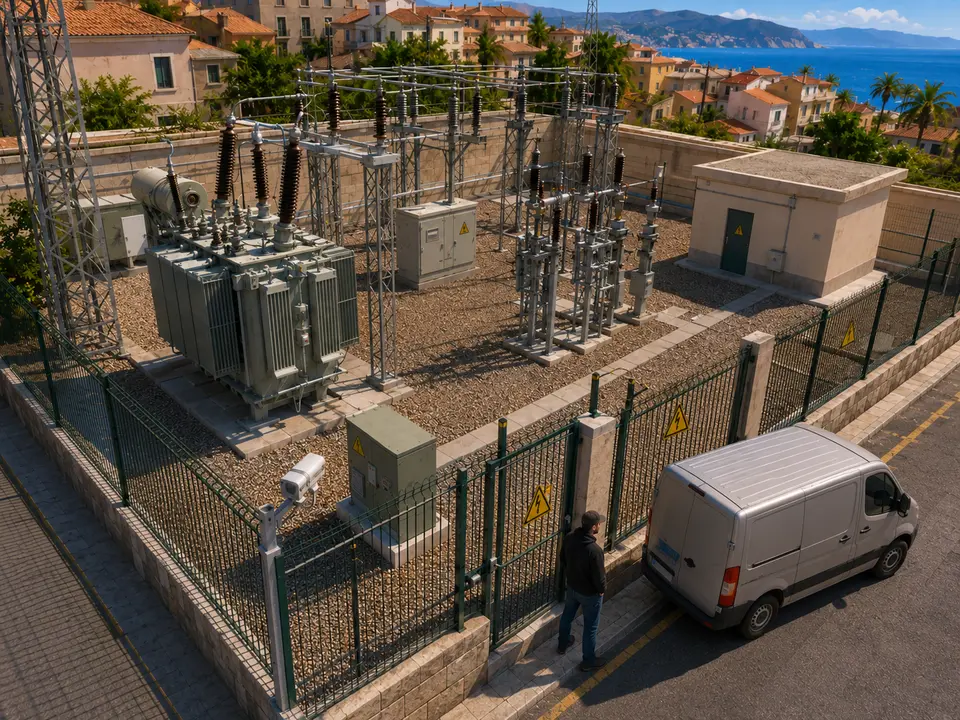
CAM-342Eleven minutes parked where nobody ever stops
«Tell me if a vehicle stays stopped for more than four minutes in front of the gate or up against the fence.»
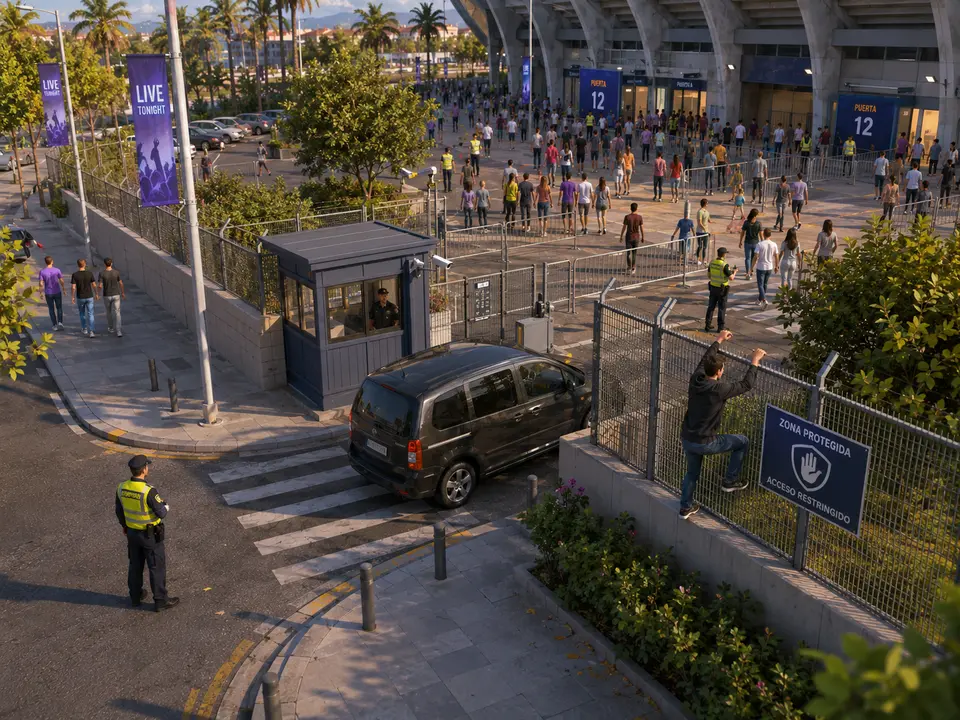
CAM-488A van stopped at the barrier and someone climbing the fence
«Tell me if anyone crosses the fence line, or if a vehicle stays stopped in front of the barrier for more than two minutes.»


What it does not do
IRIS does not know what that person is doing or why they stopped there. It does not read intentions, it does not recognise faces and it never says anybody is suspicious. It says how long a vehicle has been standing at a point where nobody stops.
And it gets the place wrong, not the person: if the stretch you marked includes somewhere people genuinely park, it will alert all the time. You tune the rule by looking at the stretch, not by lowering the threshold until it goes quiet.
Questions
- Will it not alert on anyone who parks for a moment?
- No, because you set the time and you set the place. In front of a substation gate, four minutes is already a lot; on a port service road, fifteen is nothing. It is chosen stretch by stretch, with whoever knows that place, and adjusted in the first week from what comes out. If one point alerts too much it is usually because people do stop there, and then what changes is the stretch. An alert that fires all the time stops being read within three days.
- Does it tell a stopped car from one driving slowly?
- Yes, and that is exactly the difference that makes this rule useful. IRIS sees the vehicle, sees that it stays in the same place and counts the minutes. A car driving slowly is not a stopped car and produces nothing. And it counts people too: if somebody gets out and stands by the fence, that can be asked for separately, because on many perimeters what matters is not the vehicle but the person who has planted themselves against the mesh.
- Can it be used on a public road?
- It can, and it has to be done carefully, because a street is not your site. The usual approach is to watch only the strip against the fence or the wall, not the whole pavement, and to keep only the clip from the alert rather than the whole day. None of this identifies anybody: IRIS does not recognise faces and keeps no record of any vehicle. Even so, the framing, the retention period and the signage are agreed beforehand with whoever handles data protection at that site.
- Does it alert at night, which is when it matters?
- Yes, and by day as well, which is when a perimeter usually gets looked over. A lot of people assume this is a small-hours matter, and most of the stops that matter happen in broad daylight, when a stopped vehicle draws less attention. The rule can be tuned by time slot: four minutes at night and ten by day, or the same threshold always. At night it depends on the camera seeing, so that point is tested in the dark before it is accepted.
See it for yourself
This isn’t a video. It’s a slice of the real screen.
A summary of the real interface, played hands-free. You see one case from start to finish; what you do not see are the other screens, and there are many.
- Four cameras at once
- Each understands its own view
- The numbers climb by themselves
Not seeing yours here?
These words are the ones we have built, not the ones IRIS understands. The list falls short on purpose: you ask for it in a sentence, and sentences do not run out. Tell us what is in front of your cameras and we will tell you whether it understands it, or not yet.
And the best part
Video tells you what happened.An alert reaches you while it is happening.
Reviewing the recording helps you explain. Hearing about it at the time helps you get there. Two different things, and until now you only had the first.
Tell us your problem and we will say whether IRIS understands it, or not yet.
We reply the same working day.