Solutions by typeIntrusion detection
How do I tell a normal job from one that is not?
A theft almost always looks like work
Almost one in the afternoon, in broad daylight. Two people inside the substation yard. One is crouched in front of a field cabinet swung wide open, pulling out copper conductors; the other is coiling them on the ground. They are wearing gloves, they are calm and they are not looking around. From a screen, this looks a great deal like a crew on a scheduled job. And today there is no scheduled job.
4 cameras across 4 sectors
What IRIS is
IRIS watches the cameras for you.
IRIS Neural is an artificial intelligence that watches the cameras you already have and understands what happens in front of them. When something important happens —or something you told it you need to keep an eye on—, it alerts you; and whatever can be counted, it counts in numbers. All day long, without anyone having to watch a screen.
You tell it what you need to watch, and IRIS does it.
Works with the cameras you already have. Nothing to replace.
A person replies, not a form.
- Your footage never leaves your premises.
- It doesn't identify people.
- Certifications →
This is how you ask for it
«Tell me if a cabinet is opened or material leaves the site when there is no authorised work at that hour.»
The copper is discovered when something fails or when somebody opens that cabinet, and that may be weeks away. By then the cost is no longer the metal: it is the outage, the fault it causes and the crew that has to go out and repair what was taken for sixty euros of scrap. Same with the rest: the missing drum shows up in the quarterly stock count, and the boxes from the controlled cupboard in an audit. By then the video of that day was recorded over weeks ago.
You decide once
You decide this once, and the key is the calendar. You say which cabinets, racks or stores are sensitive, what hours have authorised work and who gets the alert when something is opened outside those hours. IRIS checks all of them, every day, without anyone having to remember. The rule is not «I do not like the look of this person»: it is «at this hour, here, nothing was scheduled». When a job is scheduled that window opens, and when the job finishes it closes on its own.
The picture everybody has of a theft — someone running off at night with a bag — is almost never the picture. What you actually see is someone calm, going through the motions of work: opening a cabinet, filling a trolley, taking boxes out of a cupboard, loading a van. It looks like work because it is done exactly the way work is done. And in many places it is done in broad daylight, at one in the afternoon, when it draws less attention than it would at three in the morning.
That is why nobody looking at a screen can tell the difference, and why IRIS never says anybody is suspicious: it does not know, and it is not its job. What can be known is something else, and it is a checkable fact: at that hour, in that place, nothing was scheduled. That sentence turns an impossible judgement into a piece of information you look up in a calendar, and the person looking it up has the works plan in front of them.
So the rule leans on what the organisation already knows: the works plan, the open orders, the store’s opening hours. A field cabinet swung wide open in a substation on a day with no crew. A slot in the product rack that is empty in the morning with no removal logged. Boxes leaving the controlled cupboard at ten at night with no order for that hour. A sealed package crossing the armoured door of the cash back office. A technician five minutes too long in front of a rack in a server aisle. None of those is a theft on its own. All of them can be checked in a minute.
IRIS sees what happens, compares it with what was scheduled and, when it does not match, says so with camera, hour and video. Most of the time it is a job that got done and nobody logged, and that call takes half a minute. But on the day it is not, the alert arrives while the cabinet is still open — and not three weeks later, when the copper has been melted down and nothing is left of the video from that lunchtime.
What changes
Before, this was known when the stock was counted or when something stopped working, and the video was little use because nobody knew which day to look at. Now the alert arrives while the cabinet is still open, with the camera attached. And who decides changes too: it is no longer a guard trying to guess whether that is a crew, it is the maintenance manager looking at his works plan and answering in a minute. Whoever has the context is the one who gets the alert.
Where we have seen it
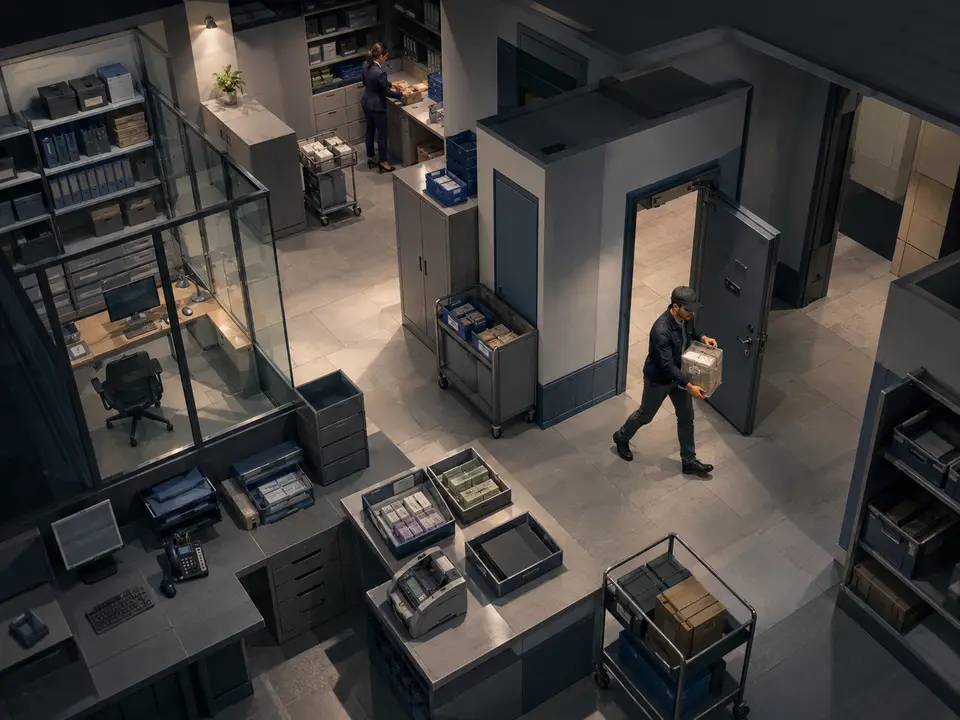
CAM-518A package leaves through the vault door, and now the time is on record
«Tell me when an object goes out through the vault doorway, and give me the exact time and how many people are in the room.»

CAM-533Chips changing hands three metres from the cash window
«Mark the moments when chips pass from one hand to another away from the tables, near the window, and keep them with the time.»
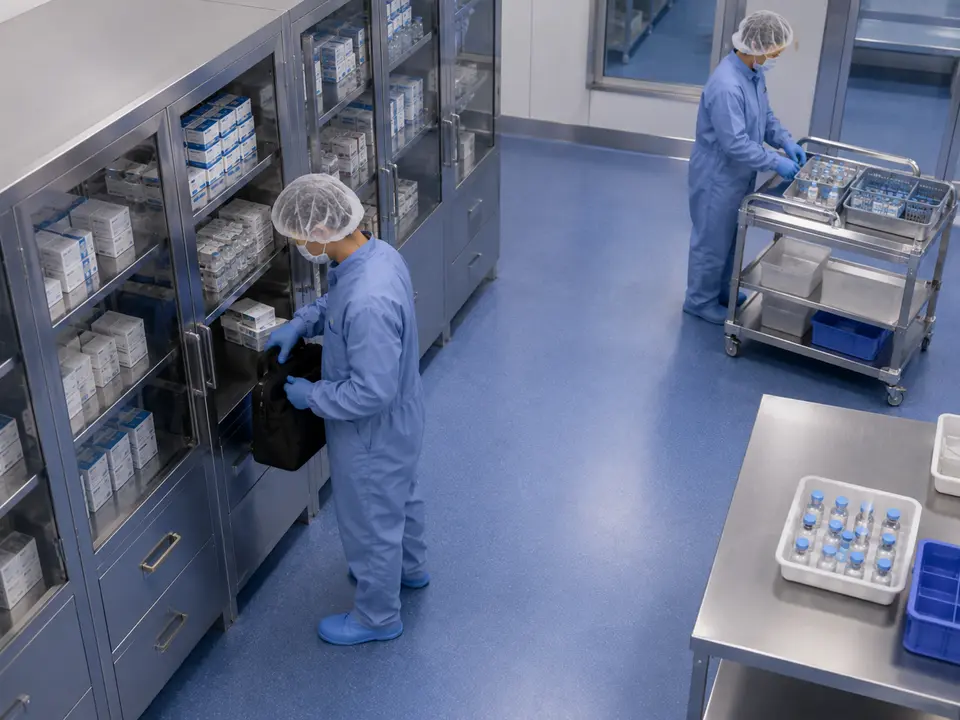
CAM-297Boxes leave the controlled cabinet with no work order open
«Tell me if boxes are taken out of the controlled cabinet when no work order is open for that hour.»
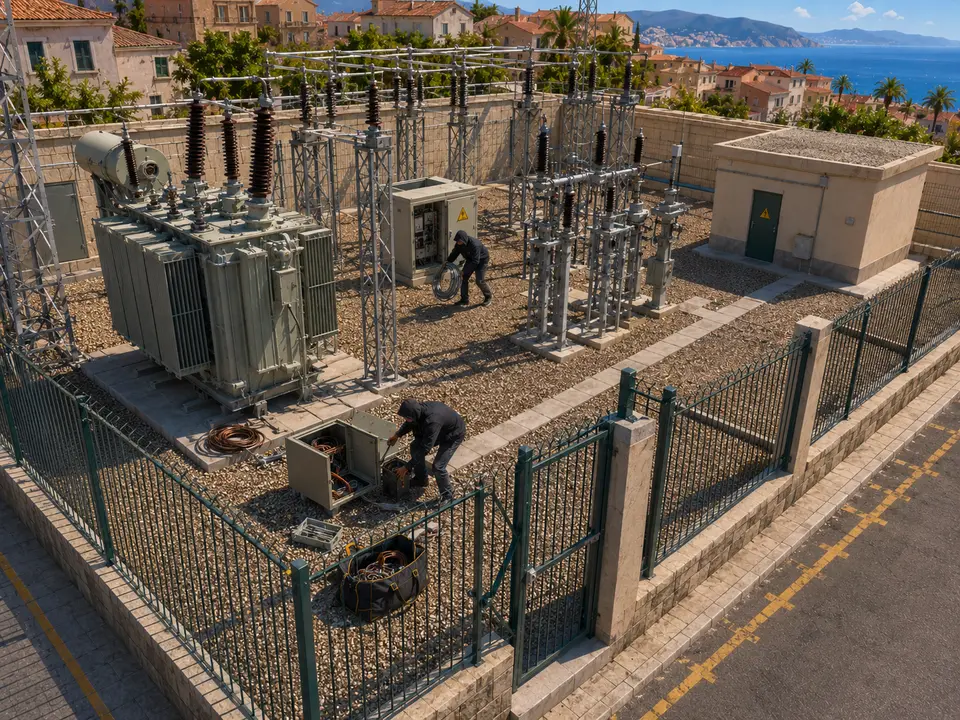
CAM-343A cabinet is being emptied of its copper
«Tell me if a cabinet is opened or cable is taken out of the yard when no authorised work is under way.»


What it does not do
IRIS does not see what is inside a box and does not know what it is worth. It sees a package going out through a door and a slot in the rack that has been left empty. How much is missing is told by the stock count, not by the camera.
And it accuses nobody. It does not recognise faces, it never says anybody is suspicious, and on its own it cannot tell authorised work from unauthorised: that is told apart by the calendar you gave it and by the person who calls to check.
Questions
- Does IRIS point at somebody as a thief?
- No, never. IRIS does not recognise faces, does not know who anyone is and does not label any person. What it says is a fact: at 12:53 this cabinet was opened, on this camera, and there was no work scheduled here at this hour. With that, a person decides whether to call maintenance or to call security. The difference matters: a system that hands out labels gets it wrong about people who have done nothing, and a system that gives facts with an hour and a video can be checked.
- What if the job was legitimate and nobody logged it?
- It happens often, and it is not a fault: it is the system doing what it should. The alert arrives, somebody checks the plan, it is not there, they call on the radio and in thirty seconds it is cleared up. Over time something good happens: because every unlogged job generates a call, jobs start getting logged. The calendar improves by itself. And if in one particular place that is unavoidable, you change the rule instead of putting up with alerts nobody is going to read.
- Can it detect that something is missing, not just somebody taking it?
- Yes, and it is a different case, solved by looking at the empty slot. You show IRIS the product rack or the shelving and every morning it checks whether each slot is occupied. If a drum is not there, it comes out in the report with the hour it stopped being there and the camera where it was last seen. That works even when no camera caught the moment it was taken out, because what is being looked at is not the person: it is the empty space.
- Is the video usable as evidence?
- The video is the same one as always and is worth whatever it is worth in each country; IRIS does not change that. What it adds is that the video exists and can be found: the alert marks the exact minute, keeps the clip before the recording is written over, and leaves it findable by what happened, not by the hour somebody thinks they remember. Many complaints collapse because the video existed and no longer does. That problem does get solved.
A different case every time
Watch what happens. Then watch what IRIS does with it.
Not a recorded video and not a drawing: it is a summary of the real tool, with a different case each time round. The whole tool does not fit in a box.
- You ask
- IRIS searches
- It shows you
Not seeing yours here?
These words are the ones we have built, not the ones IRIS understands. The list falls short on purpose: you ask for it in a sentence, and sentences do not run out. Tell us what is in front of your cameras and we will tell you whether it understands it, or not yet.
And the best part
A recollection cannot be checked.A number can, and it comes out the same every day.
The number does not depend on who was on shift or how they remember it. It is measured the same way every day, and that is why people counting is certified by the Centro Español de Metrología.
Tell us your problem and we will say whether IRIS understands it, or not yet.
We reply the same working day.