Solutions by typePersonal safety
Who opened that cabinet at this hour?
An open panel at eleven at night
It is 23:10 in a utility compound. An unmarked van has come in along the service road, lights off. A cabinet door is wide open and two people are calmly pulling out cable, coil by coil. There is no authorised work anywhere on this site tonight. The camera has been recording it for twenty minutes and nobody is watching, because at that hour nobody is watching any of them. By six in the morning the cable is gone, and so is the van.
7 cameras across 4 sectors
What IRIS is
IRIS watches the cameras for you.
IRIS Neural is an artificial intelligence that watches the cameras you already have and understands what happens in front of them. When something important happens —or something you told it you need to keep an eye on—, it alerts you; and whatever can be counted, it counts in numbers. All day long, without anyone having to watch a screen.
You tell it what you need to watch, and IRIS does it.
Works with the cameras you already have. Nothing to replace.
A person replies, not a form.
- Your footage never leaves your premises.
- It doesn't identify people.
- Certifications →
This is how you ask for it
«Tell me if someone opens an electrical panel outside a scheduled job.»
The stolen cable gets replaced, and that is not the expensive part. The expensive part is the outage, the emergency crew at midnight and a whole shift of people who should have been elsewhere. In a factory the bill differs: a cabinet open with the line running and no padlock in sight is the picture that turns up in the report after a shock.
You decide once
Maintenance decides once the window in which authorised work happens, and everything else becomes the exception. The sentence is framed the other way round: if a cabinet is opened, outside the authorised work window, and no lock or tag is visible, then tell the duty manager, open the camera and keep the video. Decided once, it holds every day of the year.
An open electrical cabinet does not mean the same thing at eleven in the morning as at eleven at night. By day, in a factory, it is almost always maintenance sorting something out. At night, in a utility compound or a substation, it is nearly always copper leaving. The image is identical; what changes is the hour and whether authorised work is under way.
And in both cases there is something worse than theft: there is a person with their hands where the voltage is. In industry the scene sets itself up: a cabinet open with the line still running and no padlock or tag in sight. Nobody decided to skip anything: at eleven at night there is nobody to ask for a lockout, and the job has to be finished for the morning shift.
IRIS sees the open door, sees whether someone is working in front of it and cross-checks it with the hours you have set. Outside the authorised work window, it alerts. Inside it, it stays quiet. That way the same scene that bothers nobody at ten in the morning wakes somebody up at eleven at night. The open door is not the problem. The problem is the open door at the wrong time.
What changes
Before, a cabinet opened at night was discovered the next day, when somebody saw the gap or when the service went down. Now the duty manager gets the alert with the camera open while the van is still inside, and the report goes in with a video and a timestamp instead of an estimate of what is missing. In the factory, the maintenance manager finds out that same night, not at Friday’s meeting.
Where we have seen it

CAM-534Someone on the floor and, at the same time, an open equipment cabinet
«Tell me if somebody falls or stays down on the floor, and tell me too if somebody opens an equipment cabinet or covers a camera.»
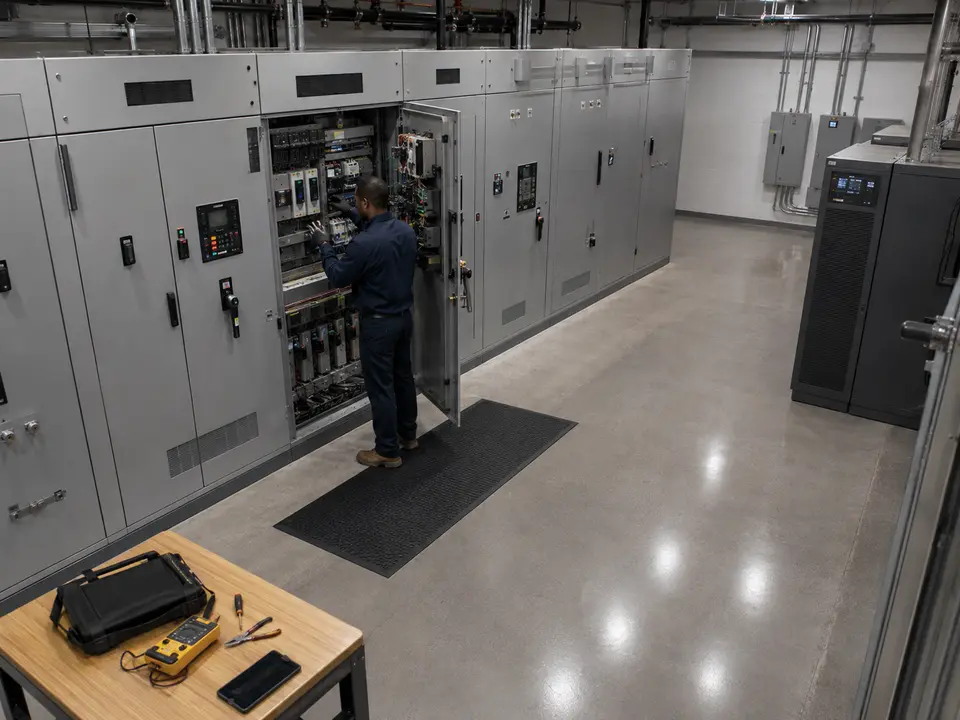
CAM-553A single pair of hands inside the open panel
«Tell me if there is only one person in the switchgear room while work is going on inside an open panel.»
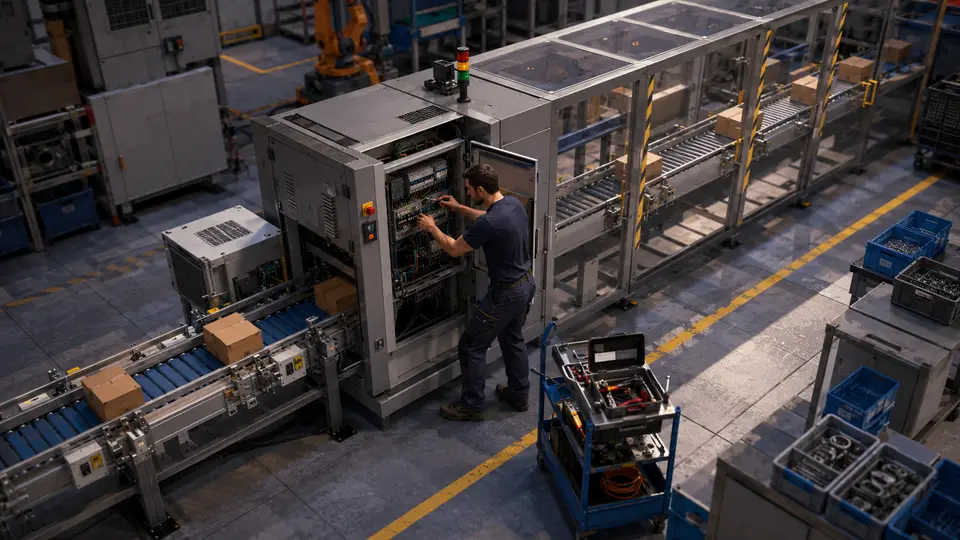
CAM-252Electrical cabinet open, line running, not a padlock in sight
«Tell me if someone opens an electrical cabinet and starts working with no padlock or tag hanging on it while the line is still running.»
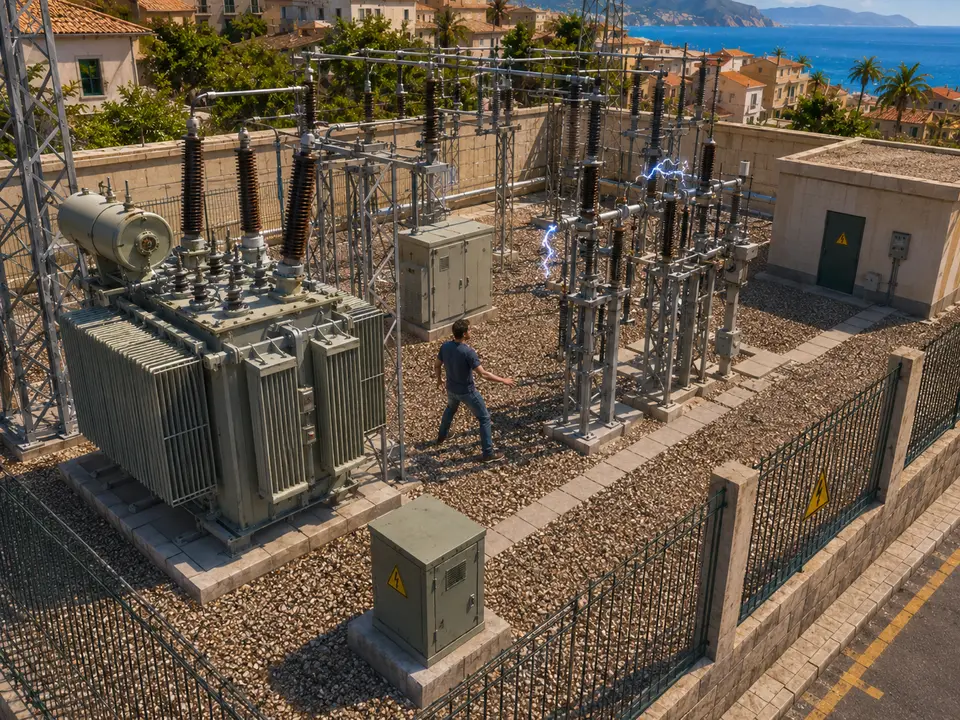
CAM-347No protective clothing beside the live cells
«Tell me if anyone enters the high-voltage zone without a helmet, gloves and protective clothing, even if they are only walking through.»
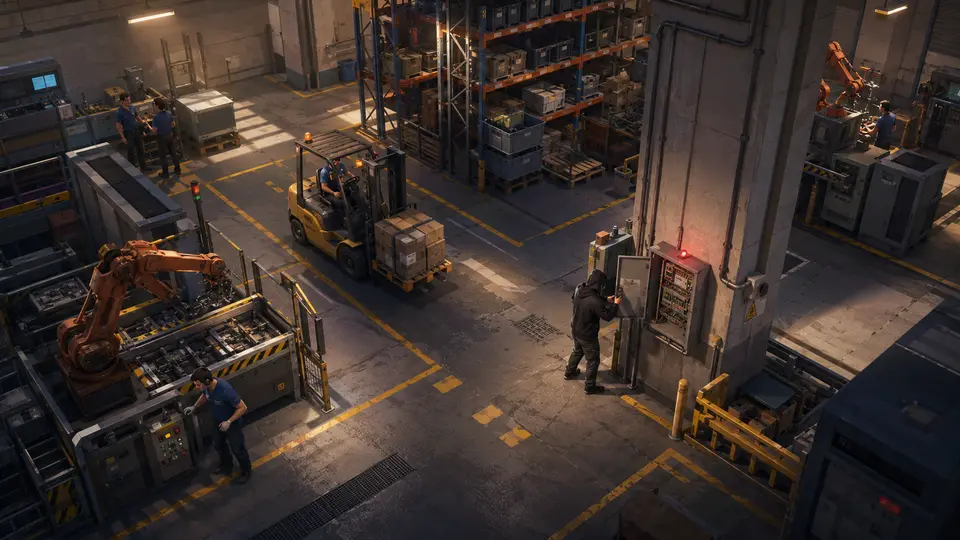
CAM-258An electrical panel open at eleven at night
«Tell me if anybody opens an electrical cabinet outside a scheduled intervention.»
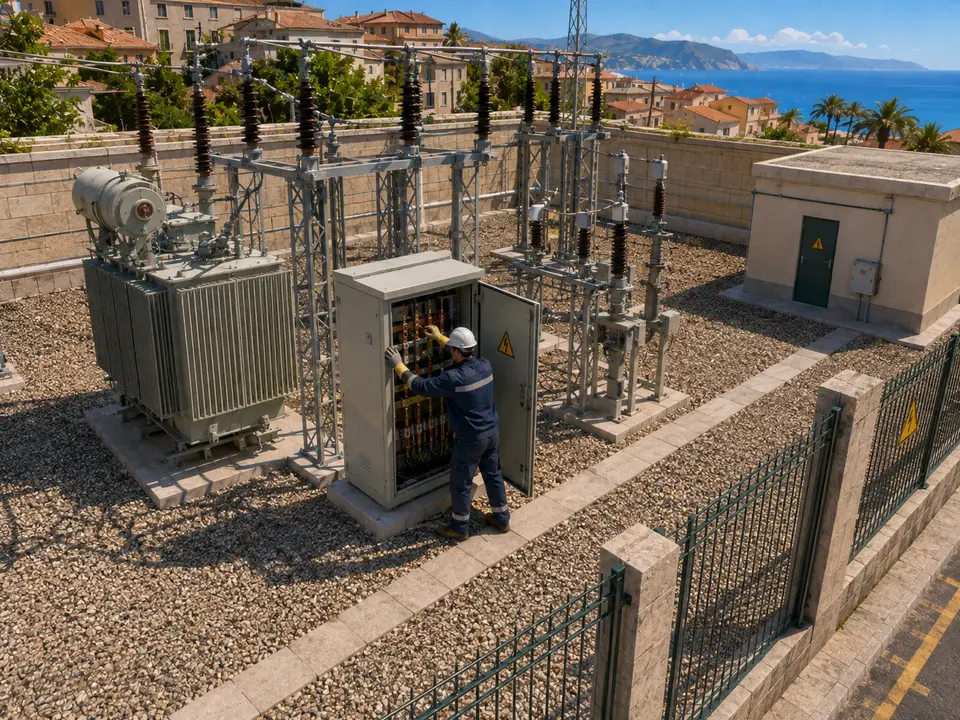
CAM-348An open cabinet and no lockout in sight
«Tell me if somebody opens a cabinet or a cell and I cannot see the lockout and the tag-out card in place.»


What it does not do
IRIS does not know whether the cabinet is live or whether the job is authorised in the permit system. It sees an open door and someone in front of it, and cross-checks that with the hours you have set.
And it cannot read a padlock or check a signature. Matching the alert against the work order and deciding whether to send anyone is the organisation’s job.
Questions
- Does IRIS know whether the job was planned?
- Not by itself: it knows through the time window you set. The usual way to frame it is the other way round, staying quiet during the hours when authorised work happens and alerting the rest of the time. That way the alert only appears when there really is something to look at, and does not become noise people end up ignoring. If one day there is work outside hours, you widen the window for that day and that is it.
- Is it useful against copper theft?
- Yes, and it is one of the most direct uses. A cabinet opening in a compound at three in the morning, or cable leaving when no work is authorised, is exactly the scene you want to see live rather than at stocktaking. The alert comes with the camera, the time and the video, so the report is filed with something you can actually watch rather than an estimate of what is missing.
- Can it alert if only one person is working on an open panel?
- Yes, and in a switchgear room it is one of the most requested rules. IRIS counts how many people are inside while the cabinet is open and alerts if only one is left where there should be two. It is the same count used for lone working, applied to a place where the second person is not there to help with the work, but to pull the first one out if something goes wrong.
- Can IRIS see whether the lockout padlock is missing?
- Not always, which is why it does not rely on that alone. A small padlock seen edge-on may simply not be visible from the camera. What IRIS looks at is the whole scene: whether the door is open, whether someone is in front of it, whether the line is still signalling that it is running and whether this is an hour when nobody should be there. That combination is what fires the alert, and it is far more reliable than hunting for a ten-centimetre object.
Every simulation
Something has spilled
Tell me if there is liquid or foam outside its place and it is still there two minutes later.
- The sentence
- Where it applies
- What it finds
- The same rule
Not seeing yours here?
These words are the ones we have built, not the ones IRIS understands. The list falls short on purpose: you ask for it in a sentence, and sentences do not run out. Tell us what is in front of your cameras and we will tell you whether it understands it, or not yet.
And the best part
There are nights of thick fogwhen the image gives you nothing. We do not dress that up.
Backlight, heavy rain, a street lamp that has blown. IRIS works with what the camera puts in front of it; when there is no image, it says so instead of inventing an answer.
Tell us your problem and we will say whether IRIS understands it, or not yet.
We reply the same working day.