Solutions by typePersonal safety
What if the strange thing is not the movement, but the stillness?
Still for far too long
It is 19:20 in the emergency waiting room. Someone has spent forty minutes in the same chair, head against the wall, in the same position they arrived in. The room has emptied and filled twice. Reception has called three names and none of them was theirs. Nobody has come over to ask if they are all right, because in a waiting room sitting still is the most normal thing in the world.
20 cameras across 9 sectors
What IRIS is
IRIS watches the cameras for you.
IRIS Neural is an artificial intelligence that watches the cameras you already have and understands what happens in front of them. When something important happens —or something you told it you need to keep an eye on—, it alerts you; and whatever can be counted, it counts in numbers. All day long, without anyone having to watch a screen.
You tell it what you need to watch, and IRIS does it.
Works with the cameras you already have. Nothing to replace.
A person replies, not a form.
- Your footage never leaves your premises.
- It doesn't identify people.
- Certifications →
This is how you ask for it
«Tell me if someone has been motionless in the waiting room for a long time, so a person can go and check.»
Stillness costs nothing until it costs a great deal. A car body stopped for a minute at its station is twelve cars fewer by the end of the shift and a stoppage nobody records. A trunk across a channel does nothing for hours, until the water spills over and an excavator has to be brought in. And the person in the waiting room ends up as an emergency that could have been a calm consultation.
You decide once
It is decided once, place by place. The organisation says where IRIS looks — this room, this station, this stretch of channel — how long is too long at that point, and what happens when the limit is passed: alert the supervisor, open an incident, keep the video. One minute on an assembly line, thirty in a waiting room. IRIS does not choose that number; it applies it without fail on every shift, in August and at four in the morning too.
Almost everything we watch, we watch because it moves. There are places where the fright is exactly the opposite. A car body that has not advanced for a minute at its station. A tree trunk wedged across an irrigation channel. A load fallen in the left-hand lane. Someone who has spent forty minutes in the same chair. All of it is still, and stillness catches nobody’s eye.
The day it goes wrong, the stillness has been there for hours. The trunk in the channel does nothing until the water builds up behind it and spills where it should not. A stopped line is not just money: it is the clue that somebody had to reach into something to clear it. And the person in the waiting room has been feeling ill for forty minutes in front of twelve people who never noticed, because nobody looks at whoever is not moving.
IRIS measures how long something has stayed unchanged and speaks up when that stretch stops being normal for that place. One minute on an assembly line, five in a waiting room, twenty in a channel. There is no single number, because still does not mean the same thing in two different places. The odd thing does not always move. Sometimes the odd thing is the only one that has looked exactly the same for half an hour.
What changes
Before, the stopped line showed up in the next day’s production report and the blocked channel was discovered once the water was already where it should not be. Now an alert arrives with the camera open and the elapsed time: twenty-six minutes, not a while. The supervisor does not have to review anything to know since when. That figure, the exact time, is what turns a complaint into a decision.
Where we have seen it

CAM-220Three people standing idle in front of a body shell
«Tell me when a body shell has not moved on for more than a minute at the station, and show me the video from just before.»
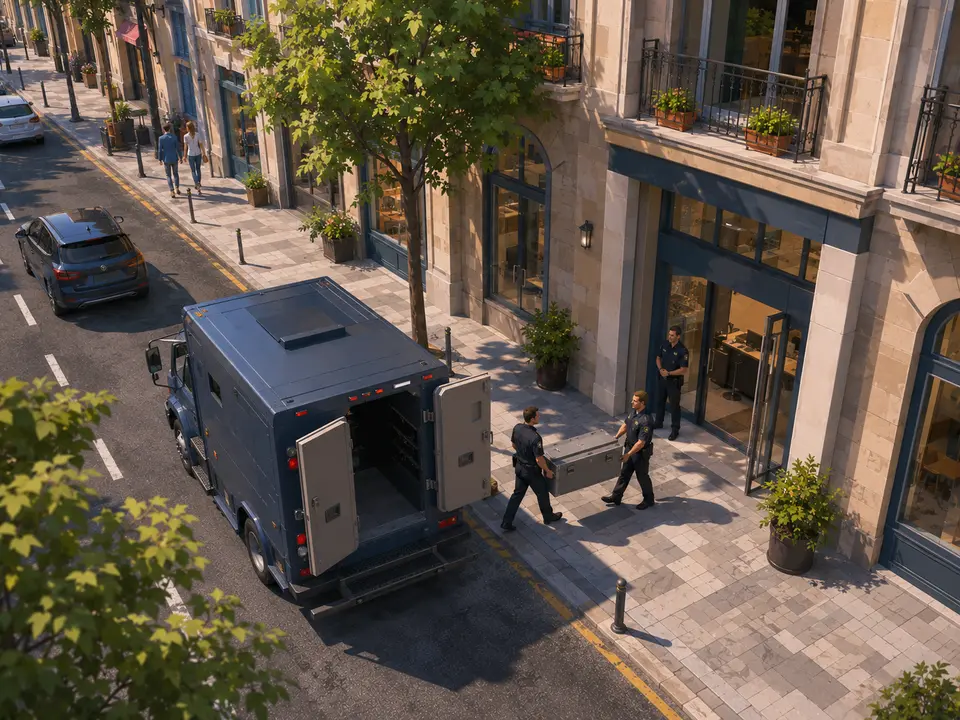
CAM-517A cash box crosses eight metres of pavement
«Tell me if the van’s rear door stays open more than a minute with nobody from the crew beside it, and keep the time of every collection for me.»
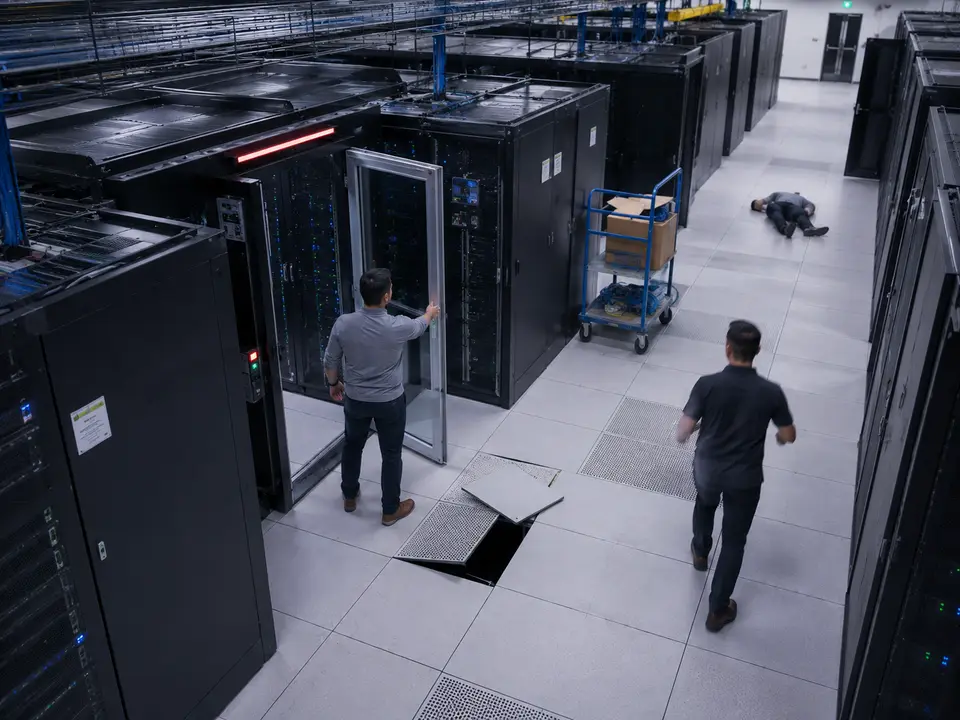
CAM-559Someone on the floor and an aisle you cannot get through
«Tell me if somebody has been still on the floor of a hall for more than thirty seconds, and tell me whether the aisle to them is clear.»
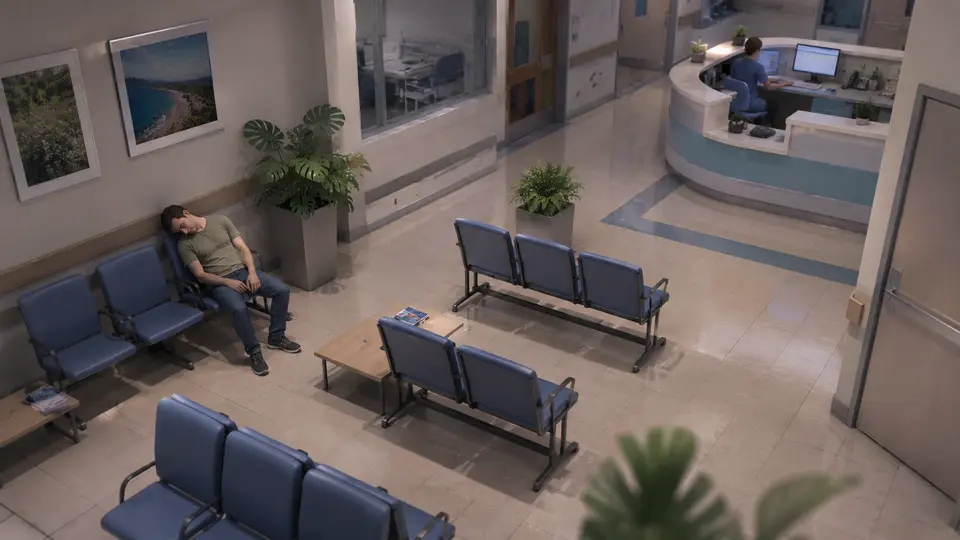
CAM-119Not moving in the waiting area
«Tell me if somebody in the waiting area has not moved for a long while, so that someone can go over and check.»
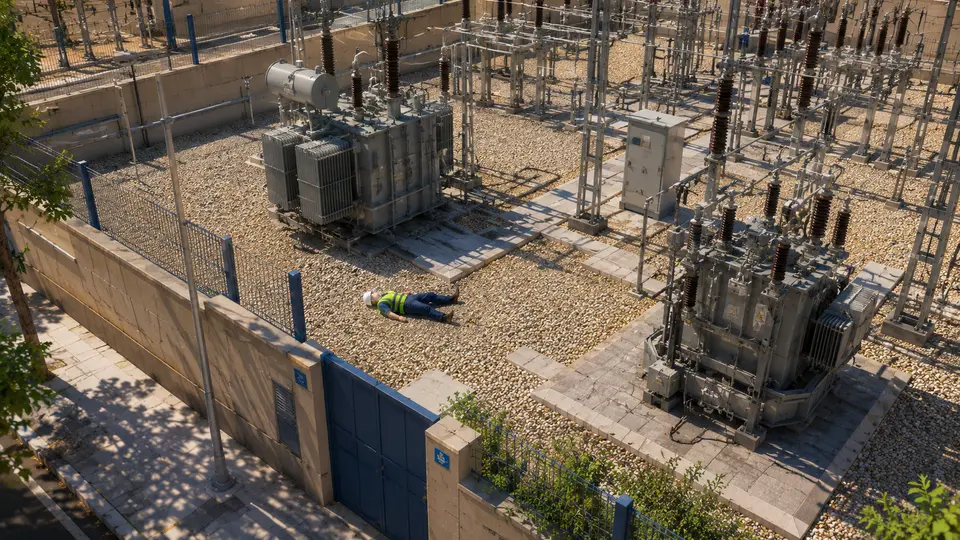
CAM-164A worker on the ground, not moving
«Tell me if somebody stays still on the ground for more than a few minutes, especially if they are alone on the site.»
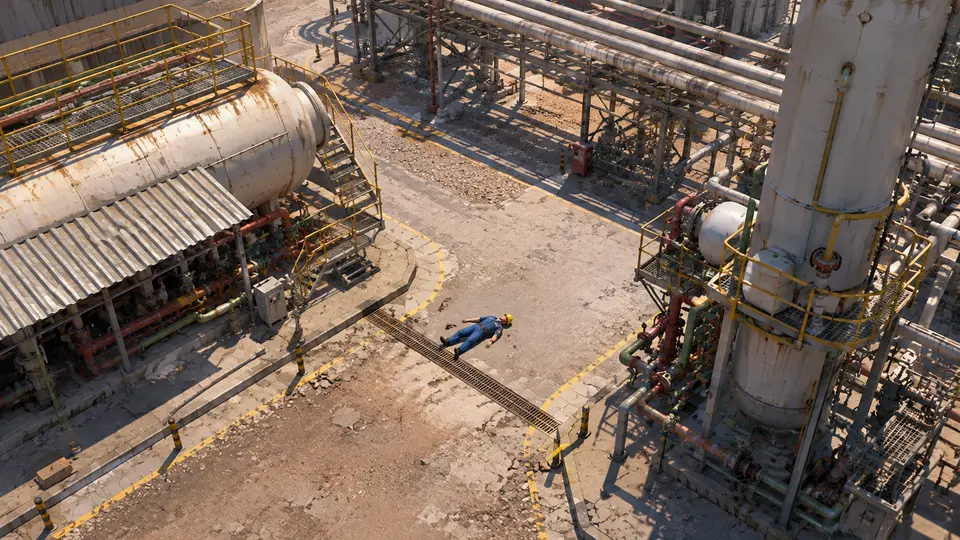
CAM-332A person on the ground and an empty plant around them
«Tell me if anyone stays motionless on the ground for more than a minute anywhere in the unit.»
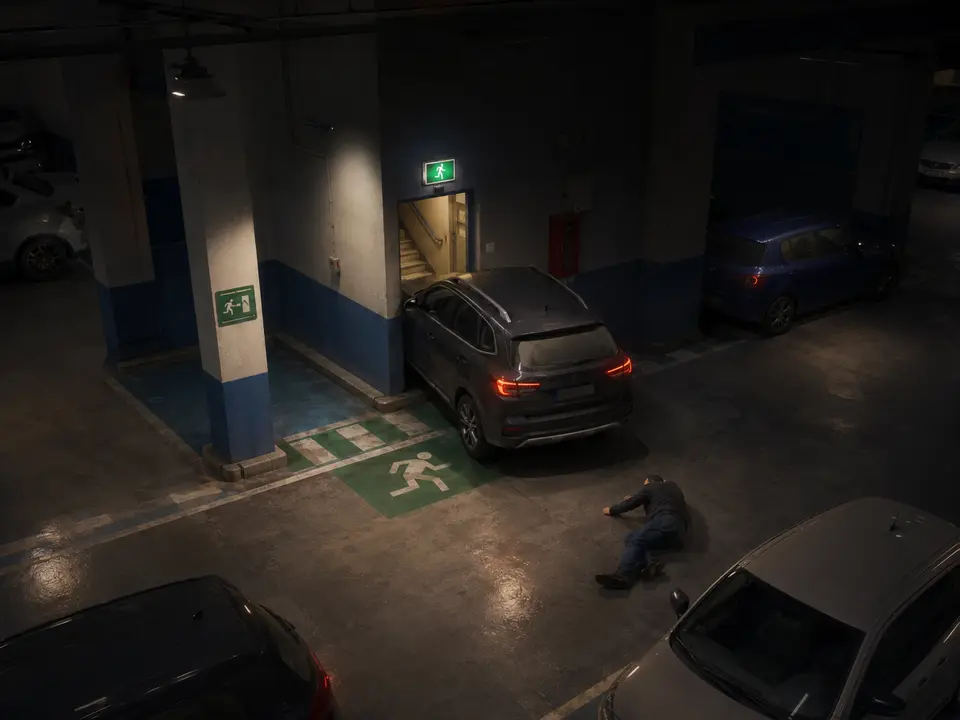
CAM-474The emergency exit blocked by a car and a person on the ground
«Alert me if anyone parks on the emergency exit or if there is a person on the ground not moving.»
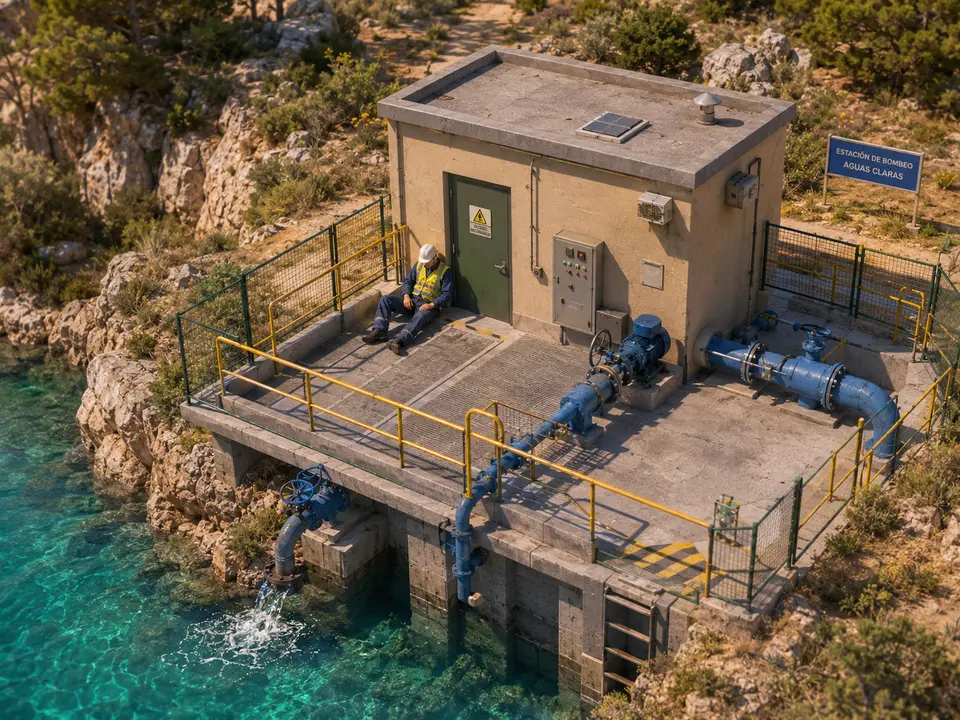
CAM-411A lone pumping station, and the operator has not moved for nine minutes
«Tell me if the operator working alone at a station stops moving for more than two minutes.»
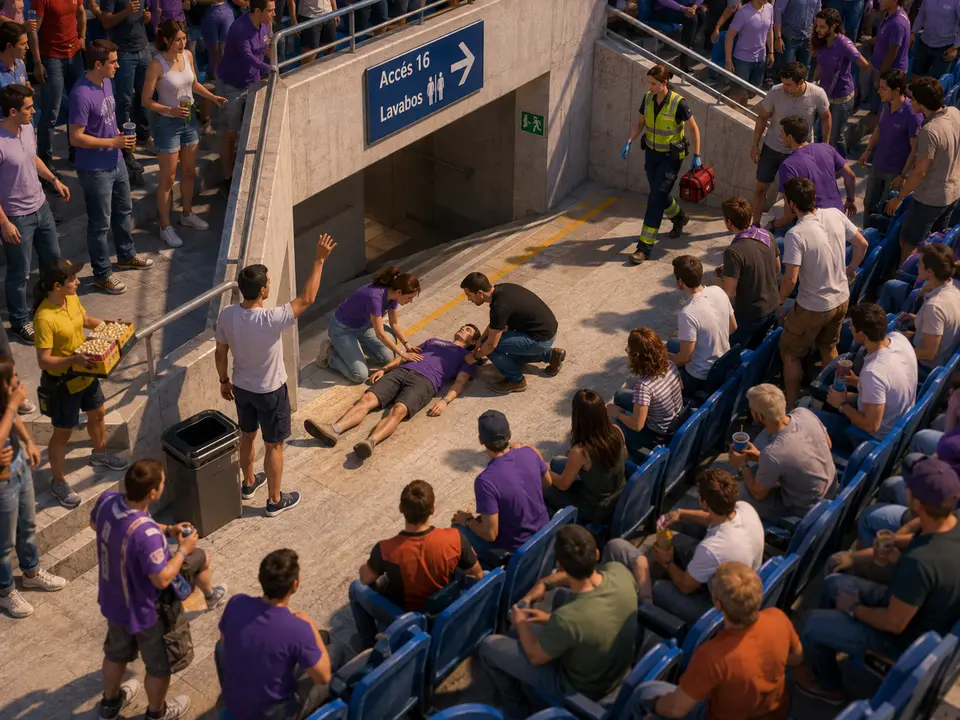
CAM-492Someone on the ground who has not moved for a minute
«Tell me if somebody has been lying still on the ground for more than thirty seconds in a corridor, a stand or an access, and tell me which sector.»
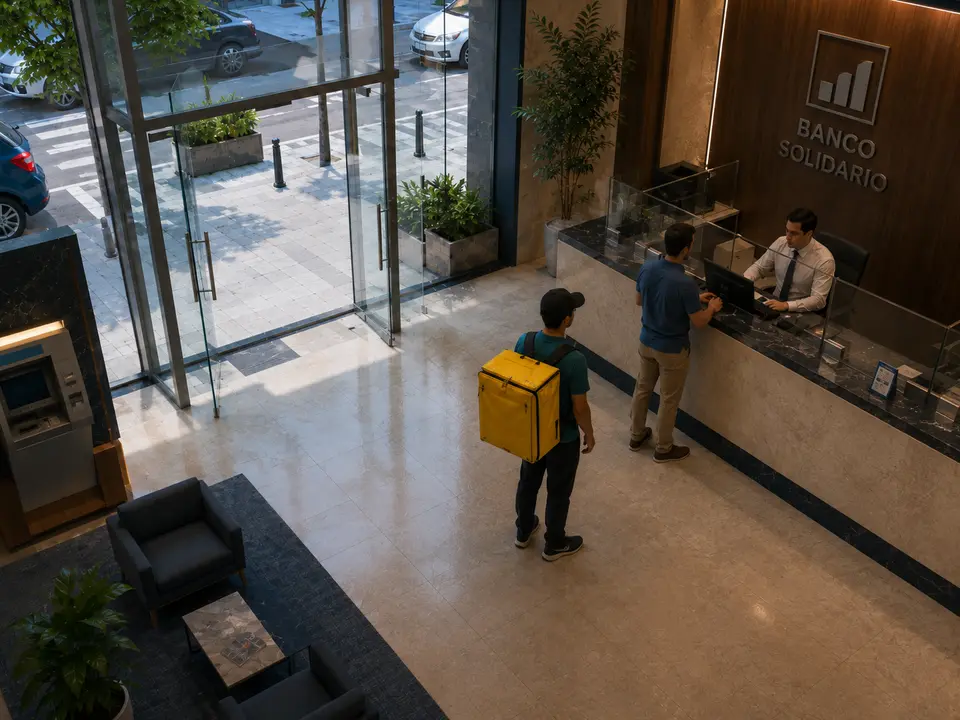
CAM-521A bulky item comes in and stays put in the lobby
«Tell me if a bulky item comes into the branch and stays more than two minutes in the public area without going up to the counter.»


What it does not do
IRIS does not know why something is still: a breakdown, a break, a jam or somebody feeling unwell. It flags that it has been there longer than you set and shows the video.
And it does not guess the number. Ask for two minutes where twenty were needed and it will alert a hundred times a day. This rule succeeds or fails on the time you give it, and that time is known by whoever knows the place.
Questions
- Can I decide how long is too long?
- Yes, and it is the first thing to decide. The number changes a great deal with the place: one minute on an assembly line is already a stoppage that needs explaining; in a waiting room you need twenty or thirty before it is odd; in an irrigation channel, an object lying across it can sit there for hours with nothing happening. There is no universal number, and that is precisely what the site knows and the system does not.
- Does it work for objects as well as for people?
- Yes, and half the value is there. The same idea covers a person in a waiting room, a part that stops advancing at its station, a load fallen in a lane and a trunk wedged across a channel. What gets measured is always the same: how long it has stayed unchanged where it is. The object changes; the question does not. Still is a signal in every one of them. And the delay you set changes with the object as much as with the place.
- Will it alert every time somebody stands still?
- No, not if the rule is set properly. It only goes where stillness is unusual, and with a long delay: thirty minutes in a waiting room, two in a busy corridor. It can also be limited to a specific time window. An alert that fires a hundred times a day gets switched off in the first week, and from then on it protects nobody. Tuning the delay is what separates a useful rule from a nuisance.
- Does IRIS know why something has stopped?
- No. IRIS measures how long something has stayed unchanged and alerts; the reason is always supplied by the person who looks. It could be a breakdown, a break, a jam or somebody feeling unwell, and from a camera those four look very much alike. That is why the alert arrives with video from before, so whoever opens it takes ten seconds to work out which of the four it is.
The real interface, step by step
You set the rule once. IRIS applies it every time.
You will see a summary of the interface, played step by step and hands-free. Each round starts with another case. The complete tool does not fit in a demo.
- The rule gets built
- It goes to every camera
- Published, it watches alone
- And then it fires
Not seeing yours here?
These words are the ones we have built, not the ones IRIS understands. The list falls short on purpose: you ask for it in a sentence, and sentences do not run out. Tell us what is in front of your cameras and we will tell you whether it understands it, or not yet.
And the best part
A recollection cannot be checked.A number can, and it comes out the same every day.
The number does not depend on who was on shift or how they remember it. It is measured the same way every day, and that is why people counting is certified by the Centro Español de Metrología.
Tell us your problem and we will say whether IRIS understands it, or not yet.
We reply the same working day.