Solutions by typeLogistics efficiency
How many vehicles really went through that barrier?
The barrier counts openings, not trucks
It is 07:10 at the terminal gate. A truck with a container crosses the lane while the barrier is up. Tucked against its bumper, a second truck follows: it does not stop at the booth, nobody reads its plate and nobody asks for its paperwork. The barrier comes down behind both. The gatehouse log records one entry, one vehicle, one opening. Out in the yard there are two trucks and only one has papers.
6 cameras across 4 sectors
What IRIS is
IRIS watches the cameras for you.
IRIS Neural is an artificial intelligence that watches the cameras you already have and understands what happens in front of them. When something important happens —or something you told it you need to keep an eye on—, it alerts you; and whatever can be counted, it counts in numbers. All day long, without anyone having to watch a screen.
You tell it what you need to watch, and IRIS does it.
Works with the cameras you already have. Nothing to replace.
A person replies, not a form.
- Your footage never leaves your premises.
- It doesn't identify people.
- Certifications →
This is how you ask for it
«Tell me if two vehicles cross on a single barrier opening, or if the barrier stays up for more than a minute.»
That second truck exists on no paperwork. When a load goes missing a week later, the yard has to rebuild the whole morning by hand: hours of video, a weighbridge sheet that does not add up, and an argument with the haulier that nobody can settle because nobody has the plate. Meanwhile the same gap stays open every morning at the same time.
You decide once
You decide this once. You say which lanes are watched, how many vehicles are allowed per opening, how long the arm may stay up and who gets told: if two vehicles cross the entry lane on one opening, alert the gatehouse with the camera and the second plate. IRIS applies it on every shift and at every gate, without anyone having to remember. If the hours change, you change the rule.
A barrier does not count vehicles: it counts openings. And a weighbridge does not weigh trucks: it weighs whatever is driven onto it. That difference sounds like a detail, and it is where half of logistics leaks out. Two cars on one ticket at the car park. One truck glued to another at the terminal gate. A loaded dumper leaving the quarry down the left-hand lane because there was a queue at the scale and he was running late. None of those three feels like a thief. They were just in a hurry.
The trouble is that the paperwork believes the machine. Access control logs one opening and assumes one vehicle went through. The weighing sheet lists the trucks that stopped, not the ones that left. When the month-end figures do not add up, there is no way to tell whether material is missing, a weighing is missing, or a truck is extra, because from a spreadsheet all three holes look alike. And the gatehouse cannot fix it by looking harder. Whoever is in there answers the intercom, stamps delivery notes, takes phone calls and raises the barrier, and at the exact second the second truck goes through they have their back turned, signing a piece of paper. It is not that they do not look: nobody can look and work at the same time, and no sign and no memo will change that.
IRIS watches the lane, not the relay. It sees how many vehicles cross each time the arm goes up, it sees whether the barrier has stayed up, and it sees whether a loaded truck has driven straight past the weighbridge. When that happens it says so, with the camera, the time, the plate and the video of the seconds before. It does not decide whether it was right or wrong: the person in the gatehouse decides that, and now they know while it is happening instead of three weeks later.
What changes
Before, the gatehouse trusted the opening counter and the mismatch showed up in the stock count weeks later. Now, the moment the second vehicle goes through, someone gets the camera with the time and the plate, walks out and stops it before it reaches the yard. Most of the time it is carelessness and it is over in a minute on the radio. That is why it works: checking costs so little that it always gets checked.
Where we have seen it
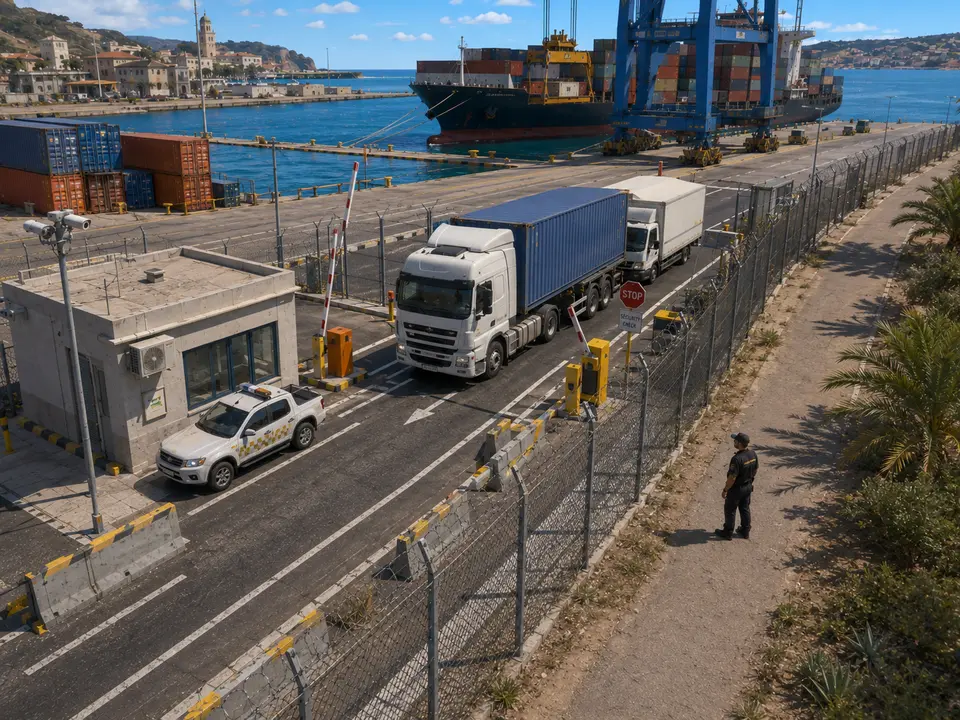
CAM-443Two trucks, one single barrier opening
«Tell me if two vehicles go through on one barrier opening, or if the barrier stays up for more than a minute.»
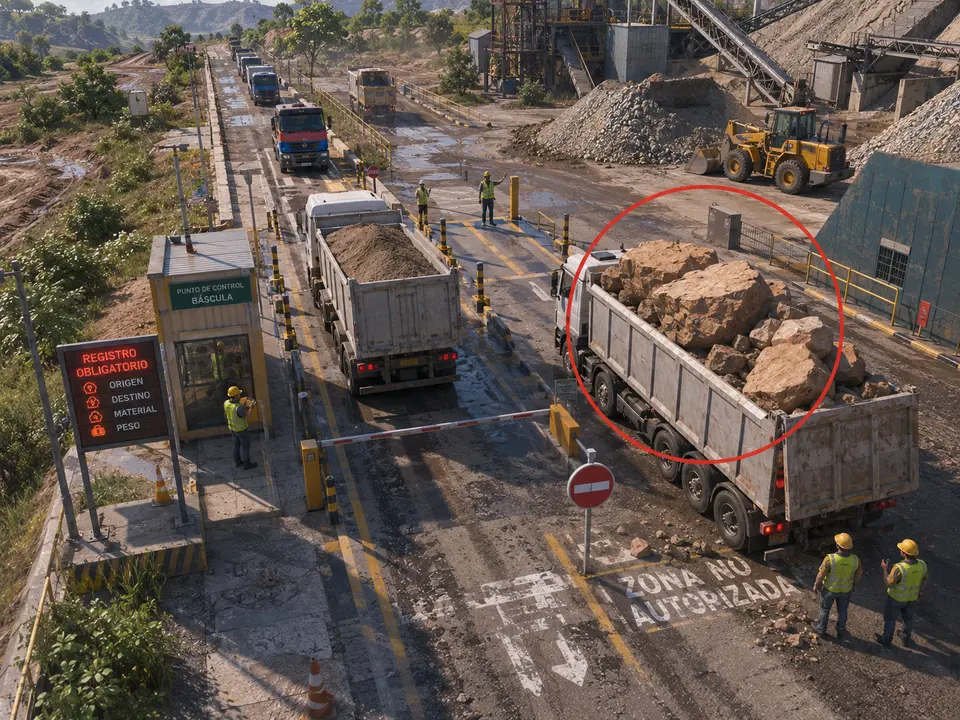
CAM-386A loaded truck slipping past the weighbridge
«Tell me when a loaded truck leaves the quarry without crossing the weighbridge, and keep the plate for me.»
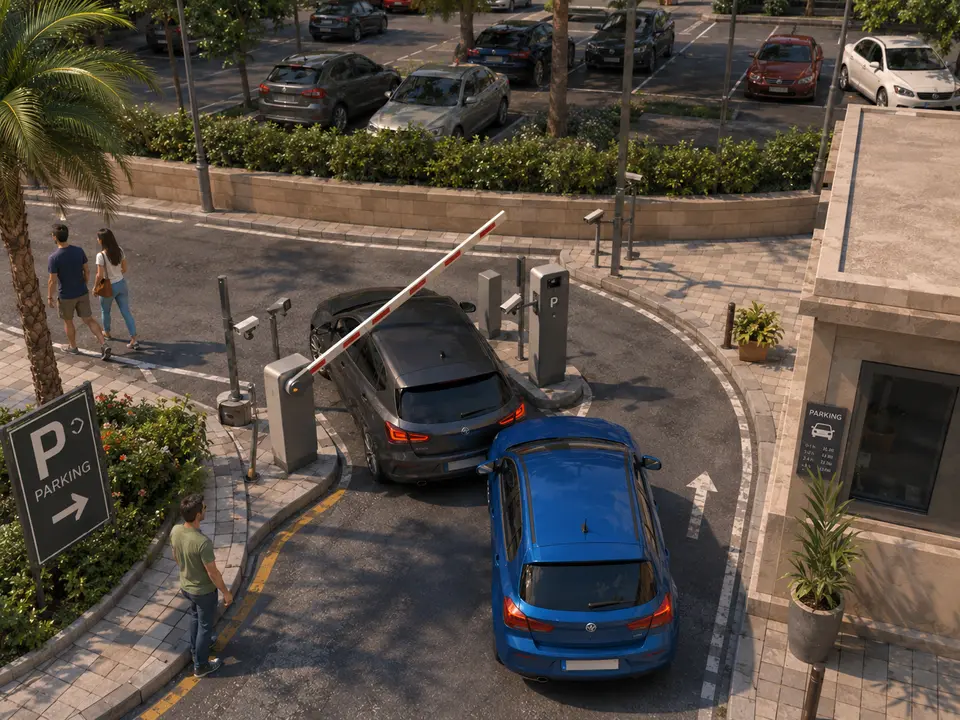
CAM-465Two cars crossed on a single opening
«Tell me when more than one vehicle goes through on a single barrier opening, and save me the video with the time.»
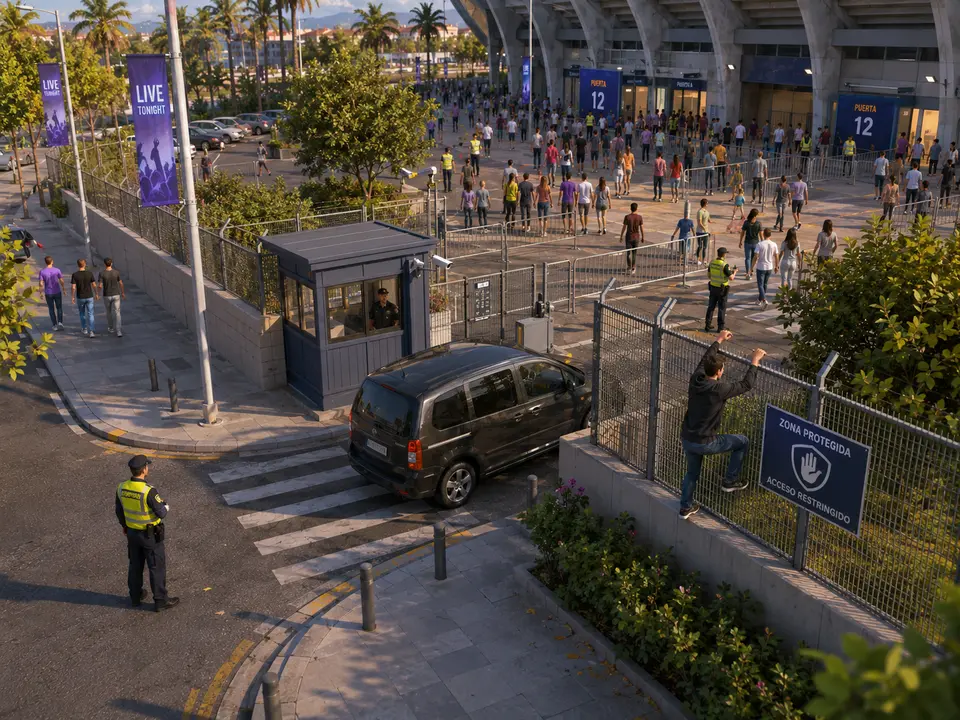
CAM-488A van stopped at the barrier and someone climbing the fence
«Tell me if anyone crosses the fence line, or if a vehicle stays stopped in front of the barrier for more than two minutes.»
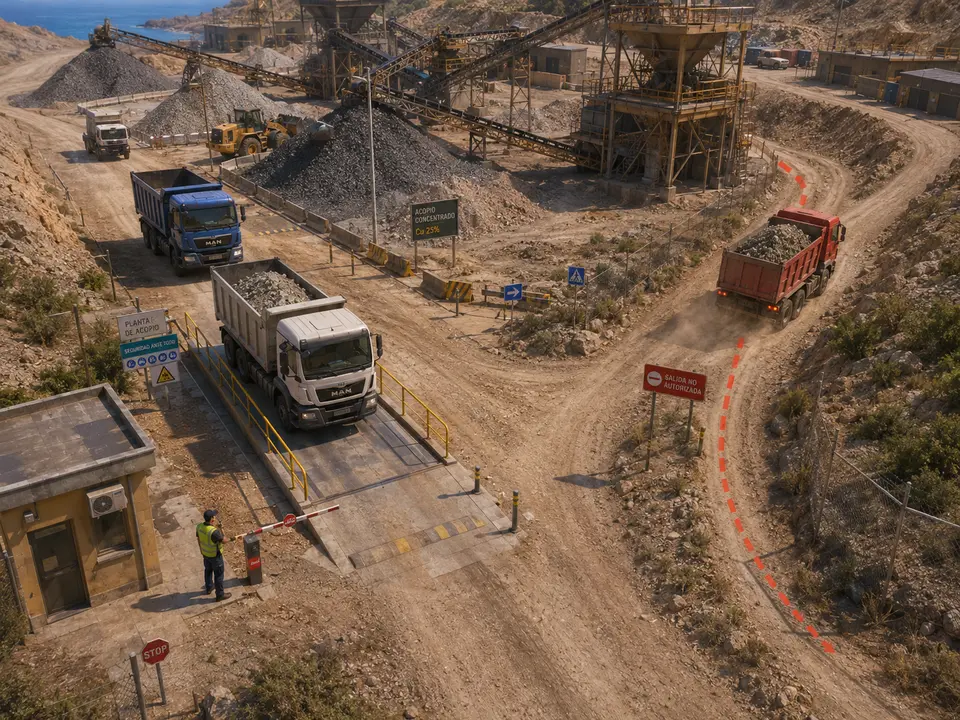
CAM-380A loaded truck leaves by a way that is not a way out
«Tell me if a loaded truck leaves the stockpile by the lower track instead of going over the weighbridge.»


What it does not do
IRIS does not open or close the barrier, and it does not block it. It watches the lane and speaks up; the movement is your equipment’s job and the decision is a person’s.
Nor does it know whether that second truck was allowed in. It knows nothing about bookings, delivery notes or who is driving. It says two crossed on one opening and shows you the plate and the video. The rest is added by whoever looks.
Questions
- How does IRIS tell two close trucks from one long one?
- It counts them separately on the image of the lane. IRIS does not read the barrier counter: it watches the lane and follows each vehicle from the moment it enters the frame until it leaves, so an articulated truck is one and two trucks nose to tail are two, even with half a metre between them. The alert arrives with the camera, the time, the video of the crossing and the plate of the second vehicle, which is exactly the one that usually appears nowhere.
- Do I have to change the barrier or the weighbridge?
- No. IRIS works with the camera you already have pointing at the lane; the barrier and the weighbridge stay exactly as they are. Nothing has to be wired into their electronics and access control is not touched. If you also give us the opening signal or the weighing file, IRIS cross-checks them against what it saw and the alert gets sharper, but that is not needed to start: what is counted is counted on the image.
- Can it also tell me which trucks were never weighed?
- Yes. It is the same idea seen from the other side: instead of counting the ones that cross, IRIS flags the ones that drive past. It sees the truck, sees that it is loaded, sees which lane it leaves by and sees that it never stopped on the platform. When that happens it alerts with the plate and the video, and stores the crossing for the end of the day. At the end of the shift you get a short list of departures without a weighing, instead of a sheet that does not add up and nobody knows why.
- What about at night, with headlights or in the rain?
- Yes, with the usual condition: if the camera can see the lane, IRIS can read it. A yard gate is one of the easier spots, because it is usually lit and the framing never moves. Where it needs a second look is backlight at dawn, headlights straight into the lens or heavy rain on the glass. There the plate may not be readable even though the crossing is still detected, and it is fairer to say so up front: the counting holds up better than the plate reading.
The real interface, step by step
A camera looks. IRIS understands what it sees.
An extract of the real screen, no voice-over and hands-free. Each round poses another situation. What sits behind it is a good deal bigger than what you see.
- It lands in the tray
- You open it
- You confirm or dismiss
Not seeing yours here?
These words are the ones we have built, not the ones IRIS understands. The list falls short on purpose: you ask for it in a sentence, and sentences do not run out. Tell us what is in front of your cameras and we will tell you whether it understands it, or not yet.
And the best part
By the eighth hour of a shiftnobody watches the way they did in the first. That is not a flaw.
It is being human. A camera has no eighth hour: at four in the morning it understands what it understood at noon, and it speaks up just the same.
Tell us your problem and we will say whether IRIS understands it, or not yet.
We reply the same working day.