CAM-930
The stream breaks up
A city junction at dusk, the tarmac wet. There is a white saloon in the foreground, cars waiting at the crossing and people standing on the pavement in front of the shop windows. And it arrives in pieces: strips of coloured pixels run right across the frame, blocks sit out of place and black bands mark where nothing arrived at all. The bottom third barely exists; the blue car is cut in half. IRIS sees that parts of the picture are missing and that the recording has gaps. What it does not know is where along the way they are being lost: it could be the cable, a piece of network kit or the camera itself.

Turn on IRIS Vision
AI-generated image
What IRIS is
IRIS watches the cameras for you.
IRIS Neural is an artificial intelligence that watches the cameras you already have and understands what happens in front of them. When something important happens —or something you told it you need to keep an eye on—, it alerts you; and whatever can be counted, it counts in numbers. All day long, without anyone having to watch a screen.
You tell it what you need to watch, and IRIS does it.
Here, for example, IRIS doesn't wait until someone asks for a video and it isn't there: it counts how many times that camera's signal breaks up and flags it the same day, with the camera, the time and how many drops it's had in the last hour. With that number you decide whether to check the cable or the network gear, then see whether the drops go down.
Works with the cameras you already have. Nothing to replace.
A person replies, not a form.
- Your footage never leaves your premises.
- It doesn't identify people.
- Certifications →
What IRIS understands
What it recognises in this scene
- chunks that never arrive
The rule
You decide once. IRIS applies it always.
If
a camera loses chunks of picture several times in a row and gaps are left in the recording
Then
- alert maintenance with the camera, the time and the video of the cuts
- count how many gaps there have been and how much time they add up to
- flag those stretches, so nobody later hunts for a video that is not there
The instruction that set it up«Tell me when a camera starts losing chunks of picture, and tell me how many cuts it has had today.»
What changes
What changes for whoever answers for the cameras working
Every torn strip is a stretch of time when that camera recorded nothing. And the problem does not show up today: it shows up the day somebody asks for the video from twenty past two in the morning and exactly that minute is missing. Nobody deleted it. It never arrived. Meanwhile the camera looks fine on the video wall most of the time, so nobody gives it a second look. With IRIS the alert goes out on day one: this camera, this hour, this video, this many cuts in the last hour. Whoever runs the network has somewhere to start, and nobody has to wait for the day the recording really matters. IRIS does not mend the cable: it notices, and it tells you.
What people usually ask
Is this not a problem with my network rather than with the camera?
Almost always, yes, and IRIS does not claim otherwise. The picture breaks up along the way: a cable in poor shape, a piece of network kit, a link that runs tight at certain hours. IRIS does not fix the network and does not promise to. What it does is notice: which camera is losing picture, at what time and how often, with the video to show for it. That turns a vague sense of trouble into something concrete to start from. Today that information does not exist until somebody asks for a recording and it is not there.
How do I know whether recording is missing or it only looked bad live?
They are two different things and it is worth separating them. If the gap was only in what appeared on screen, the recording may well be intact. If the gap is in the recording, it is missing and it does not come back: that stretch never reached the disk. IRIS checks what gets stored, not what gets displayed, which is why the alert points at the exact stretch that is not in the archive. From the first moment you know whether to look at the viewing chain or to accept that the minute is gone.
Does a two-second glitch raise an alert too? I do not want one every few minutes.
You decide, camera by camera. You set how many cuts within what period deserve an alert, and how much lost time makes it serious. One isolated glitch in a whole day says nothing; thirty in an hour say a great deal. And the lobby camera need not carry the same rule as the one covering the only exit. You decide once and IRIS applies it every time, on every camera, every day, with nobody having to remember.
Every simulation
Search by number plate
Show me every time that plate crossed the barrier this week, with the time and the video.
- What you are looking for
- Where to look
- What matches
- Who looks
See it somewhere else

What does an airport see before the queue forms?
14 cases: 7 raise an alert when something happens and 7 only measure. You see each image as it is, and then with what IRIS understands on top.
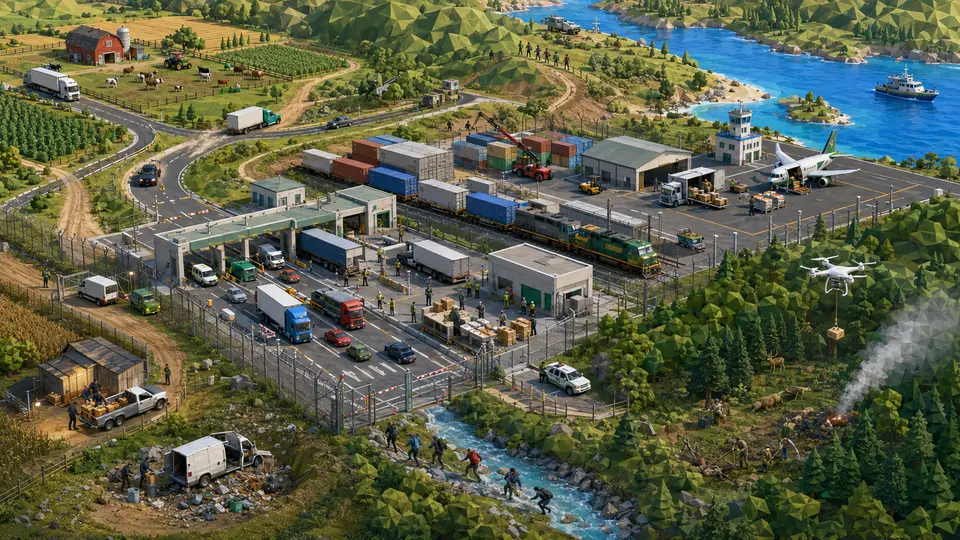
What can a camera see without pointing at anyone?
13 cases: 9 raise an alert when something happens and 4 only measure. You see each image as it is, and then with what IRIS understands on top.


And the best part
IRIS only sees what the camera shows.Where we do not reach, we say so.
No software fixes a lens pointing the wrong way or covered in dust. Before promising anything, we say which cameras are in a state to see what you are asking of them.
Tell us your problem and we will say whether IRIS understands it, or not yet.
We reply the same working day.