CAM-931
Frozen
A sunny corner at midday. Someone climbs a few steps with a briefcase, someone else walks towards the zebra crossing, a third person is halfway across it, a dark estate car waits in the road and there is a queue of cars up the street. The picture is flawless: sharp, well exposed, full colour. Look for the fault and you will not find it, because it is not in the picture: it is that the picture has been exactly the same for six hours. That person has been taking the same step for six hours. IRIS does not look at whether the picture is good; it looks at whether it changes. This one does not. What it cannot say is where it froze: the camera, the path or the recorder.

Turn on IRIS Vision
AI-generated image
What IRIS is
IRIS watches the cameras for you.
IRIS Neural is an artificial intelligence that watches the cameras you already have and understands what happens in front of them. When something important happens —or something you told it you need to keep an eye on—, it alerts you; and whatever can be counted, it counts in numbers. All day long, without anyone having to watch a screen.
You tell it what you need to watch, and IRIS does it.
Here, for example, IRIS does not check whether the picture looks nice: it checks whether it changes, and this one has been exactly the same for six hours. That way you know this camera is not recording what is actually happening, even though the light shows green. With that alert you decide to check the camera, the cable or the recorder within the hour, not on the day you need the proof.
Works with the cameras you already have. Nothing to replace.
A person replies, not a form.
- Your footage never leaves your premises.
- It doesn't identify people.
- Certifications →
What IRIS understands
What it recognises in this scene
- picture that never changes
The rule
You decide once. IRIS applies it always.
If
a camera’s picture stops changing for longer than makes sense in that place
Then
- alert maintenance with the camera, the time of the last change and the video
- state the exact moment from which the same frame repeats
- keep checking it and report as soon as the picture starts moving again
The instruction that set it up«Tell me if a camera stops changing, even if it still shows as online.»
What changes
What changes for whoever answers for the cameras working
The light is green. On the list the camera shows as online. The disk is spinning and recording. And what it records is the same frame, over and over, six hours running. Anyone looking at the video wall sees nothing odd: they see a nice street. The trouble arrives weeks later, when somebody needs the video from four in the morning and it turns out nothing happened there, because nothing was recorded there. A camera can be in perfect shape and still not be telling you what is going on, and it is the hardest fault to catch by eye: nobody discovers by watching that a picture is not changing. IRIS does, because that is exactly what it checks. The alert goes out in the first hour, not on the day the evidence is needed.
What people usually ask
If the picture is frozen, how does IRIS find out that it is frozen?
Because it does not look at the picture: it looks at whether the picture changes. IRIS compares each frame with the one before. In a street something always changes: a shadow, a leaf, a car, the light itself. When hours go by with nothing changing at all, that is not a quiet street, it is a stopped picture. And the alert does not depend on the camera saying it is fine, because a frozen camera says it is fine. It depends on the picture moving, which is the one thing that cannot be faked.
My panel says the camera is online. Does that mean it is fine?
Online means that a signal is arriving, not that the signal carries a new picture. A frozen camera responds, transmits and records: it records the same frame. That is why it can sit in the list marked as healthy and be of no use whatsoever. IRIS does not ask the camera how it is; it looks at what the camera sends and checks whether it changes. That is the difference between being connected and being able to see, and only the second one helps on the day the video is needed.
What if the scene really is still? A closed warehouse at night does not change.
That is exactly why you set the interval yourself, camera by camera and time band by time band. A junction that does not change in two minutes is already odd; a closed loading bay on a Sunday can look identical for hours and be perfectly healthy. And even with nobody about, a live picture is never identical to itself: the light shifts, the camera’s own noise shifts. What does not vary by a single dot for hours is not a quiet scene. That is the difference, and it is why the two do not get mixed up.
See it for yourself
Everything comes in. Only what matters gets through.
This sums up what IRIS does with one alert, from the moment it appears until it is closed. The real screen holds far more; this is the main thread.
- The rule gets built
- It goes to every camera
- Published, it watches alone
- And then it fires
See it somewhere else
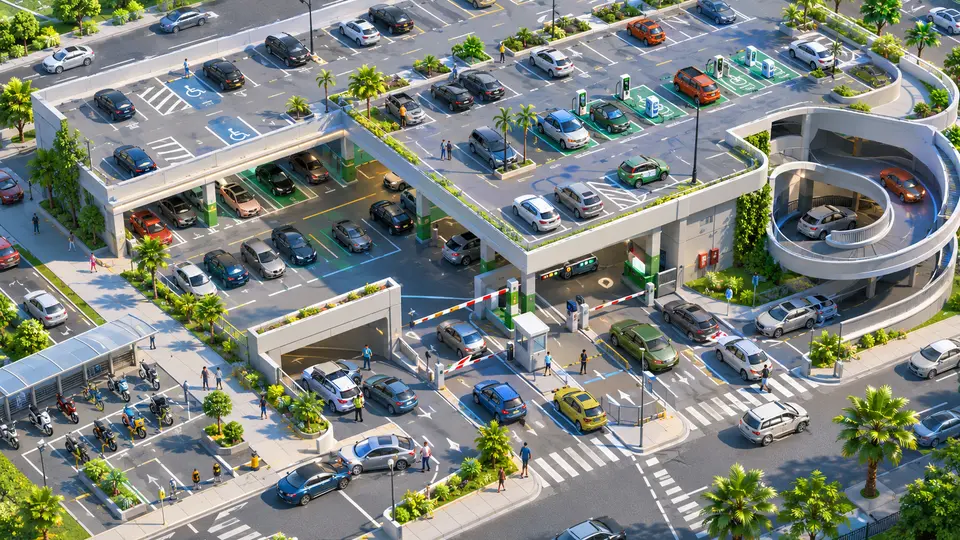
How many bays are free right now?
15 cases: 9 raise an alert when something happens and 6 only measure. You see each image as it is, and then with what IRIS understands on top.

What does a venue with twenty thousand people inside see?
15 cases: 11 raise an alert when something happens and 4 only measure. You see each image as it is, and then with what IRIS understands on top.


And the best part
Nobody covers the night shift:the camera that is already on covers it.
It does not tire, it does not blink and it does not go for coffee. What happens at night is understood just as it would be at midday, and whoever is on duty hears about it while it is happening.
Tell us your problem and we will say whether IRIS understands it, or not yet.
We reply the same working day.