Critical infrastructureIntrusion detection
CAM-145
A van parked on the dam crest
The same crest, at midday. A white van is stopped at an angle against the fence, its nose up against the no-entry sign and the transformer just on the other side of the mesh. One person is sitting at the wheel with the window down, and the rear doors are shut. Nobody else is in frame. IRIS sees a vehicle stopped where nobody stops; it doesn’t read the license plate and doesn’t know whose it is.

Turn on IRIS Vision
AI-generated image
What IRIS is
IRIS watches over your critical infrastructure.
IRIS looks at the cameras you already have at the dam, the water plant, or the power plant, and understands what it sees: someone entering where they shouldn't, a strange vehicle, an overflow, the perimeter. When something like that happens, it lets you know right away; and whatever can be counted, it counts in numbers. All day long, with no one needing to watch a screen.
You tell it what you need to watch, and IRIS does it.
Take this spot on the dam crest: no vehicle is ever supposed to park there. The second a car sits still longer than it should, staff get an alert with the picture and the exact time stamped on it. That's what lets the crew on duty call it — a breakdown, or someone heading out to take a look.
Works with the cameras you already have. Nothing to replace.
A person replies, not a form.
- Your footage never leaves your premises.
- It doesn't identify people.
- Certifications →
What IRIS understands
What it recognizes in this scene
- vehicle stopped
- person at the wheel
- crest fence
- transformer
- no-entry sign
What this camera measures
An alert says something’s happening. The reading says how much.
- 11 minStopped for
- 1People inside the vehicle
- 0Vehicle doors open
- 0Site staff in frame
- 1Vehicles on the crest
- 13:05Time
The figures on this screen are an example from the illustration, not any client’s measurement.
The rule
You decide once. IRIS applies it always.
If
a vehicle has been stopped on the crest for longer than the operator has set, and it is not just passing through
Then
- alert whoever is on call, with the camera, the spot and the video from the moment it arrived
- keep the clock running and alert again if anyone gets out of the vehicle
- log the time it arrived and the time it left
The instruction that set it up«Tell me if a vehicle stays parked on the crest for more than five minutes outside working hours, and tell me if anyone gets out of it.»
What changes
What changes for whoever answers for the site
A vehicle stopped on the crest isn’t a crime, it’s an anomaly, and the two look alike enough to be worth a look. Most of the time it’s a breakdown, a lost delivery driver or somebody taking photographs. Occasionally it’s something else. The trouble is that today nobody looks: a dam has no gatekeeper, no manned barrier, and the track leads nowhere else. With IRIS the alert arrives once the vehicle has been there for as long as the operator has decided is too long, with the picture and the time, and whoever is on call decides whether it’s a breakdown or worth driving out for. What IRIS doesn’t do is identify the vehicle or the person inside it.
What people usually ask
Does IRIS read the plate to check whether the vehicle is authorized?
No. IRIS does not read license plates and does not recognize faces. It does not read them, it does not check them against any authorized list and it does not store who anyone is. What it sees is a vehicle, where it’s and how long it’s been there. If the operator wants to control who comes in, that’s an access-control job, which is a different thing and goes separately.
What about visits and maintenance vehicles, which do stop there?
That’s exactly why the rule is written by the site operator and not by us. You set how long counts as too long, the time bands where no alert fires and the stretches where parking is expected. A maintenance van at ten in the morning with the crew working doesn’t need to raise anything; the same van at eleven on a Sunday night should. It’s the same camera with two different rules.
Is it any use for the transformer right next to it?
It’s useful for the same thing as the rest of the frame: seeing that someone is where they shouldn’t be, or that a vehicle has been sitting there longer than it should. IRIS doesn’t know what’s inside an electrical cabinet and measures nothing about the electrical installation. What it does is let somebody find out now that a vehicle is parked up against it, instead of discovering it when something has gone missing.
Every simulation
On the edge of a drop
Tell me if someone steps to the edge of a drop with nothing holding them.
- The sentence
- Where it applies
- What it finds
- The same rule
Next step
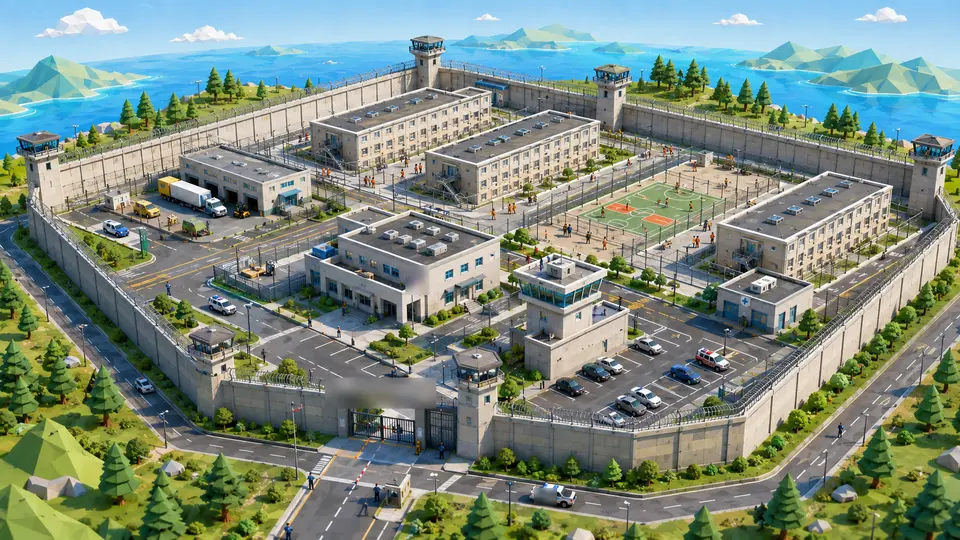
Who is watching the yard screen when the fight starts?
17 cases: 16 raise an alert when something happens and one only measures. You see each image as it is, and then with what IRIS understands on top.

How long before somebody comes down that hallway at four in the morning?
13 cases: 12 raise an alert when something happens and one only measures. You see each image as it is, and then with what IRIS understands on top.


And the best part
“The white van, Tuesday afternoon.”That’s enough to find it.
You type it the way you’d tell a colleague, and the matching minutes come back, each with its camera and its time. You don’t need to remember the exact moment.
Tell us your problem and we’ll say whether IRIS understands it, or not yet.
A person answers, the same working day.