CAM-489
A flare burning in the stand, and you need to know which row
Night concert. Halfway up the left-hand stand a red flare has been lit between the seats, and a column of pink smoke is rising over the whole block. People in the nearby rows are on their feet, moving away. Five high-visibility vests are crossing towards it from the floor. Down at the front, thousands of people standing before the stage have not even noticed. IRIS sees the point of light and the smoke, and marks the spot.

Turn on IRIS Vision
AI-generated image
What IRIS is
IRIS keeps an eye on every gate for you.
IRIS is an artificial intelligence that watches the cameras you already have at the venue and understands what's happening at the gates and in the stands. When a crowd builds up at an entrance, a stand nears capacity, or something you've asked it to watch happens, it alerts you — and whatever can be counted, like people in each area, it counts in numbers. All day long, with no one needing to watch a screen.
You tell it what you need to watch, and IRIS does it.
Here, for example, IRIS spots the flash of light and the smoke from the flare, and marks the row and the exact second it was lit, with the video right there. That way nobody has to scan the whole venue to know where to go. With that, you decide whether to send two people to the exact spot or stop the concert.
Works with the cameras you already have. Nothing to replace.
A person replies, not a form.
- Your footage never leaves your premises.
- It doesn't identify people.
- Certifications →
What IRIS understands
What it recognises in this scene
- flare burning
- column of smoke
- row of seats affected
- steward moving in
- crowd standing on the floor
- stage
What this camera measures
An alert says something is happening. The reading says how much.
- 22:41Time it was lit
- 38 sTime it has been burning
- 9Row where it was lit
- 5Vests counted in shot
- 40People standing around it
The figures on this screen are an example from the illustration, not any client's measurement.
The rule
You decide once. IRIS applies it always.
If
a point of flame or a column of smoke appears in a spectator area
Then
- alert the control room with the camera, the block and the row
- save the video from ten seconds before it was lit
- time how long it burns and alert the supervisor for that stand
The instruction that set it up«Tell me the moment a flare is lit or smoke appears in the stand, and give me the block and the row.»
What changes
What changes for whoever runs security at the venue
Seeing the flare is no achievement: the whole venue sees it. What nobody has is the block, the row and the exact second it was lit, with the video beside it. That is what supports a sanction, what lets you send two people to one spot instead of to a whole block, and what saves having to stop a concert because nobody knows where to look. IRIS reports while it is happening; what to do next is the head of security’s call.
What people usually ask
Does IRIS identify whoever lights the flare?
No. IRIS recognises no faces and names nobody. It detects a flame and a column of smoke in a spectator area, and says which block and which row. Who lit it comes, if it comes at all, from the video a person reviews and from the staff who get there. The camera provides the place and the minute, which is what nobody has today.
Does it tell a flare apart from a stage smoke machine?
Yes, if the venue sets it up. Stage smoke always comes from the same place at the same time, and that area is left out of the rule. What the camera looks for is an intense point of light appearing suddenly in a seating area and the smoke rising right above it. Even so, the one who confirms is the person watching the video.
Is it any use for detecting a real fire?
It helps, but it does not replace the fire detection system. A camera sees smoke and flame the moment they appear in the image, and in an open venue that arrives sooner than a ceiling detector. Fire protection is a legal requirement and still governs: IRIS works alongside it and adds the picture and the exact minute.
Other cameras
- CAM-480 · The queue tells you when the gates should open
- CAM-481 · One gate standing idle while the next one jams
- CAM-482 · Twenty-four arrive a minute, the search line clears nine
- CAM-483 · More people per square metre than three minutes ago, and nobody moves
- CAM-484 · The ramp is packed and the concourse next to it is empty
- CAM-485 · Twenty thousand people leaving at once, all through the same gate
The real interface, step by step
This isn’t a video. It’s a slice of the real screen.
A summary of the real interface, played hands-free. You see one case from start to finish; what you do not see are the other screens, and there are many.
- The hour, as a grid
- You look where it's dark
- You jump to that minute
See it somewhere else

Why did the line stop?
237 cases, and in every one of them IRIS raises an alert when something happens. You see each image as it is, and then with what it understands on top.
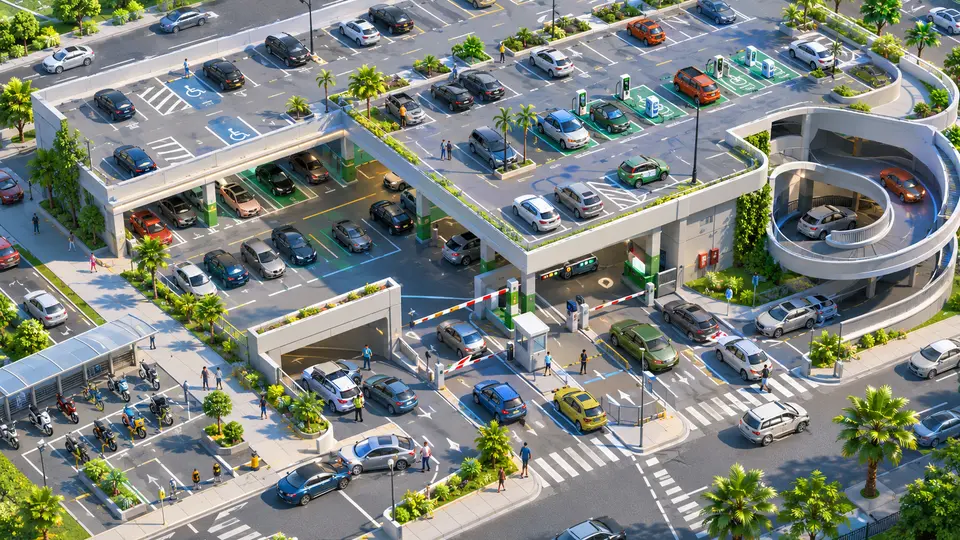
How many bays are free right now?
15 cases: 9 raise an alert when something happens and 6 only measure. You see each image as it is, and then with what IRIS understands on top.


And the best part
IRIS only sees what the camera shows.Where we do not reach, we say so.
No software fixes a lens pointing the wrong way or covered in dust. Before promising anything, we say which cameras are in a state to see what you are asking of them.
Tell us your problem and we will say whether IRIS understands it, or not yet.
We reply the same working day.