Solutions by typePersonal safety
What if there is a flash and the flame-resistant kit is missing?
No flame-resistant kit in the hot zone
It is 13:40 and it is forty degrees in the yard. A fitter crosses the pump area without the flame-resistant coverall, helmet on, taking a tool to a colleague. Two minutes of walking. The flame-resistant coverall is unbearable in this heat and is hanging in the locker room. If a seal lets go in those two minutes and hot product sprays out, the cotton he is wearing melts onto his skin.
3 cameras across 2 sectors
What IRIS is
IRIS watches the cameras for you.
IRIS Neural is an artificial intelligence that watches the cameras you already have and understands what happens in front of them. When something important happens —or something you told it you need to keep an eye on—, it alerts you; and whatever can be counted, it counts in numbers. All day long, without anyone having to watch a screen.
You tell it what you need to watch, and IRIS does it.
Works with the cameras you already have. Nothing to replace.
A person replies, not a form.
- Your footage never leaves your premises.
- It doesn't identify people.
- Certifications →
This is how you ask for it
«Tell me if someone enters the pump area without flame-resistant clothing.»
A second-degree burn on an arm is weeks off work, dressings every other day and a post covered by someone who does not know the unit. Then come the incident report, the internal investigation and an inspector asking how access to that area is controlled. Today the honest answer is usually that it is controlled by looking, when somebody happens to walk past. In August, with the changing room two hundred metres away, nobody does.
You decide once
The organisation makes this decision once. If someone crosses into the pump yard, while the unit is in service, and their arms and legs are not covered by workwear, then the control room is alerted with the camera open and the crossing is logged. Written once, IRIS applies it on every shift without anyone having to remember it.
Nobody takes off flame-resistant clothing to look tough. It is heavy, it does not breathe, and wearing it in August is a punishment. There is also a detail that fools people: this clothing does nothing for the day-to-day work. It is worn for the second when something goes out of place, and that second may not come in twenty years. So the person crossing without it does not feel reckless. They feel comfortable.
The day it goes wrong, the difference between a scare and a hospital is four or five seconds. Flame-resistant clothing does not prevent the flash, the slag splash or the steam jet. What it does is not burn and not melt, and give that person just enough time to walk out. A cotton T-shirt does the opposite. And on a casting platform, where an aluminised suit and a lowered face shield are required, the difference is measured in centimetres of skin.
IRIS watches the door into the hot area, the point everyone passes through. It sees whether the person entering has arms and legs covered or is missing the clothing that area requires, and it alerts right there, at the threshold, when turning back costs thirty seconds. Half an hour later the alert no longer protects anyone: it only feeds a telling-off. The clothing does not save you from the accident. It saves you from the second after it.
What changes
Before, the control was the shift supervisor, who looks up when he gets a chance, because he has four other things on at once. Now the alert lands at the threshold, with the image of the person walking in, and whoever is on the desk can call them over the tannoy before they reach the first pump. And after a month there is a count by gate and by shift, which is what you need to know whether the changing room is where it should be or simply too far away.
Where we have seen it
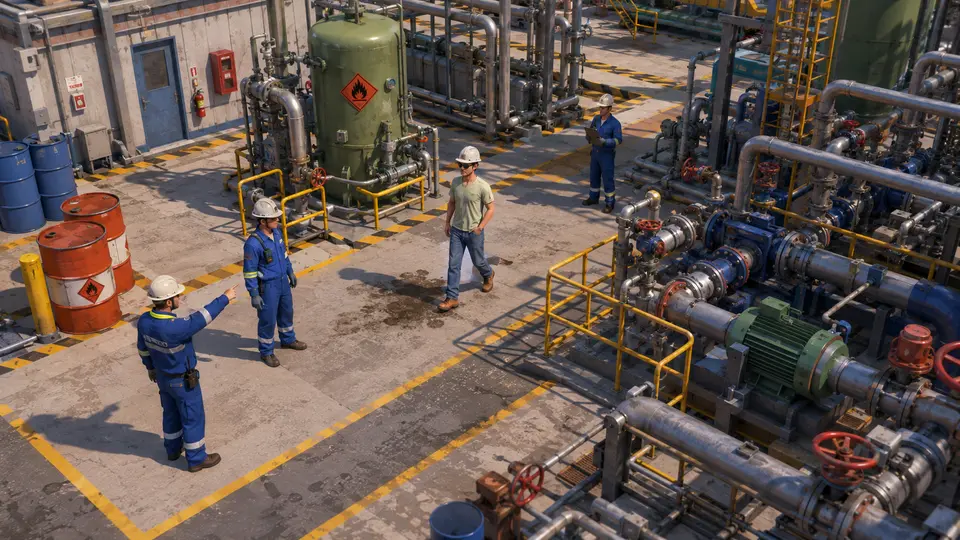
CAM-331Bare arms in the pump area
«Tell me if anyone enters the pump area without flame-resistant clothing.»
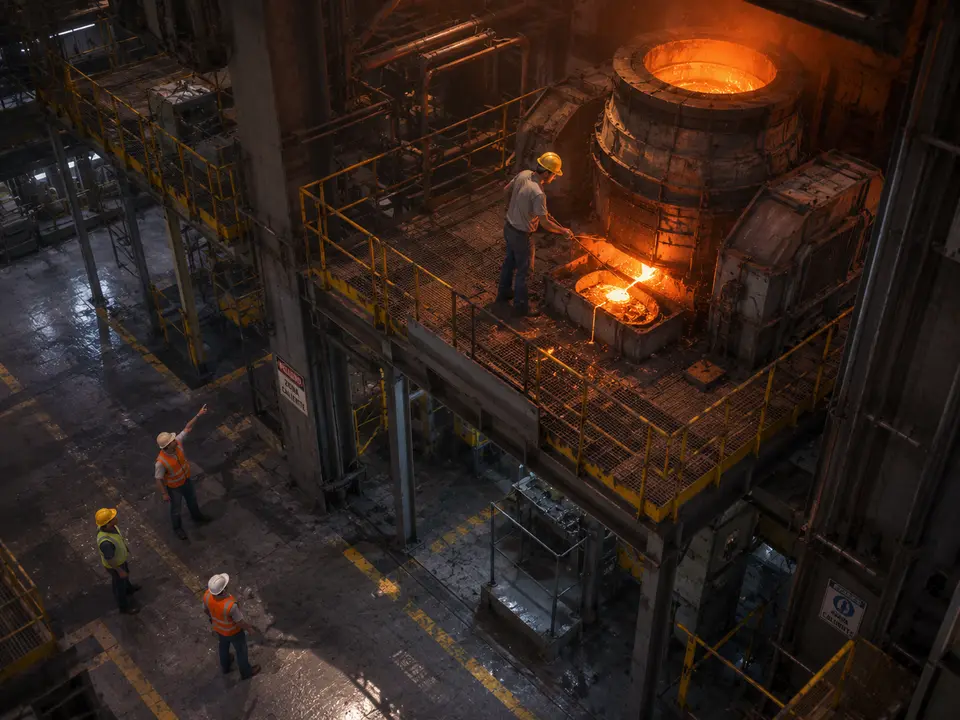
CAM-375One person alone on the furnace platform
«Tell me if anybody goes up onto the furnace platform during a pour without thermal clothing.»
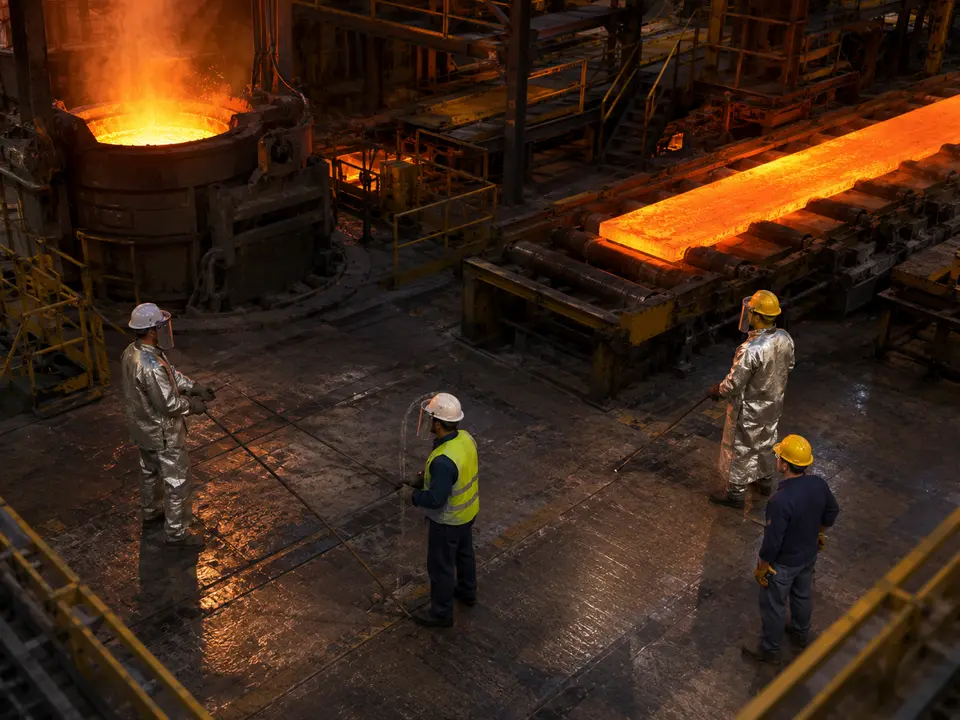
CAM-374Two workers on the casting floor with no thermal clothing
«Tell me if somebody steps onto the casting floor without an aluminised suit or without the face shield down.»


What it does not do
IRIS does not check whether the suit is certified for that area, whether the face shield is in good condition, or whether the fabric has lost its protection after fifty washes. It sees whether someone is covered in workwear or is missing it.
And it does not measure temperature or detect gas: it does not replace the plant’s sensors. It is one more pair of eyes at the gate, not a process instrument.
Questions
- Can IRIS tell flame-resistant kit from street clothes?
- Yes, by what is visible from outside: arms and legs covered, a full coverall, the cut and colour of that area’s uniform. A T-shirt and jeans separate from a work coverall without any difficulty. What you cannot ask of a camera is whether that coverall is certified or whether it has lost its protection after fifty washes. That gets checked in the stores, not in the yard.
- Does it work on the casting platform too?
- Yes, and the requirement there is stricter: an aluminised suit and a lowered face shield. You ask IRIS in the same sentence to flag anyone climbing onto the platform during a pour without the suit on or with the shield up. A pour is short and predictable, so the rule is limited to those minutes and stays quiet for the rest of the shift. That is the difference between an alert people read and an alert people mute.
- Will it not end up alerting on everyone in summer?
- No, not if the rule is placed well, and that is where the whole difference lies. Mark the whole hot area and it alerts constantly; within a week nobody reads it. Mark only the door into that area and it alerts once or twice a day, and every alert is worth acting on. An alert people stop reading is worse than no alert, because it also buries the ones that matter.
- Can IRIS shut the unit down if someone enters unprotected?
- No. IRIS alerts and a person decides. Shutting down a process unit is a decision with large consequences, taken from the control room with the full picture in front of you, not from a single image. What IRIS does do is make sure that person gets the alert now, with the camera open and the exact minute, instead of hearing about it at the shift handover.
Demo · IRIS at work
A new case each time. Always the same screen.
It plays by itself and shows one case from start to finish. It is a summary: the real screen has far more functions than fit in this box.
- Cameras on the map
- You draw an area
- What passed shows up
Not seeing yours here?
These words are the ones we have built, not the ones IRIS understands. The list falls short on purpose: you ask for it in a sentence, and sentences do not run out. Tell us what is in front of your cameras and we will tell you whether it understands it, or not yet.
And the best part
Adding a camera costs what it costs;adding someone to watch it costs every single month.
Past a certain number, almost nobody is watching anything. IRIS watches them all at once and only calls you when something you said mattered happens in one of them.
Tell us your problem and we will say whether IRIS understands it, or not yet.
We reply the same working day.