Solutions by typeInfrastructure integrity
What if the gate is not where the system says it is?
The system says closed. The water says open.
Eleven twenty in the morning at the intake works. A curtain of water is falling from the gate into the canal below: it is open. A few metres away, the valve with the blue handwheel is shut. Four people are watching from the walkway and two of them are pointing. Upstairs, on the control room screen, that gate has read closed since yesterday afternoon, and that is the figure this afternoon’s manoeuvre has been planned on.
10 cameras across 3 sectors
What IRIS is
IRIS watches the cameras for you.
IRIS Neural is an artificial intelligence that watches the cameras you already have and understands what happens in front of them. When something important happens —or something you told it you need to keep an eye on—, it alerts you; and whatever can be counted, it counts in numbers. All day long, without anyone having to watch a screen.
You tell it what you need to watch, and IRIS does it.
Works with the cameras you already have. Nothing to replace.
A person replies, not a form.
- Your footage never leaves your premises.
- It doesn't identify people.
- Certifications →
This is how you ask for it
«Tell me if the gate or the valve is not in the position the control system reports.»
A gate in the wrong position breaks nothing that morning. It breaks the flood night, when someone works in the dark trusting a picture that is not the real one. In the meantime a canal runs dry, an intake sends water where it should not go, and the whole operation runs on a wrong map. And what comes afterwards is not a repair: it is a report to the river authority explaining how long it was like that and how it went unnoticed.
You decide once
You decide this once. You say which gates are watched, what the correct position of each one is, how much difference is tolerated and who gets told: if the leaf does not match what the system reports for more than five minutes, alert the operations manager with the image of the gate and the position the signal was giving. IRIS checks that at every hour, including Sunday at dawn and including during a flood, which is exactly when nobody has time to drive up and look.
A gate is one of the few things in a facility that holds two positions at once: the official one and the real one. The official one is whatever the limit switch says, and the limit switch says what it said the day it was fitted. A leaf that has slipped off its guide, a seized contact, a manual manoeuvre nobody logged: from the control room everything still looks fine.
The spillway has its own version of the same problem. Discharge capacity is not what the drawings say: it is whatever the trash racks allow that day. A raft of trunks and branches builds up against the bays over hours and announces nothing; it is simply that when the flood arrives, that route no longer carries what it was meant to. The same goes for foam spilling over the rim of a clarifier at three in the morning, for the green mat that appears in front of an intake overnight, or for the van that has been parked crosswise on the crown for twenty minutes.
IRIS looks at the structure, not at the signal. It checks where the leaf sits inside its frame, how far the water reaches against the marks you painted on the image, and what is piling up against the racks. When what it sees stops matching what it should be, it says so, and shows yesterday’s image alongside so the difference is obvious at a glance. It moves nothing: the manoeuvre is ordered by whoever carries the responsibility for ordering it.
What changes
Before, the real position was checked by driving up. Someone took the car, got to the crown and looked, and days went by between one visit and the next. On a flood night, that drive was done in the dark and in the rain. Now the image of the gate arrives on a phone with the position the signal was reporting right beside it, and the argument on the walkway at twenty past eleven no longer needs to happen: you can see it.
Where we have seen it
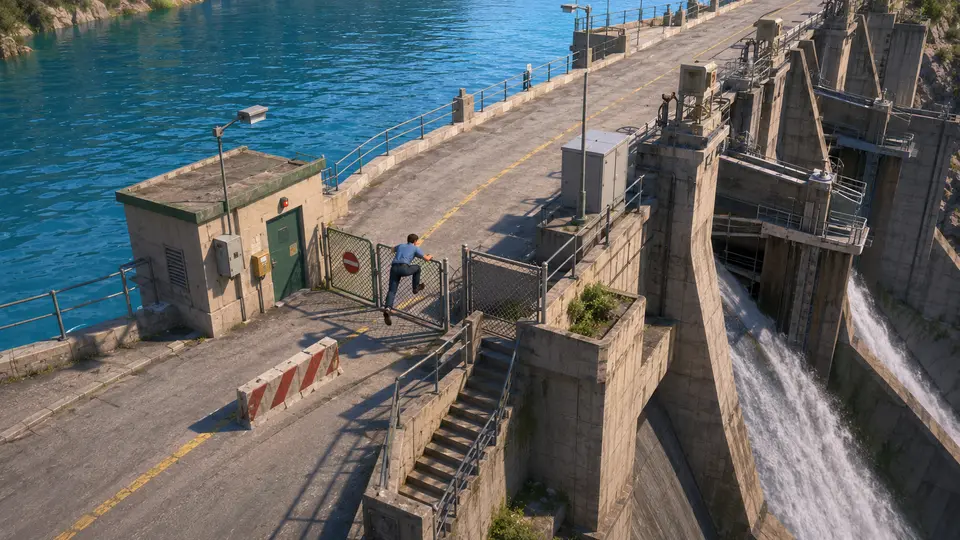
CAM-144Someone climbs the gate onto the dam crest
«Tell me the moment anyone climbs over the fence onto the crest, at any hour, and tell me which camera and where they got in.»
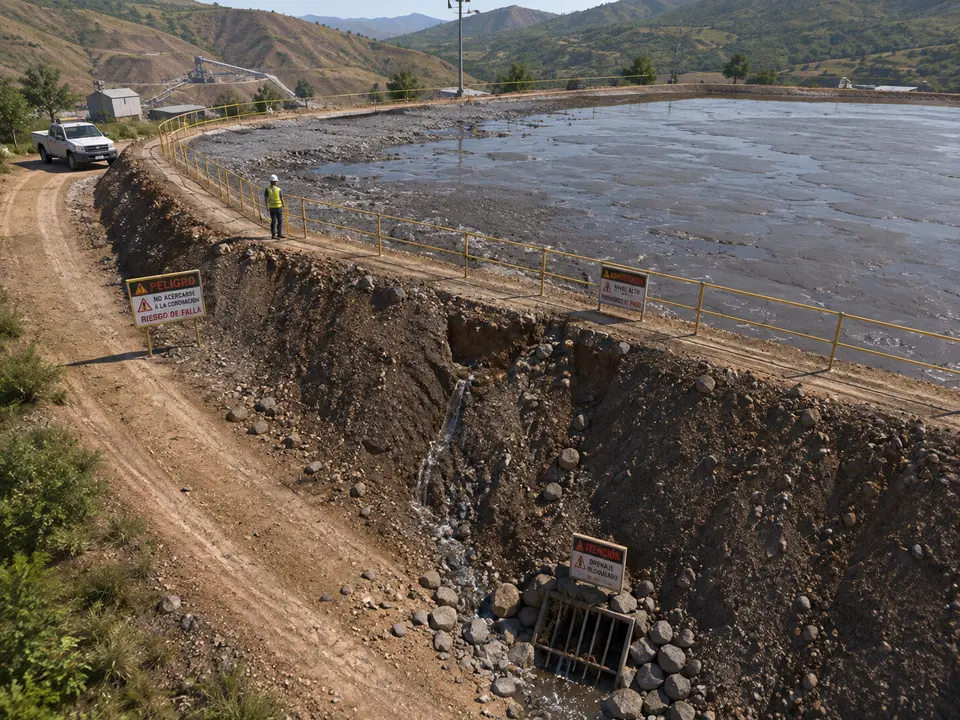
CAM-396Seepage cutting a gully down the tailings dam face
«Warn me if water appears on the outer face, if the gully grows or if the slurry gets close to the crest, and show me yesterday's image next to it.»
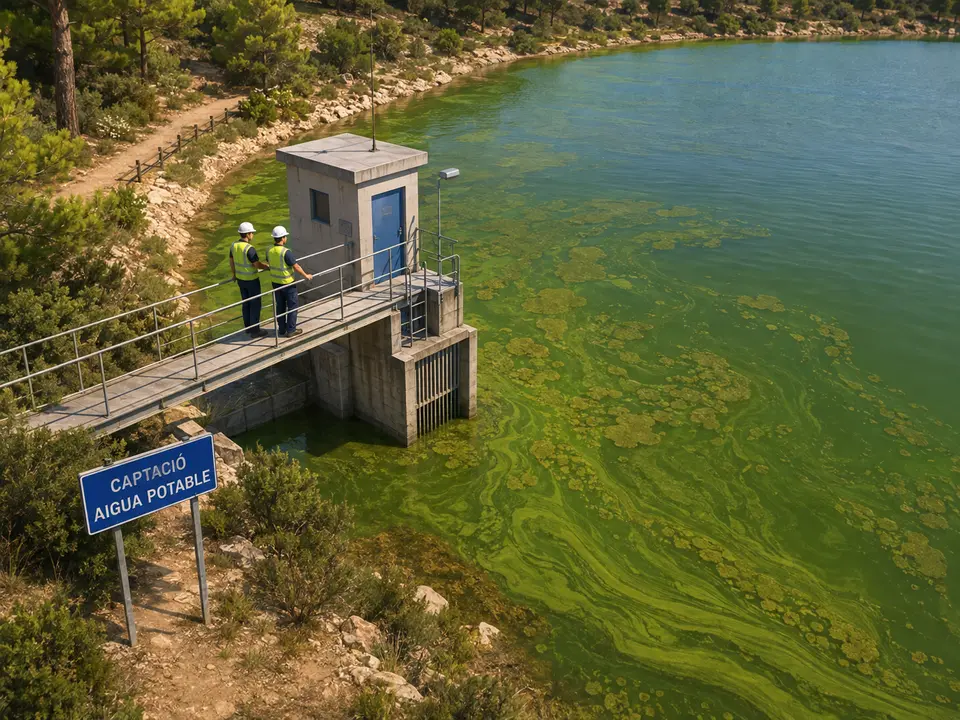
CAM-416The intake reservoir woke up green
«Tell me if the water in front of the intake changes colour or if a mat appears on the surface.»
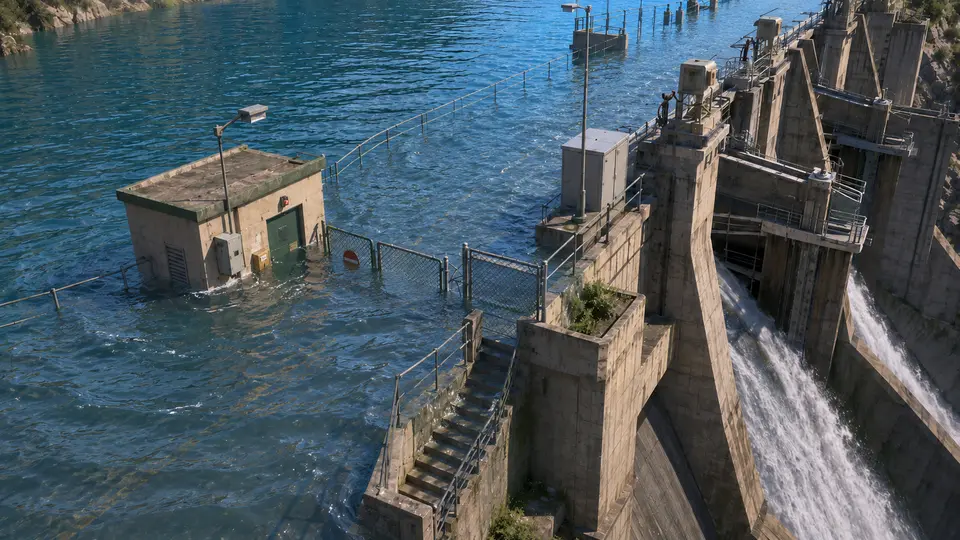
CAM-147Water has come over the dam crest
«Tell me how high the water is against the threshold of the hut door, alert me when it goes past the warning mark, and show me how it has risen.»
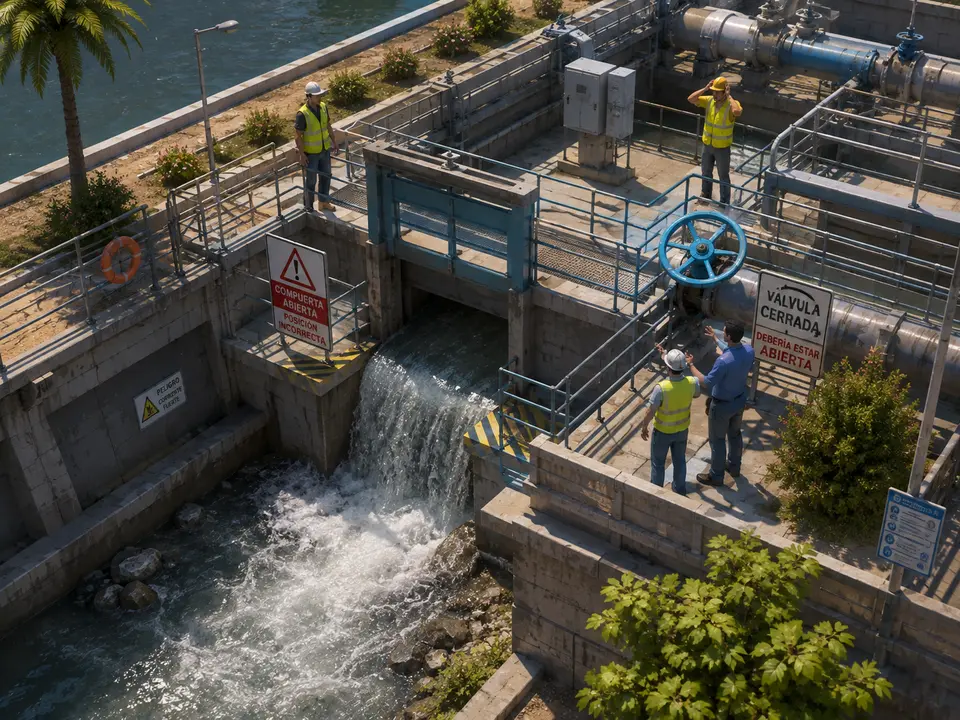
CAM-406The gate says one thing and the control system says another
«Tell me if the gate or the valve is not in the same position the control system says it is.»
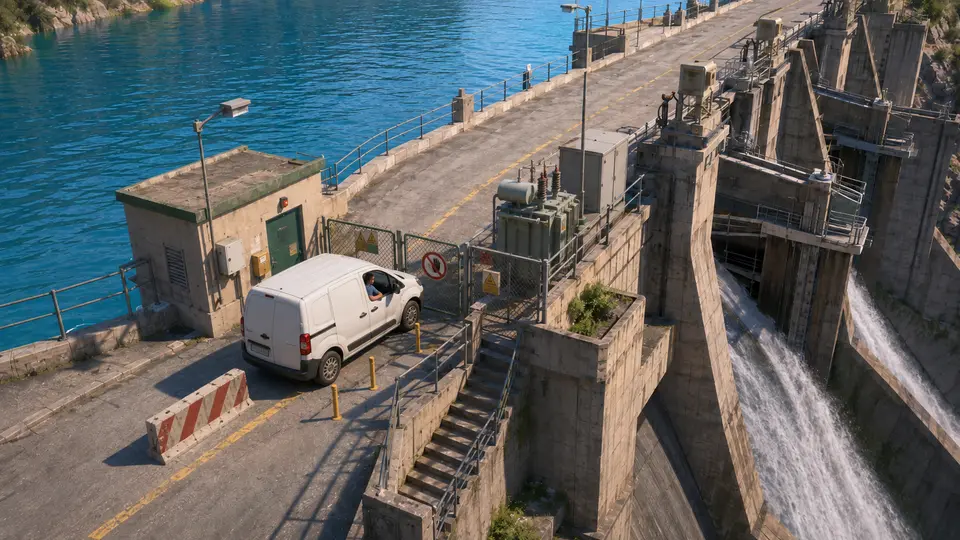
CAM-145A van parked on the dam crest
«Tell me if a vehicle stays parked on the crest for more than five minutes outside working hours, and tell me if anyone gets out of it.»
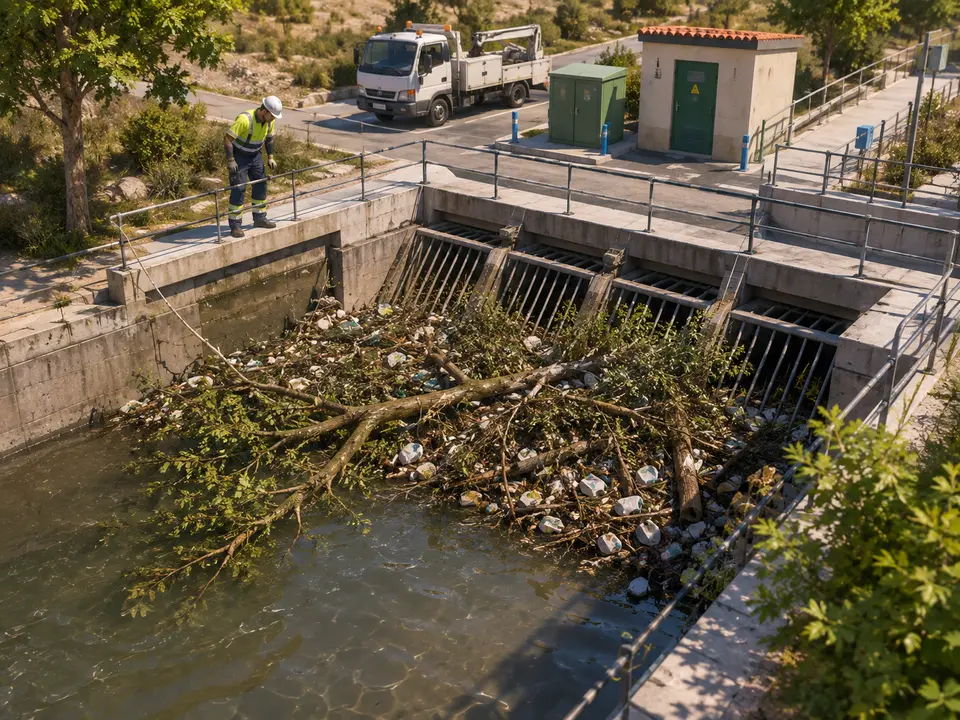
CAM-403A tree has come down the channel and is blocking the intake
«Tell me if something large lodges across the racks at the intake.»
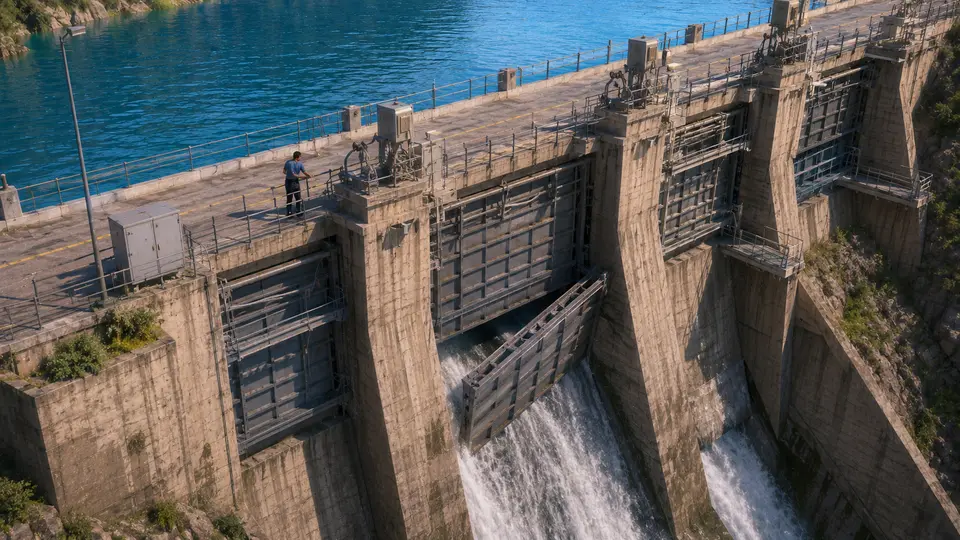
CAM-148A gate that is not seated in its frame
«Tell me when a gate is not where it should be in its frame, and show me the movements it has made this week.»
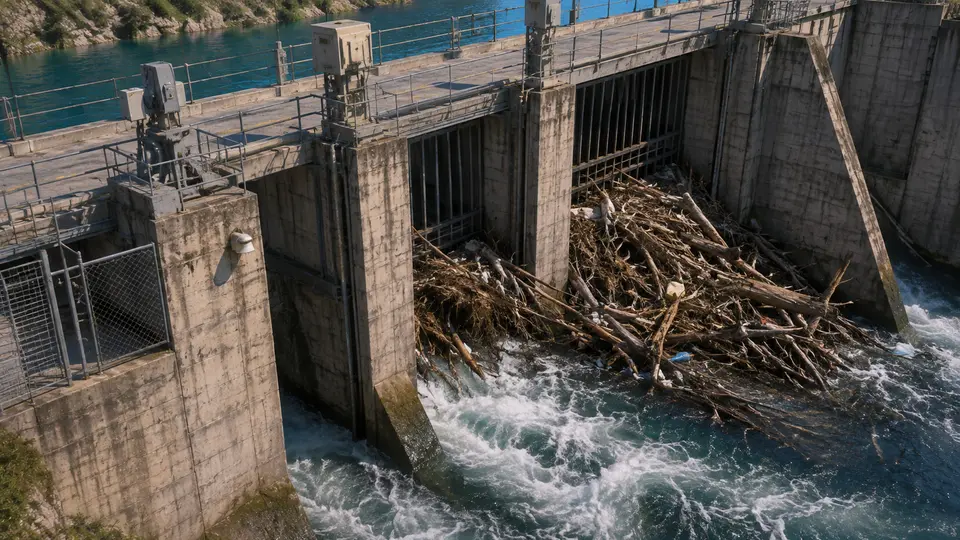
CAM-146Logs piling up against the spillway
«Tell me when wood or rubbish builds up against the spillway screens, and tell me whether the pile is still growing.»


What it does not do
IRIS does not move a gate, does not open a spillway and does not order a manoeuvre. It compares what can be seen with what should be, and says so. The person who operates is the person who can answer for it.
And it does not replace the limit switch or the level gauge. It is a second witness, and it looks at the thing instead of at the signal. When both agree you never notice it is there; it earns its place the day they disagree.
Questions
- Does it replace the gate telemetry?
- No. It is a second witness, and it looks at something else. Telemetry tells you what the limit switch says; the camera shows you where the leaf is. When the two agree, nothing happens and you never notice. When they disagree, there is the alert, with the image next to the figure. Most of the serious surprises at a dam are of that kind: the signal said one thing and the structure had been doing another for days.
- Can it read the water level off the staff gauge?
- Not the way a level gauge does, and it is worth saying so up front. What it does is read the image against the marks you paint on it: the alert level, the threshold of the operating hut door, the crown. It tells you when the water covers a mark and keeps rising, and shows you how it has risen since yesterday. For the official figure the instrument still rules; for finding out at three in the morning, the mark does the job.
- What about rain, fog or darkness?
- Visibility gets worse, and we are not going to hide that. In thick fog or with rain against the housing, the image loses detail, and a fine rule such as the exact position of a leaf loses reliability. What does hold up well are the big differences: water over the crown, a pile of trunks against the racks, a whole stretch changed since yesterday. So a rule is tuned by looking at that camera on a storm day, which is when it has to work, not on a clear one.
- Can IRIS open or close a gate?
- No, and we do not want it to. A manoeuvre at a dam is ordered by a person who answers for it, with the emergency plan in front of them and the downstream warnings already given. What IRIS contributes is everything that comes before that decision: the real position of the leaf, how far the water has reached, what is piling up against the racks and how it has changed since yesterday. It is information for deciding, not a control. The difference between those two things is exactly accountability.
A different case every time
Watch what happens. Then watch what IRIS does with it.
Not a recorded video and not a drawing: it is a summary of the real tool, with a different case each time round. The whole tool does not fit in a box.
- You ask
- IRIS searches
- It shows you
Not seeing yours here?
These words are the ones we have built, not the ones IRIS understands. The list falls short on purpose: you ask for it in a sentence, and sentences do not run out. Tell us what is in front of your cameras and we will tell you whether it understands it, or not yet.
And the best part
Nobody covers the night shift:the camera that is already on covers it.
It does not tire, it does not blink and it does not go for coffee. What happens at night is understood just as it would be at midday, and whoever is on duty hears about it while it is happening.
Tell us your problem and we will say whether IRIS understands it, or not yet.
We reply the same working day.