Solutions by typeInfrastructure integrity
Who sees a fallen tree across the road at five in the morning?
The tree is across the road and nobody knows
Ten past five in the morning, after a windy night. On the road out of the village a tree has come down and covers both lanes with all its branches. Loose branches lie across the asphalt. The camera on the pole has been watching it since the first minute. The first car to arrive from that side is doing ninety, and the bend hides the view until twenty metres out.
11 cameras across 4 sectors
What IRIS is
IRIS watches the cameras for you.
IRIS Neural is an artificial intelligence that watches the cameras you already have and understands what happens in front of them. When something important happens —or something you told it you need to keep an eye on—, it alerts you; and whatever can be counted, it counts in numbers. All day long, without anyone having to watch a screen.
You tell it what you need to watch, and IRIS does it.
Works with the cameras you already have. Nothing to replace.
A person replies, not a form.
- Your footage never leaves your premises.
- It doesn't identify people.
- Certifications →
This is how you ask for it
«Tell me if a tree comes down across the road, and how many lanes are blocked.»
Nobody calls until somebody meets the tree head-on. With luck, that person brakes in time and phones it in; without luck, there is a crash and now the lane is blocked with a car in it. And the same scene has other versions: a tree jammed across a canal with water backing up behind it, or a heavy branch resting on a railway track. In all of them, the time between the fall and someone finding out is time in which only luck is working.
You decide once
You decide it once and it applies across the whole camera network: what counts as an obstruction, on which stretches it matters — a straight with clear sightlines is not the exit of a bend — and who is told depending on the hour, because five in the morning is not the same shift as midday. IRIS applies it on windy nights and on calm ones, on every camera at once, with nobody having to remember to look harder when a storm warning is issued.
A fallen tree is not a hard alert to understand: either it is on the carriageway or it is not. What is hard is that it happens exactly where nobody is watching, and almost always at night or in a storm — when the road is at its most dangerous and the control room has far more cameras switched on than eyes available.
And it is not only the road. The same thing that blocks two lanes also jams across a canal from wall to wall, and then the water stops behind it and starts rising where it should not. Or it comes to rest on a railway track. The consequence changes; what does not change is that someone has to go and remove it, and that the later it is known, the more it costs.
IRIS watches the carriageway, or the canal, and sees that something large is there that was not there before and is not moving. It does not need to know what species the tree is: it needs to know that it blocks the way, how many lanes, and since when. With that, the alert arrives with the camera open, and whoever receives it can already decide whether to send signage, a machine or a patrol. On a windy night that may be ten alerts in an hour — and that is precisely the night when one person cannot walk three hundred cameras.
And there is a second half that almost nobody talks about: when it can reopen. Once it is cleared, somebody has to say the way is free, and until now that was a radio call from someone already on their way to the next incident. The same camera that saw the tree come down sees the empty lane, and whoever is in the control room checks it without sending anyone to look. On a night with six open incidents, that is one hour less of closed road.
What changes
Before, the first news of a fallen tree was a call from someone who had already met it. Now the first news is the camera, and it arrives while the road is still empty. What gets dispatched changes: instead of an ambulance and a recovery truck, a sign and a chainsaw. And what can be explained afterwards changes too, because the time it fell and the time it took to clear are both on record.
Where we have seen it
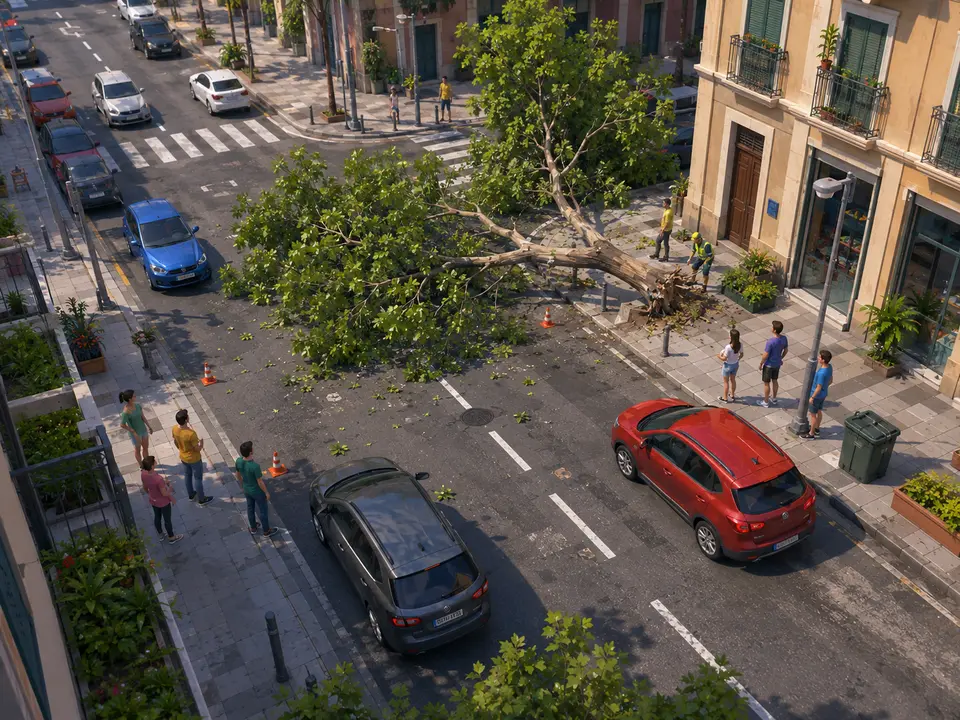
CAM-33Fallen tree blocking the road
«Tell me if a tree falls onto the road, and how many lanes are blocked.»
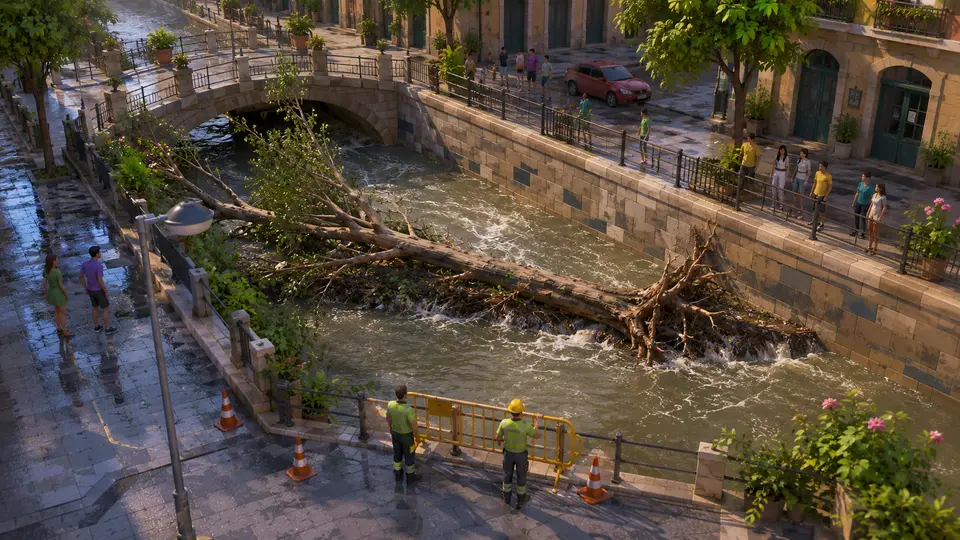
CAM-176A tree jammed across the canal
«Tell me if something big gets jammed across the canal and the water starts backing up behind it.»
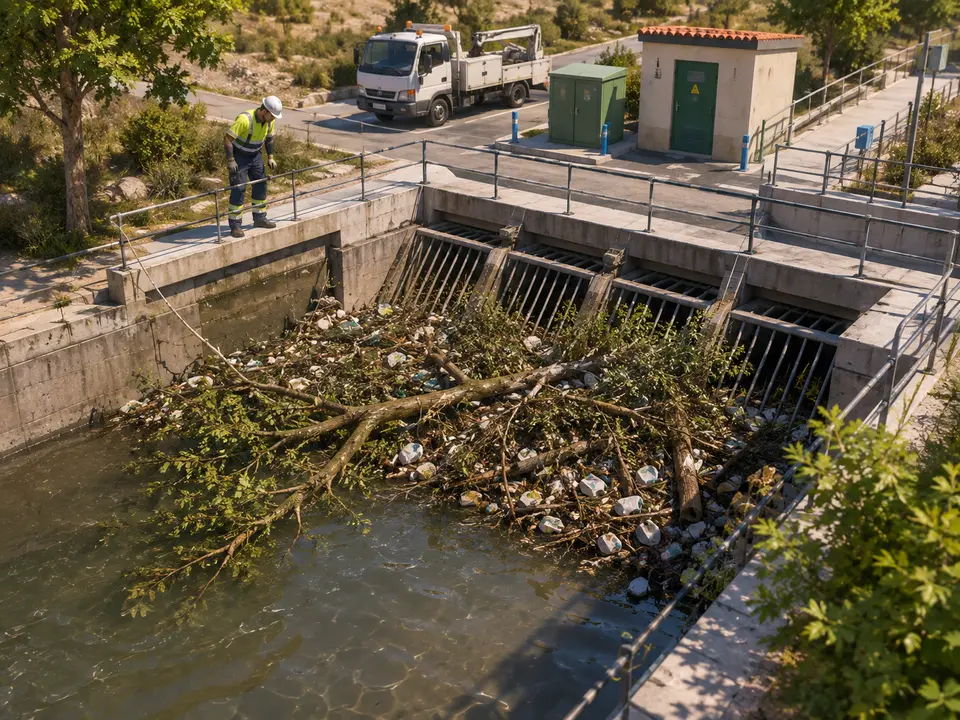
CAM-403A tree has come down the channel and is blocking the intake
«Tell me if something large lodges across the racks at the intake.»
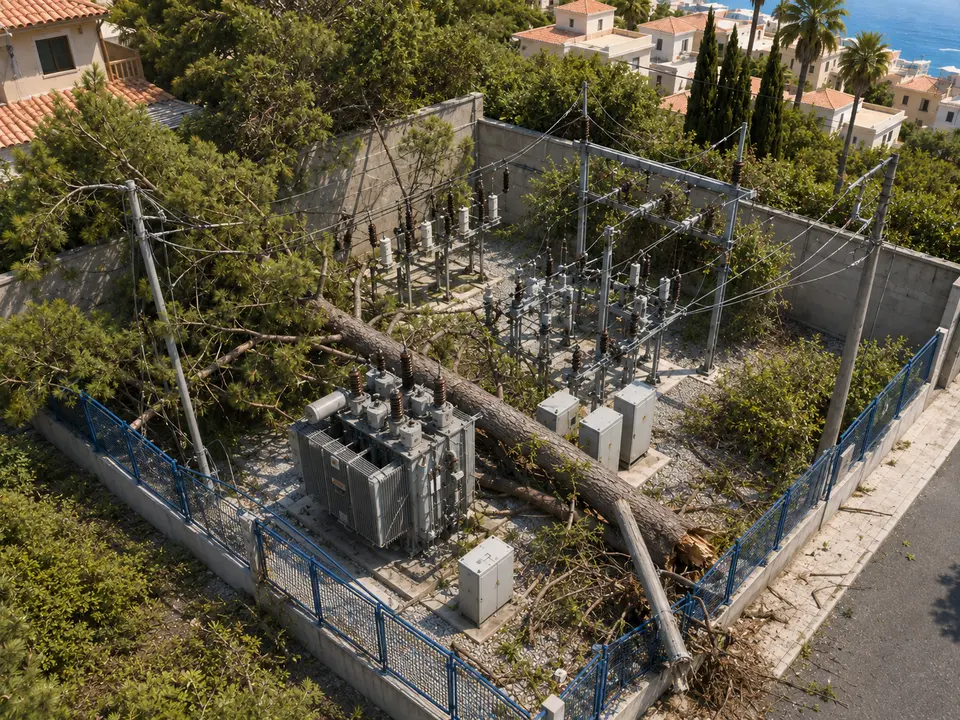
CAM-351A whole pine tree down inside the substation
«Alert me right away if a tree or a pole comes down inside the substation, and show me the before and after.»
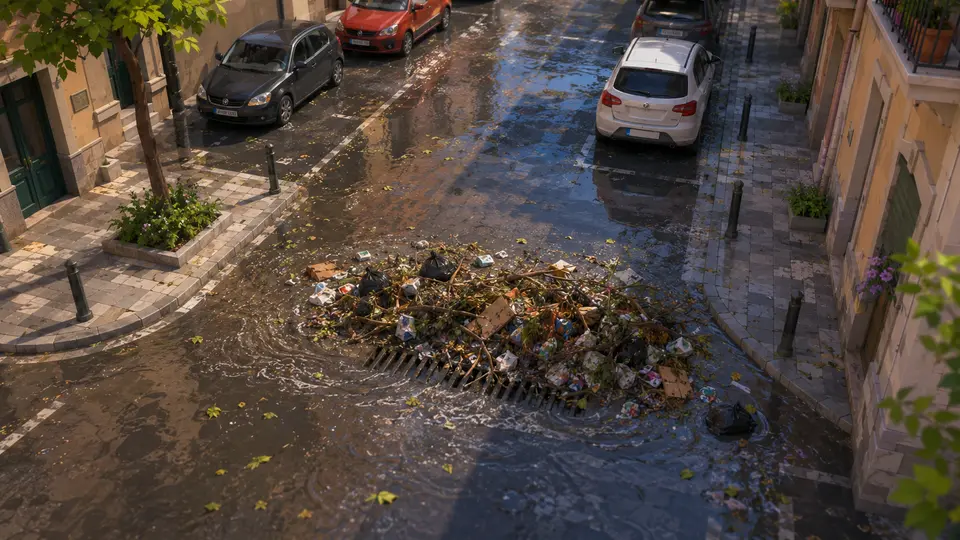
CAM-167The street gully choked with branches
«Tell me when a gully gets covered and stops taking water, before the street floods and a resident has to phone me about it.»
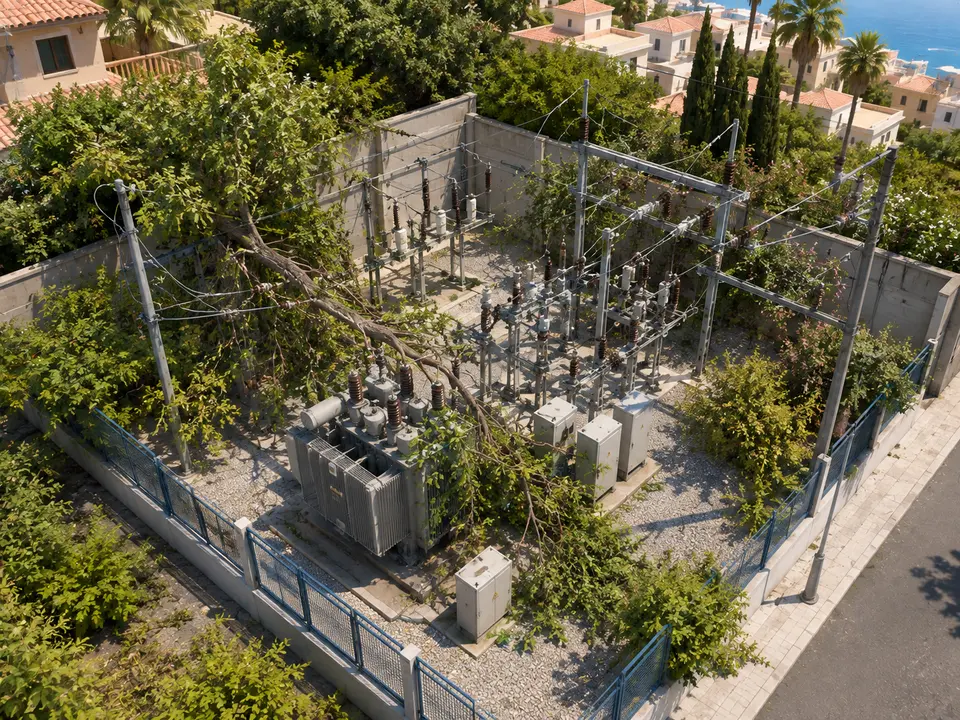
CAM-350A branch touching the substation busbar
«Tell me if vegetation grows inside the yard or if a branch gets close to the busbar.»
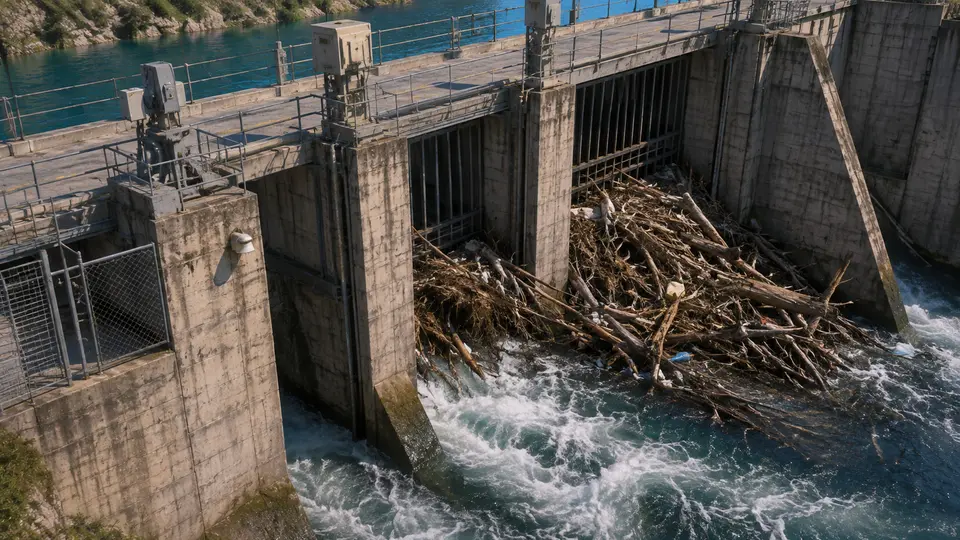
CAM-146Logs piling up against the spillway
«Tell me when wood or rubbish builds up against the spillway screens, and tell me whether the pile is still growing.»
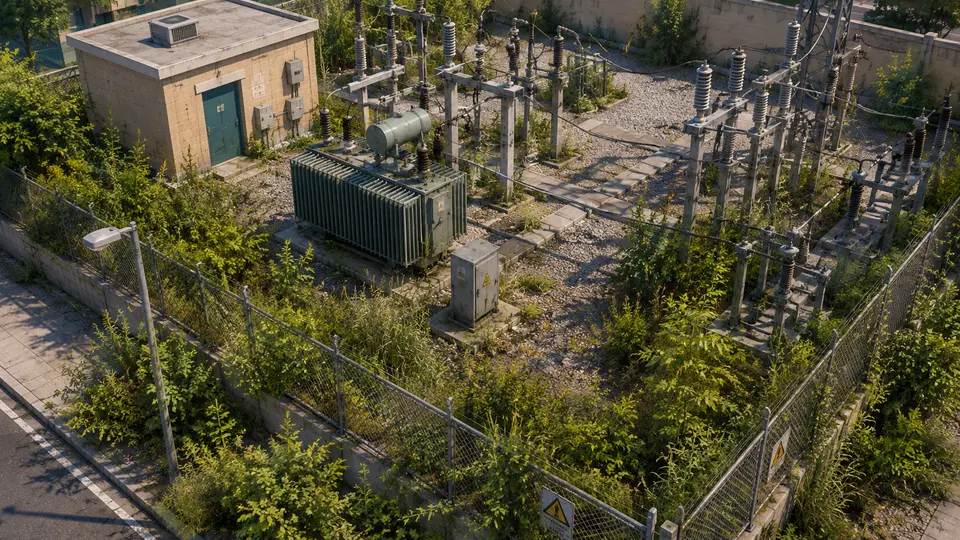
CAM-161Weeds have taken over the yard
«Tell me when the vegetation starts taking over the yard, without waiting for the inspection: compare it with what was there a month ago.»


What it does not do
IRIS does not know whether the tree is intact or whether another one is about to come down beside it. It does not measure wind, predicts nothing and does not say whether the embankment is unstable: whoever arrives judges that.
And it only sees what the camera sees. A tree down on a stretch with no coverage is still seen by nobody, and in thick fog or very heavy rain the image degrades just as anyone’s eyesight would.
And it cannot say whether what is on the carriageway is a tree, a pole or a load that fell off a lorry. It says there is something large blocking the way and not moving, which is exactly what you need in order to set out. The species is added by whoever arrives, and it does not change what gets dispatched.
Questions
- Can it tell a fallen tree from a shadow or a branch swaying in the wind?
- Yes, and the key is time. A shadow changes with the light and a swaying branch returns to where it was; a fallen tree lies still on the carriageway and is in exactly the same place a minute later. That is why the rule does not fire on what appears, but on what appears and stays. That detail is what separates an alert people actually look at from one that gets muted on the first windy night — the very night it was needed most.
- Can it tell me how many lanes are blocked?
- Yes, if the camera sees the whole carriageway. You mark the lanes on the image once, and IRIS says which of them has something on it. That is the difference between «there is a tree on the road» and «there is a tree across both uphill lanes», which is exactly what decides whether the road is closed or traffic is routed past. If the camera only sees half the width, the alert says half the width: nothing that is not in the image is invented.
- Does it work for a canal or a railway track, or only for roads?
- It works anywhere there is a way that has to stay clear. In a canal the problem is not the impact: it is that water stops behind it and starts rising, and that shows in the image long before it reaches anywhere. On a railway track, what matters is that nothing can be there when a train comes. What changes is the area you draw and who is told; what is being watched is the same: something large blocking a way and not moving.
- On a stormy night many come down. Does the control room not get flooded?
- It is a reasonable worry, and it is solved by deciding in advance. On a night like that what you need is not one alert per event but an ordered list: which stretches are blocked, how many lanes and since when. That lets you dispatch by severity instead of by the order calls came in. You can also mark in advance the stretches where a blockage is most serious, so they rise to the top. The bad night is exactly what this is installed for.
See it for yourself
This isn’t a video. It’s a slice of the real screen.
A summary of the real interface, played hands-free. You see one case from start to finish; what you do not see are the other screens, and there are many.
- Four cameras at once
- Each understands its own view
- The numbers climb by themselves
Not seeing yours here?
These words are the ones we have built, not the ones IRIS understands. The list falls short on purpose: you ask for it in a sentence, and sentences do not run out. Tell us what is in front of your cameras and we will tell you whether it understands it, or not yet.
And the best part
Nothing changes on the wall.On the screen, everything changes.
Same brackets, same cabling, same cameras. The only difference is that those images are now understood as they come in, instead of waiting for someone to open them.
Tell us your problem and we will say whether IRIS understands it, or not yet.
We reply the same working day.