Solutions by typeLogistics efficiency
Who sees that the container is not resting on all four corners?
It does not fall when you stack it. It falls later
It is 16:40 on the container yard. A heavy-duty handler is still holding a red container that has ended up crossways on the stack: it is not resting on all four corners and one end overhangs the aisle. From the cab the operator can see two corners; the other two are hidden behind the box. Down in the aisle, a terminal vehicle is passing at that very moment.
4 cameras across 4 sectors
What IRIS is
IRIS watches the cameras for you.
IRIS Neural is an artificial intelligence that watches the cameras you already have and understands what happens in front of them. When something important happens —or something you told it you need to keep an eye on—, it alerts you; and whatever can be counted, it counts in numbers. All day long, without anyone having to watch a screen.
You tell it what you need to watch, and IRIS does it.
Works with the cameras you already have. Nothing to replace.
A person replies, not a form.
- Your footage never leaves your premises.
- It doesn't identify people.
- Certifications →
This is how you ask for it
«Tell me when a container ends up out of line on a stack or with one end overhanging an aisle, and tell me if there are people nearby.»
Nobody dismantles a whole stack to check one corner. What usually happens is that the container stays as it is, another goes on top, and the problem surfaces the day the stack shifts in the wind, or the day a machine catches the corner that was not resting. Then several tonnes come down on an aisle people walk through, and the investigation asks who placed it and when. By that day nobody remembers.
You decide once
You decide this once. You say which stacks are watched, how much out of line is too much, which aisles may never be overhung and who gets told: if a container ends up out of line on a stack and there is a person or a vehicle under the overhang, alert the yard supervisor with the camera and the position. IRIS applies it across the whole yard, at any hour, with nobody having to go and look.
Stacking is the most ordinary thing in the world until it is not. On a container yard, at a waste plant or on a bale pile, everything gets stored on top of everything else because ground is expensive and material is plentiful. And it works: stacks hold, they are built every day, and almost nothing ever happens. The problem is not stacking. The problem is the corner that is not resting, the face that has crept half a metre towards the walkway, the flame coming out of one flank of the waste pile at four in the morning.
What makes this hard is that almost nobody can see it. The machine operator sees two corners out of four. The supervisor sees the stack from the ground and cannot see the top face. The yard camera is aimed at who comes in, not at the geometry of a pile. And because the fault does not fall at the time, no record is left of who placed it or when: only the result, weeks later. And a yard cannot be checked by hand. There are hundreds of positions, three or four tiers high, and machines moving them all day: by the time the supervisor has walked the whole thing, half of what he looked at has already changed. That is why checking stacks is one of those things everybody knows should be done and almost nobody does, not out of neglect, but because by hand there is no time.
IRIS looks at the stack as a shape. It sees whether the top container is out of line, whether one end hangs over an aisle, whether the face of a pile has moved towards the tipping floor, whether smoke is showing at one flank. And it also sees what is underneath: if a person or a vehicle is passing at that moment, that changes the urgency. The alert carries camera, time and video, and it arrives while the machine is still holding the load, which is the only moment when fixing it costs a minute.
What changes
Before, a badly built stack was found the day it moved. Now the yard supervisor gets the image while the machine is still holding it, and the fix is to lower the container and set it down again. It is also recorded: the stack, the time and the video. When somebody asks how often this happens in a month, there is an answer instead of an argument.
Where we have seen it
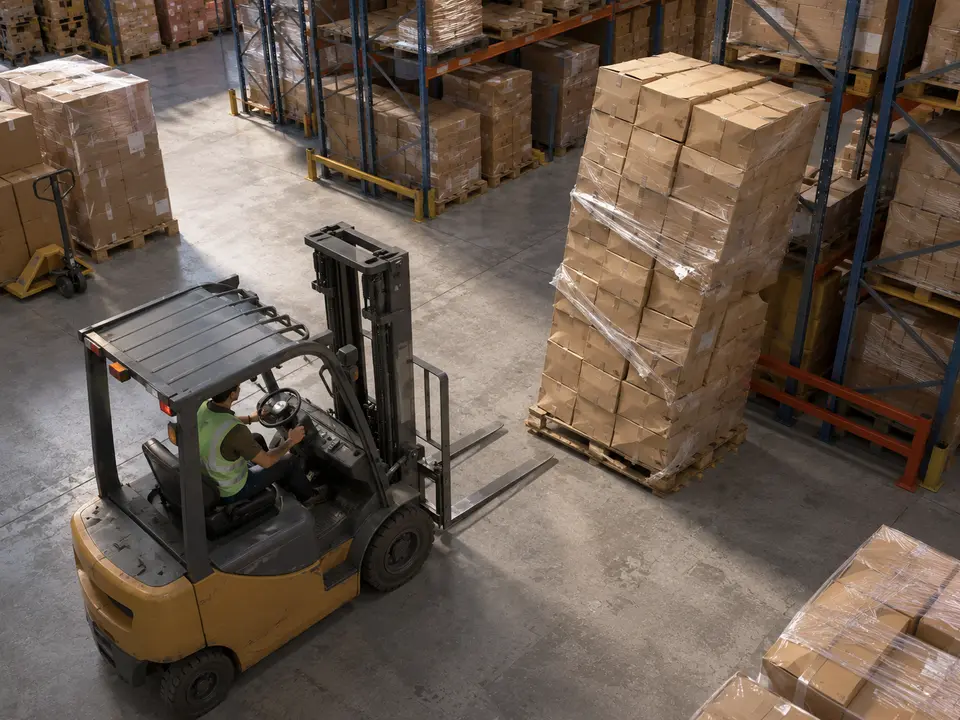
CAM-269A pallet stacked too high, leaning, with the wrap hanging loose
«Tell me if there is a leaning pallet or one with loose wrap in the aisle, especially if a forklift is coming.»
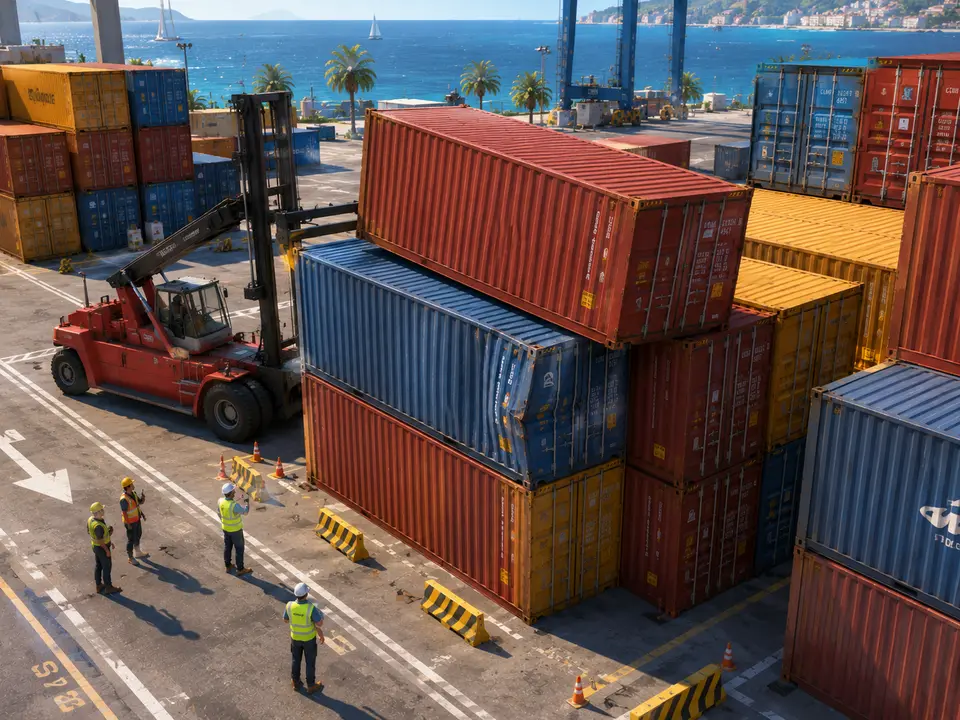
CAM-451A container has ended up crooked on the stack
«Tell me when a container ends up out of alignment on a stack or with one end overhanging an aisle, and tell me if there are people nearby.»
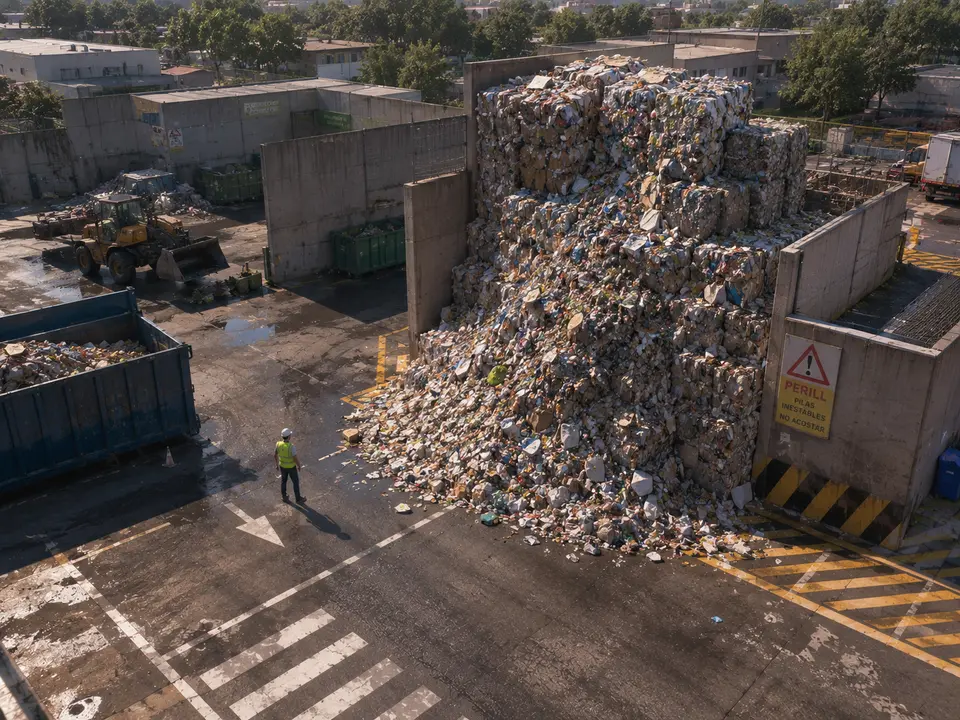
CAM-433The bale stack has slid onto the yard
«Tell me if a stack goes above the wall or if material slides onto the yard.»
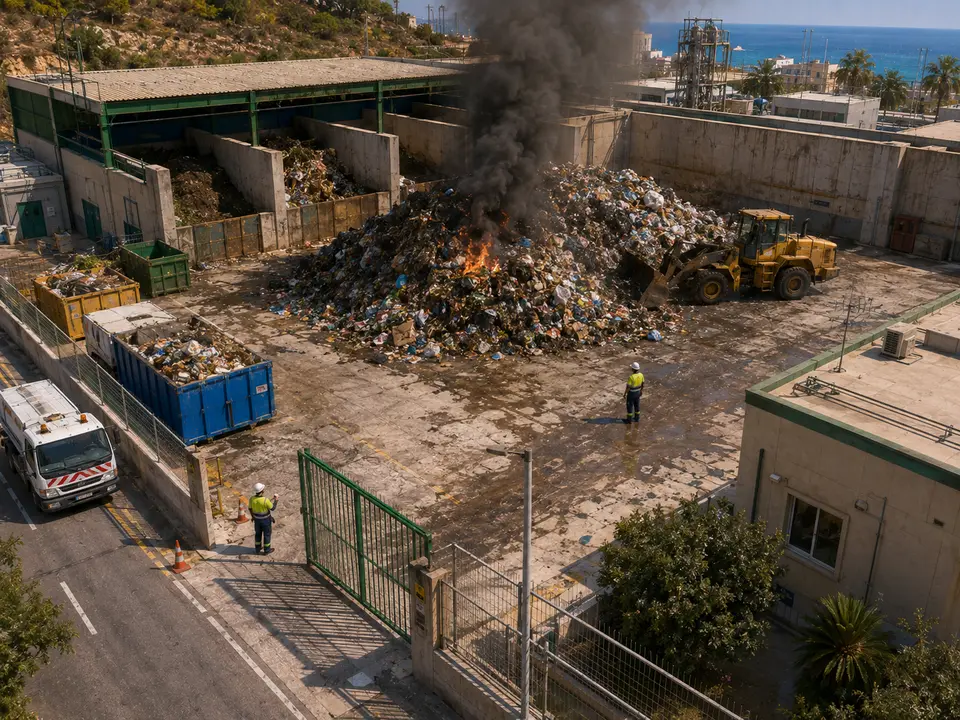
CAM-179Fire in the waste pile
«Tell me the moment smoke or flame comes off the pile, day or night, even when there is nobody on site.»


What it does not do
IRIS does not calculate whether that stack is going to fall. It does not know what each container weighs, how it is lashed or what the wind is doing up there. It sees geometry: what is out of line, what overhangs a walkway and what has moved since yesterday.
And it does not replace inspection. A container that seats badly on the inside while looking correct from outside is not something any camera will catch. What IRIS does is make sure the error that can be seen does not go unnoticed for two weeks.
Questions
- How can a camera see that a container is badly seated?
- By shape, not by weight. IRIS compares the top container with the line of the stack beneath it: if an edge juts out, if the axis does not match, or if one end overhangs an aisle, that is visible from outside and it is clearly visible. What cannot be seen from outside — how it seats inside, how it is lashed — it does not report, and it never will. That is why the alert always shows the image: the final check is made by a person.
- Does it work for a bale pile or a waste heap?
- Yes, and it is the same question in a different shape. On a bale pile, IRIS watches the height against the wall and the position of the face: if material goes above the wall or the face has moved towards the floor, it alerts. At a waste plant it also watches for smoke or flame at a flank, day or night and even with nobody on site. What is watched changes; the idea does not: a mass that has moved from where it was.
- Can it tell me if somebody is underneath?
- Yes, and that is what changes the urgency. IRIS watches the stack and watches what is under the overhang: if a person on foot or a vehicle is passing through the aisle at that moment, the alert says so and its priority rises. It does not know who that person is and does not need to: it counts that somebody is there and says where. A badly placed container with nobody nearby is a correction; the same container with somebody underneath is a radio call right now.
- Does it work at night, with the yard half lit?
- Yes, as long as the camera can see the outline of the stack. A yard at night is an odd place: bright in some spots and pitch dark in others, and containers are large blocks with flat faces, which is exactly what reads best in low light. Where care is needed is thick fog, rain on the lens or a light tower that is out. In those cases the honest answer is to say so: if the camera cannot see the stack, IRIS cannot see it.
See it for yourself
No extra alarms here. Just what needs looking at.
Not a recorded video, not an explanatory drawing: a summary of the real screen, with a different case every time it starts. There is a lot more behind it.
- You draw the line
- It counts by itself
- A number comes out
Not seeing yours here?
These words are the ones we have built, not the ones IRIS understands. The list falls short on purpose: you ask for it in a sentence, and sentences do not run out. Tell us what is in front of your cameras and we will tell you whether it understands it, or not yet.
And the best part
A recollection cannot be checked.A number can, and it comes out the same every day.
The number does not depend on who was on shift or how they remember it. It is measured the same way every day, and that is why people counting is certified by the Centro Español de Metrología.
Tell us your problem and we will say whether IRIS understands it, or not yet.
We reply the same working day.