Public safetyMobility analysis
CAM-572
A boat stopped on the wrong side of the line of buoys
A cove with the bottom visible through the water and a line of buoys marking the edge of a protected area. On the far side of the line a wooden boat lies stopped, with gear aboard and tackle in the water beside the rocky shallow; a person is standing on deck. Outside the area there is a service vessel and, in the foreground, the coastal surveillance camera with two people checking the image on a tablet. IRIS does not say what that boat is doing: it says it is stopped inside the line, at which point and since when.

Turn on IRIS Vision
AI-generated image
What IRIS is
IRIS looks after the city for you.
IRIS is an artificial intelligence that uses the cameras you already have in the control room and understands what's happening on the streets and in public spaces. When an incident happens, or something you want to track occurs, it alerts you right away instead of someone having to watch a hundred screens at once; and whatever can be counted, it counts in numbers. All day long.
You tell it what you need to watch, and IRIS does it.
Here, for example, IRIS sees a boat stopped inside the line of buoys marking the protected area, and flags it right away with the spot and the time. That way whoever has to act doesn't depend on a patrol boat passing by or a neighbour calling in. With that alert they decide whether to go check it out or close the case.
Works with the cameras you already have. Nothing to replace.
A person replies, not a form.
- Your footage never leaves your premises.
- It doesn't identify people.
- Certifications →
What IRIS understands
What it recognises in this scene
- vessel stopped inside the line
- person standing on deck
- line of buoys marking the boundary
- tackle in the water
- service vessel outside the area
- coastal surveillance camera
- person scanning with binoculars
- person checking the position on the tablet
- rocky shore and pine woods
- protected seabed visible through the water
The rule
You decide once. IRIS applies it always.
If
a vessel stays stopped inside the line of buoys for more than five minutes
Then
- alert whoever manages the protected area, with the position and the time
- save the video from when it crossed the line until it leaves
- attach the sequence to the case file, without characterising the event
The instruction that set it up«Tell me if a vessel stays stopped inside the line of buoys for more than five minutes.»
What changes
What changes for whoever goes out, whoever decides and whoever justifies it later
A buoyed zone is only useful if somebody can know, at the time, that something is inside it. Until now that depended on a patrol boat passing by or a neighbour calling, and both arrive late and rarely. With the line drawn on the image, the position and the time come out by themselves, and whoever has the power to act can go, or can file it away. It is worth saying the sentence out loud here: IRIS does not say anybody has done anything. It says where a boat was and since when. The characterisation belongs to a person, with the recording in front of them, and that same recording may end up proving it was authorised.
What people usually ask
Does IRIS say that boat is breaking a rule?
No, and that is the line that is not crossed. The alert says: a vessel is stopped inside the buoyed area, at this point, since this time. It could be a boat with a research permit, a breakdown, an emergency anchoring or an infringement. Telling those four apart is the job of a person with the authority to do it, with the recording in front of them and the rules of the area. The camera contributes a fact and a time; the characterisation is not its to make.
How does IRIS know where the line of buoys is?
Because somebody drew it on the image. This is the difference between speaking and drawing, and here it shows clearly: no sentence describes exactly where the edge of a protected area runs. You have to trace it. It is traced once on the frame, following the buoys that are already there, and there it stays. That is why the same alert behaves identically in June and in October, and why the criterion does not change with whoever is on shift.
What if the boat only comes in briefly to take shelter?
That is why the threshold is five minutes and not zero: going in and coming out again triggers nothing. And even when it does trigger, an alert is not a penalty: it is a check. Whoever receives it looks at the video, sees a swell running and a boat looking for shelter, and closes it. The sequence is kept all the same, and that is the good part: if later somebody questions why it was there, the answer is recorded.
Other cameras
- CAM-560 · The gate has been blocked by a stopped vehicle for eight minutes
- CAM-561 · How many people are inside the compound right now
- CAM-562 · Two cars in the lane with the red cross above it
- CAM-563 · Thirty-four minutes of waiting, and only three lanes open
- CAM-564 · Something crosses the wall from above and drops a package inside
- CAM-565 · Who went into the store, when, and what can be proved
Demo · IRIS at work
A new case each time. Always the same screen.
It plays by itself and shows one case from start to finish. It is a summary: the real screen has far more functions than fit in this box.
- The alert fires
- You open it
- You confirm or dismiss
See it somewhere else
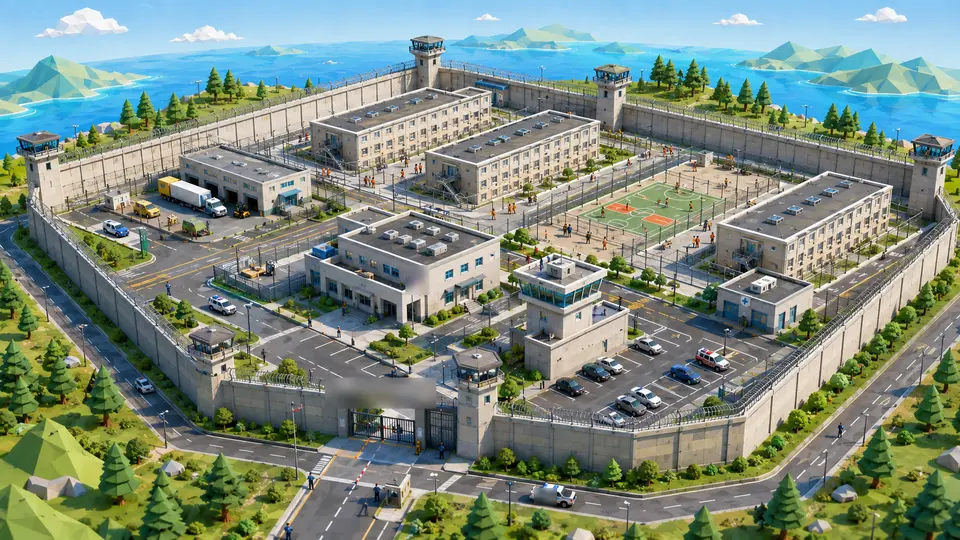
Who is watching the yard screen when the fight starts?
17 cases: 16 raise an alert when something happens and one only measures. You see each image as it is, and then with what IRIS understands on top.

How long before somebody comes down that corridor at four in the morning?
13 cases: 12 raise an alert when something happens and one only measures. You see each image as it is, and then with what IRIS understands on top.


And the best part
You can ask which van came in yesterday.Who was inside is not a question you ask here.
IRIS searches for things and situations, not people: it identifies nobody and recognises no faces. You write what you are looking for and it returns the matching minutes.
Tell us your problem and we will say whether IRIS understands it, or not yet.
We reply the same working day.