CAM-593
Twenty-two minutes waiting for assistance to arrive
The special assistance meeting point, next to a busy concourse. It is a signed corner with a rug, armchairs and a rope marking it out, and a screen saying the team is about to arrive. Inside there is a person in a wheelchair with her dog beside her, on her own. The armchairs next to her are empty. Along the concourse six hundred and forty people an hour go past on their way to the gates. She has been there twenty-two minutes and for the last eighteen nobody from the service has come into the area.

Turn on IRIS Vision
AI-generated image
What IRIS is
IRIS keeps watch over the airport for you.
IRIS is an artificial intelligence that looks at the cameras you already have and understands what's happening at security checkpoints, the baggage belt and the access points. If a queue grows, the belt stops, or something you need to watch happens, it alerts you right away; and whatever can be counted, it counts in numbers. All day long, without anyone having to stare at a screen.
You tell it what you need to watch, and IRIS does it.
Here, for example, IRIS notices the person has been waiting more than twenty minutes at the assistance point and sends the alert on its own, without anyone needing to spot it. So you know how long she's been waiting and how long it's been since anyone from the team came by. With that alert you decide whether to go now, and later you check the log to see the average wait at each point.
Works with the cameras you already have. Nothing to replace.
A person replies, not a form.
- Your footage never leaves your premises.
- It doesn't identify people.
- Certifications →
What IRIS understands
What it recognises in this scene
- assistance point sign
- person waiting alone in the area
- assistance dog lying beside her
- empty armchairs beside her
- waiting area marked out by the rope
- concourse flow towards the gates
- gate signs above the concourse
- apron seen through the window
What this camera measures
An alert says something is happening. The reading says how much.
- 22 minTime waiting at the point
- 0Service staff in the area
- 18 minSince anybody from the service came by
- 640 / hPeople walking past in the concourse
- 15:48:30Video starts at
The figures on this screen are an example from the illustration, not any client's measurement.
The rule
You decide once. IRIS applies it always.
If
somebody has been at the assistance point for more than twenty minutes
And alsonobody from the service has come into the area
Then
- alert the assistance coordinator with the point and the minutes waited
- say whether anybody from the service is at any of the other points, so they can be redirected
- log the wait in the day's assistance service record
The instruction that set it up«Tell me if somebody has been at the assistance point for more than twenty minutes with nobody from the service arriving.»
What changes
What changes for operations, for the passenger and for maintenance
There is nothing to watch here and everything to attend to. A person who has requested assistance and has been waiting alone for twenty-two minutes is someone who may miss a flight, and nobody knows because the team is dealing with another arrival at the other end of the terminal. An alert at twenty minutes bothers nobody and costs one message. On top of that, the record of the average wait at each meeting point is exactly what you need to size the service and to answer a complaint with a figure instead of an apology.
What people usually ask
Does IRIS know who that person is or what she needs?
No, and it will not know. IRIS sees that somebody is inside the waiting area, how long they have been there and that nobody from the service has come in. No faces, no names, no information about the person, and least of all about their health or circumstances. All this camera produces is a clock: somebody has been waiting twenty-two minutes in a place where you wait for somebody to come. That is enough for a person to turn up, which is the whole point.
Isn't it intrusive to put a camera where people wait for assistance?
It is a question worth asking, and the answer is in what it is used for. This is a public, signposted meeting point in the middle of a concourse hundreds of people an hour walk through, and the camera looks at nobody: it measures whether the area is occupied, for how long, and whether anybody from the service has come in. No faces, no identification, nothing about the person. And the use is the exact opposite of surveillance: it is to make sure the person who should come, comes. Where there is no IRIS camera is inside a toilet, a changing room or an examination room, and there never will be one.
And what if she has already been attended to and is just resting?
Then the alert is closed in five seconds, because whoever receives it opens the video and sees. An extra alert here costs nothing: it costs a glance. A missing alert costs somebody sitting there for forty minutes and losing a flight. When the two are not worth the same, the rule leans to the side that matters, and the number of minutes is adjusted by writing it into the sentence until it matches how the service actually works.
Other cameras
- CAM-580 · The kerb jams before the terminal does
- CAM-581 · Eighteen minutes in one queue, four in the one beside it
- CAM-582 · How long the security wait really is, measured not guessed
- CAM-583 · An open lane nobody has gone through in nine minutes
- CAM-584 · Fifty-two minutes of queue and seven booths switched off
- CAM-585 · The aisle is clear and ten metres on, nobody moves
Simulation · how IRIS works
A new case each time. Always the same screen.
It plays by itself and shows one case from start to finish. It is a summary: the real screen has far more functions than fit in this box.
- Checks the whole system
- Flags what is failing
- Puts it on one screen
See it somewhere else
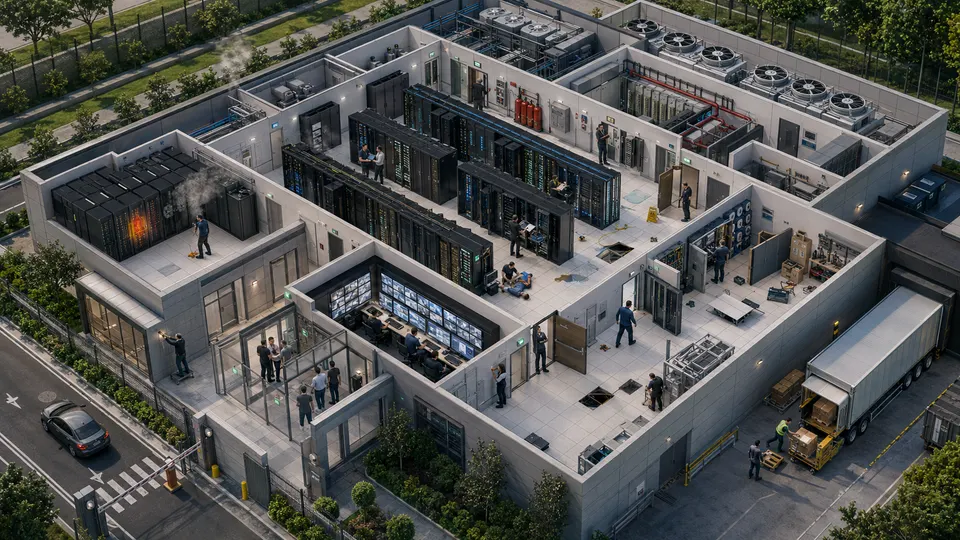
What if the outage does not start with an attack?
13 cases, and in every one of them IRIS raises an alert when something happens. You see each image as it is, and then with what it understands on top.
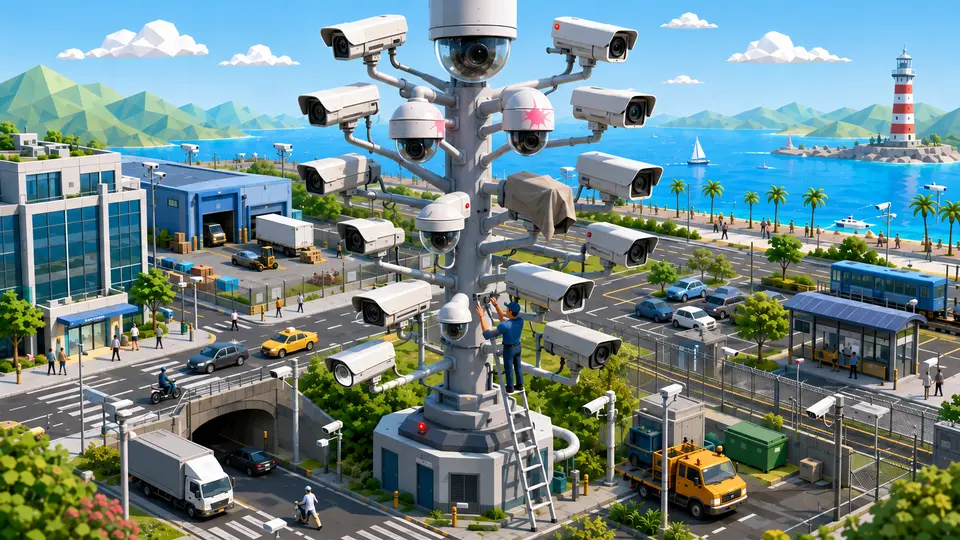
And who watches the cameras?
34 cases, and in every one of them IRIS raises an alert when something happens. You see each image as it is, and then with what it understands on top.


And the best part
Counting is not watching over anyone.It is knowing how many went through, and when.
It is what lets you compare: two Tuesdays, two doors, two seasons. Because it is measured the same way every day, the comparison stands on its own.
Tell us your problem and we will say whether IRIS understands it, or not yet.
We reply the same working day.