Solutions by typeProduction efficiency
What if the label says the opposite of what is inside?
The label says something else
Mid-morning in the nut packing room. Clear bags full of cashews come down the belt one after another, and the labeller sticks the same label on every one: the one from the previous product, which reads «nut free». The reel was not changed at changeover. Nobody has read a single bag since. The first ones are already on the pallet.
7 cameras across 5 sectors
What IRIS is
IRIS watches the cameras for you.
IRIS Neural is an artificial intelligence that watches the cameras you already have and understands what happens in front of them. When something important happens —or something you told it you need to keep an eye on—, it alerts you; and whatever can be counted, it counts in numbers. All day long, without anyone having to watch a screen.
You tell it what you need to watch, and IRIS does it.
Works with the cameras you already have. Nothing to replace.
A person replies, not a form.
- Your footage never leaves your premises.
- It doesn't identify people.
- Certifications →
This is how you ask for it
«Tell me the moment a pack comes out with a label that is not the one for this order, and tell me at the labeller, not at the pallet.»
That mistake is invisible when you open the bag: it only shows when you read it. And the person reading it is someone who avoids nuts because their health depends on it. When it goes off, it goes off completely: a product recall, a notice to the authority, a call to every customer who received the pallet, and an investigation that starts with the most uncomfortable question of all — what time was the reel changed, and who checked it.
You decide once
You decide this once, and quality decides it, not the camera. You say which label belongs to which order, where it gets checked and who is told: at the labeller outfeed, if a pack comes out with a label that is not the current order’s, alert the line manager with a photo of that label and the time. IRIS applies it at every changeover, and does not depend on somebody remembering to read the first bag.
The label is the only part of a product that speaks, which is why a lying label does a different kind of damage from a dent or a tear. A battery pack whose number does not match the body waiting at the station. Two drums with their labels torn off inside the painted square in the yard. Nine pallets ready to ship with identical magenta labels and a tenth with green ones. A parcel that takes the bag chute when its label says another exit. A pallet loaded onto a truck that does not run that route.
It almost always happens at the same moment: the change. The product changes, the order changes, the destination changes, and something from before stays behind. The label reel, the order still open on screen, the pallet that was half built. Nobody lies and nobody cuts a corner: eight things get changed and one stays. What is missing is not willingness, it is a second pair of eyes at the exact minute of the change.
IRIS puts those eyes where they count, at the machine and not at the pallet. It compares the label coming out with the one that should be coming out and flags the first one, with a photo of the label and the time. The difference between alerting there and alerting at pallet control is eight hundred bags. The difference between alerting there and alerting when the customer calls is a product recall.
What changes
Before, the wrong label turned up at pallet control, in the customer’s warehouse or in a phone call, and by then nobody knew where it had started. Now the alert arrives at the labeller itself, with a photo of the wrong label and the exact time. The operator stops, changes the reel and carries on. What used to be a whole batch on hold is now four bags set aside.
Where we have seen it
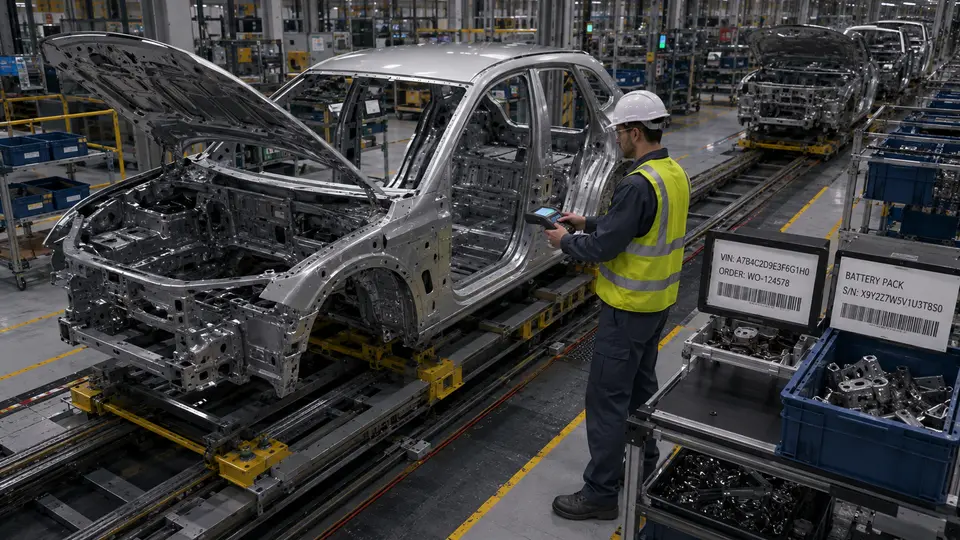
CAM-229The body number and the pack number do not match
«Tell me if the number on the pack label does not match the VIN of the body at the station.»
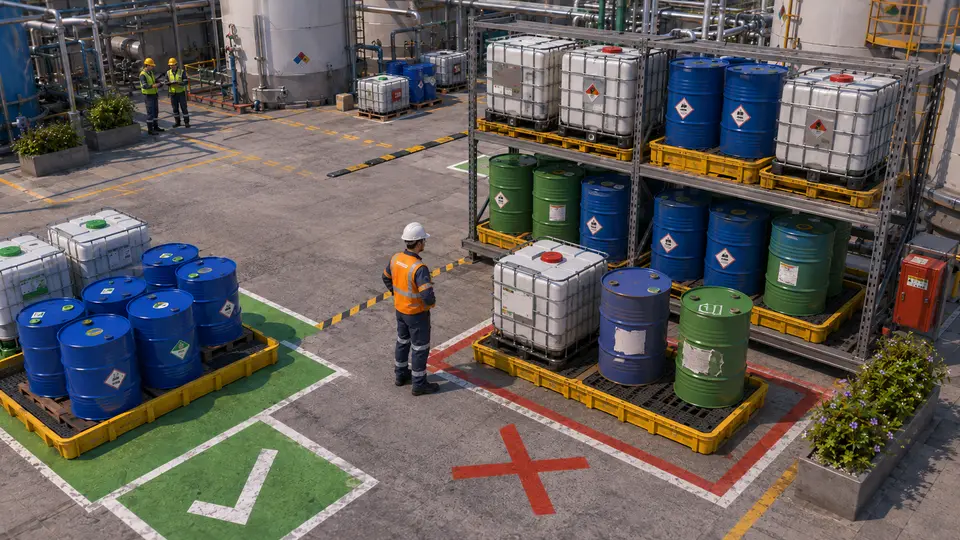
CAM-304Two drums with the label torn off in the marked bay
«Tell me if a container with no readable label turns up in the drum area.»
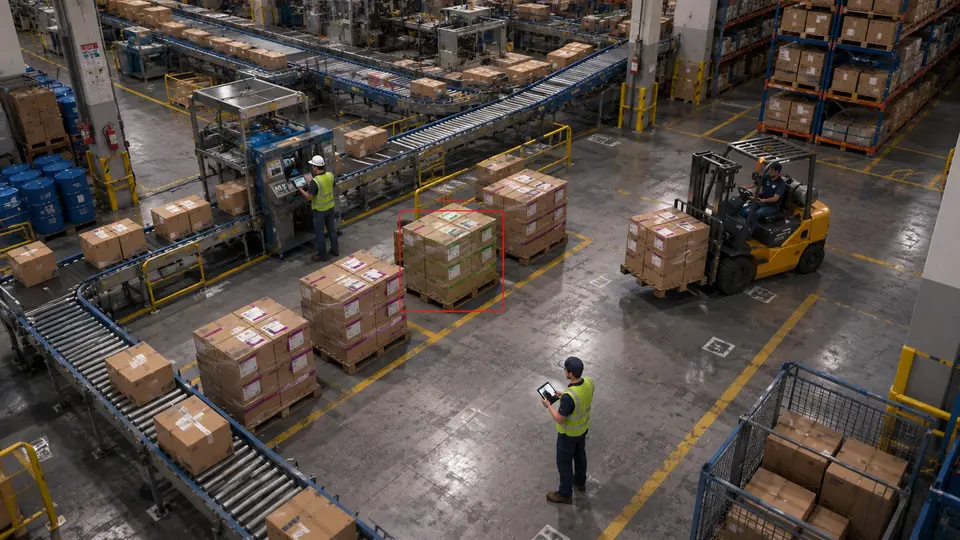
CAM-249One pallet with different labels from all the rest
«Tell me if there is a pallet in the dispatch area with different labels from the rest of the batch.»
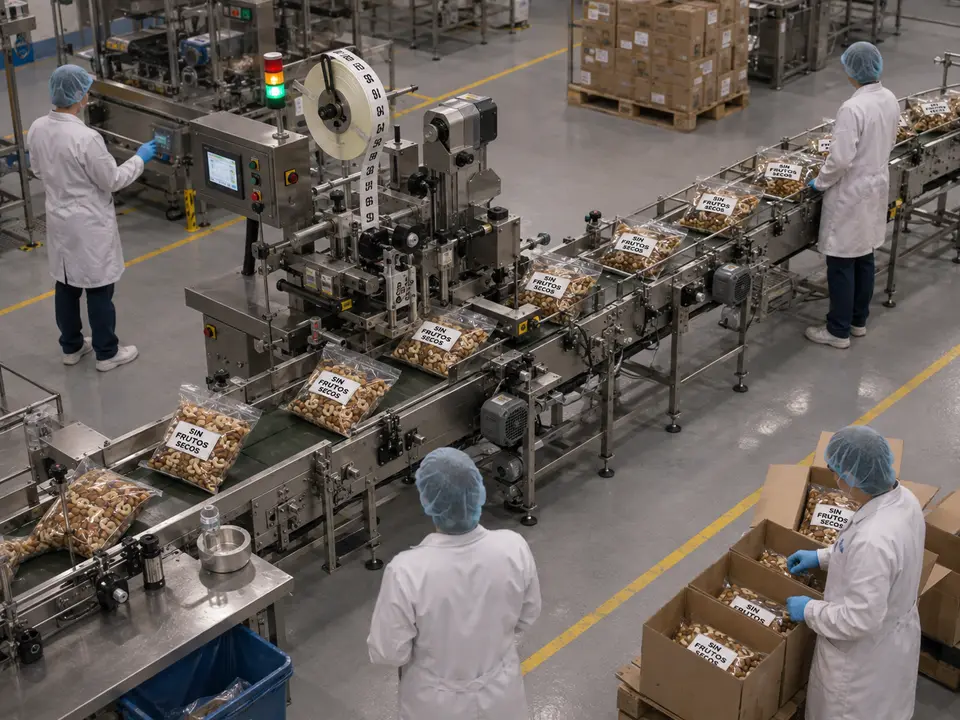
CAM-205A label that says the opposite of what is in the bag
«Tell me the moment a bag comes out with a label that is not the one for this order, and tell me at the labeller, not at the pallet.»
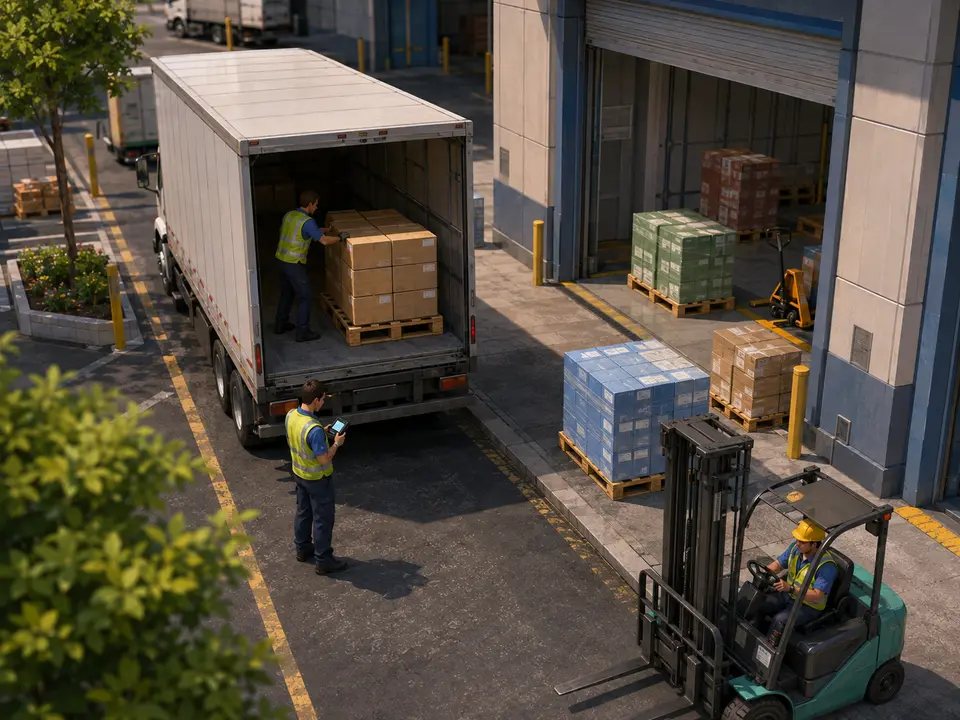
CAM-265The pallet going into the truck is not the one for that route
«Tell me if a pallet goes into the truck with a label that is not on that dock’s loading order.»
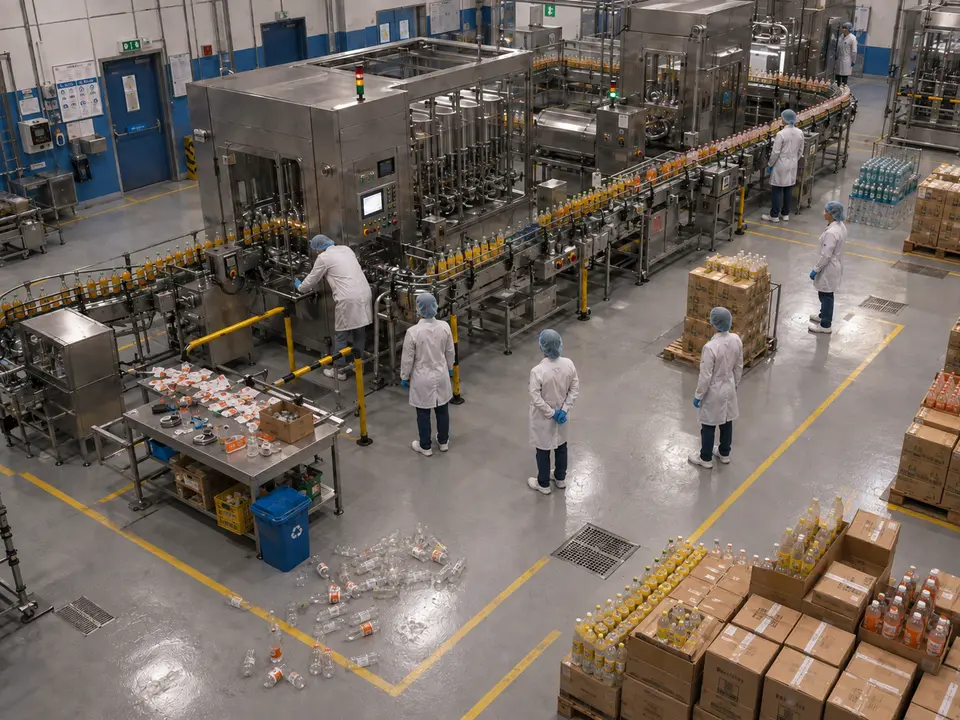
CAM-206The changeover is not finished
«Before we start up, tell me if anything from the previous product is still on the table or on the floor: labels, packs or tooling.»
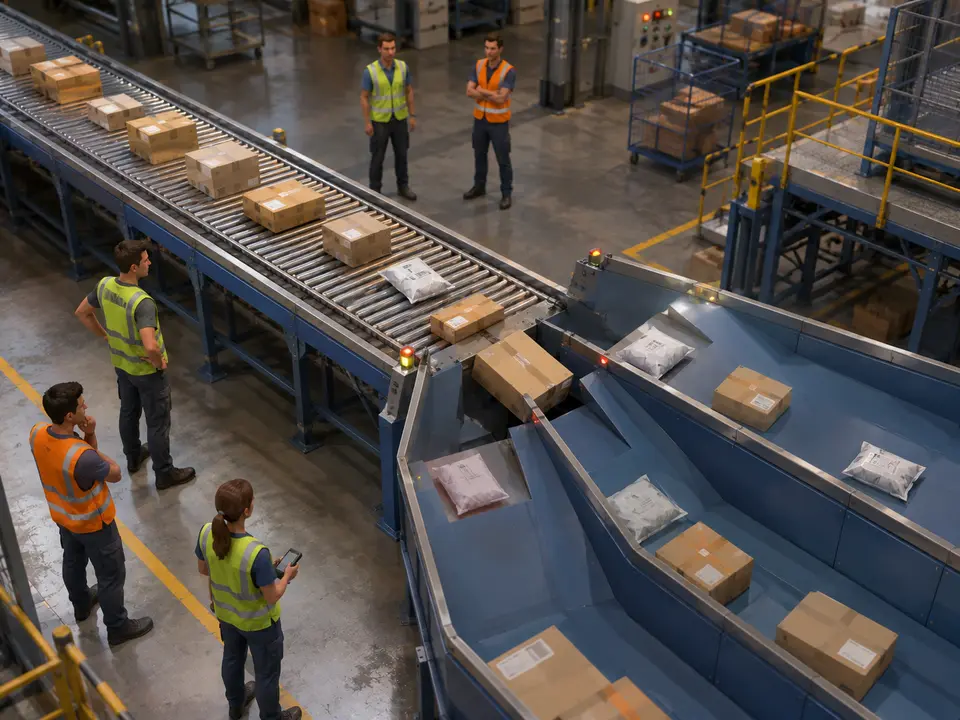
CAM-267A big box dropping into the wrong chute
«Tell me when a parcel drops into a chute that is not the one on its label, and show me the picture of the label.»


What it does not do
IRIS does not read small print from six metres. What it can compare depends on the camera and how big the printing is: colour, format and large text, yes; the ingredient list in six-point type, no.
And to know which label is the right one, it has to be told. If nobody tells it which order is running, IRIS can flag that a label is different from the rest, but not that it is the wrong one.
Questions
- Does IRIS actually read what the label says?
- Yes, when the camera sees it close enough and still enough. At a labeller, with the pack passing nearby under its own light, the code, the reference and the large text can be read. On a hall camera hung six metres up, no: there what stands out is the colour and format of the label, which is often enough to see that one pallet is not carrying the same one as the other nine. Before a rule is accepted, it is tested with the real label and the real camera.
- Does it help prevent an allergen mix-up?
- Yes, for the part that is visible, and it is worth saying which part that is. IRIS checks that the label being applied is the one for the order being run, and flags the first bag that comes out with a different one. That covers the failure the changeover itself creates: the previous product’s reel, left on the machine. What it does not do is analyse the contents: it does not know whether there are cashews or almonds inside. It checks the paper against the order; the contents are guaranteed by your product control.
- Does it need to be connected to our production system?
- It depends what you want it to check. To flag that a pallet carries different labels from the other nine, or that a drum has none at all, nothing needs connecting: it is visible in the image. To flag that a label is not the current order’s, somebody has to tell it which order that is, and that is usually solved with a simple link to the system that already holds the orders. You can start with the first and add the second later.
- What if the label is torn off or unreadable?
- Yes, that is the easiest case of all. A container with no label, or with the label half torn off, is clearly distinguishable from one that still has it, even on a yard camera. In a drum storage area that is worth a lot: an unidentified container is a safety problem before it is a traceability problem, because nobody knows what is inside. The rule is drawn over the area and alerts with a photo of the drum and its exact position.
Demo · IRIS at work
We won't just tell you. We'll show you.
It is a summary of the real screen: it plays by itself, step by step, and shows only the path of one case. The actual tool has far more than fits in here.
- The alert fires
- It lands in the tray
- You open it
- You confirm or dismiss
Not seeing yours here?
These words are the ones we have built, not the ones IRIS understands. The list falls short on purpose: you ask for it in a sentence, and sentences do not run out. Tell us what is in front of your cameras and we will tell you whether it understands it, or not yet.
And the best part
Counting is not watching over anyone.It is knowing how many went through, and when.
It is what lets you compare: two Tuesdays, two doors, two seasons. Because it is measured the same way every day, the comparison stands on its own.
Tell us your problem and we will say whether IRIS understands it, or not yet.
We reply the same working day.