Solutions by typeLogistics efficiency
What if the goods leave through the wrong door?
The wrong place makes no noise
It is 10:20 on the dock apron. A blue trailer has pulled in crooked at the right-hand door, across the yellow lines, and that dock’s light is red. Its booking was for the door next to it. Nobody has noticed, because both doors are open and the yard is busy. The driver climbs down, a forklift rolls up and starts loading what was never meant for that truck.
5 cameras across 4 sectors
What IRIS is
IRIS watches the cameras for you.
IRIS Neural is an artificial intelligence that watches the cameras you already have and understands what happens in front of them. When something important happens —or something you told it you need to keep an eye on—, it alerts you; and whatever can be counted, it counts in numbers. All day long, without anyone having to watch a screen.
You tell it what you need to watch, and IRIS does it.
Works with the cameras you already have. Nothing to replace.
A person replies, not a form.
- Your footage never leaves your premises.
- It doesn't identify people.
- Certifications →
This is how you ask for it
«Tell me when a truck backs into a dock that is not its booking, and tell me which one it should have used.»
Loading is quick; undoing it is not. When the mistake surfaces, sometimes at the customer’s gate three hundred kilometres away, the truck has to come back, a free dock has to be found and the goods have to be turned round again. That dock loses its morning, the next appointment loses its slot and somebody has to call the customer. And back in the warehouse there is a line marked as shipped that is not.
You decide once
You decide this once. You say which docks each booking covers, which doors are outbound and which are not, how much slack is allowed and who gets told: if a trailer backs into a dock that is not its own, alert the yard supervisor with the camera, the plate and the number of the dock it should have used. IRIS applies it across all twenty doors at once, every day, with nobody having to check.
In a warehouse, almost nothing that goes wrong looks like it is going wrong. There is no crash, no alarm, nobody running. There is just one thing in a place that is not its own: a trailer at the dock next door, a cart of modules going out through the side corridor, a cage crossing the dock door with no open dispatch order, a loaded truck heading down the dirt track instead of over the weighbridge. Everything moves normally. Only in the wrong place.
And that is the problem: an open door says nothing. The system does not know which truck belonged at which dock, and the person who would know is looking at something else. Place mistakes are found later, once they have travelled: at the customer’s gate, in the month-end count, or the day a cage is missing and nobody can say whether it was lost or simply left through the wrong door. It is both at once, because on paper a mistake and a theft look so alike that they cannot be told apart. And the correction always comes late for a very simple reason: nobody has the booking list and the door in front of them at the same time. The person in the office has the list and cannot see the yard; the person in the yard sees the yard and does not have the list. Twenty docks fit between those two screens, and that is exactly where the mistake slips through.
IRIS watches the door and compares what it sees with what you decided. It knows which dock was booked, which doors are outbound, which route each cart takes. When something crosses where it should not, it says so while it is happening: camera, time, video and, where there is one, the plate. It accuses nobody. Almost always it is a slip, and a slip corrected in two minutes never becomes a problem: it comes to nothing.
What changes
Before, the mistake surfaced when the truck was already on the road and fixing it cost a whole trip. Now, the moment the trailer settles at the wrong door, the yard supervisor gets the camera and the number of the right dock and walks down before the forklift lifts the first pallet. It gets solved by moving a truck twenty metres, which is what it really cost all along.
Where we have seen it
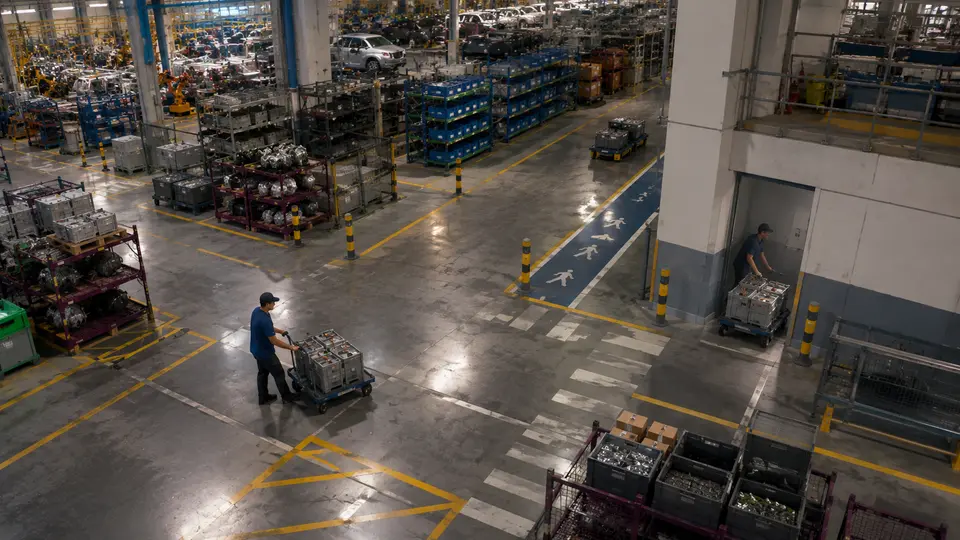
CAM-239A trolley of modules leaves through a door that is not its own
«Tell me if a loaded trolley leaves the store through a door that is not on its route.»
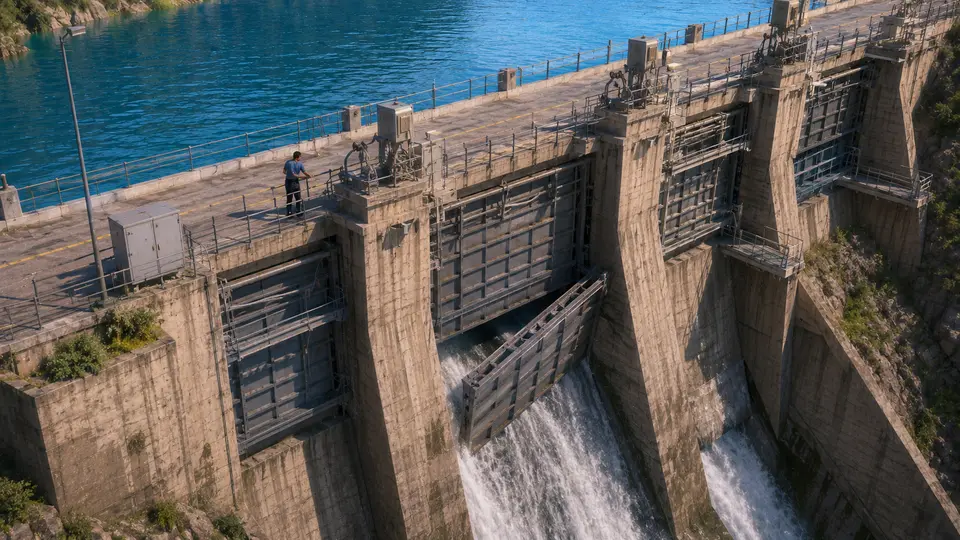
CAM-148A gate that is not seated in its frame
«Tell me when a gate is not where it should be in its frame, and show me the movements it has made this week.»
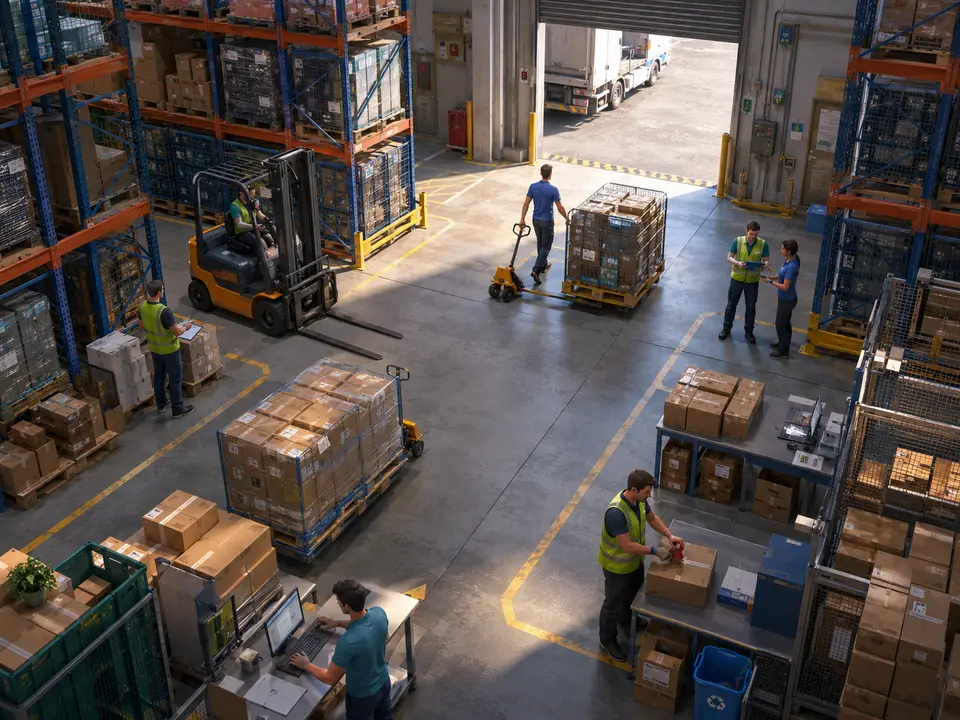
CAM-260A cage goes out through the wrong door
«Tell me when a cage or a pallet goes out through a door that is not the one for its route and there is no outbound order open for those goods.»
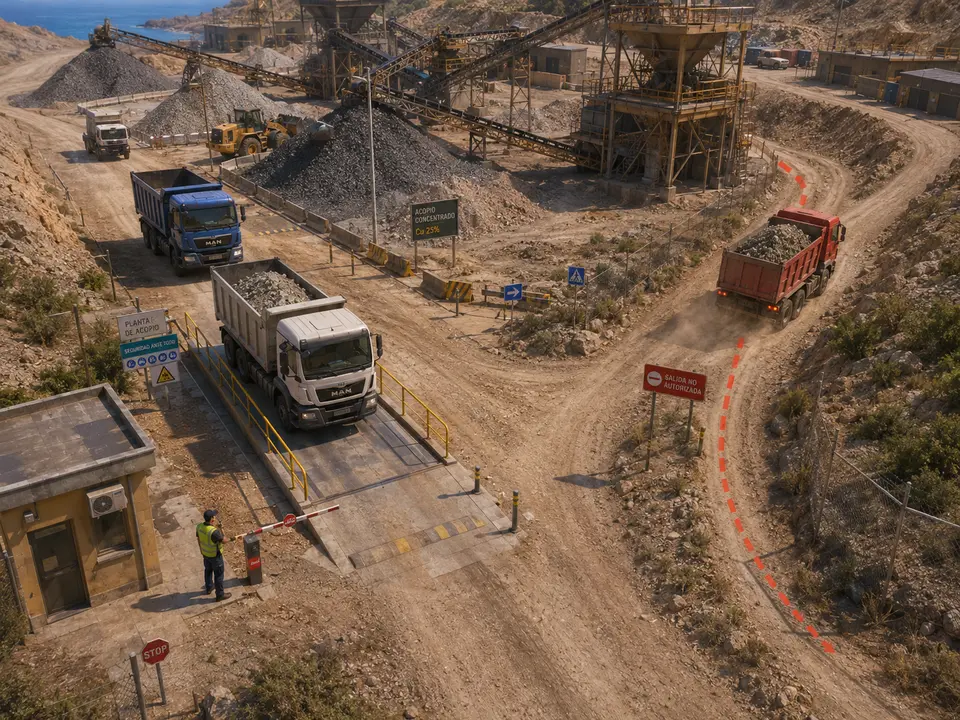
CAM-380A loaded truck leaves by a way that is not a way out
«Tell me if a loaded truck leaves the stockpile by the lower track instead of going over the weighbridge.»
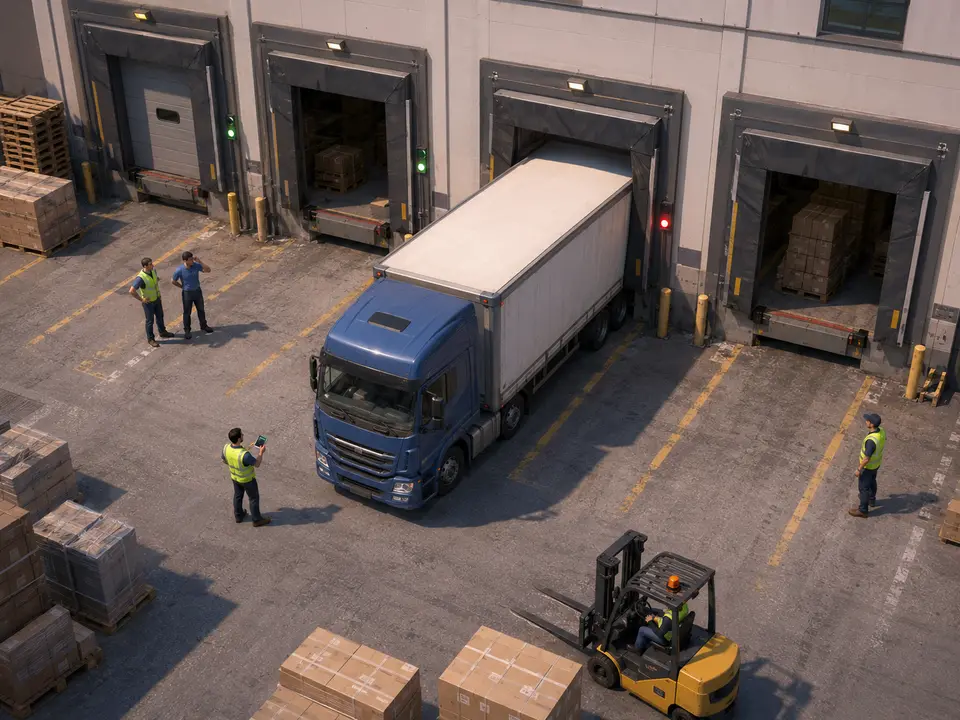
CAM-263The trailer is at the wrong dock
«Tell me when a lorry parks up at a dock that is not the one for its appointment, and tell me which one it should be at.»


What it does not do
IRIS does not know your booking system on its own. It knows which truck is at which dock because you told it which door is which, and if you give us the appointment list it cross-checks against that. Without it, IRIS reports what it sees — a truck at a door marked closed, a departure through a door that is not an exit — but it cannot tell you whose slot it was.
And it stops nothing. It does not close a door, block a forklift or hold a driver. It alerts, and the yard supervisor decides.
Questions
- How does IRIS know which dock that truck should have used?
- Because you told it, once. Each door is marked on the image with its number and its use — inbound, outbound, closed — and if you pass us the day’s appointment list, IRIS cross-checks it against the plate it has read. When a truck settles at a dock that is not its booking, the alert carries the camera, the time, the plate and the number of the right dock, so the yard supervisor does not have to look it up on any screen.
- What if we do not have a booking system?
- It still works, with less detail. Without bookings IRIS cannot tell you which dock was the right one, but it can tell you the rest: that there is a truck at a door marked closed, that a forklift is taking material out through a door that is not an exit, that a loaded vehicle has left by a route that does not pass the weighbridge. Often that is enough, because most place mistakes are about the door, not the timetable.
- Is this about catching theft?
- Not primarily. The vast majority of these alerts are mistakes: haste, a nearer door, an instruction misunderstood. IRIS accuses nobody and labels nobody: it says a cage went out through the wrong door and shows the video. If it also turns out there was no open dispatch order for those goods, that fact comes from your system and a person weighs it up. We do not put labels on people.
- Does it work in a warehouse with twenty docks at once?
- Yes, and that is where it shows most. One person cannot watch twenty doors at once, and the wrong-place mistake always happens at the one they were not watching. IRIS applies the same rule to every camera in the yard at the same time, with no shifts and no breaks, and only speaks up when something falls outside what you decided. The rest of the day it says nothing, which is exactly the point: a system that flags everything flags nothing.
The real interface, step by step
A camera looks. IRIS understands what it sees.
An extract of the real screen, no voice-over and hands-free. Each round poses another situation. What sits behind it is a good deal bigger than what you see.
- It lands in the tray
- You open it
- You confirm or dismiss
Not seeing yours here?
These words are the ones we have built, not the ones IRIS understands. The list falls short on purpose: you ask for it in a sentence, and sentences do not run out. Tell us what is in front of your cameras and we will tell you whether it understands it, or not yet.
And the best part
A recollection cannot be checked.A number can, and it comes out the same every day.
The number does not depend on who was on shift or how they remember it. It is measured the same way every day, and that is why people counting is certified by the Centro Español de Metrología.
Tell us your problem and we will say whether IRIS understands it, or not yet.
We reply the same working day.