Solutions by typeEnvironment and cleanliness
Who raises the alarm when a slick appears and nobody is watching the sea?
By the time you see it from the beach, it is late
It is 07:10 on a Tuesday in August. The harbour mouth is calm and a dark stain sits on the turquoise water, covering half the bay. Its edge already touches the stones on the shore, fifty metres from the first parasols. The lifeguard tower opens at nine. Nobody has called yet. The camera on the breakwater has been recording it since it was a thin trail behind a boat on its way out.
2 cameras across 2 sectors
What IRIS is
IRIS watches the cameras for you.
IRIS Neural is an artificial intelligence that watches the cameras you already have and understands what happens in front of them. When something important happens —or something you told it you need to keep an eye on—, it alerts you; and whatever can be counted, it counts in numbers. All day long, without anyone having to watch a screen.
You tell it what you need to watch, and IRIS does it.
Works with the cameras you already have. Nothing to replace.
A person replies, not a form.
- Your footage never leaves your premises.
- It doesn't identify people.
- Certifications →
This is how you ask for it
«Alert me in red if a dark surface appears on the water and grows.»
The alert usually comes from a swimmer, and by then the slick has been spreading with the current for half an hour. Closing the beach, calling the port authority, working out which boat left at that time, getting the booms out: everything starts late. And the clean-up gets dearer by the minute, because a slick that wide is no longer contained, it is chased.
You decide once
The port decides once: which stretches of water matter, how big a stain has to be to raise an alert, and who gets the call at seven on a Sunday morning. IRIS applies that rule on every shift, every day of the summer, without anyone explaining it again. If the slick grows, the alert steps up. If it holds still, it is logged with its time and camera to be judged calmly.
A small-town port has no wall of screens. It has an office with two people who also work the radio, charge for moorings and answer the phone. The cameras are up and they record well, which is why the video always turns up after the fact. Having the video was never the problem: the slick appears at seven in the morning and the video gets watched at eleven.
IRIS watches that sheet of water all the time. It is not looking for boats or people: it is looking for a dark surface that was not there before and is getting bigger. When it finds one it opens the camera, says which minute it started and puts the previous hours within reach, which is where you see what left through the harbour mouth just before. The alert does not say what it is or whose it is. It says where it is, since when, and which way it is spreading.
The same word works inland. At an unstaffed substation, the dark glossy stain running down from a transformer base and across the slab is exactly the same alert: something dark where there used to be grey. No swimmers there, but there is oil going into the drain and a transformer running out of it. And the next maintenance visit is three weeks away.
What changes
This used to be reported by whoever happened to be there: a skipper coming in, a lifeguard, a neighbour with a phone. And it arrived the way those things do, with no exact time and no exact spot, sometimes half a morning later.
Now the alert comes from the camera itself, with the minute it started, an image of how the water looked before, and the video already kept. Whoever picks it up does not start by searching. They start by looking.
Where we have seen it
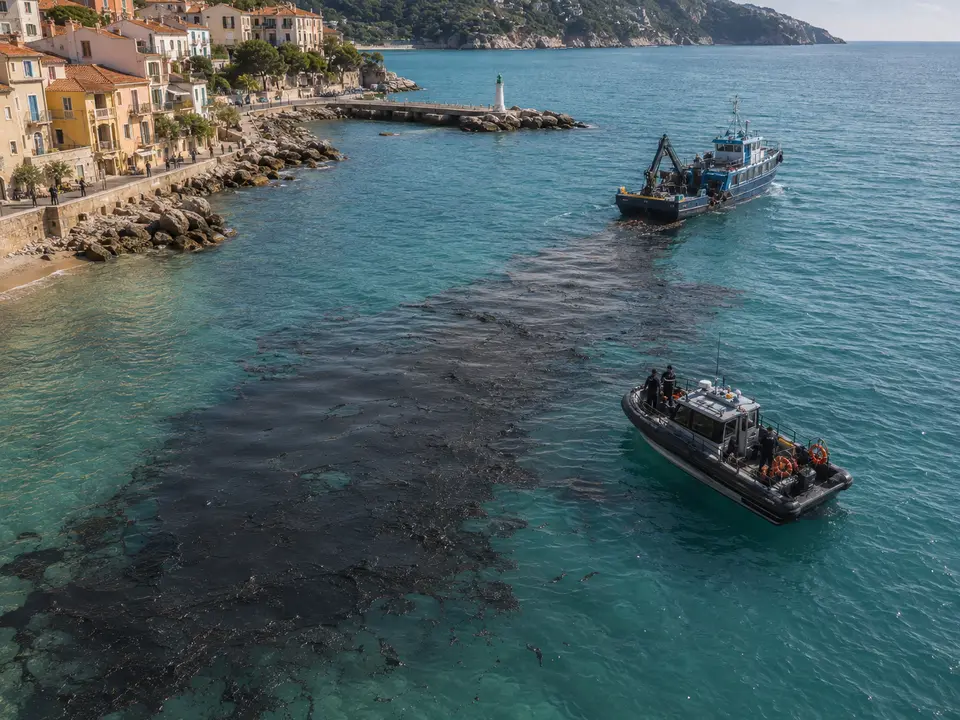
CAM-569A dark slick moving towards the town beach
«Give me a red alert if a dark surface appears on the water and grows.»
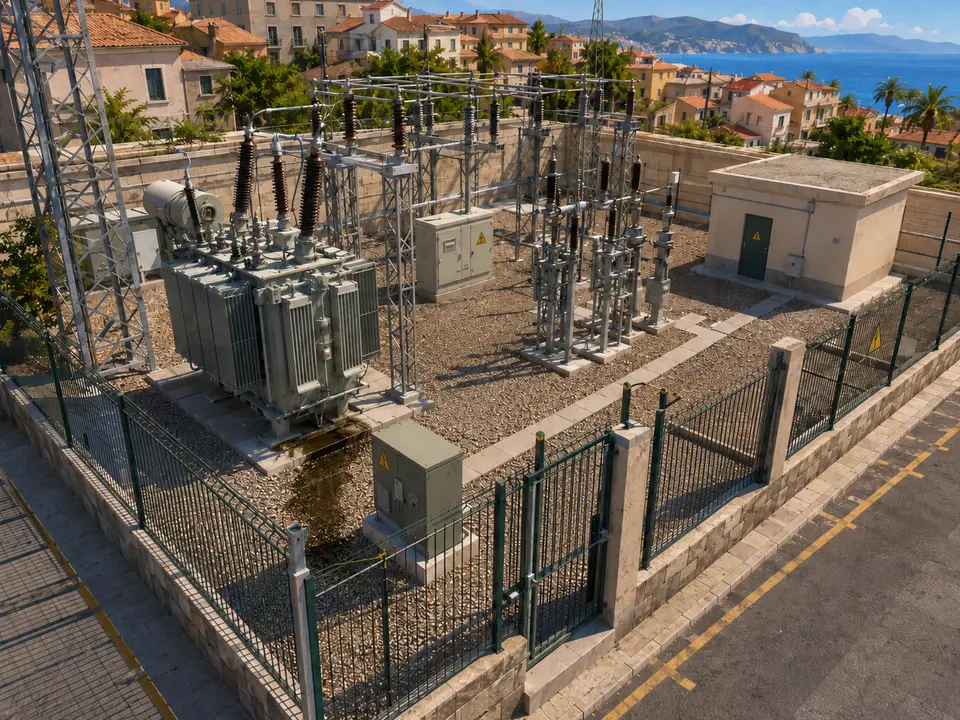
CAM-345A trail of oil under the transformer
«Tell me if a dark stain shows up on the ground under any transformer and it was not there in the earlier pictures.»


What it does not do
IRIS does not say what the stain is. It does not know whether it is diesel, hydraulic oil, bilge water or an algae bloom, and it will not pretend to: that is for whoever goes and looks, or for the lab.
Nor does it know whose it is. It sees a dark surface that was not there, says where it is and since when, and keeps the earlier video within reach.
Questions
- Does IRIS know whether it is diesel or algae?
- No, and it will not pretend to. IRIS sees a dark surface on the water that was not there before and is growing; it analyses nothing. Telling a hydrocarbon from an algae bloom, from cloud shadow or from a seagrass bed is the job of whoever goes and looks, or of the lab that tests the sample. What that person gains is half an hour: they arrive while the slick can still be contained, not once the current has spread it.
- Does it work the same at night?
- Not the same as by day, and it is better said before the demo. A slick shows up because it changes the colour and the sheen of the surface, and that needs light. With normal harbour lighting you see what sits under the floodlights and little else: the rest of the mouth is dark. It can be solved with the right camera in the right spot, but that is decided before installing, not promised afterwards.
- Does it work for a stain on the ground, not on water?
- Yes. It is the same alert written over a different surface: a dark glossy stain under a transformer, a trickle at the foot of a tank, a sheen on a slab that used to be dry. At an unstaffed substation that can sit there for days with nobody seeing it, until the next maintenance visit. The rule reads the same: if something dark appears where there was nothing, alert me, and keep how it looked before.
- Can it say who spilled it?
- No. IRIS does not identify people, does not recognise faces and does not name culprits. What it does is keep the previous hours from that camera within reach, which is where you see what came in and what went out of the harbour mouth before the slick appeared. With that, whoever has to open the case starts with material; without it, they start by asking who was on duty. Naming who did it is not a camera’s job.
Demo · IRIS at work
We won't just tell you. We'll show you.
It is a summary of the real screen: it plays by itself, step by step, and shows only the path of one case. The actual tool has far more than fits in here.
- The alert fires
- It lands in the tray
- You open it
- You confirm or dismiss
Not seeing yours here?
These words are the ones we have built, not the ones IRIS understands. The list falls short on purpose: you ask for it in a sentence, and sentences do not run out. Tell us what is in front of your cameras and we will tell you whether it understands it, or not yet.
And the best part
Nobody was hired to stare at a screen.They were hired to know what to do.
Watching is what a machine does best; deciding is what only a person does. IRIS watches all four thousand at once and hands over only what calls for a decision.
Tell us your problem and we will say whether IRIS understands it, or not yet.
We reply the same working day.