Solutions by typeLogistics efficiency
Did the number of parcels match the order?
Twenty-two go out and the order says twenty-four
It is 17:15 at the outbound dock. The curtain-sider is half loaded with its door open. On the ground beside the truck, two pallets of boxes have been left behind. A supervisor with a tablet looks at them, counts with his finger and starts again. The order says twenty-four parcels; twenty-two have crossed the door. The truck leaves in ten minutes and nobody yet knows whether two are missing or two were counted twice.
4 cameras across 4 sectors
What IRIS is
IRIS watches the cameras for you.
IRIS Neural is an artificial intelligence that watches the cameras you already have and understands what happens in front of them. When something important happens —or something you told it you need to keep an eye on—, it alerts you; and whatever can be counted, it counts in numbers. All day long, without anyone having to watch a screen.
You tell it what you need to watch, and IRIS does it.
Works with the cameras you already have. Nothing to replace.
A person replies, not a form.
- Your footage never leaves your premises.
- It doesn't identify people.
- Certifications →
This is how you ask for it
«Count the parcels that cross this dock door and tell me at closing whether they match the order.»
A two-parcel mismatch costs more than two parcels. Either the truck is held or it leaves with the doubt, and both ways you pay: it misses its delivery window, or it arrives with a claim already open. Then come the hours somebody spends searching the video, the email with the customer and a stock line nobody knows how to close. And next month it happens again, because counting by hand in a hurry always fails the same way.
You decide once
You decide this once. You say where the counting line goes, what counts as one parcel — a pallet is one, a loose box is one — when the count closes and who is told if it does not match: when the dock door closes, if the number does not match the order, alert the supervisor with the video of the last parcels. IRIS applies it at every door and every day, with the same criterion.
Counting is the oldest job in the warehouse and the one done worst. It is done with a finger, with a tablet in the other hand, with the driver waiting and the door open. And it does not fail through carelessness: it fails because counting while you do something else is impossible. That is why the mismatch always shows up at the end, when there is no time left to fix it, and why every warehouse has a folder of incidents that starts with the word missing.
Counting and asking are not the same thing. An alert is set up by speaking: tell me if somebody walks into the loading area without a vest. A count is not: you cannot describe a line with a sentence, you have to draw it. That is why counting is configured by drawing on the camera image — here is the line at the door, this counts as a parcel, this does not — and that is why the number is repeatable and auditable, and can be put in front of a customer. And drawn counting has an advantage that shows up over a month: it does not depend on who is on that day. The criterion is the same with the regular team, with the seasonal extras and with the night shift. And when something does not add up, the disagreement stops being between two people who remember it differently and becomes one between two numbers you can look at.
IRIS counts what crosses that line while people load, without anyone stopping their work. When the dock closes, the number is there: twenty-two, with the time of each one and the video of any you want to review. If the order says twenty-four, the alert arrives before the truck pulls away, which is when two parcels are still two parcels and not a claim. IRIS does not know what is inside the boxes and does not need to: it counts how many go through.
What changes
Before, the count was done by a person who was also loading, and the result was known once the truck had gone. Now the number builds itself while loading goes on, and it is on the screen when the door closes. The supervisor stops counting and starts checking: he looks at the two parcels in doubt, watches the video and decides. It is the same job, done in a minute instead of twenty.
Where we have seen it

CAM-593Twenty-two minutes waiting for assistance to arrive
«Tell me if somebody has been at the assistance point for more than twenty minutes with nobody from the service arriving.»
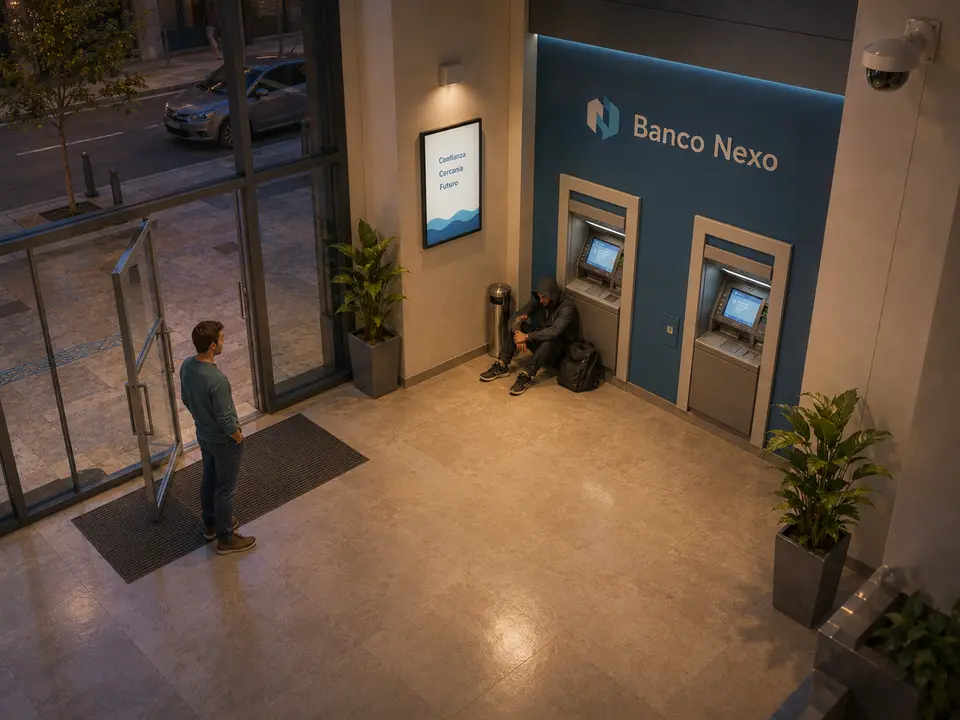
CAM-515Someone has been in the ATM lobby for twenty-two minutes
«Tell me if anyone stays more than fifteen minutes in the ATM lobby between ten at night and seven in the morning, and tell me how many people are inside.»
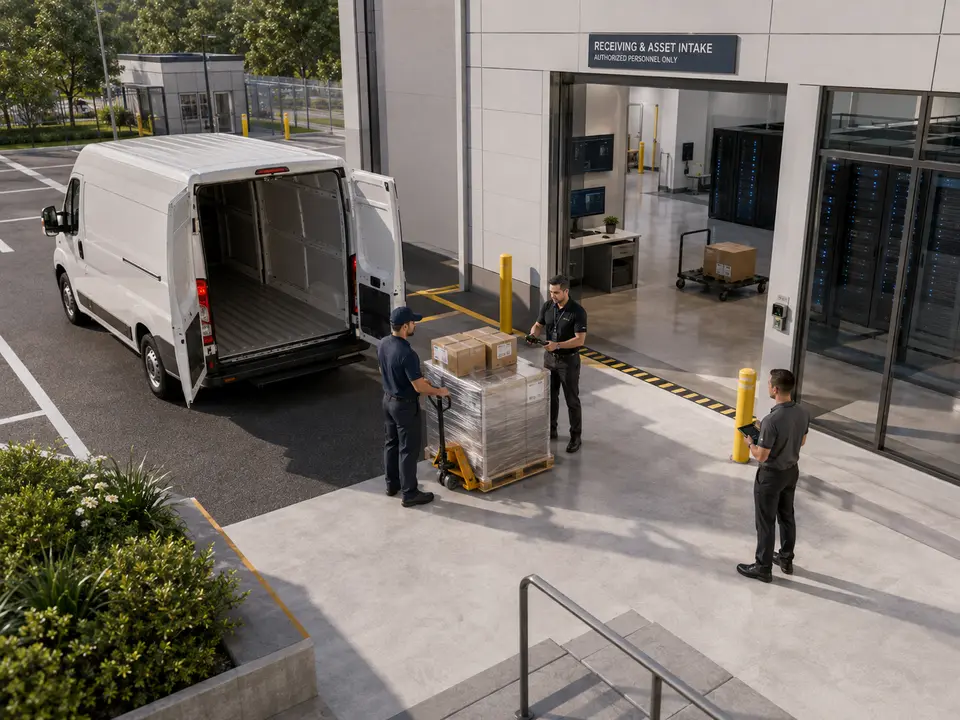
CAM-556Goods coming in at the dock, and the door has been open six minutes
«Tell me if the dock doorway has been open for more than five minutes during an unload, and tell me how many packages have gone in.»
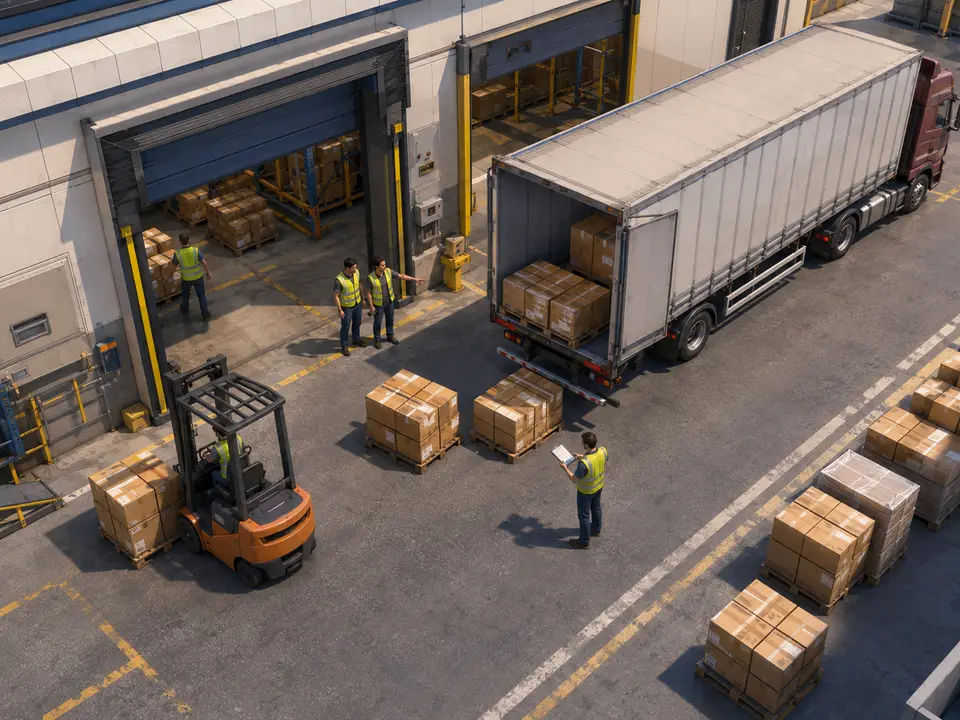
CAM-266Twenty-two units go out and the order says twenty-four
«Count the units crossing this dock’s door and tell me at closing whether they match the order.»


What it does not do
IRIS does not know what is inside a box. It counts parcels, not contents: if three units are missing from a pallet, IRIS still sees one pallet. Contents are your system’s job, and what IRIS adds is the video of the moment that pallet crossed the door.
And it counts what crosses the line you drew. If a parcel leaves by another door, it is not counted there. That is why counting is done door by door with a fixed criterion: changing the line halfway through the month is changing the number.
Questions
- Is it as reliable as counting by hand?
- Yes, and above all it is more consistent. A person counts the first ten parcels well and the last forty worse, because they are loading at the same time. IRIS counts number one the same way as number one hundred, and leaves the video of each crossing, so checking is not arguing from memory: it is opening second 14:32:07 and looking. Where it needs tuning is the odd cases — two parcels stuck together, one that comes back — and that is why the criterion is agreed at the start.
- Does the number stand up in an audit?
- Yes, because it is measured by drawing and not by opinion. The counting line is fixed on the image, the criterion for what counts as a parcel is written down, every crossing has its time and its video, and counting twice gives the same result. That is exactly what an audit asks for: not a pretty number, but a number that can be reproduced. It is the same principle by which a people count can be certified: what can be reproduced can be verified.
- Does it count people too, not just parcels?
- Yes, and by the same mechanics. The same line that counts boxes counts people crossing a door, and the same zone that measures a dock measures how many people are in a lobby or how long somebody has been waiting at an assistance point. IRIS does not know who anyone is and does not recognise faces: it counts how many and for how long. When that number falls outside what you decided, it alerts; the rest of the time it is just a number in the table.
- What if a parcel crosses the door twice?
- IRIS follows it, it does not just watch it go by. If a pallet goes out, comes back in and goes out again, the criterion is whatever you agreed: count the net — what left minus what came back — or count every crossing. What matters is that it is decided once, written down and not changed halfway through the month. A number is only worth something if the criterion is the same on Monday as on Thursday, and that is the part most often neglected when counting by hand.
Demo · IRIS at work
We won't just tell you. We'll show you.
It is a summary of the real screen: it plays by itself, step by step, and shows only the path of one case. The actual tool has far more than fits in here.
- The alert fires
- It lands in the tray
- You open it
- You confirm or dismiss
Not seeing yours here?
These words are the ones we have built, not the ones IRIS understands. The list falls short on purpose: you ask for it in a sentence, and sentences do not run out. Tell us what is in front of your cameras and we will tell you whether it understands it, or not yet.
And the best part
Adding a camera costs what it costs;adding someone to watch it costs every single month.
Past a certain number, almost nobody is watching anything. IRIS watches them all at once and only calls you when something you said mattered happens in one of them.
Tell us your problem and we will say whether IRIS understands it, or not yet.
We reply the same working day.