Solutions by typePersonal safety
What if the guard door is left open?
The guard is open, the part still inside
It is 16:40, afternoon shift at the press. The part comes out skewed and jams in the die. Freeing it with the machine locked out takes four minutes; opening the guard door and reaching in takes ten seconds. The door is left wide open, with the part still inside. Nobody closes it again. The press is still ready to come down the moment it gets the order.
5 cameras across 4 sectors
What IRIS is
IRIS watches the cameras for you.
IRIS Neural is an artificial intelligence that watches the cameras you already have and understands what happens in front of them. When something important happens —or something you told it you need to keep an eye on—, it alerts you; and whatever can be counted, it counts in numbers. All day long, without anyone having to watch a screen.
You tell it what you need to watch, and IRIS does it.
Works with the cameras you already have. Nothing to replace.
A person replies, not a form.
- Your footage never leaves your premises.
- It doesn't identify people.
- Certifications →
This is how you ask for it
«Tell me if the press guard is left open with a part still in the die.»
Today nobody sees this. The opening leaves no trace in the shift report and the press goes back to producing as if nothing happened. The cost shows up elsewhere: the same part jams fourteen times a week and not even the line manager knows, because each jam is cleared in ten seconds and forgotten. And the day the machine comes down with an arm inside, the cost is a hand, a line stopped for a month and a case that runs for two years.
You decide once
The plant decides once what is unacceptable on that machine, and IRIS applies it across all three shifts. If the guard is open, for more than a few seconds, and there is a part in the die and the machine is still signalling that it runs, then the line manager is alerted, the camera opens and the video from before the jam is kept. Nobody has to remember that rule every afternoon: it is written once and still runs on Sunday night.
A guard is the only thing between a hand and a machine that weighs tonnes. It is also the thing most in the way when there is a rush. So it gets opened, propped, left ajar or bypassed: not out of recklessness, but because the job is against the clock and opening is always faster than stopping. Not a trace of it appears in the shift report. In the video, it does.
The day it goes wrong there is no warning. A shear starting its cycle, a press coming down, a recycling baler clearing itself and pressing again. What was inside was a pair of arms. No reaction is possible: between the machine moving and the hand coming out there is no human time. And the person it happens to is almost never the new hire. It is the one with fifteen years who knows the machine so well that he trusts it.
IRIS watches the guard door and the opening of the die. It sees whether the guard is open, whether a body is in the opening, whether the machine is still signalling that it is live. When those three line up, it says so at once. And because it also keeps count, by Friday you know which press has been opened fourteen times and at what point in the cycle. Almost always the answer is not the person: it is the part that keeps jamming.
What changes
Before, if someone asked how often that guard gets opened, the answer was an opinion. The video got watched if there had been an accident, and only then. Now there is a list with the time of every opening and the video of each one, and in the Friday meeting you can see that thirteen of the fourteen happen at the same point in the cycle. That stops being a safety talk and becomes a change to the tooling.
Where we have seen it
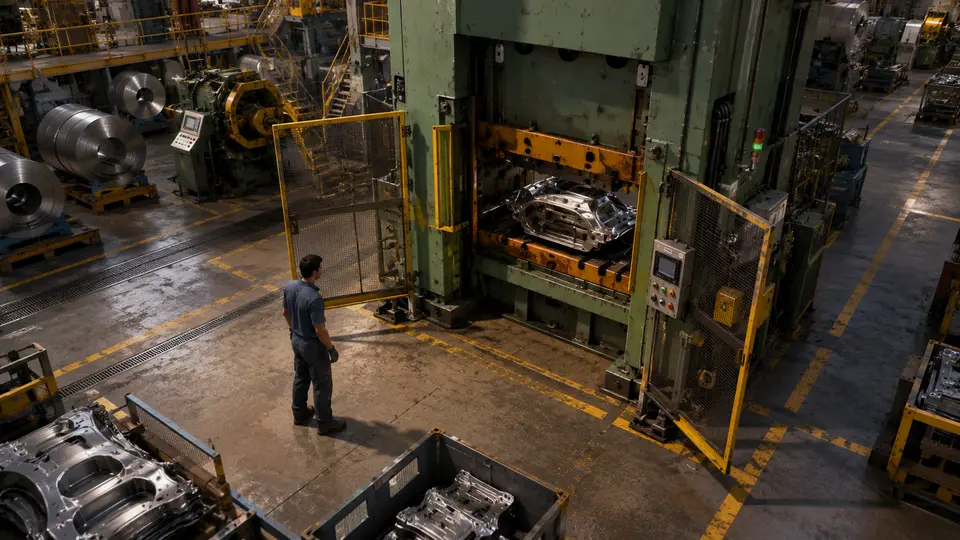
CAM-234The press guard, standing wide open
«Tell me if the press guard is left open with a part inside the tool.»
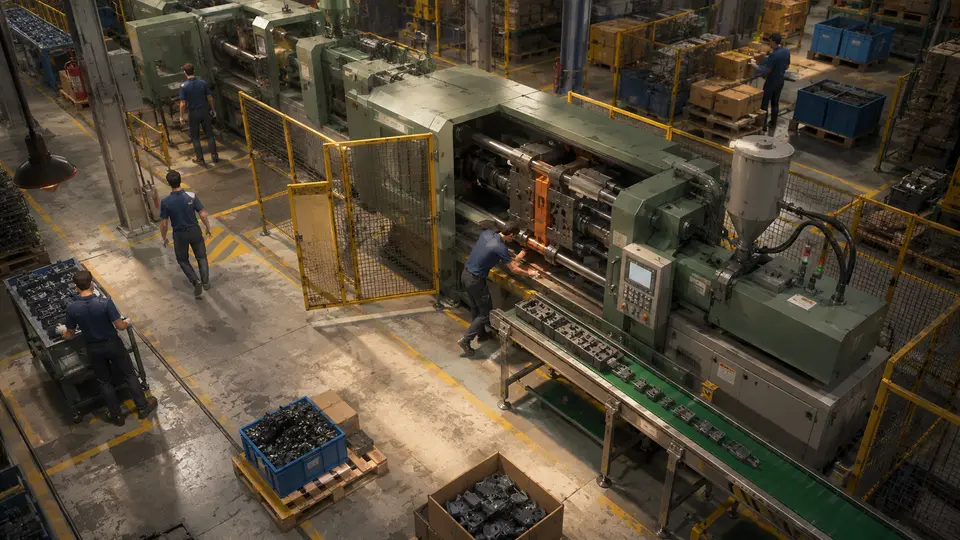
CAM-251The guard door is open and there are hands inside the machine
«Alert me straight away if someone comes through the guard gate or reaches into the mould area while the machine is not locked out.»
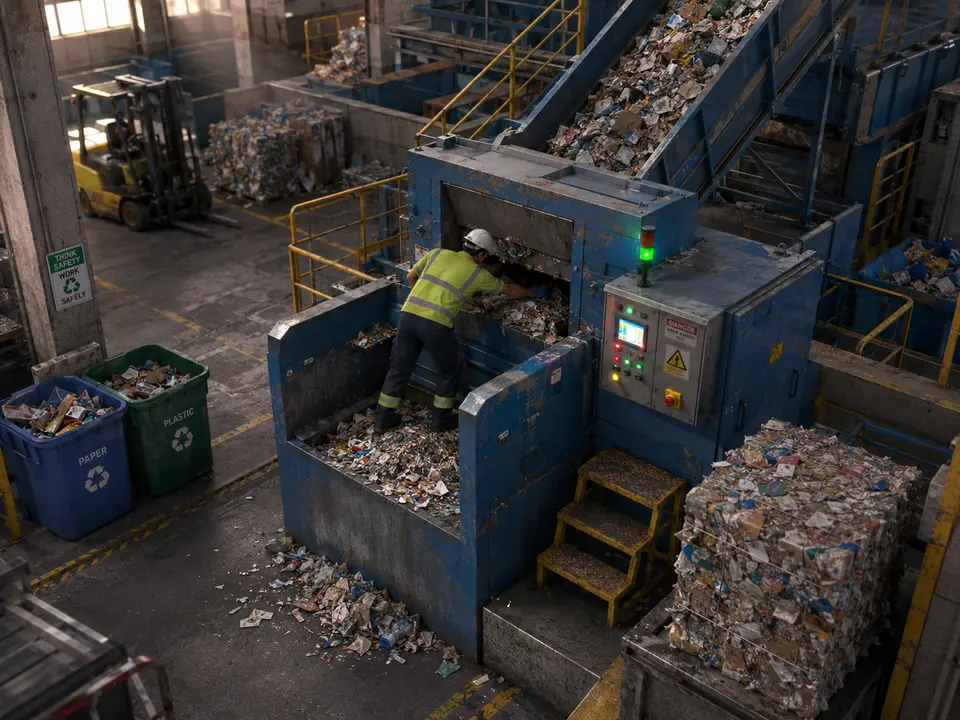
CAM-432He is clearing a jam with the press still live
«Tell me if someone puts their body inside the press and the machine is not stopped and locked off.»
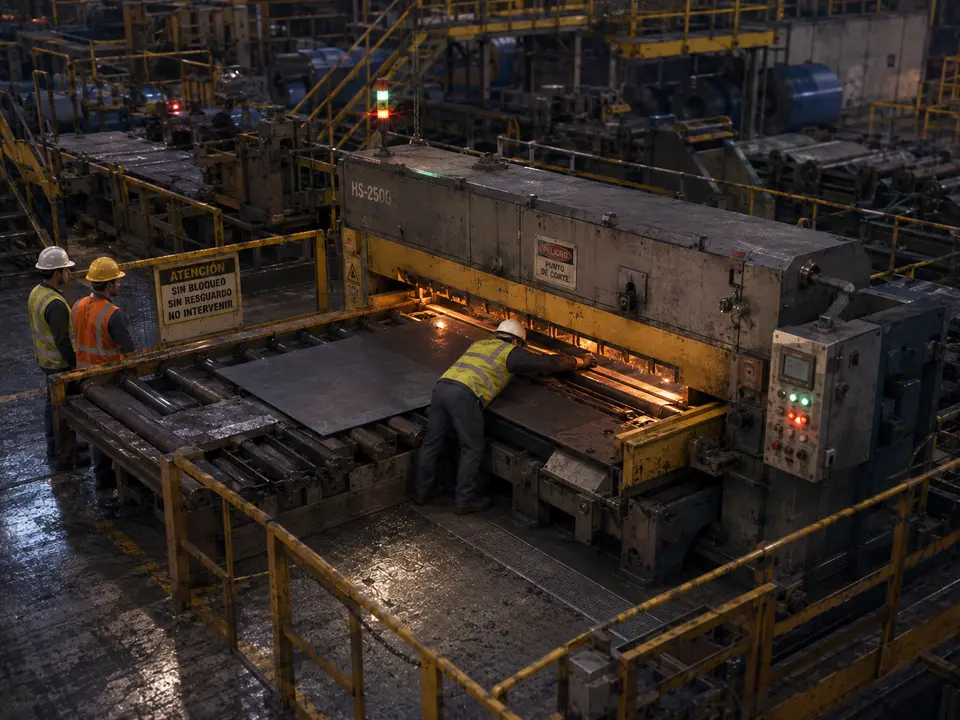
CAM-376Arms inside the shear, with the machine still live
«Tell me if anybody puts their hands in the shear with the guard open and the machine not locked out.»
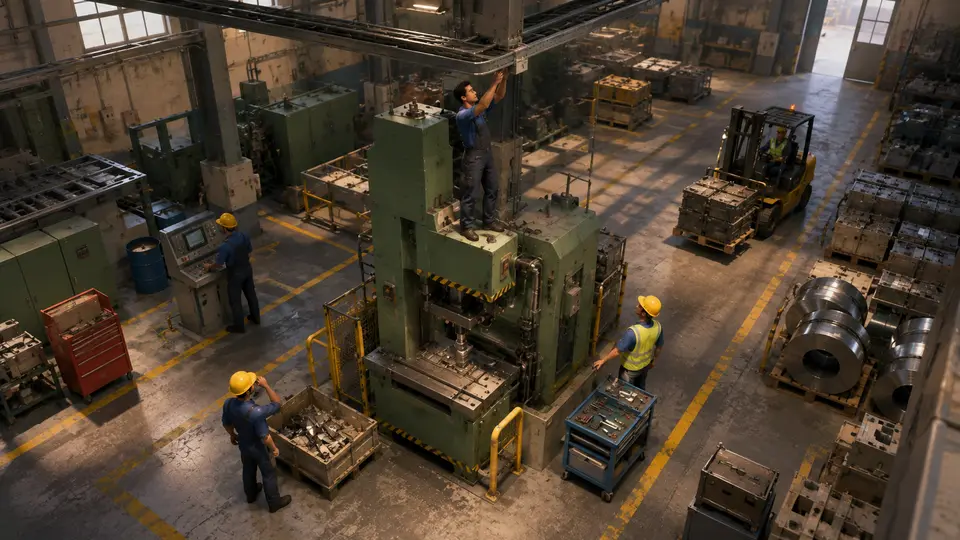
CAM-257Somebody is standing on top of the press
«Tell me if somebody climbs on top of a machine or works at height without a harness.»


What it does not do
IRIS cannot see inside the machine or know whether it is genuinely locked out. It works with what is visible from outside: the open guard, the body in the opening, the running signal.
And it does not replace an interlock or a light curtain. Those are what physically stop the machine from moving, and they remain the first line. IRIS is the eye, not the brake.
Questions
- Does IRIS replace the machine’s safety guarding?
- No. The interlock and the light curtain are what physically stop the machine from moving, and they remain the first line. IRIS is the eye that notices that today this guard has been open for twenty minutes with someone in front of it. It surfaces the exception the same day; it does not authorise work or sign off a machine. If you have to choose between the two, choose the guarding.
- Can you know how often a guard gets opened?
- Yes, and it is usually the figure that changes things most. A single alert gets argued about; fourteen openings of the same press in one week, always at the same point of the cycle, do not. That stops being a behaviour problem and becomes a problem with the part, the tooling or the pace. Fix the cause and the openings disappear on their own, with no need for another safety talk.
- Does it alert when the guard is opened for a tool change?
- No, not unless you want it to. A tool change is a planned opening, and the rule can be asked for only when a part is still in the die and the machine is still signalling that it runs. With the press stopped and locked out, those conditions are not met and nothing fires. The rule can also be limited to production hours. The idea is that IRIS only speaks when there is something to look at.
- Can IRIS stop the press?
- No. IRIS alerts; stopping a machine is a decision for a person or for a safety system designed and certified to do it. The alert can reach whoever runs the line at that very moment, with the camera open and the video from before the jam, and that is what lets them decide properly. A machine that stops by itself at the wrong moment creates a risk of its own.
Demo · IRIS at work
We won't just tell you. We'll show you.
It is a summary of the real screen: it plays by itself, step by step, and shows only the path of one case. The actual tool has far more than fits in here.
- The alert fires
- It lands in the tray
- You open it
- You confirm or dismiss
Not seeing yours here?
These words are the ones we have built, not the ones IRIS understands. The list falls short on purpose: you ask for it in a sentence, and sentences do not run out. Tell us what is in front of your cameras and we will tell you whether it understands it, or not yet.
And the best part
You have cameras to spare.What you run out of is eyes to watch them.
One person can follow two or three screens. Nobody can follow forty. IRIS watches them all and speaks up when someone needs to decide.
Tell us your problem and we will say whether IRIS understands it, or not yet.
We reply the same working day.