Solutions by typeIntrusion detection
What if something turns up that nobody carried in through the door?
A bag that was not there before
It is 18:05. A blue backpack on the ground at the foot of the perimeter wall, a few steps from the gate. In the 17:50 frame it was not there. In the 17:58 frame it was. There is nobody around: not the person who left it, not the person waiting for it. It is Friday, and the guard who does the seven o’clock round has not left the gatehouse yet. Opposite there is a bin and, beyond it, the waste ground you can walk across from the bus stop.
2 cameras across 2 sectors
What IRIS is
IRIS watches the cameras for you.
IRIS Neural is an artificial intelligence that watches the cameras you already have and understands what happens in front of them. When something important happens —or something you told it you need to keep an eye on—, it alerts you; and whatever can be counted, it counts in numbers. All day long, without anyone having to watch a screen.
You tell it what you need to watch, and IRIS does it.
Works with the cameras you already have. Nothing to replace.
A person replies, not a form.
- Your footage never leaves your premises.
- It doesn't identify people.
- Certifications →
This is how you ask for it
«Tell me if a bag appears against the wall or the gate and is still there a few minutes later.»
Almost always it is nothing: a bin bag, a forgotten backpack, a piece of cardboard. But while you do not know, it costs the same. Someone walks over, looks, calls on the radio and, at worst, a walkway is closed or a building evacuated over a bag. And the video afterwards helps less than you would think: to find out when it appeared you have to rewind six hours staring at a wall. The expensive part is not the bag: it is not knowing when it started.
You decide once
You decide this once. You say which strips of ground are watched — the foot of the wall, the gate, the platform —, how many minutes the object has to stay before it alerts, at what hours and who receives it. Two minutes in a busy lobby and fifteen at a back wall are not the same problem, and so they are not the same rule. IRIS checks it all day, including Friday at six.
Throwing something over a wall is the oldest way there is of getting something into a closed place. A yard, a school at night, a depot whose fence backs onto waste ground. Nobody comes in, nobody forces anything and no alarm goes off, because alarms are fitted for people and for doors, not for the ground. What moved is a bag, and a bag opens nothing.
The same rule catches the opposite case, in the same words: something left behind by someone who walked away. And here it is worth being clear about what IRIS gives you and what it does not. It does not say «danger», because it does not know. It does not say «suspicious», because it will never say that about anyone. What it gives is a before and an after, with a time: at 17:50 it was not there, at 17:58 it was, and here are the eight minutes in between.
That clip is what turns an hour of patrolling into a two-minute decision. Whoever watches it sees whether it was left by a courier who came back for it, a neighbour who sat down to smoke, or someone who walked off fast without looking back — and decides. Almost always the decision is «it is nothing», and it is closed. The difference is that it is closed with an image in front of you, at minute ten, instead of three hours later and with doubts.
And there is a case that gets told less and that, in a school or a sports centre, is the usual one: what turns up in the morning in a closed yard. Nobody climbed the fence, nobody forced anything, and yet there is something there that was not there yesterday. With the rule in place, instead of starting Monday by asking who did it, you start knowing it appeared on Saturday at 23:40 and from which side of the yard. It is far less dramatic than an alarm, and it settles a great many more mornings.
What changes
Before, the bag was found by whoever happened to walk past, and its story started the moment it was found: nobody knew whether it had been there ten minutes or since yesterday. The round was a lottery, and reconstructing it meant six hours of video staring at a wall. Now the story starts at the minute it appeared, with the clip already cut. The round stops finding things by chance and starts going to a specific place for a specific reason.
Where we have seen it
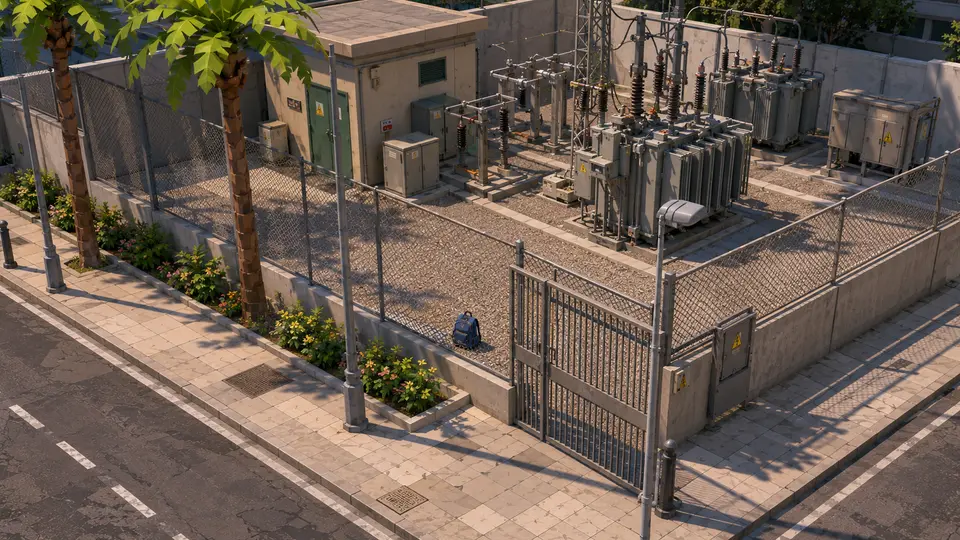
CAM-163A bag left at the foot of the wall
«Tell me if a bag turns up against the wall or the gate and is still there a few minutes later.»
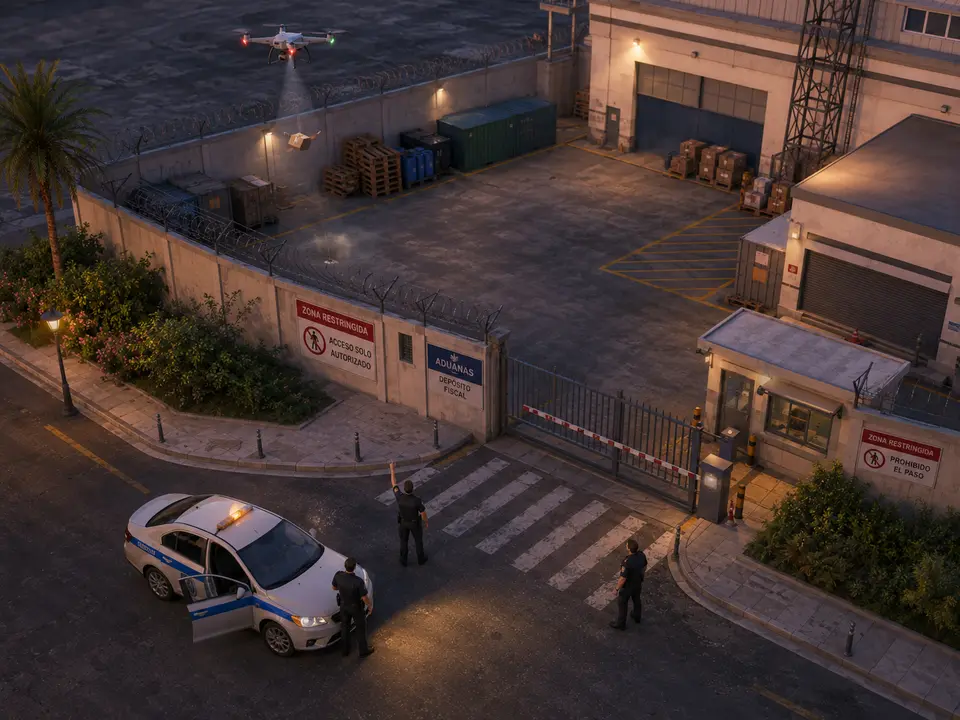
CAM-564Something crosses the wall from above and drops a package inside
«Give me a red alert if something flies over the wall outside service hours.»


What it does not do
IRIS does not know what is inside the bag. It does not say whether it is dangerous, it does not open it and it does not identify anyone. And it calls nobody suspicious: it says there is something where there was nothing, and since when.
There are places where this is easy and places where it is not. An empty wall is easy; a busy lobby with suitcases everywhere is another matter, and there you need more minutes and a carefully drawn zone. It is tested in that place at that hour before being signed off.
Questions
- Does IRIS know whether the bag is dangerous?
- No, and it cannot. IRIS sees a shape on the ground that was not there and is still there: nothing more. It does not look inside, analyse anything or classify the contents. And it does not call anything or anyone suspicious. What it adds is the exact time it appeared and the video of those minutes, which is exactly what a person needs to decide whether to go, to call, or to leave it. The decision belongs to whoever signs it.
- Does it alert on every suitcase in a station?
- No, because you set the minutes and the zone. A suitcase beside its owner in a lobby does not meet the rule: the rule says «on this strip of ground, with nobody beside it, for this many minutes». On a busy platform you need more minutes and a tighter zone; at the foot of a back wall, two minutes is plenty. If the place is a hard one, the trial shows it, and then you adjust it or put the camera where it belongs.
- Can it tell me who left it?
- It identifies nobody, and that matters: IRIS does not recognise faces and does not put names to people. What you get is the video of the exact moment the object appeared, and there you see what there is to see: whether someone walked up, arrived by bike, or it came from above. A person watches that and a person interprets it. If the matter goes further, that video is what gets handed to whoever it should, with its time and its camera.
- Does it also work if a drone drops the object?
- Yes, because the rule watches the ground and does not care how what is on it got there. And if you also have the sky rule over the wall, you have the two halves of one story and they fit together on their own: at 21:10 something crossed above the razor wire, and at 21:11 there is a bundle on the yard paving. Two alerts sharing a time say far more than either alone, and both arrive with their video.
Every simulation
Something has spilled
Tell me if there is liquid or foam outside its place and it is still there two minutes later.
- The sentence
- Where it applies
- What it finds
- The same rule
Not seeing yours here?
These words are the ones we have built, not the ones IRIS understands. The list falls short on purpose: you ask for it in a sentence, and sentences do not run out. Tell us what is in front of your cameras and we will tell you whether it understands it, or not yet.
And the best part
With two screens you watch.With twenty you look without seeing.
It is nobody’s fault: it happens to everyone. IRIS watches all twenty at once and only interrupts when something deserves a person’s attention.
Tell us your problem and we will say whether IRIS understands it, or not yet.
We reply the same working day.