Critical infrastructureIntrusion detection
CAM-163
A bag left at the foot of the wall
A blue backpack on the ground at the foot of the perimeter wall, a few steps from the gate. It was not in the earlier pictures, and it was already there ten minutes ago. There is nobody around. IRIS does not say what it is or whose it is: it says there is a bag there that was not there before and is still there.

Turn on IRIS Vision
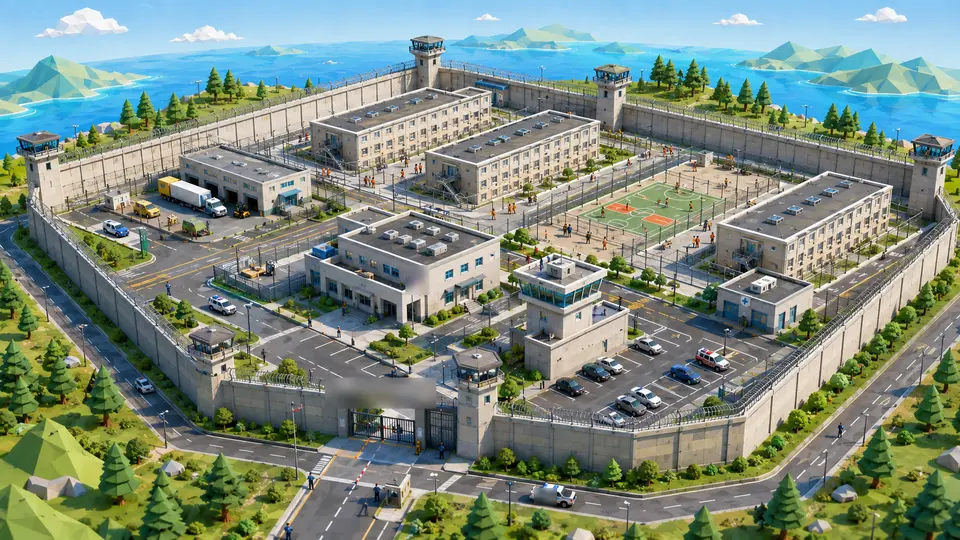
AI-generated image
What IRIS is
IRIS watches over critical infrastructure.
IRIS looks at the cameras you already have at the dam, the water plant or the power plant, and understands what it sees: someone entering where they shouldn't, a strange vehicle, an overflow, the perimeter. When something like that happens, it alerts right away; and whatever can be counted, it counts in numbers. All day long, with no one needing to watch the screen.
You tell it what you need to watch, and IRIS does it.
Here, for example, IRIS compares how that stretch of wall looked before and sees a backpack that wasn't there, still sitting untouched. It sends the alert with the before and after photos, without saying what it is or whose it is. With those two images you decide whether it's worth checking right away, then see how long it took to get sorted.
Works with the cameras you already have. Nothing to replace.
A person replies, not a form.
- Your footage never leaves your premises.
- It doesn't identify people.
- Certifications →
What IRIS understands
What it recognises in this scene
- bag that was not there before
- perimeter wall
- access gate
- yard switchgear
- public pavement
What this camera measures
An alert says something is happening. The reading says how much.
- 19 minOn the ground for
- 10 minMinutes set by the site
- 1New objects on the strip
- 24 minLast person seen
- 0People in shot
- 07:52Time of the alert
The figures on this screen are an example from the illustration, not any client's measurement.
The rule
You decide once. IRIS applies it always.
If
an object that was not there appears on the strip by the wall and is still there after the minutes the site has set
Then
- alert the control room with the camera, the time and both pictures: before and now
- keep the sequence from before it appeared
- leave the decision to whoever goes out to look
The instruction that set it up«Tell me if a bag turns up against the wall or the gate and is still there a few minutes later.»
What changes
What changes for whoever answers for the site
Almost always it is nothing: a builder's bag, a forgotten backpack, a piece of cardboard the wind brought in. And that is exactly why it is worth looking the same day rather than at the quarterly inspection, when nobody knows any more where it came from. What IRIS does is almost silly in its simplicity: it remembers what that patch of ground looked like and sees that there is now something that was not there. It does not know what it is, does not name it and decides nothing. It sends the alert with the before and after pictures, and whoever goes out to look decides.
What people usually ask
Does IRIS know what is inside the backpack?
No, and it does not claim to. IRIS sees a bag that was not there and is still there after the minutes the site has set. What it is and what to do about it is decided by whoever goes out to look. Anything we said here about the contents would be made up, and on this it is better to say little and say it properly.
Who decides how many minutes is too long?
The site's operator. In a compound nobody enters for weeks, three minutes is already a lot; in one with daily visits, waiting ten may make sense. The rule is written in one sentence and changed in one sentence, and it is written by whoever knows the place.
Can you find out who left it there?
IRIS does not identify anyone: it does not recognise faces, it does not read number plates, it does not compare against any database and it does not store who anyone is. What remains is the video of the moment the bag appears; it belongs to the site and whoever has to look at it looks at it. IRIS puts a name to nobody.
A different case every time
This isn’t a video. It’s a slice of the real screen.
A summary of the real interface, played hands-free. You see one case from start to finish; what you do not see are the other screens, and there are many.
- The alert fires
- It lands in the tray
- You open it
- You confirm or dismiss
See it somewhere else
Who is watching the yard screen when the fight starts?
17 cases: 16 raise an alert when something happens and one only measures. You see each image as it is, and then with what IRIS understands on top.

How long before somebody comes down that corridor at four in the morning?
13 cases: 12 raise an alert when something happens and one only measures. You see each image as it is, and then with what IRIS understands on top.


And the best part
Nobody covers the night shift:the camera that is already on covers it.
It does not tire, it does not blink and it does not go for coffee. What happens at night is understood just as it would be at midday, and whoever is on duty hears about it while it is happening.
Tell us your problem and we will say whether IRIS understands it, or not yet.
We reply the same working day.