Solutions by typePersonal safety
What if they reach in with a bare hand?
A bare hand on the belt
It is 06:30. The sorting line has been running for an hour. Cardboard goes past, plastic, and every so often a piece of broken glass. One of the sorters has taken his gloves off because he cannot grip the small bottles with them on. His hand goes in and out of the stream a few inches from the rollers. From the walkway, ten metres back and from behind, every arm looks the same.
3 cameras across 3 sectors
What IRIS is
IRIS watches the cameras for you.
IRIS Neural is an artificial intelligence that watches the cameras you already have and understands what happens in front of them. When something important happens —or something you told it you need to keep an eye on—, it alerts you; and whatever can be counted, it counts in numbers. All day long, without anyone having to watch a screen.
You tell it what you need to watch, and IRIS does it.
Works with the cameras you already have. Nothing to replace.
A person replies, not a form.
- Your footage never leaves your premises.
- It doesn't identify people.
- Certifications →
This is how you ask for it
«Tell me if someone starts sorting on the belt without gloves.»
A cut from glass on the sorting line is three stitches, a month off work and a post to cover with overtime for four weeks. A splash of caustic on the back of a hand is an emergency room visit and an accident report you will later have to explain to an inspector. Neither of them shows up on paper until after the fact, because nobody records the times someone worked bare-handed and did not get cut.
You decide once
The decision is made once, and made whole. If someone works on the marked stretch of belt, for more than a few seconds at a time, and their hands are bare, then an incident is opened, the supervisor is notified and the video is kept. Those seconds of margin exist so that bending down to pick something up does not count. After that nobody has to remember: IRIS applies it every shift.
Gloves come off, and hardly ever out of carelessness. They come off because they get in the way. A good glove costs you your sense of touch, and some jobs take two seconds with touch and twenty without: threading a cap, separating two small parts, making a fine joint. So the hand comes out of the glove for a moment, and the moment stretches. From a distance nobody corrects it, because at ten metres a gloved hand and a bare hand are the same blur.
The day it goes wrong rarely makes the news. A cut on the sorting line; a splash of caustic that does not hurt at first, which is why the person carries on for half an hour before going to rinse it. Next to a high-voltage cell there is no middle ground. These are hand injuries, and hands never make headlines: they simply show up in the sick-leave figures at the end of the year, when there is nothing left to fix.
IRIS watches hands exactly where hands matter: above the decanting point, over the stretch of belt where people sort, in front of the switchgear. It sees whether there is a glove or not, and it speaks up while the drum is still closed and the hand is still outside. A glove costs less than a day off work. Here that is not a poster slogan: that is the whole arithmetic.
What changes
Before, this was caught on the supervisor’s round, if they walked past, or in the next day’s video once there was already a report to fill in. Now the supervisor gets the camera open at the exact minute, with the frame showing the bare hand on the material. They walk over, say two words, and it is done. And at month end they have the count: how often, and on which stretch.
Where we have seen it
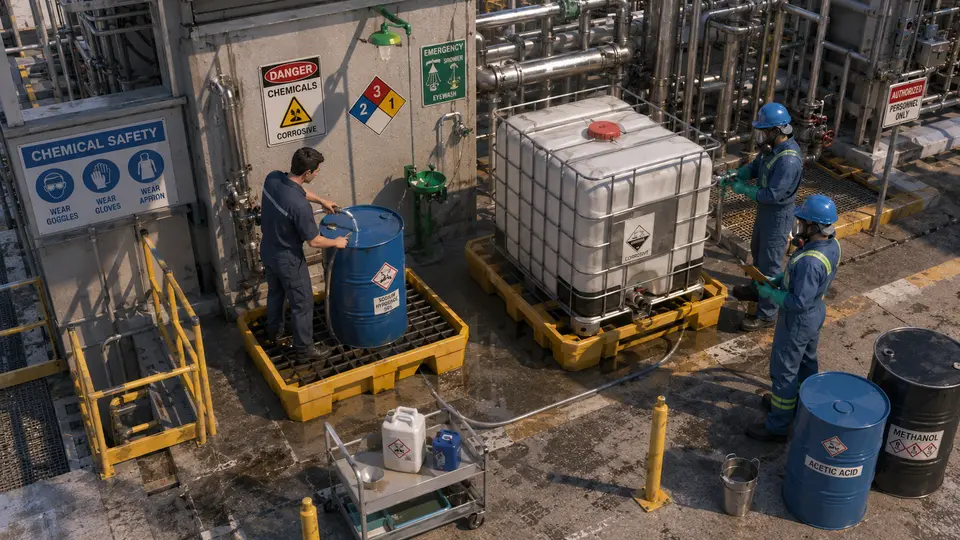
CAM-313Decanting a caustic with no goggles, no gloves and no apron
«Tell me if anyone transfers product in this bay without the goggles, the gloves and the apron.»
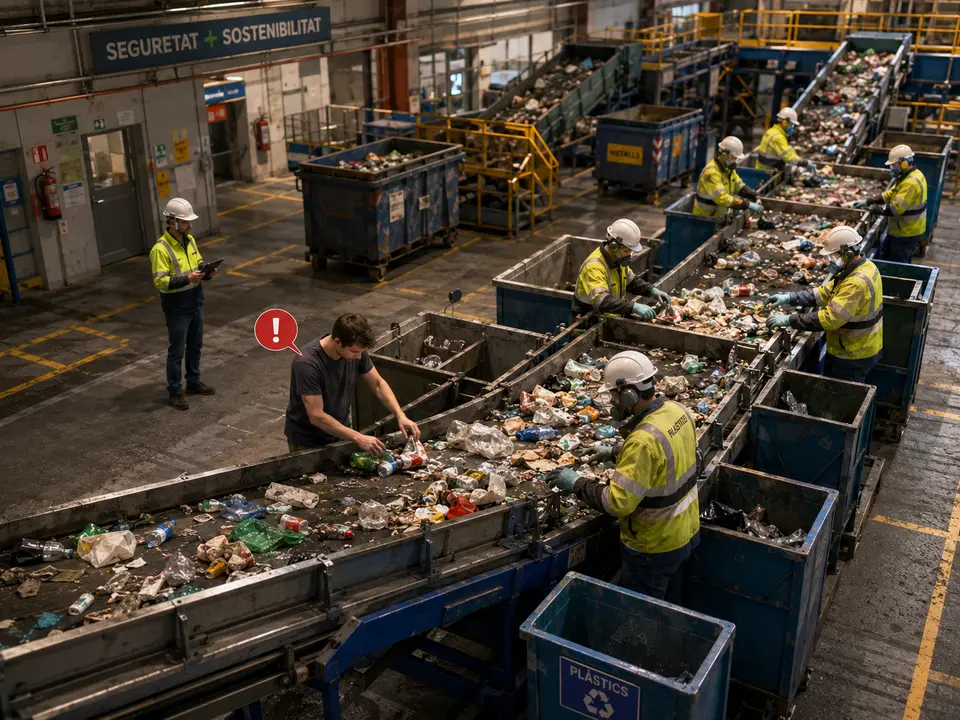
CAM-438No helmet, no gloves, bare hand on the belt
«Tell me if somebody starts sorting on the belt without helmet, gloves or hi-vis.»
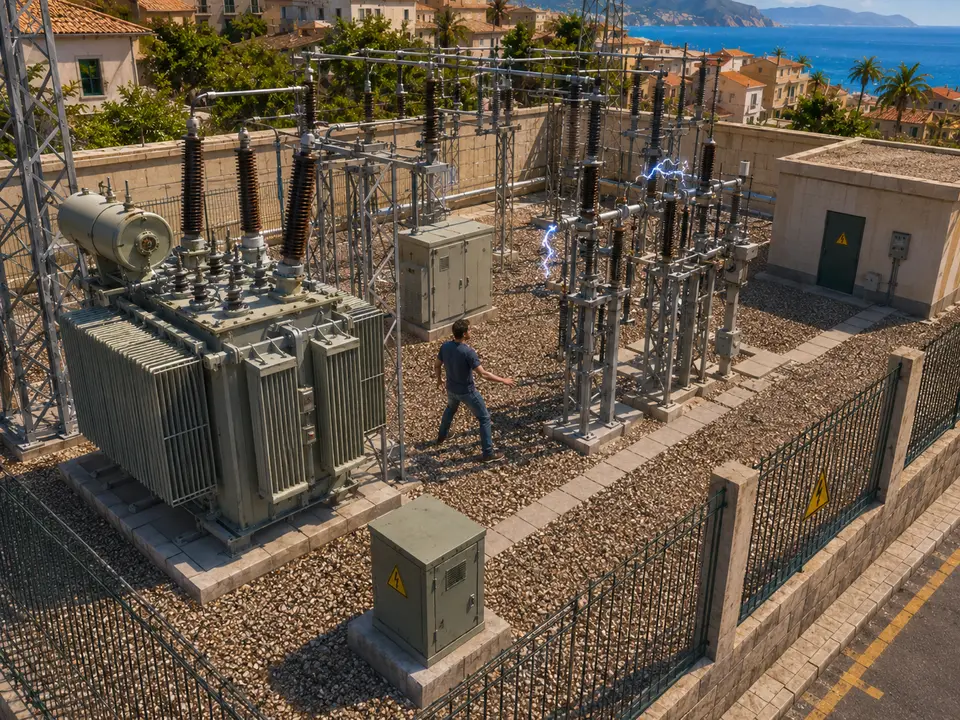
CAM-347No protective clothing beside the live cells
«Tell me if anyone enters the high-voltage zone without a helmet, gloves and protective clothing, even if they are only walking through.»


What it does not do
IRIS does not know whether the glove is the right one for that product, whether it is torn inside, or whether someone is wearing it badly. It sees whether a hand is covered or bare at the point you have marked.
And it depends on where the camera is: at two metres head-on it separates them clearly; at twenty metres from behind it does not.
Questions
- Can IRIS tell a gloved hand from a bare one?
- Yes, provided the camera is where hands are seen close up: above the decanting point, over the stretch of belt where sorting happens, on the workbench. At two metres and head-on, a glove separates clearly from skin. At twenty metres and from behind it does not, and in that case the honest answer is not to put the rule there. Here, where you place the camera decides whether the rule works at all.
- Does it work for decanting chemicals?
- Yes, and it is one of its most common uses. When decanting, the rule usually calls for three things at once: goggles, gloves and an apron. IRIS can watch all three in the same sentence and flag any one that is missing, before the drum is opened. The value is in the timing: the alert lands while there is still time to fetch the kit, not once there is product on the floor and someone rinsing an arm.
- Does it alert if someone takes them off for just a moment?
- Yes, and that moment is precisely the one worth catching. Almost nobody works a full shift bare-handed: the gloves come off for thirty seconds to thread a cap or separate two small parts, and that is when the cut or the splash happens. You set a short margin so an ordinary movement triggers nothing, and only alert if the hand is still bare after it. That way the alert means something when it arrives.
- Is it used to discipline people who work without gloves?
- No. IRIS identifies nobody, does not recognise faces and does not say who the person in the frame is: it sees a bare hand at a point where a glove is required. The alert goes to whoever can fix it right then, usually the line supervisor, and its purpose is for that person to put a glove on. Using it as a punishment tool ruins the system: people learn to hide from the camera and you lose the only thing that was worth having.
Demo · IRIS at work
A new case each time. Always the same screen.
It plays by itself and shows one case from start to finish. It is a summary: the real screen has far more functions than fit in this box.
- Cameras on the map
- You draw an area
- What passed shows up
Not seeing yours here?
These words are the ones we have built, not the ones IRIS understands. The list falls short on purpose: you ask for it in a sentence, and sentences do not run out. Tell us what is in front of your cameras and we will tell you whether it understands it, or not yet.
And the best part
The rule does not decide anything.It just never forgets, and it tells the person who decides.
You write once what needs watching, and it holds at three in the morning just as at noon. What to do with the alert is still a person’s decision.
Tell us your problem and we will say whether IRIS understands it, or not yet.
We reply the same working day.