Solutions by typeProduction efficiency
How long has that line been stopped, and what happened just before?
The line is stopped and nobody knows since when
Mid-morning on the assembly floor. The line is moving nothing. Inside the machine there is a wooden pallet jammed sideways, tilted, with an aluminium casing on top about to slide off. The red beacon is lit. Two operators stand and look, touching nothing: one has his hands on his head. The parts have been still on the conveyor for eleven minutes. The cameras are recording all of it, and not one of them is counting the minutes.
4 cameras across 4 sectors
What IRIS is
IRIS watches the cameras for you.
IRIS Neural is an artificial intelligence that watches the cameras you already have and understands what happens in front of them. When something important happens —or something you told it you need to keep an eye on—, it alerts you; and whatever can be counted, it counts in numbers. All day long, without anyone having to watch a screen.
You tell it what you need to watch, and IRIS does it.
Works with the cameras you already have. Nothing to replace.
A person replies, not a form.
- Your footage never leaves your premises.
- It doesn't identify people.
- Certifications →
This is how you ask for it
«Tell me when the line stops moving parts for more than a minute, and save me the video from just before.»
The stoppage reaches the production manager at the end of the shift, on a hand-written sheet, with whatever cause somebody remembers. The time written down is the time afterwards. And two-minute stops never get written down at all: they are the ones that eat the most hours over a month, and the only ones that appear in no report. At the morning meeting nobody can show what the picture looked like just before.
You decide once
You decide this once. You say which stretch is watched, how many seconds without movement count as a stop, which shifts it applies to and who gets told: if parts have been still for more than a minute, tell the shift supervisor, open the camera and attach the minute before. IRIS applies that on every shift and on every line carrying the rule, with nobody having to remember. If the threshold changes, you change the rule, not the habit.
A stopped line makes no noise on paper. On an assembly floor it is a pallet that went in crooked. In bottling it is an open filler with one operator elbow-deep inside and three colleagues standing around waiting. And at a quarter past three in the morning, on a roughing mill, it is a glowing slab sitting still on rollers that are not turning. Three different places, the same gap: the machine knows it has stopped, but nobody is watching since when.
The expensive part is not the big breakdown. The expensive part is the two-minute stops that happen six times a day and get written down nowhere, because by the end of the shift nobody remembers them. Over a month that adds up to hours, and the morning meeting argues about it from memory: one says it was the changeover, another says it was the material. There is no picture to show.
IRIS watches the stretch and sees whether the product is moving or not. When it stops moving, it times it from the first second and saves the video of the minute before. That is where the crooked pallet shows up. IRIS does not write the cause: a person writes it, with the exact time and the footage in front of them, and it takes a minute instead of half an hour. It counts the minutes that nobody counts today.
What changes
Before, the supervisor logged the stoppage when he remembered, and maintenance turned up asking what had happened. Now the alert goes out within the minute, with the camera open and the footage of the seconds before, and maintenance arrives knowing what to look at. At month end the stoppages sort by cause instead of by memory, and the short ones stop being invisible.
Where we have seen it
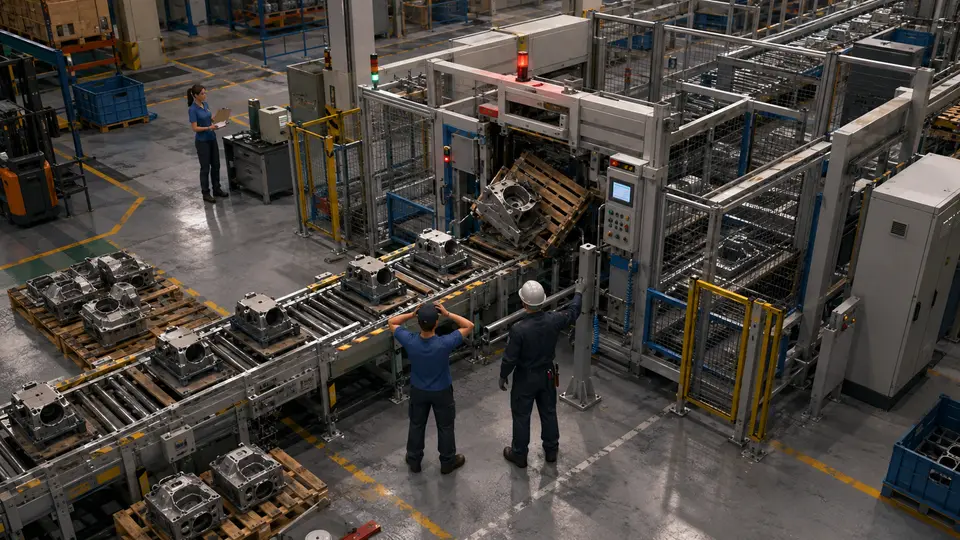
CAM-240The line has stopped with a pallet jammed inside
«Tell me when the line stops moving parts for more than a minute, and keep me the video from just before.»
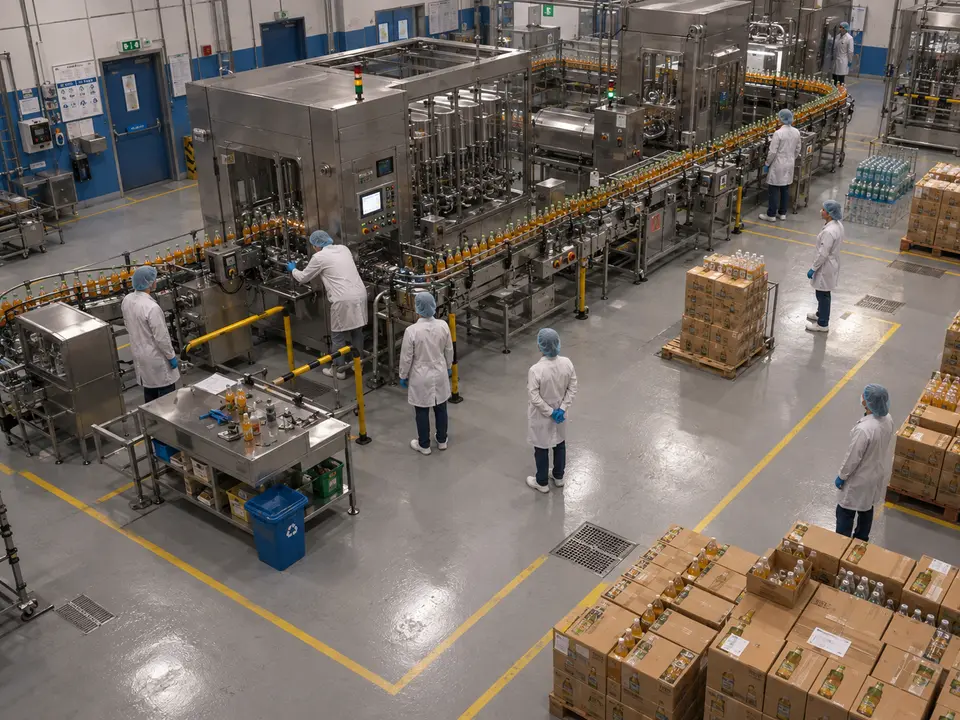
CAM-200The line has stopped and nobody knows why
«Tell me when the filler stops putting out bottles for more than a minute, and show me the video from just before.»
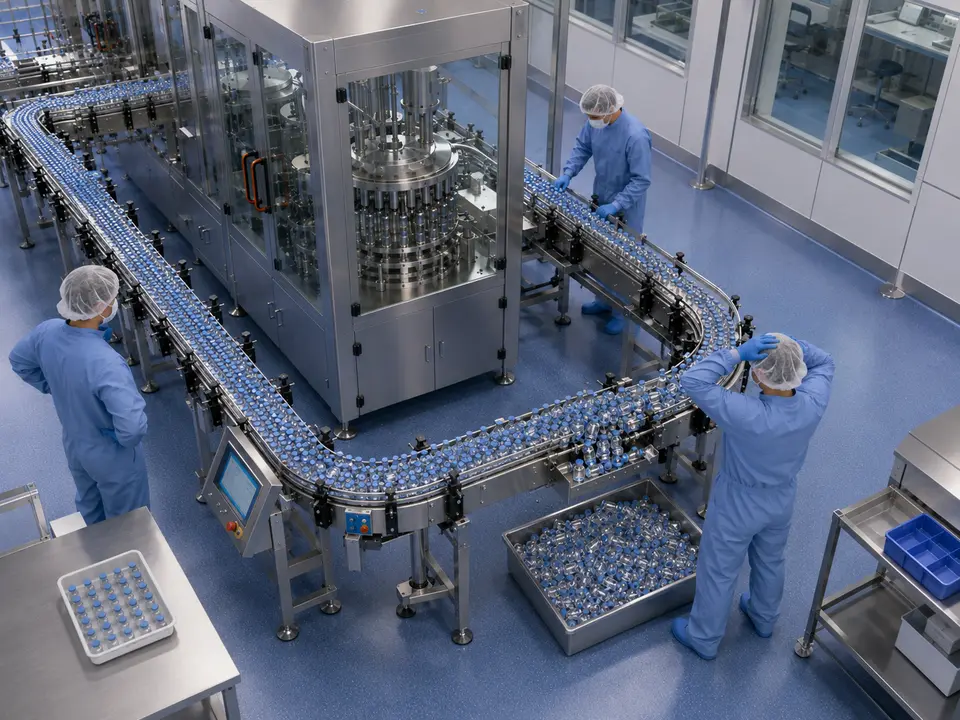
CAM-299The line has stopped and the reject tray is overflowing
«Tell me when the vials stop moving for more than a minute, and tell me how many have gone into the reject tray.»
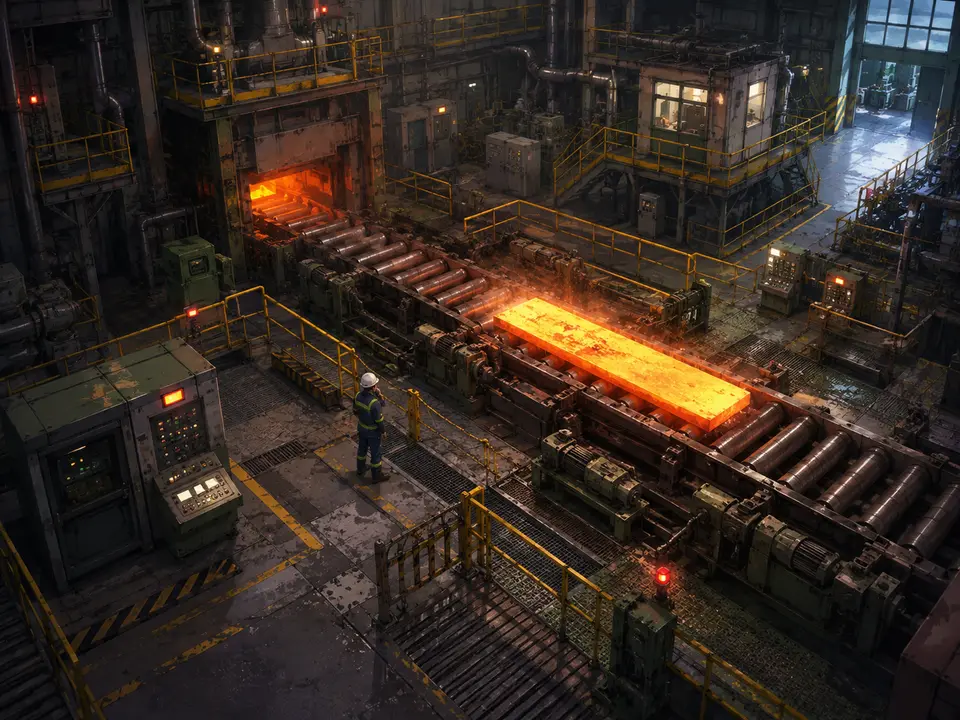
CAM-360The slab has stopped on the mill, with the beacons on red
«Tell me if the line sits still for more than two minutes with hot product on it, and keep me the video from just before.»


What it does not do
IRIS does not know why the line stopped. It sees that the product has stopped moving, times it from the first second and keeps the picture. The cause is written by a person.
And it does not act: it does not stop the line, does not start it and does not send anyone anywhere. Nor does it replace the system that already runs production. It works alongside it and adds what that system lacks, which is the image and the minute.
Questions
- Does IRIS know why the line stopped?
- Not by itself. IRIS sees that the parts have stopped moving and saves the video of the seconds before. In that footage you can see the pallet going in crooked, or the jam, or the missing material. The cause is written by a person, with the exact time and the images in front of them, and it takes a minute instead of half an hour. What changes is not who diagnoses: it is that the diagnosis stops being made from memory.
- Does it also catch the short stops that nobody logs?
- Yes, and that is where it shows most. The plant sets the threshold: one minute, thirty seconds or ten. IRIS times every stop from the first second and adds them up across the shift. Two-minute stops never make it onto the sheet, and they are the ones that eat the most time over a month. Seeing them added up, each with its time and its camera, changes the conversation at the morning meeting.
- Does it replace the system that already logs stoppages?
- No. The production system already knows that the line stopped and at what time. What it does not have is what happened just before, and that only exists in the picture. IRIS works alongside it and adds that part: the video and the exact minute. Together, the two turn a stoppage code into a concrete cause you can fix. And the other way round: without the plant system, the video only tells half the story.
- Does the same rule work in a steel mill and on a juice line?
- Yes, by changing the threshold and the stretch. The rule does not look at what product goes past: it looks at whether anything goes past. On a juice line, a minute of stillness is already a stop; on a roughing mill you wait two minutes and it also matters whether hot product is sitting there. Each plant writes that. The same camera and the same sentence work for parts, bottles, vials or parcels, because what is measured is movement.
See it for yourself
No extra alarms here. Just what needs looking at.
Not a recorded video, not an explanatory drawing: a summary of the real screen, with a different case every time it starts. There is a lot more behind it.
- You draw the line
- It counts by itself
- A number comes out
Not seeing yours here?
These words are the ones we have built, not the ones IRIS understands. The list falls short on purpose: you ask for it in a sentence, and sentences do not run out. Tell us what is in front of your cameras and we will tell you whether it understands it, or not yet.
And the best part
Finding something in yesterday’s videoshould take as long as asking for it.
No more scrubbing back through six hours with your finger on the mouse. You type what you are after, in plain words, and the matching moments come up. Same cameras as always.
Tell us your problem and we will say whether IRIS understands it, or not yet.
We reply the same working day.