Solutions by typeEnvironment and cleanliness
Do you find out while they are painting, or once the wall is done?
The video turns up once the wall is already painted
It is 02:10 on a Saturday. Five people are spraying the wall of the underpass: cans on the ground, a ladder leaning against it, two onlookers filming on their phones. They have been at it forty minutes and have twenty more to go. The underpass camera is on, as it is every night, recording every stroke. Nobody will look at that recording until Monday, by which time maintenance will already have asked for a cleaning quote.
6 cameras across 4 sectors
What IRIS is
IRIS watches the cameras for you.
IRIS Neural is an artificial intelligence that watches the cameras you already have and understands what happens in front of them. When something important happens —or something you told it you need to keep an eye on—, it alerts you; and whatever can be counted, it counts in numbers. All day long, without anyone having to watch a screen.
You tell it what you need to watch, and IRIS does it.
Works with the cameras you already have. Nothing to replace.
A person replies, not a form.
- Your footage never leaves your premises.
- It doesn't identify people.
- Certifications →
This is how you ask for it
«Tell me if somebody is painting a wall, and keep me the video from the start.»
Cleaning a large wall takes two people a morning, plus product and, if the surface is delicate, special equipment. And you do not pay for it once: the same wall is painted again three weeks later, because a wall that turns up clean and unwatched is an invitation. Meanwhile the underpass empties out at night, people go the long way round, and somebody ends up asking for more lighting and more cameras in a place that already had cameras.
You decide once
You decide this once. You say which walls matter, during which hours nobody should be standing in front of them and who gets told: if between midnight and six somebody stays against the underpass wall for more than a minute, alert the control room with the camera open and the video kept from the moment they arrived.
A big piece takes an hour to paint and a morning to clean, and that asymmetry is the whole problem. The underpass camera was on, as it is every night of the year; it recorded the cans, the ladder, the five of them, every stroke, even the people who stopped to watch. Recording is not watching: the video existed, but it surfaced on Monday, when the only thing left to do was ask for a quote. Recorded does not mean reported, and that distinction is what separates a camera from a camera that is any use.
And there is another kind of paint that almost nobody talks about: the paint on the floor. In a dispatch yard, the green bays are released product and the blue ones are material on hold. In a tunnel, a blue band on the wall says how high the water may rise. All of it is a decision somebody made once and painted on the ground so it would not have to be repeated.
IRIS understands both kinds of paint. On a wall it says somebody is painting right now, with the camera and the video from the moment they arrived, not once the piece is finished. On a floor it does the opposite: it checks that the line already painted is being respected, and it speaks up when a person, a truck or a pallet is where the paint says they should not be. What it does is keep a line painted ten years ago meaning something at three in the morning.
What changes
This used to be discovered in the morning. The supervisor opened up, saw the wall and asked for the video; somebody rewound eight hours to find the moment, and what came out was a finished piece and five figures with their backs turned.
Now the alert comes while it is happening, with the camera open and the video kept from the moment they arrived. Who decides what to do with that — send someone, make a call, or simply turn more lights on that night — is still a person.
Where we have seen it
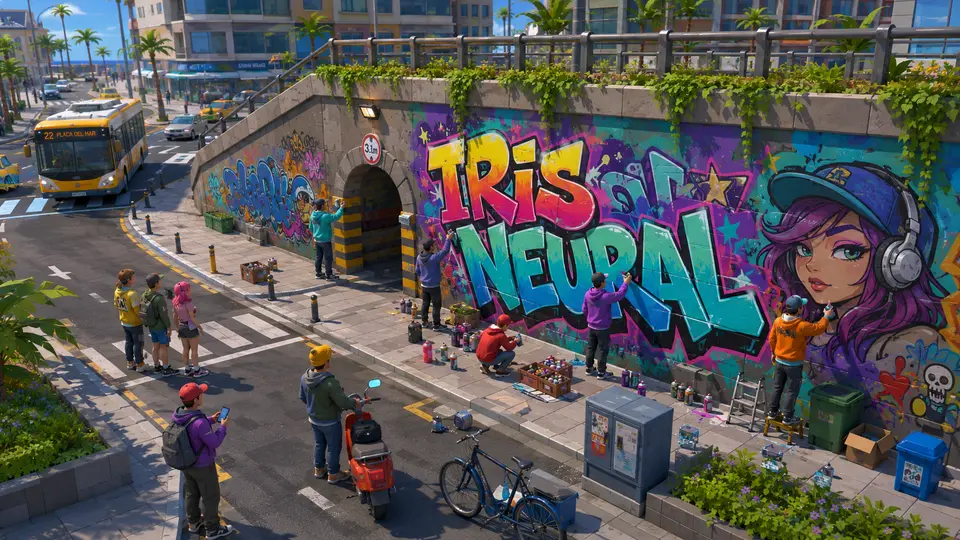
CAM-23Graffiti on a facade
«Tell me if someone is painting a wall, and keep the video from the very start.»
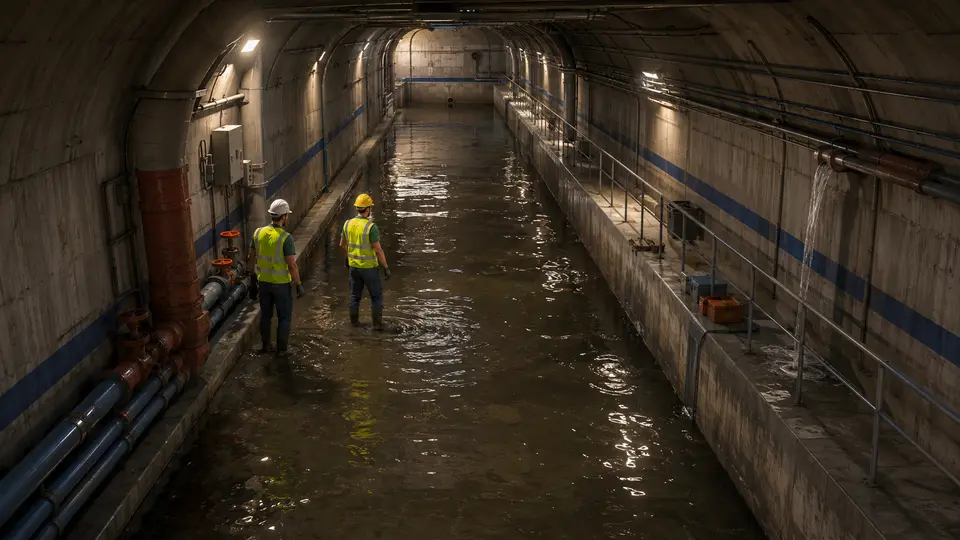
CAM-172Water building up in the tunnel
«Tell me if water builds up on the tunnel invert while there are people inside, and tell me how far it still is from the painted band.»
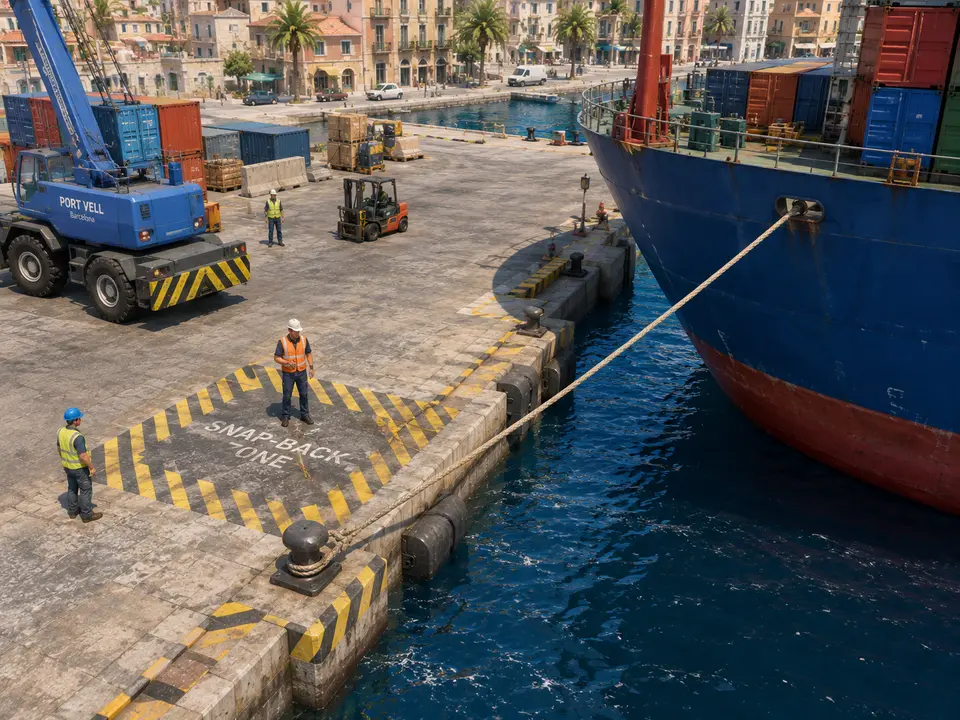
CAM-450Someone is standing inside the snap-back zone
«Tell me as soon as there is a person inside the painted snap-back zone while a mooring line is under load.»
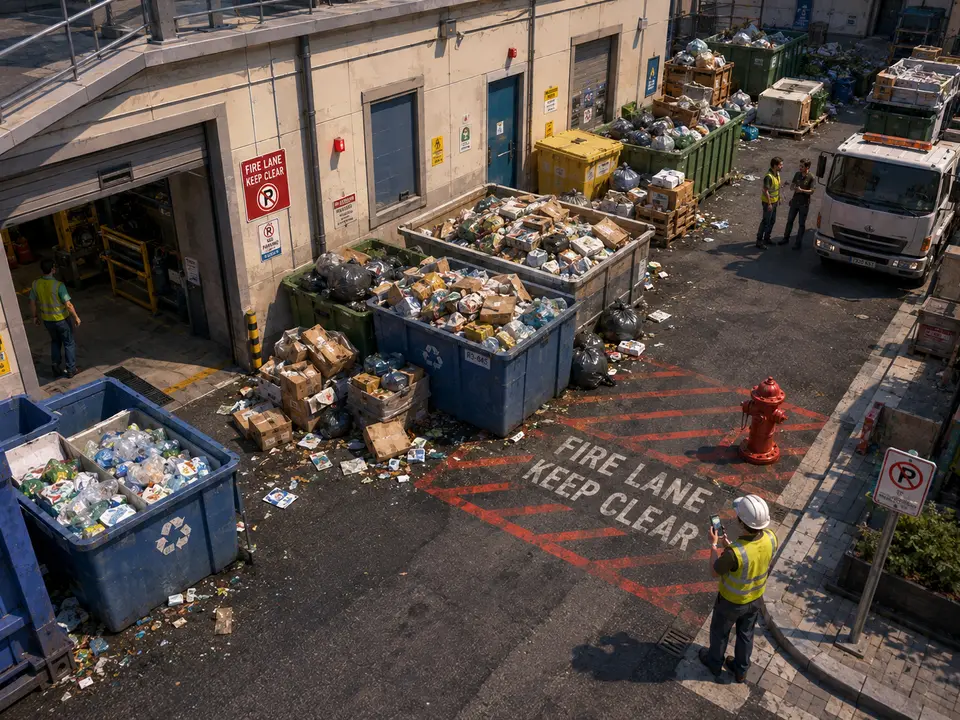
CAM-437The emergency lane is packed with skips and pallets
«Tell me if anybody leaves something on the painted emergency lane or in front of the hydrant.»


What it does not do
IRIS does not identify anyone. It does not recognise faces and it does not say who was painting: it says that people are painting that wall, at that hour, on that camera. What is done with that is decided by a person, under your organisation’s rules.
It also cannot tell on its own a tag from a mural commissioned by the council: to a camera it is the same scene.
Questions
- Does it tell a tag from an authorised mural?
- Not on its own, and rightly so. What a camera sees is a person painting a wall, and that looks the same at two in the morning on a Saturday as it does on a Tuesday morning with a signed permit. The rule makes the difference: which walls matter, and during which hours nobody should be in front of them. A wall painted only with permission and always in working hours produces no alert at eleven in the morning; the same wall at two at night does. And the person watching the video decides in two seconds.
- Is the video any use for a police report?
- Yes, in the sense that it is stored with its time, its camera and the video from before it started, which is what usually gets asked for. What IRIS does not do is identify anyone or decide whether to report it: that is a decision for the organisation and, where relevant, the municipal duty service. We say this plainly because it is the most misread point: IRIS alerts and preserves the evidence; whose face that is, if it is even visible, IRIS does not say.
- Why do cameras looking at painted floor markings show up here?
- They are here on purpose. Paint on a wall and paint on a floor are the same thing seen from opposite sides: somebody decided something and wrote it down in paint. On a wall, the paint that appears is the problem. On a floor, the paint that was already there is the rule, and the problem is it not being respected: a truck inside the yellow strip, a pallet on the fire lane, a person standing in the snapback zone with a line under tension. IRIS watches both: it flags the paint that appears and it guards the paint that is already there.
- Does it alert while it is happening or the next day?
- While it is happening. That is the whole point of this word: a big piece takes about an hour, so an alert a few minutes in is still worth something and a video on Monday is not. The rule is usually simple, because the context helps: a wall where nobody should be standing at night is an easy case to define. And even if nobody gets there in time, there is a difference you feel the following month: the video starts when they arrived, not when the wall was already painted.
Demo · IRIS at work
We won't just tell you. We'll show you.
It is a summary of the real screen: it plays by itself, step by step, and shows only the path of one case. The actual tool has far more than fits in here.
- The alert fires
- It lands in the tray
- You open it
- You confirm or dismiss
Not seeing yours here?
These words are the ones we have built, not the ones IRIS understands. The list falls short on purpose: you ask for it in a sentence, and sentences do not run out. Tell us what is in front of your cameras and we will tell you whether it understands it, or not yet.
And the best part
The door was left open at two.Finding out at nine is no use to anyone.
The video tells you at nine. IRIS says it at two, with the camera, the time and the images from that moment. The difference between the two is whether someone can go.
Tell us your problem and we will say whether IRIS understands it, or not yet.
We reply the same working day.