Solutions by typeEnvironment and cleanliness
Who sees the foam at four in the morning?
The foam goes over the edge and the plant is empty
It is 04:20 at a water treatment plant. The circular clarifier is covered in white foam from side to side, and the foam is already going over the perimeter wall and falling onto the slab, which is wet all the way round. There is nobody on site until six. The camera above has been watching since half past one, when the blanket started closing over the surface. Whatever reached the water tonight arrived three hours ago, and nobody knows it yet.
5 cameras across 4 sectors
What IRIS is
IRIS watches the cameras for you.
IRIS Neural is an artificial intelligence that watches the cameras you already have and understands what happens in front of them. When something important happens —or something you told it you need to keep an eye on—, it alerts you; and whatever can be counted, it counts in numbers. All day long, without anyone having to watch a screen.
You tell it what you need to watch, and IRIS does it.
Works with the cameras you already have. Nothing to replace.
A person replies, not a form.
- Your footage never leaves your premises.
- It doesn't identify people.
- Certifications →
This is how you ask for it
«Tell me when foam goes over the edge of a clarifier and keeps going, even at night with nobody on site.»
When the foam goes over the weir it carries floating solids with it, and that leaves the plant through the channel. If that night happens to coincide with an inspection, nobody can explain the sample: whoever signs it does not know what time it started or where it came from. And if what is overflowing is a reactor spilling from its mouth, this is no longer about cleaning: it is about product on the floor and people nearby.
You decide once
You say which edge must not be crossed, how long it has to keep going before it counts as an alert and who is called at each hour: if foam covers the clarifier and passes the weir for more than three minutes, alert the on-call team with the camera and the video from when the blanket started; if it is in the reactor hall, alert immediately with no waiting, because there are people there. IRIS applies it every night, including the ones nobody remembers to check.
Foam is never the problem. It is the signature of something that changed further upstream: a discharge that came in overnight, a surfactant that should not be there, a temperature, a biology that has gone off. That is why the time it started is worth more than the photo taken at seven in the morning.
And foam turns up in three places that have nothing in common. In a secondary clarifier at four in the morning, covering the water with bottles and packaging trapped inside it and pouring over the weir into the channel. In a reactor hall in mid-afternoon, coming out of one open reactor mouth without stopping, running down the whole skirt to the floor, with a column of vapour above it and operators ten metres away. And on a packaging line at the end of the night shift, where there is no emergency at all: just unrinsed foam marks on the wet floor and residue between the belt guides, which is what will decide whether the first hour of production is scrapped.
IRIS watches the surface and watches the edge. It says when the blanket starts closing over the water, it says when it goes over the weir and keeps going, and it says it with the camera, the time and the video from the beginning, whoever happens to be on site. It does not know what that foam is. It knows it is going where it should not, and it says so while it is happening.
What changes
This used to be discovered on the six o’clock round: the slab wet all the way round and a long hour with a hose.
Now the alert goes out at twenty past four, with the camera and the video from when the blanket began to close. The on-call team decides whether to go or wait, and the next day there is an exact time to work back from and find out what came in and from where. The cleaning is just as dull as before; what has changed is that it is no longer done blind.
Where we have seen it
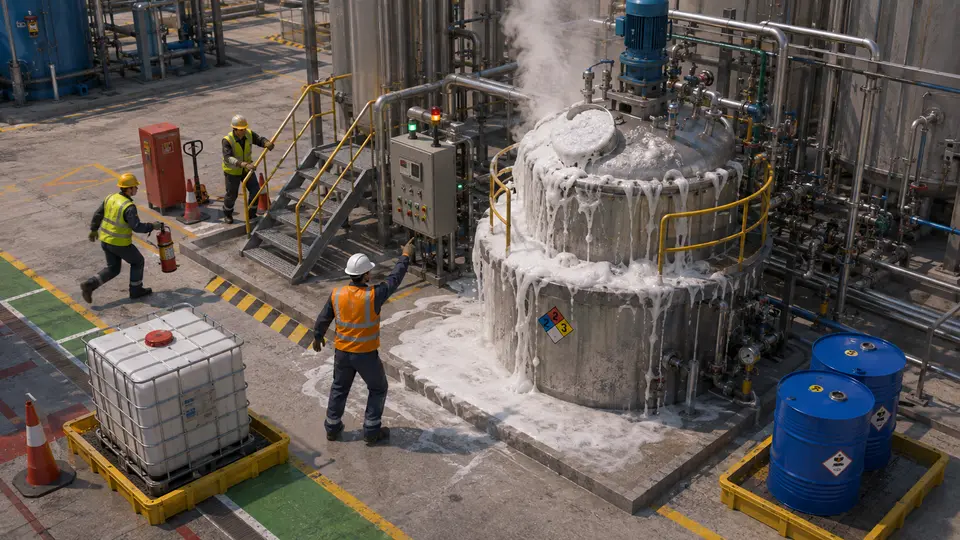
CAM-306The reactor is pushing foam out of the manway and down the whole shell
«Tell me as soon as foam or liquid comes out of the manway of any reactor in the bay.»
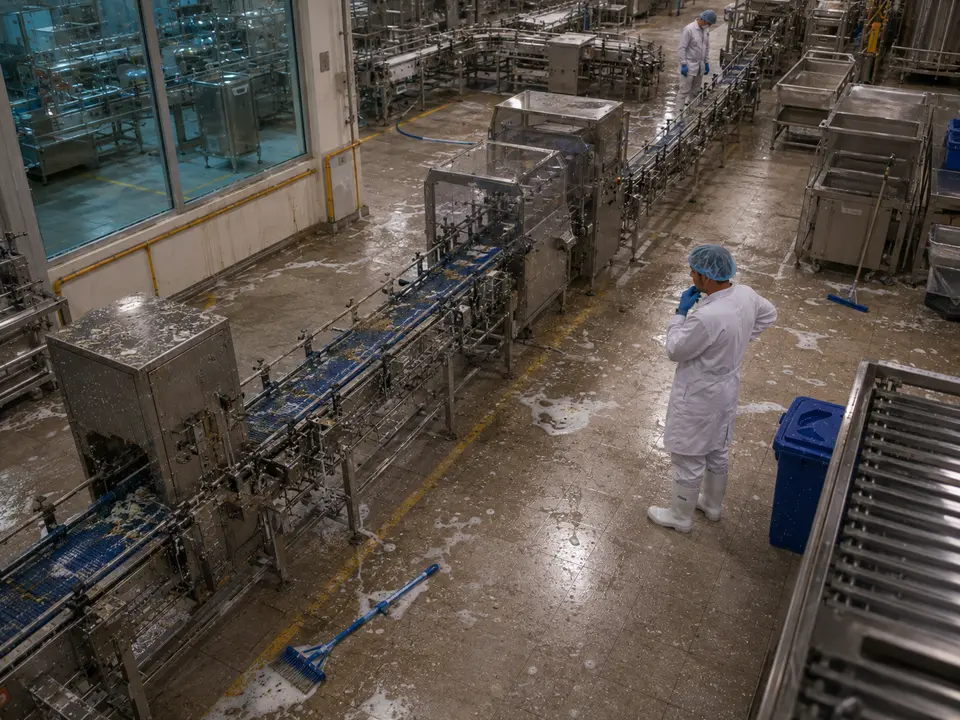
CAM-211The clean-down is not finished
«Before we start up in the morning, tell me if anything is still visible on the line: foam, residue or a tool left on the floor.»
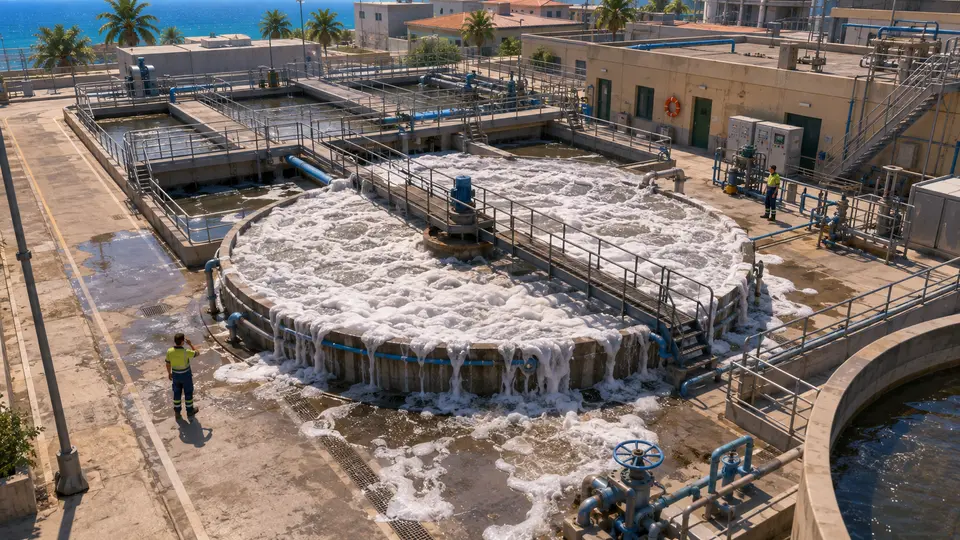
CAM-150Foam spilling over the clarifier
«Tell me when foam starts going over the edge of a clarifier and keeps going over, even at four in the morning when nobody is on site.»
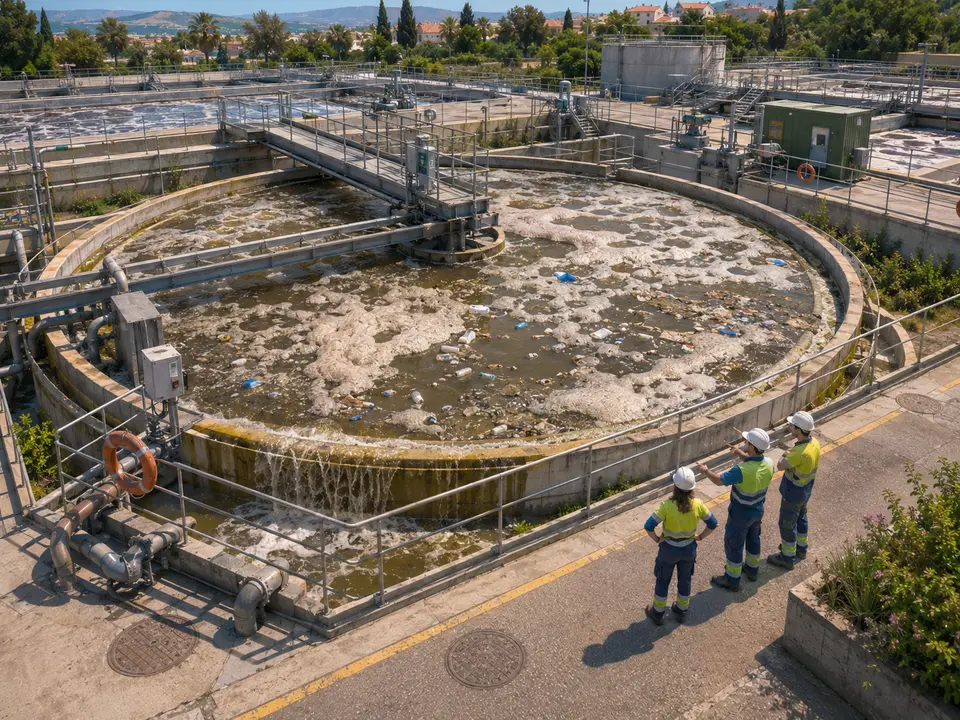
CAM-401The clarifier has filled with foam and it is going over the weir
«Tell me when the clarifier fills with foam or floatables start going over the weir.»
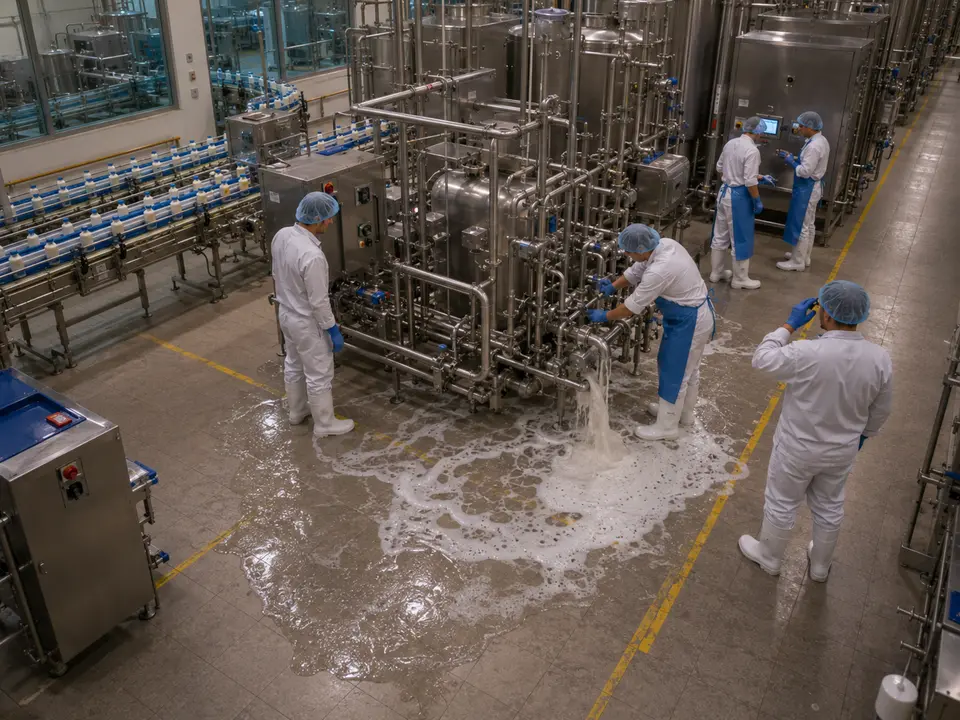
CAM-215A pool of foam right across the walkway
«Tell me if liquid or foam builds up on the process floor, even at night with nobody around.»


What it does not do
IRIS does not analyse the water. It does not say what the foam is made of, where it came from, or whether it breaches anything: that is what probes, analysers and sampling are for, and IRIS does not replace them.
And it sees what the camera sees: a covered tank with no light above it, at night, is a hard case. It does not dose antifoam or stop anything either: it alerts a person.
Questions
- Does it know why there is foam?
- No, and it will not find out by looking. The cause is upstream and it is worked out with analysis, not with a camera. What IRIS brings is the other half, the half that is usually missing: the exact time it started and how long it lasted. With that time you can go to the intake log, the flows and whoever discharged that night, and the conversation changes completely. Without it, at seven in the morning there is only a white surface and nobody who can say since when.
- Can it alert before it overflows?
- Yes, and that is usually the most useful part. Before it goes over the edge, the foam does something very visible: it closes over the water, starting at one side and covering the surface until the water is out of sight. That phase lasts a while, and it is where a person can still do something. The rule can be set in two steps: a calm alert when the blanket covers more than half, and an urgent one when it passes the weir. The gap between the two steps is minutes of margin, and those minutes are almost everything.
- Does it work for a packaging line too?
- Yes, and there the rule works the other way round: instead of alerting when something appears, it checks that nothing is left before start-up. At the end of the night shift the line is stopped and empty, and what decides the first hour of the day is whether there are unrinsed foam marks on the floor, residue between the guides or a tool left on the belt. It is a dull check that today is done by one person in a hurry at a quarter to six. IRIS does it the same way every day and leaves a record with image and time.
- Does it replace the probes and analysers?
- No. A probe measures what is inside the water and IRIS measures none of that: it sees the surface. They are different things and they get on well. The probe tells you a value has moved; the camera tells you the blanket has covered the clarifier and that at 04:20 it was going over the wall. Together they tell the whole story, and neither of them tells it alone. That is why IRIS goes in alongside what you already have, not instead of it.
A different case every time
Watch what happens. Then watch what IRIS does with it.
Not a recorded video and not a drawing: it is a summary of the real tool, with a different case each time round. The whole tool does not fit in a box.
- You ask
- IRIS searches
- It shows you
Not seeing yours here?
These words are the ones we have built, not the ones IRIS understands. The list falls short on purpose: you ask for it in a sentence, and sentences do not run out. Tell us what is in front of your cameras and we will tell you whether it understands it, or not yet.
And the best part
The door was left open at two.Finding out at nine is no use to anyone.
The video tells you at nine. IRIS says it at two, with the camera, the time and the images from that moment. The difference between the two is whether someone can go.
Tell us your problem and we will say whether IRIS understands it, or not yet.
We reply the same working day.