Solutions by typeEnvironment and cleanliness
What time did it start coming out, and how far did it get?
Five centimetres of kerb and a form with a date on it
It is twenty past one in the afternoon, in front of the pumping station. Cloudy water is surging out of a displaced manhole cover and already covers half the carriageway; the flow runs down the street towards the doorways below. A vacuum tanker is parked alongside with its hose out, and two people are watching the surge without yet knowing whether it is going in or coming out. The first thing whoever picks up the phone will ask is since when. Nobody knows.
3 cameras across 3 sectors
What IRIS is
IRIS watches the cameras for you.
IRIS Neural is an artificial intelligence that watches the cameras you already have and understands what happens in front of them. When something important happens —or something you told it you need to keep an eye on—, it alerts you; and whatever can be counted, it counts in numbers. All day long, without anyone having to watch a screen.
You tell it what you need to watch, and IRIS does it.
Works with the cameras you already have. Nothing to replace.
A person replies, not a form.
- Your footage never leaves your premises.
- It doesn't identify people.
- Certifications →
This is how you ask for it
«Tell me if liquid comes out of a manhole, a bund or a mouth and spreads towards the street or a drain.»
The moment something reaches a gully, an inspection chamber or the street, it stops being an internal matter. You have to notify, you have to sample and you have to write a report with a start time that is almost never known. Without that time everything is an estimate, and an estimate is the worst box to fill in on an environmental file.
You decide once
You say which line must not be crossed — the edge of the bund, the kiln mouth, the rim of a manhole, the lid of a chamber — how many seconds are tolerated and who is called: if liquid appears outside the tank bund and keeps growing for ten seconds, alert the environmental team and the control room, with the camera and the video from the first stain.
Everything that hits the floor of a plant is going somewhere. The paving has a slope, there are channels, chambers and containment bunds, and that design is exactly what separates an internal incident from a case file: a spill that stays inside the bund is cleaned up and logged; the same spill crossing the edge and running down the concrete towards the drain is no longer cleaning, it is a phone call, a sample and a report. The border between the two is a few centimetres of kerb that nobody is looking at at midday.
And the discharge does not always come out where you expect. It comes out of the mouth of a rotary kiln as red-hot material running down the ramp and landing outside the intended area, with people nearby and the heat ahead of it.
IRIS watches the edges and the mouths. It sees the stain crossing the containment and which way it is heading, sees the jet coming from where it should not, sees the cover that is no longer in place and sees somebody putting something into a tank at an hour when nobody should. And it provides the one thing that cannot be reconstructed afterwards: the exact time it started and the video from the first second. And when the usual question arrives — «since when?» — there will be an answer, not an estimate.
What changes
This used to be reconstructed from memory. Somebody said «I saw it around one», somebody else said it already smelled odd at twelve, and the report went out with a two-hour window and a photo taken once the street was already closed.
Now there is a start time, video from the first second and a camera with a name. Whoever signs the report signs a fact.
Where we have seen it
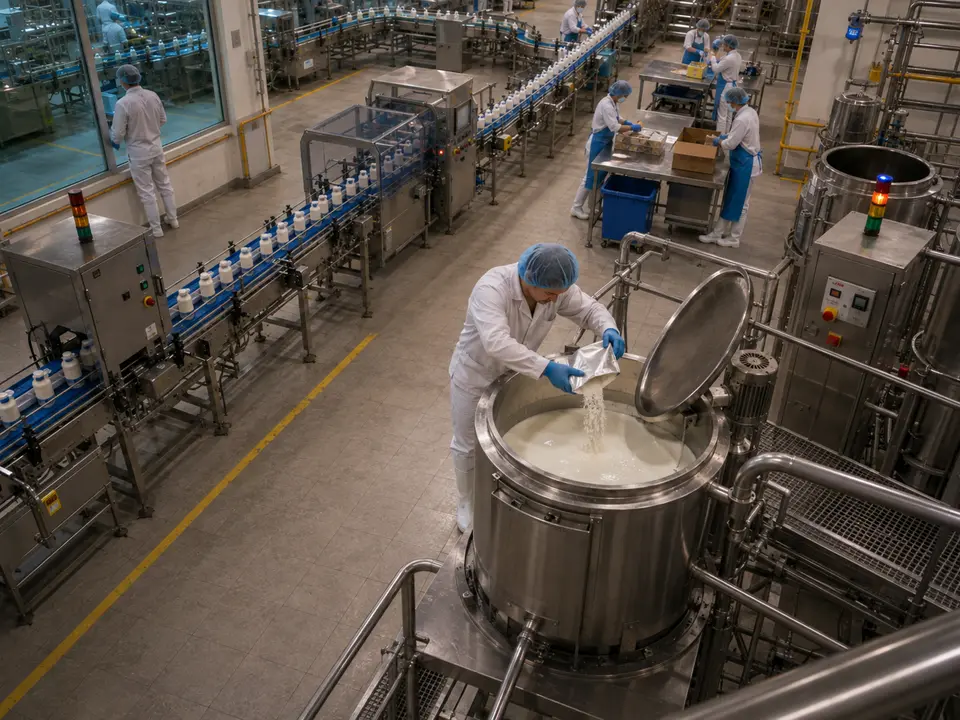
CAM-216Somebody is tipping something into an uncovered tank
«Tell me if somebody opens a mixing tank or tips something in outside the hours when dosing is due.»
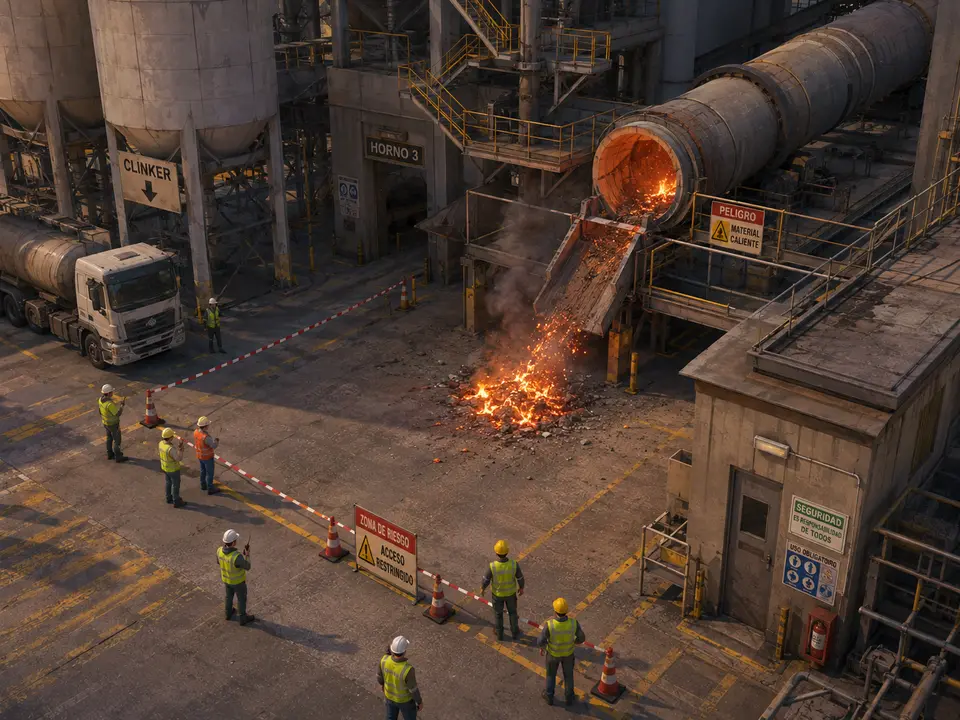
CAM-398Red-hot clinker spilled outside the kiln
«Tell me right away if hot material comes out past the kiln mouth or if there is fire in the yard, and tell me how many people are nearby.»
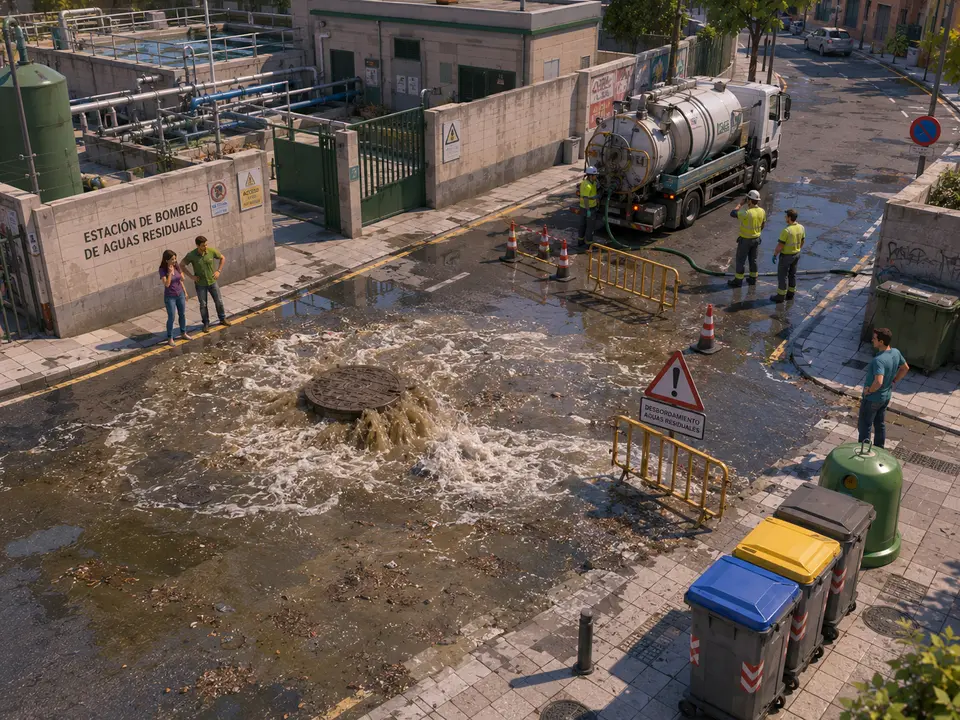
CAM-400Water is coming up through the cover and the street is a river
«Tell me if water comes up through a manhole or a cover and spreads across the street.»


What it does not do
IRIS does not analyse anything. It does not say what that liquid is made of, whether it is hazardous, or whether the discharge breaches a permit: that is determined by samples, flow meters and probes, and IRIS does not replace them.
It also does not close a valve or shut a street. It alerts a person with the time and the video, and that person decides.
Questions
- Does it say whether what is coming out is polluting?
- No, and nobody should buy expecting that. A camera sees a stain, a jet and a direction; it does not see a concentration. What IRIS brings is the part no analyser gives you: what came out, from where, heading where and from which second. With that time you take the sample in the right place and you bound the episode; without it, the report starts with an «approximately». Both pieces of data are needed, and neither replaces the other.
- Is it any use for the report that has to be filed?
- Yes, for the part it knows: the exact start time, how long it lasted, which camera saw it and the video from the first second, stored and searchable. That is usually the weakest part of any report, because it gets written from memory days later. What IRIS does not provide is the characterisation of the discharge or a legal assessment: that is signed off by the analyses and by whoever is qualified to do it. We are not going to claim that a video closes a case, because it does not.
- Does it also see what goes into a tank, not just what comes out?
- Yes, and it is the least obvious case in this word. An uncovered mixing tank outside dosing hours, with somebody tipping something in, is exactly the same problem in reverse: something arriving where it should not. The rule is written the same way — which mouth, during which hours it may be open, what counts as normal — and the alert comes at the time, not two days later when the lab returns an odd result and the whole batch has to be reviewed.
- Can it alert before it reaches the drain?
- Yes, as long as the camera sees the path. That is why in these cases the camera is not pointed at the tank but at the ground between the tank and the drain: that is where everything is decided. Between the stain crossing the bund edge and reaching the grating there are usually seconds or minutes, and that margin is exactly what somebody needs to lay a barrier, close a penstock or make a call. If the path falls outside the frame, it cannot see it, and that is checked before buying anything.
The real interface, step by step
A camera looks. IRIS understands what it sees.
An extract of the real screen, no voice-over and hands-free. Each round poses another situation. What sits behind it is a good deal bigger than what you see.
- It lands in the tray
- You open it
- You confirm or dismiss
Not seeing yours here?
These words are the ones we have built, not the ones IRIS understands. The list falls short on purpose: you ask for it in a sentence, and sentences do not run out. Tell us what is in front of your cameras and we will tell you whether it understands it, or not yet.
And the best part
The rule does not decide anything.It just never forgets, and it tells the person who decides.
You write once what needs watching, and it holds at three in the morning just as at noon. What to do with the alert is still a person’s decision.
Tell us your problem and we will say whether IRIS understands it, or not yet.
We reply the same working day.