Solutions by typeProduction efficiency
Which machine is actually holding the whole floor up?
The queue grows here and the next machine sits idle
Ten past five in the machining shop. The curved conveyor feeding the machine is piled high with metal casings, stacked and crooked, one on top of another. The signal tower is green: the machine is running, so on paper everything is fine. Twenty metres further on, the conveyor that collects the output is empty end to end and an operator is standing there with nothing to do. Nobody has counted either of those two things.
4 cameras across 3 sectors
What IRIS is
IRIS watches the cameras for you.
IRIS Neural is an artificial intelligence that watches the cameras you already have and understands what happens in front of them. When something important happens —or something you told it you need to keep an eye on—, it alerts you; and whatever can be counted, it counts in numbers. All day long, without anyone having to watch a screen.
You tell it what you need to watch, and IRIS does it.
Works with the cameras you already have. Nothing to replace.
A person replies, not a form.
- Your footage never leaves your premises.
- It doesn't identify people.
- Certifications →
This is how you ask for it
«Count how many parts are waiting in front of this machine, and tell me if it goes over forty for more than ten minutes.»
The bottleneck is always found late, when half the floor is waiting and the shift is already lost. Before that there are only impressions: machining says it is drowning, assembly says it is short of material, and both are half right. The argument gets settled by seniority, not by data, because nobody has a figure for how much material is waiting on the floor.
You decide once
Here the organisation decides two things, and draws them: where the area is in which waiting work is counted, and which line the output crosses. Then it puts a number on it: forty parts, ten minutes, tell the shop supervisor. IRIS applies that pair of counts on every shift, hour by hour, and keeps the curve for the whole day. And if the flow changes tomorrow, you move the area and the count is still the same count.
The bottleneck is never where the shouting is. It is where something piles up without anyone measuring it. In machining it is casings stacked on a curved conveyor while the output conveyor runs empty. In bottling it is an overflowing accumulation table with hundreds of bottles locked against each other and two operators pushing them apart by hand. In a sorting hall it is a roller bend where parcels have ridden up over each other while the belt above keeps dropping boxes.
What they share is not the jam. It is that the production system cannot see it. That system knows how many parts each machine has declared; it does not know how many are on the floor, on a conveyor or inside a container waiting their turn.
Here IRIS does not alert: it counts. You draw the area where waiting work builds up and the line the output crosses, and you watch both numbers at once. When one climbs while the other falls, that is your bottleneck, without walking the shop and without fitting a sensor to any machine. And this is set up differently on purpose: asking is for finding, counting is for measuring, and a line cannot be described in a sentence. It has to be drawn, always in the same place, so that today’s number can be compared with yesterday’s.
What changes
Before, the supervisor walked the shop mid-afternoon and decided on what he saw in passing. Now he has two figures on the same screen: how many parts are waiting here and how many are coming out there, hour by hour, each count with its picture. He moves people and material before the next station runs dry, and at month end he can show which machine always piles up, instead of recalling it.
Where we have seen it
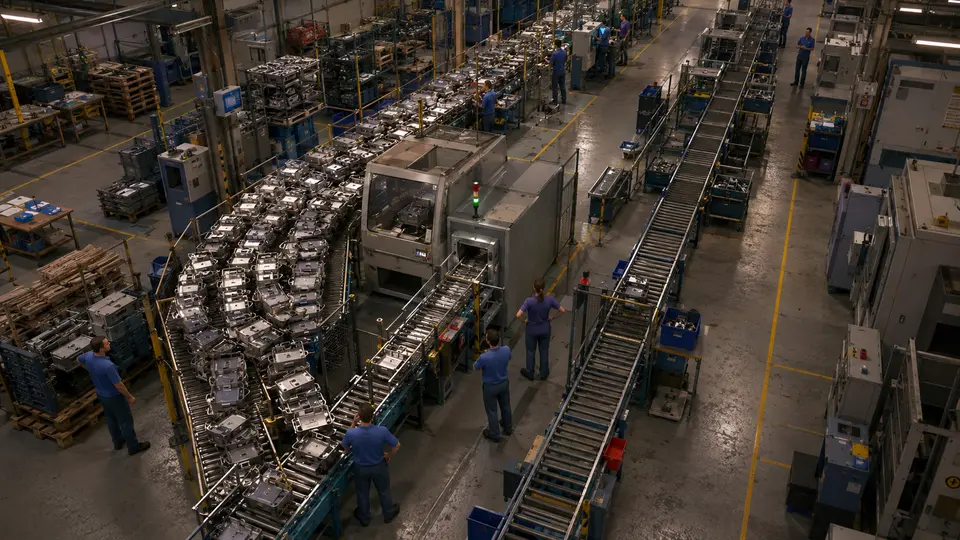
CAM-242A mountain of parts has built up in front of one machine
«Count how many parts are waiting in front of this machine and warn me if it goes over forty for more than ten minutes.»
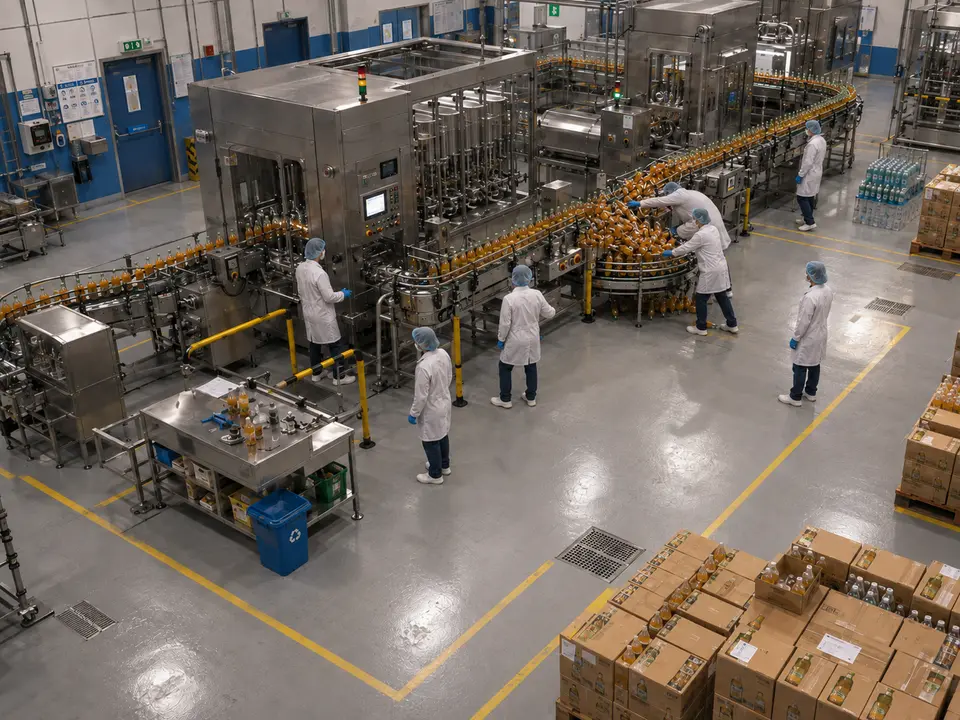
CAM-201Bottles piling up on the accumulation table
«Tell me when bottles pile up on the accumulation table and stop moving forward.»
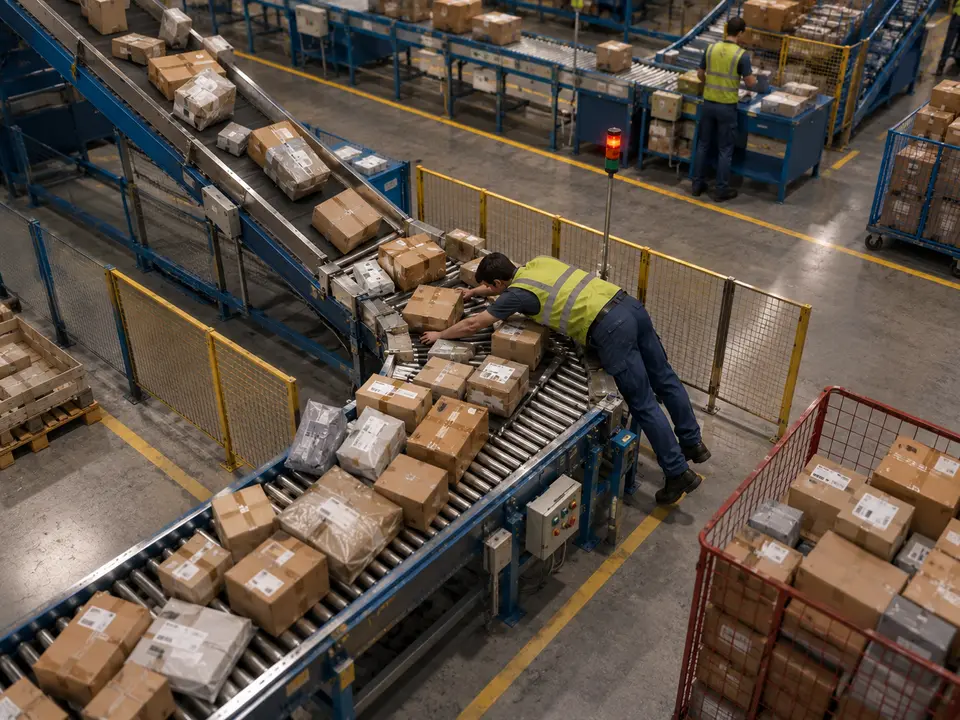
CAM-275Jammed conveyor, two arms in among the rollers
«Tell me if somebody puts their hands into the conveyor without stopping it first, and show me the video from when the jam started.»
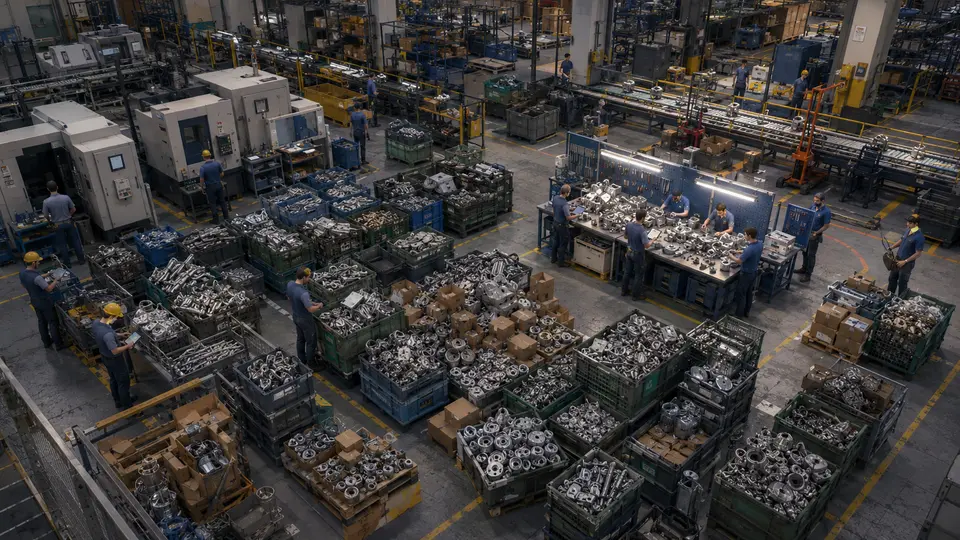
CAM-248The rework area has swallowed the aisle
«Tell me if, mid-afternoon, there are more stillages than usual in the rework area.»


What it does not do
IRIS counts what is visible from that framing. When the stacks hide what is behind them, one viewpoint is not enough: the same spot gets a second camera from another angle, and the two perspectives together give the count.
And counting parts or containers is an operational measure, not a certified figure. The only thing certified by the Spanish Metrology Centre is our people counting.
Questions
- How does IRIS know where the bottleneck is?
- By counting two things at once. It counts the parts waiting in front of the machine and the parts leaving on the next conveyor. When one figure climbs while the other falls, that is your bottleneck. No new sensor is needed on the machine and nothing has to be touched in the production system: the count is made on the image, by drawing the area being watched and the line things cross. And every count keeps its picture.
- Is this set up by speaking, the way alerts are?
- No, and that is the important difference. Asking is for finding; counting is for measuring, and they are not done the same way. A line cannot be described in a sentence: it has to be drawn on the image, always in the same place. That is why counting is set up by drawing a line or an area, and why the number is repeatable: today’s can be compared with last month’s because the line has not moved.
- Does IRIS predict when the queue will build up?
- No. IRIS does not predict: it counts what is happening while it happens. It sees the queue grow from twenty parts to fifty in twenty minutes and says so straight away, with the figure and the picture. That leaves room to act before the next station runs dry, but the forecast and the decision belong to a person. IRIS supplies the timed figure; the judgement comes from whoever knows the hall.
- Does it replace the system that already tracks production?
- No. The production system knows how many parts each machine has declared. What it does not know is how many are on the floor, on a conveyor or inside a container waiting their turn. IRIS counts what is visible and puts that figure next to the one that already exists. It is the material nobody has declared yet, and usually the very material that explains the delay. The two numbers together are worth far more than either on its own.
See it for yourself
This isn’t a video. It’s a slice of the real screen.
A summary of the real interface, played hands-free. You see one case from start to finish; what you do not see are the other screens, and there are many.
- Four cameras at once
- Each understands its own view
- The numbers climb by themselves
Not seeing yours here?
These words are the ones we have built, not the ones IRIS understands. The list falls short on purpose: you ask for it in a sentence, and sentences do not run out. Tell us what is in front of your cameras and we will tell you whether it understands it, or not yet.
And the best part
What you bought was a warehouse of images.What you needed was someone to look at them.
Those same cameras that only fill disks today can flag what matters while it is happening. The warehouse stays; it just stops being all you have.
Tell us your problem and we will say whether IRIS understands it, or not yet.
We reply the same working day.