Solutions by typeEnvironment and cleanliness
How long has the water at the intake been green?
The water turns green and we hear about it late
It is 11:20 at the reservoir the drinking water comes from. Away to the right, the water is still blue. In front of the intake tower it is not: a thick green mat covers the whole shoreline and curls in swirls right up to the intake screens. Two technicians in helmets and vests look at it from the walkway. It has been growing for three days in the heat, and there is nothing written about it in the operations log until today.
7 cameras across 6 sectors
What IRIS is
IRIS watches the cameras for you.
IRIS Neural is an artificial intelligence that watches the cameras you already have and understands what happens in front of them. When something important happens —or something you told it you need to keep an eye on—, it alerts you; and whatever can be counted, it counts in numbers. All day long, without anyone having to watch a screen.
You tell it what you need to watch, and IRIS does it.
Works with the cameras you already have. Nothing to replace.
A person replies, not a form.
- Your footage never leaves your premises.
- It doesn't identify people.
- Certifications →
This is how you ask for it
«Alert me if the water in front of the intake changes colour or a mat appears on the surface.»
In the heat, a mat grows in three days. And the operations manager finds out when the lab results arrive, which is two days late. In those two days water has kept being drawn at the same depth, the river basin authority has not been told, and there is no written timeline of when it started or how far it reached. If explanations are needed later, they are given from memory. And with drinking water, explanations from memory are worth nothing.
You decide once
You decide which patch of water is watched, at what time of day it is compared and how much change deserves an alert. The time matters far more than it seems: the same water at seven in the morning and seven in the evening is not the same colour, and comparing at the same hour is what makes the reading worth anything. That is written once. IRIS then compares every day, including the days with no walk-round.
An algal bloom is not an incident: it is a slow process. There is no instant when something happens, just a week in which the water changes colour a very little each day. That is what makes it so hard to see: the person who goes to the intake daily does not notice the difference between today and yesterday, the same way you do not notice a child’s hair growing.
The camera does notice, because it does not compare against memory: it compares against yesterday’s image, taken from the same place at the same hour. It sees that the shoreline has changed, sees which way the mat has advanced, and sees when it reaches the intake screens, which is the moment this stops being a curiosity and becomes an operational problem.
And here is the important part, which we say before anyone asks: colour can be seen, toxin cannot. No camera on earth knows whether that mat carries cyanotoxins. That is measured in a laboratory, from a sample. What IRIS does is win you the day: it warns this same morning that the water has changed and how far it has reached, so that somebody takes samples today instead of on Thursday. And it leaves the timeline in writing, which is what the report asks for afterwards.
What changes
Before, this was spotted on the walk-round, when there was one, and confirmed by a lab result that arrived days later. Now the alert arrives the same morning the mat shows up, with today’s image next to yesterday’s and last week’s. Whoever runs the intake orders samples that day and decides whether to change the draw-off depth, with the timeline already written.
Where we have seen it

CAM-235Hands inside the die with the beacon still green
«Tell me if someone puts their hands in the die and the beacon is not red.»
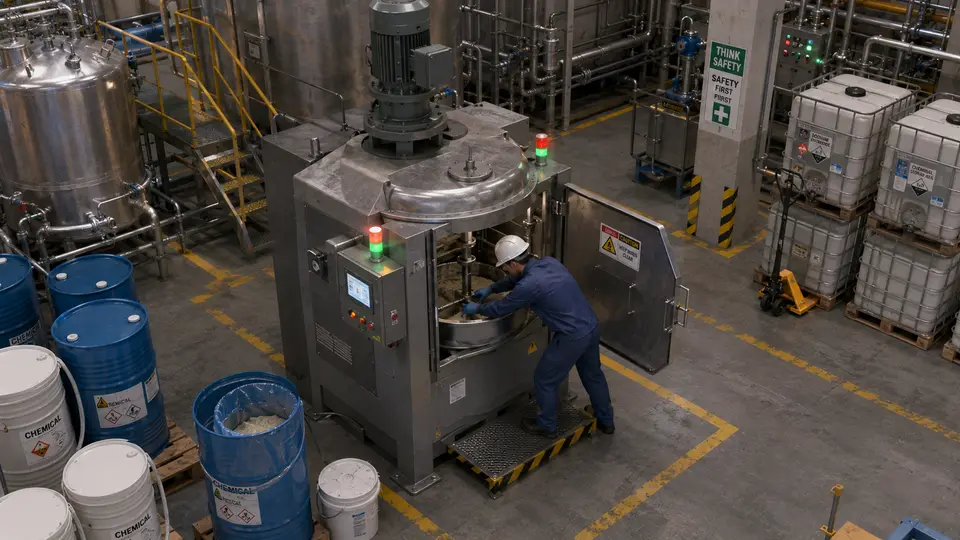
CAM-315Hands inside the mixer with the beacon still green
«Tell me if somebody puts their hands into the mixer with the door open and the beacon green.»

CAM-545A child alone in the middle of the walkway, and minutes count
«Show me where you have seen a child on their own over the last ten minutes matching the description the family has just given at the desk.»
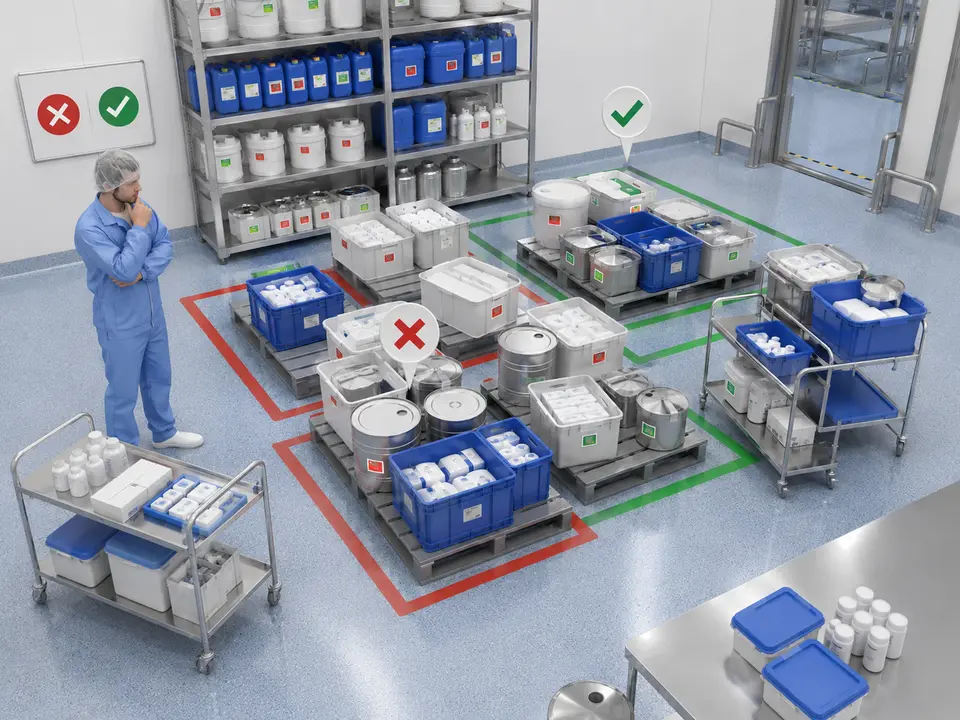
CAM-286A quarantine pallet sitting on the released zone line
«Tell me if any pallet from the red quarantine zone shows up inside the green zone or on the line.»
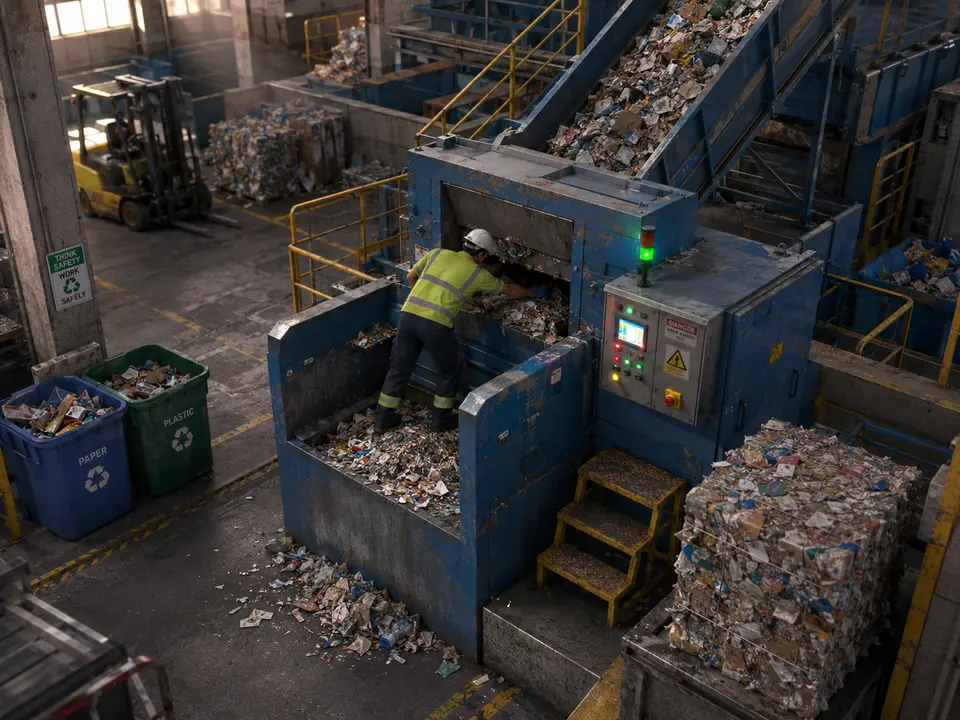
CAM-432He is clearing a jam with the press still live
«Tell me if someone puts their body inside the press and the machine is not stopped and locked off.»
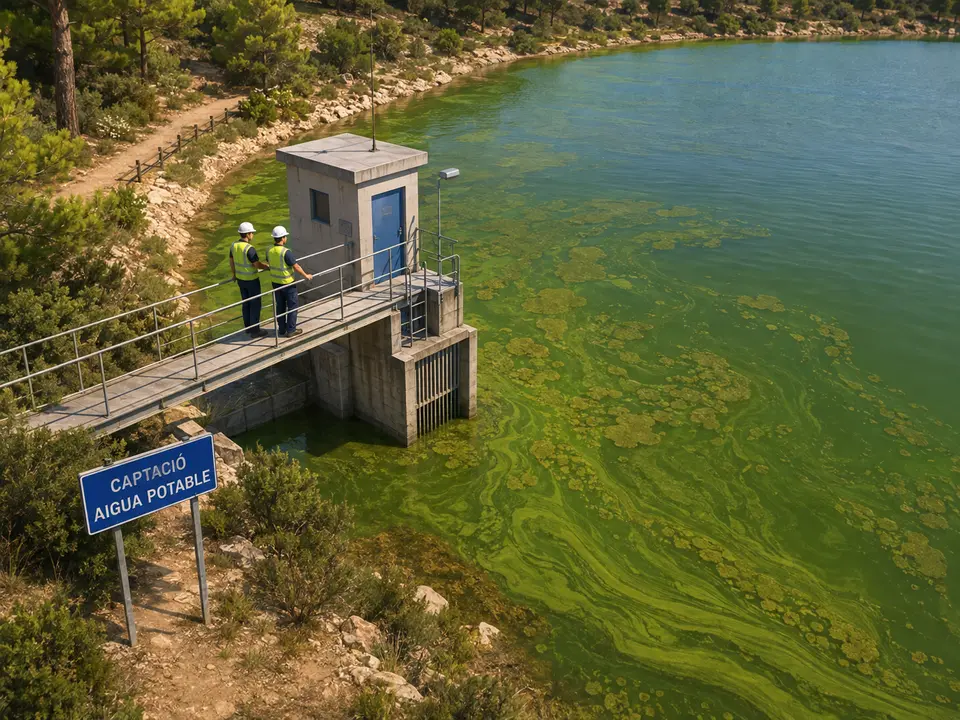
CAM-416The intake reservoir woke up green
«Tell me if the water in front of the intake changes colour or if a mat appears on the surface.»
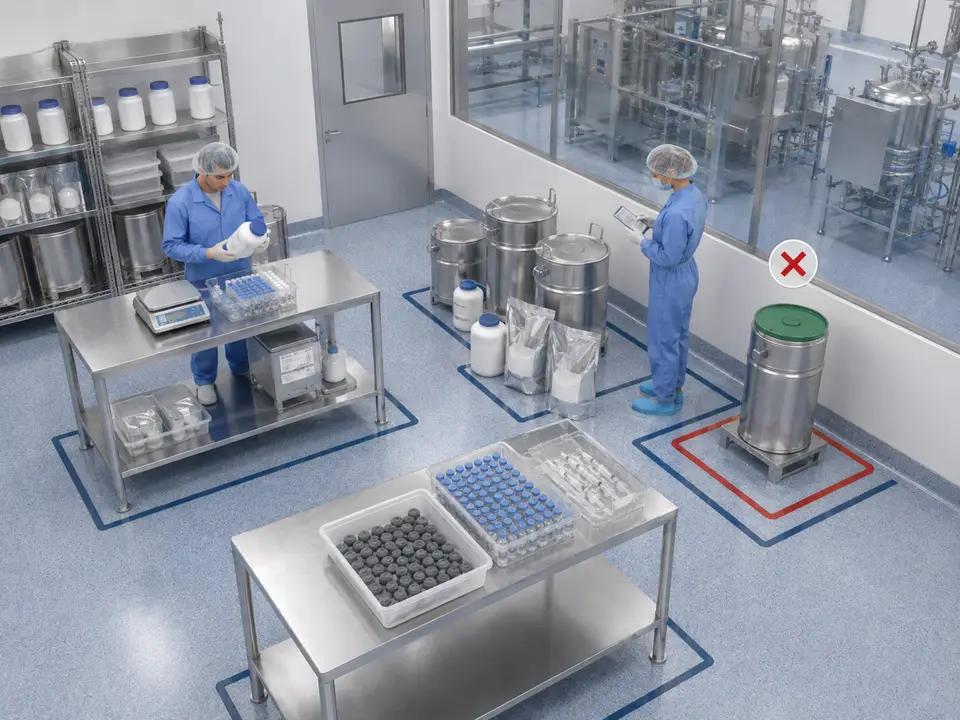
CAM-284A green-lidded drum where it does not belong
«Tell me if a container turns up in the dispensing area that is not one of those prepared for this order, or if any of them ends up outside its square.»


What it does not do
Colour can be seen, toxin cannot. IRIS reports that the water has changed and how far the mat reaches; it never says the water is toxic and, far less, that it is safe. It cannot tell what a green mat is made of either: algae, a discharge, pollen or mud after a storm change the image just the same.
Questions
- Does IRIS detect cyanotoxins in the water?
- No, and this is the most important limit on the whole page: colour can be seen, toxin cannot. A camera sees that the water has changed colour and that there is a mat on the surface. Whether that mat carries cyanotoxins, and in what quantity, is measured in a laboratory from a sample. IRIS warns that somebody needs to go and look and sample; never that the water is toxic and far less that it is safe. Anyone promising otherwise is selling smoke.
- So what is the alert actually for?
- To win you the day. A bloom is visible from the camera as soon as it shows, whereas the walk-round and the lab result arrive later. The alert puts somebody on sampling that same morning and leaves a record of what time the water changed and how far the mat reached. That timeline is worth having afterwards for the internal report, for the river basin authority, and for deciding whether to change the draw-off depth while it lasts.
- What if the water turns green for some other reason?
- It happens, and that is why the alert is called a colour change and not a bloom. A discharge, pollen, mud after a storm or the reflection of the hillside at dusk also change the image. IRIS shows the comparison with previous days, taken at the same hour, and a person looks before anything is moved. The rule for what change deserves an alert, and at what time of day to compare, is written by whoever runs the intake, because nobody knows that stretch of water better.
- Is it any use outside a drinking-water intake?
- Yes, as long as a fixed camera always looks at the same patch of water. It works on an irrigation pond, a harbour basin, a canal, a treatment plant lagoon or a factory’s cooling water. What is needed is not a special camera: it is that the framing does not move and that the comparison is made at the same hour. If the camera pans or changes zoom, the comparison stops being worth anything, and we say so before installing.
Demo · IRIS at work
We won't just tell you. We'll show you.
It is a summary of the real screen: it plays by itself, step by step, and shows only the path of one case. The actual tool has far more than fits in here.
- The alert fires
- It lands in the tray
- You open it
- You confirm or dismiss
Not seeing yours here?
These words are the ones we have built, not the ones IRIS understands. The list falls short on purpose: you ask for it in a sentence, and sentences do not run out. Tell us what is in front of your cameras and we will tell you whether it understands it, or not yet.
And the best part
There are nights of thick fogwhen the image gives you nothing. We do not dress that up.
Backlight, heavy rain, a street lamp that has blown. IRIS works with what the camera puts in front of it; when there is no image, it says so instead of inventing an answer.
Tell us your problem and we will say whether IRIS understands it, or not yet.
We reply the same working day.