CAM-253
Someone walks into the cell with the robot still running
A person opens the yellow fence gate and steps into the cell. Inside, the orange arm keeps working over the fixtures holding the aluminium castings. The amber beacon on the post is lit: the cell has not stopped. The gate leaf is swung outwards and the operator still has a hand on it. There is nobody else in the aisle to warn him.

Turn on IRIS Vision
AI-generated image
What IRIS is
IRIS watches the plant for you.
IRIS looks at the cameras you already have on the plant floor and understands what it sees: a stopped line, someone inside a robotic cell, someone without their safety gear on, jammed parts. When something like that happens, it alerts right away; and whatever can be counted, it counts in numbers. All day long, with no one needing to watch the screen.
You tell it what you need to watch, and IRIS does it.
Here, for example, IRIS spots the exact moment someone steps through the gate while the robot is still working, and it warns while it is happening, not afterwards. That way you know which camera, which cell and what time it was. With that alert you decide whether to stop the machine, evacuate or open a report, and later you check whether it happens again.
Works with the cameras you already have. Nothing to replace.
A person replies, not a form.
- Your footage never leaves your premises.
- It doesn't identify people.
- Certifications →
What IRIS understands
What it recognises in this scene
- person entering the cell
- cell gate open
- robot arm running
- amber beacon lit
- cell fence
What this camera measures
An alert says something is happening. The reading says how much.
- 9 stime with the gate open
- 15:07time of entry
- 1people inside the cell
- 12openings of this gate today
- 6parts on the fixtures in the cell
The figures on this screen are an example from the illustration, not any client's measurement.
The rule
You decide once. IRIS applies it always.
If
a person crosses the cell gate and the robot is still moving
Then
- alert the cell supervisor straight away
- save the video of the thirty seconds before and of the entry
- log the time of the entry and the camera that saw it
The instruction that set it up«Alert me the moment someone crosses the robot cell gate while the cell is not stopped.»
What changes
What changes for whoever answers for the plant
Going in for one second to reposition a part: that is what skips the safe-stop sequence, and it happens ten minutes before the shift changes. A robot cell does not forgive a lapse. IRIS sees the person cross the gate with the cell still live and alerts while it is happening. The manager gets the camera, the time and the video. What is done next, stopping, evacuating or opening a report, is decided by a person, not by the camera.
What people usually ask
Can IRIS tell an authorised entry from one that is not?
Yes, if the plant tells it. The rule can require the cell to be stopped, a work order to be open, or the entry to fall in a given time window. IRIS detects the situation; what counts as acceptable is decided by the plant, not by the system.
Do I need new cameras inside the cell?
Not always. The camera that already covers the aisle and the gate will do, as long as the whole crossing is visible. What matters is the framing, the gate and the inside of the cell in shot, not how many cameras there are.
Does it replace light curtains and interlocks?
No. Light curtains and interlocks are the protection; IRIS is the layer that sees what happens around them and leaves a record. If someone comes in through a gap the curtain does not cover, the camera still sees it.
Other cameras
- CAM-240 · The line has stopped with a pallet jammed inside
- CAM-241 · The line is running, but a gap opens every few seconds
- CAM-242 · A mountain of parts has built up in front of one machine
- CAM-243 · The cell is ready and the bin is empty
- CAM-244 · A copper coil mounted on a steel line
- CAM-245 · A unit moves down the line with no cover on
See it for yourself
A camera looks. IRIS understands what it sees.
An extract of the real screen, no voice-over and hands-free. Each round poses another situation. What sits behind it is a good deal bigger than what you see.
- You draw the line
- It counts by itself
- A number comes out
See it somewhere else
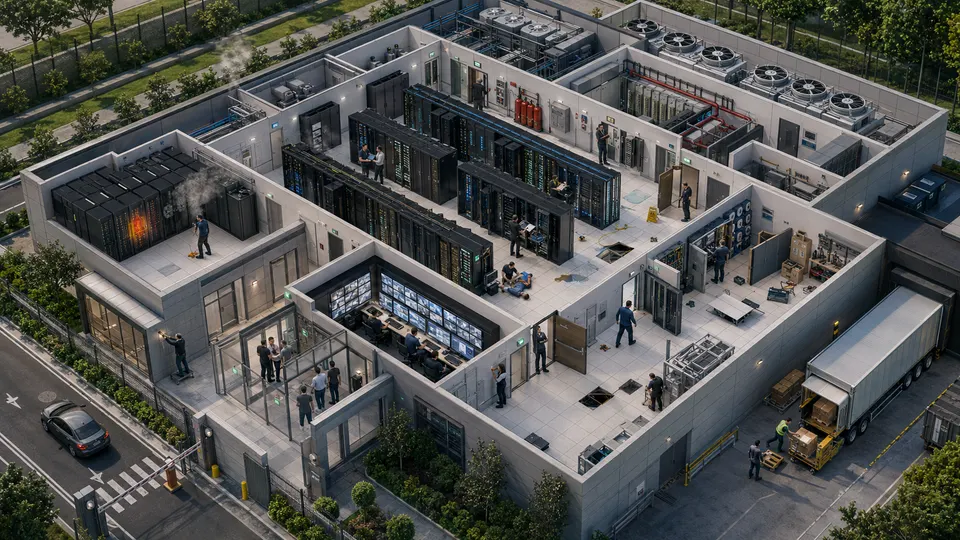
What if the outage does not start with an attack?
13 cases, and in every one of them IRIS raises an alert when something happens. You see each image as it is, and then with what it understands on top.
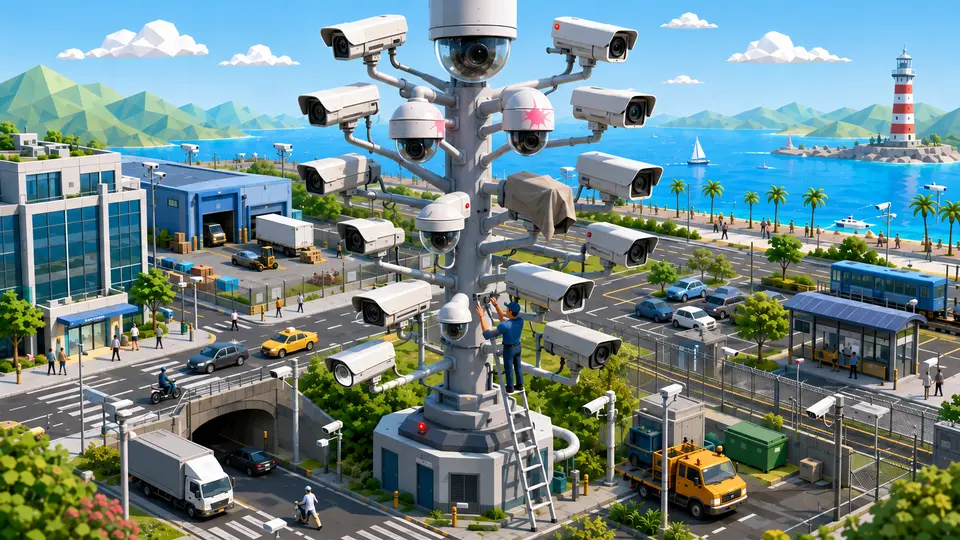
And who watches the cameras?
34 cases, and in every one of them IRIS raises an alert when something happens. You see each image as it is, and then with what it understands on top.


And the best part
Behind one camera you can put a person.Behind four thousand you cannot put anyone.
Adding a camera costs little; adding another pair of eyes does not. So the cameras keep growing and the attention does not. IRIS watches all four thousand at once and flags what matters today.
Tell us your problem and we will say whether IRIS understands it, or not yet.
We reply the same working day.