CAM-583
An open lane nobody has gone through in nine minutes
This is the same filter the camera next door measures, but the rule looks at the other end of the frame. On the left there are twenty-four minutes of line. On the right there’s a belted corridor set up, a lane open with somebody behind it and nobody going through it for the last nine minutes. Nobody calls this in: the people waiting can’t see it, and the person at the lane assumes the line will come. IRIS sees both things at once and puts them side by side, which is all it takes to fix it.

Turn on IRIS Vision
AI-generated image
What IRIS is
IRIS keeps watch over the airport for you.
IRIS is an artificial intelligence that uses the cameras you already have at the airport and understands what's happening at security checkpoints, the baggage belt and the entry points. If a line grows, the belt stops, or something you need to watch happens, it lets you know right away; and whatever can be counted, it counts in numbers. All day long, without anyone having to stare at a screen.
You tell it what you need to watch, and IRIS does it.
Picture twenty-four minutes of line on one side and an open lane on the other that nobody's walked through in nine minutes — IRIS spots both at once and flags it. That's how staff learn a lane is sitting idle at the exact moment it's needed most. With that alert, someone gets sent to steer people toward it, and you check whether the line shrinks while it's happening.
Works with the cameras you already have. Nothing to replace.
A person replies, not a form.
- Your footage never leaves your premises.
- It doesn't identify people.
- Certifications →
What IRIS understands
What it recognizes in this scene
- lane set up with nobody going through
- staffed podium
- board announcing the lane is open
- full line at the other end of the frame
- lanes that are processing people
- control arch with nobody in front of it
- people waiting a few feet away
- walkway with people still arriving
What this camera measures
An alert says something’s happening. The reading says how much.
- 9 minTime with nobody going through
- 24 minQueue wait at that moment
- 2Open lanes going unused
- 340People in line
- 07:11:36Video starts at
The figures on this screen are an example from the illustration, not any client’s measurement.
The rule
You decide once. IRIS applies it always.
If
an open lane has had nobody through it for more than five minutes
Duringthe security line is over fifteen minutes
Then
- alert the filter supervisor with the lane, the idle minutes and the queue wait
- save the video of both ends of the frame, so they can be seen together
- add up the open-lane idle minutes in the daily report
The instruction that set it up«Tell me if an open lane has had nobody through it for more than five minutes while the line is over fifteen.»
What changes
What changes for operations, for the passenger and for maintenance
Nine minutes of an open lane going unused, in the morning peak, is several hundred people who waited for no reason. It’s nobody’s fault: it’s a piece of information that wasn’t getting through. With the alert, the supervisor sends someone to the mouth of the line to feed people into that corridor and the peak comes apart while it’s happening, not once it’s over. And at the end of the month there’s a record of how many open-lane minutes were wasted, which is the conversation that actually matters.
What people usually ask
Doesn’t the hall supervisor already see this?
He sees it if he happens to be looking there at that moment. A security filter has dozens of cameras, the hall has one shift and the supervisor is dealing with something else: that’s why these nine minutes are always found out too late. IRIS watches every camera at once, around the clock, and only interrupts when both conditions are met at the same time: an idle lane and a long line. An empty lane at three in the afternoon with an empty hall isn’t a problem and raises no alert.
Does IRIS open or close a lane on its own?
No. IRIS decides nothing and touches nothing: it alerts whoever has to decide, with the lane, the minutes and the video. Opening or closing a lane depends on people, on rosters and on a procedure that no camera controls. What changes is that the decision is taken with the figure on the table and after five minutes, not off the back of a complaint and after forty.
Other cameras
- CAM-580 · The curb jams before the terminal does
- CAM-581 · Eighteen minutes in one line, four in the one beside it
- CAM-582 · How long the security wait really is, measured not guessed
- CAM-584 · Fifty-two minutes of line and seven booths turned off
- CAM-585 · The aisle is clear and thirty feet on, nobody moves
- CAM-586 · Three minutes standing at the board isn’t walking slowly
See it for yourself
Everything comes in. Only what matters gets through.
This sums up what IRIS does with one alert, from the moment it appears until it’s closed. The real screen holds far more; this is the main thread.
- The rule gets built
- It goes to every camera
- Published, it watches alone
- And then it fires
Next step

Why did the line stop?
237 cases, and in every one of them IRIS raises an alert when something happens. You see each image as it is, and then with what it understands on top.
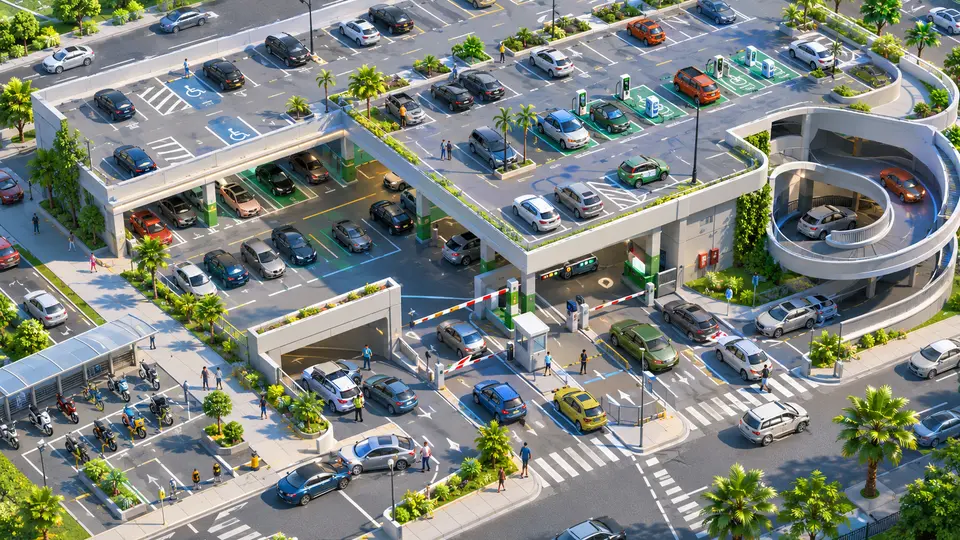
How many spaces are open right now?
15 cases: 9 raise an alert when something happens and 6 only measure. You see each image as it is, and then with what IRIS understands on top.


And the best part
What you bought was a warehouse of images.What you needed was someone to look at them.
Those same cameras that only fill disks today can flag what matters while it’s happening. The warehouse stays; it just stops being all you have.
Tell us your problem and we’ll say whether IRIS understands it, or not yet.
A person answers, the same working day.